Solana: How It Works, Staking and Fees
Solana is a monolithic, high-throughput layer-1 blockchain: one validator set runs every transaction against a single global state, scaling on the base layer rather than across separate rollups. SOL pays the network's fees and secures it through staking. This guide maps Solana from architecture through staking, fees and the spot ETF to its real risks.
In practice that single-chain bet rests on Proof of History, a verifiable clock, paired with parallel execution. Native staking pays about 5.2 per cent APY before validator commission as of 18 August 2026, there is no live protocol-level slashing, and a US spot SOL ETF now trades — though the record still includes several dated network halts. Each of these is covered below, with links to the deeper satellite pages.
Introduction
Most people meet Solana through a single claim: that it is fast and cheap. Both halves of that reputation are broadly true, and both are more conditional than the slogan suggests, which is exactly why a self-directed investor needs more than the headline before deciding to hold, stake or build on it. Solana is one of the few networks that chose to scale a single chain rather than spread activity across layers, and that one architectural decision explains almost everything else about it: why its fees behave the way they do, why it has stumbled into full network halts, why staking works as it does, and why its reliability story is one of steady hardening rather than a solved problem.
This guide is organised to follow that logic from the ground up. It starts with what Solana actually is and how its core mechanisms fit together, then looks honestly at the outage record and the client-diversity and consensus work now under way to improve it. From there it turns to the things you will act on directly: what a transaction really costs, how staking rewards are generated and what the roughly 5.2 per cent yield does and does not protect you from, what the ecosystem around the base layer looks like, and how to reach Solana through a spot ETF.
It closes with custody discipline and a plain risk framework. Where a topic deserves its own depth, a satellite page carries it, and this hub points the way.

What Solana is
Solana is a monolithic layer-1 blockchain: every validator processes every transaction against one shared global state, rather than splitting execution across separate chains or rollups. There is a single ledger, a single fee market per resource, and a single point of truth for account balances and programme state at any given moment. That is a different structural choice from ecosystems that split settlement and execution into layers — Solana keeps both in one place, which is the trade-off underpinning most of what follows in this guide.
SOL, the network's native asset, does two jobs. It pays transaction fees (the base fee plus any optional priority fee, covered in the fees section below), and it is the asset staked to secure the network through Solana's proof-of-stake consensus. Validators stake SOL — their own and SOL delegated to them by holders — and earn rewards for participating correctly in consensus. A holder does not need to run a validator to take part: delegating to one is the standard route into staking, covered later in this guide.
Under the single global state sits a specific set of mechanisms built to let one chain handle high transaction volume without sharding or offloading execution elsewhere. Proof of History provides a verifiable clock that timestamps events before consensus runs on them. Sealevel executes transactions touching non-overlapping accounts in parallel rather than one at a time. Gulf Stream forwards transactions ahead of time to whichever validator is next in the leader schedule, so there is no public mempool of pending transactions to sit in. Turbine propagates finalised blocks across the network in small pieces rather than as single large broadcasts. Each of these is examined in more depth in the mechanism section that follows.
At the map level, this places Solana among the layer-1s betting that a single, tightly integrated execution environment — rather than a modular stack of separate settlement and execution layers — is the more direct way to scale a blockchain. That bet shapes the rest of this guide: it explains why Solana's throughput, fee structure, and reliability history all trace back to the same underlying design, and why understanding that design matters before looking at staking, fees, or the network's outage history in detail.
How Solana works: Proof of History, parallel execution and no mempool
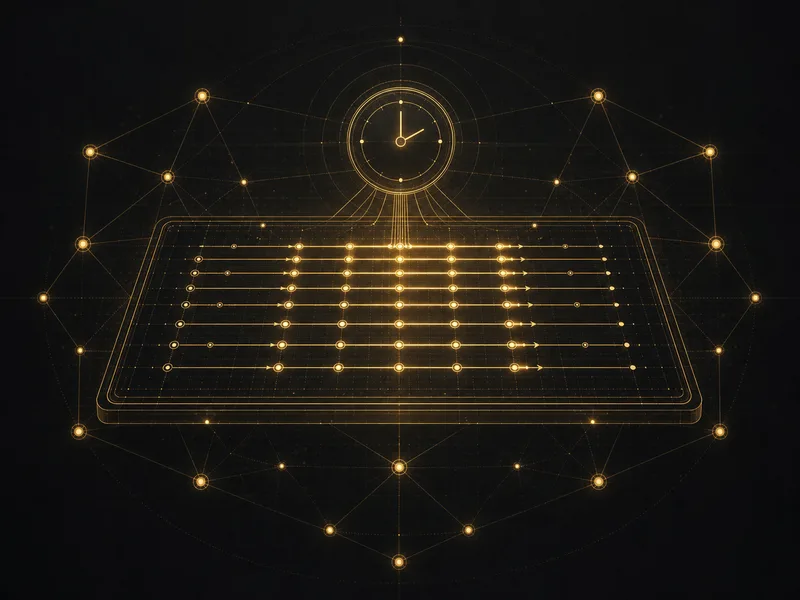
Solana is a single Layer-1 chain with one global state, and SOL is the asset you pay gas and stake with. That "one chain, one state" choice is what makes its engineering interesting: rather than splitting work across shards or rollups, Solana tries to push a single validator set to high throughput by rethinking how transactions are timestamped, ordered, executed and propagated. If you are deciding whether to hold, stake or build on SOL, the mechanisms below are the ones every later section — fees, staking yield, reliability, MEV — quietly depends on, so it is worth understanding them once rather than taking each downstream claim on trust.
Proof of History: a clock, not a consensus mechanism
Proof of History (PoH) is often mislabelled as Solana's consensus. It is not. PoH is a verifiable clock: a continuous cryptographic hash chain where each output feeds the next, so producing the sequence takes real elapsed time and anyone can verify the ordering after the fact. Because events can be stamped into this chain before validators vote on them, the network agrees on the order of transactions without every node first exchanging messages about timing. Consensus (a proof-of-stake vote) still finalises blocks, but it does so on top of an ordering that PoH has already fixed. Removing that back-and-forth about "what happened first" is what lets the other components run fast.
Sealevel: executing transactions in parallel
Most chains execute transactions one after another. Sealevel runs them in parallel. Every Solana transaction must declare up front which accounts it will read and which it will write. The runtime uses those declarations to spot transactions whose account sets do not overlap and runs those simultaneously across available cores; only transactions that touch the same writable account are forced to queue. In practice a transfer between two unrelated wallets and a swap in an unrelated pool can settle at the same instant. This is why the up-front account list, which feels like bureaucracy when you first send a transaction, is structural — it is the information the scheduler needs to parallelise safely.
Gulf Stream and the leader schedule: no public mempool
Here Solana diverges most sharply from Ethereum. There is no public mempool — no shared waiting room where pending transactions sit visible to everyone. Instead the network publishes a leader schedule in advance, so validators know which node will produce blocks in each upcoming slot.
Through Gulf Stream, wallets and RPC nodes forward each transaction straight to the current and expected upcoming leaders. Transactions stream to whoever is about to build the block rather than broadcasting to the whole network to await inclusion. That reduces the confirmation memory each node must hold and lets leaders start work sooner, but it also changes the trust surface: you are handing your transaction to a known party rather than to an open pool.
Turbine: propagating blocks in shreds
Once a leader builds a block, Turbine handles distribution. Rather than the leader sending the full block to every validator, the block is split into small pieces called shreds and relayed through a tree of nodes, each passing pieces onward. This keeps any single node's bandwidth demand bounded as the validator set grows, which is what makes a large single-shard network practical. It is worth knowing that Solana's very first full-network halt (December 2020, roughly six hours) traced to a Turbine block-propagation bug — a reminder that these components are still being hardened, not that they are finished.
The MEV consequence: Jito, not Ethereum-style PBS
The no-mempool design reshapes maximal extractable value (MEV). On Ethereum, a public mempool exposes pending transactions, enabling sandwiching and the proposer-builder separation (PBS) auctions built to manage it. Solana has no such public pool to watch.
Instead MEV is organised off-protocol, principally through Jito, which runs a bundle auction: searchers bid for their bundles of transactions to be placed in a favourable position, and a share of those tips flows back to the validator and, in turn, to the people who stake with it. So if you delegate SOL, MEV is not just something done to you in an open pool — a slice of it becomes part of your reward, a point the staking section returns to. The mechanism is auction-based and off-chain, not Ethereum-PBS.
Read together, these parts describe one design bet: fix ordering with PoH, execute in parallel with Sealevel, route transactions directly to known leaders via Gulf Stream instead of a mempool, and spread blocks efficiently with Turbine. It is a coherent system with real trade-offs — leader-directed routing and a single global state concentrate both performance and failure modes — and the sections that follow measure those trade-offs in fees, yield and uptime. For a fuller side-by-side of how these choices stack up against a modular alternative, see our Solana versus Ethereum comparison.
Reliability and uptime history
Solana's early years were marked by several full-network halts, where the whole chain stopped producing blocks until validators coordinated a restart. This history matters if you plan to hold, stake, or transact on the network, so it is worth looking at the record directly rather than at either the marketing or the mockery around it.
The confirmed full-network outages through early 2024 are listed below. Each was a halt of the entire chain, not a slowdown or a partial degradation, and each ended with validators restarting from an agreed snapshot. Durations are approximate and cover the window from the halt to a functioning restart.
| Date | Approx. duration | Cause |
|---|---|---|
| December 2020 | ~6 hours | Turbine block-propagation bug |
| September 2021 | ~17 hours | Bot transaction flood during the Grape IDO |
| April to May 2022 | ~8 hours | NFT-mint bot spam |
| June 2022 | ~4.5 hours | Durable-nonce consensus bug |
| September 2022 | ~8.5 hours | Fork-choice bug |
| February 2023 | ~19 hours | Oversized-block processing bug |
| 6 February 2024 | ~5 hours | Full network halt (last confirmed to date) |
Reading the causes together tells a clearer story than any single incident. The two 2021 and 2022 spam-driven halts came from unpriced demand overwhelming the network, while the others were software bugs in propagation, consensus, or block processing. That mix points to a young system being stress-tested in production rather than to one recurring flaw.
As of August 2026, there has been no officially confirmed full network outage since 6 February 2024. That is a streak, not a permanent guarantee, and it is worth checking the live figure yourself: Solana publishes network status at status.solana.com, which shows current and historical uptime without relying on a date this page was last edited.
Several engineering changes sit behind the improved record. QUIC replaced the older raw UDP transport for sending transactions to validators, giving the network connection-level control it previously lacked. Stake-weighted quality of service then prioritises transaction traffic from higher-stake sources, so a flood of anonymous spam can no longer crowd out legitimate activity as easily as it did during the IDO and NFT-mint incidents. Local fee markets let congestion price itself per account or program, so heavy demand for one popular contract no longer forces fees and contention up across the entire chain.
The honest framing is ongoing hardening rather than a solved problem. These changes address the specific failure modes that caused earlier halts, and the longer clean streak is real evidence they helped. They do not prove the next novel bug or demand shock is impossible, and a network that once halted regularly is not one to treat as infallible now. If uptime is a factor in your decision to stake or build, weigh the direction of travel and the current status page together, rather than either the outage-era reputation or the assumption that reliability is now permanent.
Client diversity, Firedancer and Alpenglow
For most of Solana's history, the network ran on a single validator client. That is a structural risk: a bug in one codebase can halt the whole network, and several of the historical outages traced back to exactly that kind of single-implementation fault. A second independent client changes the picture — if one implementation stalls on a malformed block, validators running the other can keep producing blocks. This is why client diversity, rather than raw throughput, is the reliability story worth watching on Solana today.
Firedancer, an independent validator client built by Jump Crypto, is the answer to that concern. The full Firedancer client went live on mainnet on 12 December 2025. That is a genuine milestone: Solana now has a second, ground-up implementation running real stake in production, not just a testnet experiment.
The nuance is adoption. As of August 2026, the full Firedancer client secures only around 4 per cent of stake, and the Frankendancer hybrid — which pairs Firedancer's networking layer with the original runtime rather than the complete rewrite — roughly 9%. The majority still runs Agave-lineage clients (Agave and Jito-Solana, the largest single client). So the single-client risk is narrowing, not eliminated: a large share of stake continues to share runtime code. The honest framing is a transition in progress. Diversity is improving as more operators migrate to the full client, and that migration is worth tracking directly rather than assuming the problem is already solved.
Alpenglow is the other change on the horizon, and it sits at a different stage entirely. It is a consensus overhaul — proposed as SIMD-0326 by Anza — that reworks how the network reaches agreement. It moved through governance and was approved by roughly a 98 per cent vote, which is a strong mandate. But approval is not activation. As of 18 August 2026 Alpenglow is not yet live; it is going through a phased pre-activation process, with activation expected somewhere in the August-to-October 2026 window and no fixed date inside it. The staging is visible on-chain rather than merely announced: BLS pubkey management in the vote account (SIMD-0387) is already live on mainnet, and the Validator Admission Ticket (SIMD-0357) lands with Agave 4.1. Alpenglow cannot switch on until enough validators have registered their keys, so validator readiness, not the calendar, is the gating factor.
That distinction matters when you read about Alpenglow's headline latency numbers. Those figures describe what the redesigned consensus is designed to achieve once it is running — they are targets, not measurements of how the network performs today. Treat any current-performance claim that leans on Alpenglow with caution until the upgrade is actually activated and producing blocks under real load. The three tenses here — proposed, approved, not yet live — are easy to blur, and the difference between an approved design and a live one is the difference between a promise and a result.
Taken together, Firedancer and Alpenglow point the same direction: a network that is hardening its foundations rather than one that has finished the job. Both are reasons for measured optimism, and both are reasons to check the live status rather than trust a headline.
Transaction fees and the priority-fee model
Solana's transaction cost has two separate parts, and conflating them is where most "always a fraction of a cent" claims go wrong. The first part is a fixed base fee: 5,000 lamports per signature, a structural charge baked into the protocol rather than something that floats with demand. Half of that base fee is burned, permanently removing it from circulation, and the remainder goes to the validator that processes the transaction. Because it is fixed and denominated in lamports rather than pegged to a dollar target, its cash value moves only with the SOL price, not with network conditions.
The second part is optional: a priority fee you can attach to bid for faster or more reliable inclusion when a specific part of the network is busy. It is calculated as compute-unit price multiplied by compute-unit limit — you are effectively naming a price per unit of computation your transaction is expected to consume, and the total goes entirely to the validator, with no burn.
Unlike the base fee, this is not a single network-wide market. Solana runs scoped local fee markets, meaning congestion in one heavily used programme or account can push its priority fees up without materially affecting the price of a transfer or swap that touches an unrelated part of the state. This localised design is deliberate: it stops one popular application from making the whole chain expensive to use.
| Component | How it is set | Where it goes |
|---|---|---|
| Base fee | Fixed, 5,000 lamports per signature | 50% burned, 50% to validator |
| Priority fee | Optional; compute-unit price × compute-unit limit, set by the sender | 100% to validator |
The practical upshot is that "always a fraction of a cent" is an oversimplification. At the base-fee floor, with no priority fee attached, a simple transaction is genuinely cheap. But that floor is not the only price that exists on the network. When a specific programme or market is under heavy demand — a popular token launch, a liquidation cascade, an NFT mint — users competing for inclusion in that local fee market bid priority fees up, sometimes sharply, while transactions elsewhere on the chain stay close to base cost.
Cost snapshots you may see cited from the November–December 2024 congestion period, when average or median SOL transaction costs spiked well above the usual base-fee level, capture one such episode rather than a permanent state of the network — treat any figure from that window as dated, not representative of typical conditions today.
For anyone budgeting transaction costs, the sensible mental model is a floor plus a variable top-up: the 5,000-lamport base fee is what you pay regardless, and the priority fee is what you pay, if anything, to jump the queue in whichever local market your transaction happens to touch. Checking current network conditions before a time-sensitive transaction is more useful than relying on a single historical average.
Staking and yield: how SOL rewards work

Staking is how holders of SOL earn a return while helping secure the network. You delegate your SOL to a validator, the validator votes on blocks, and you receive a share of the rewards it earns. Your SOL never leaves your control in the sense of ownership, but while it is staked it is bonded and subject to an unstaking wait before it becomes liquid again. This section covers what the reward actually is and where it comes from; the step-by-step mechanics of delegating, choosing a validator and unstaking live in the Solana staking guide.
As of August 2026, the native staking yield sits at about 5.2% APY before validator commission. That headline is variable, and your realised return is lower after commission, which each validator sets independently. Two stakers on the same network can earn meaningfully different amounts depending on the commission and reliability of the validator they picked. Treat any single quoted APY as a moving figure rather than a fixed rate.
The reward comes from three sources. Protocol inflation issuance is the dominant one: new SOL is minted on a fixed schedule and distributed to stakers. On top of that sit a share of transaction and priority fees, and a share of MEV tips passed through by validators that run Jito. The fee and MEV components are smaller and vary with network activity, but they are the reason a well-run validator can return slightly more than the base inflation rate implies.
As of August 2026, roughly 69% of the total SOL supply, about 437 million tokens, is staked — close to 75% of the circulating supply. A high staking ratio like this signals broad participation in securing the network, and it also dilutes the effective yield: inflation rewards are spread across more staked tokens, so the more of the supply that is staked, the lower the per-token return tends to be.
One point that is often reported incorrectly: the fixed disinflation schedule is still in effect. SIMD-0228, a proposal to cut Solana's emissions, failed in its governance vote, so issuance continues to step down along the original pre-set curve rather than being reduced by that proposal. If you read that Solana "cut its emissions", that is the proposal people are thinking of, and it did not pass.
Slashing and what staking does not protect you from
As of August 2026, Solana has no live protocol-level slashing: your staked SOL cannot be slashed today, unlike Ethereum, where protocol penalties can burn part of a validator's stake. That removes one category of principal loss, but staking is not risk-free. Validator downtime costs you rewards, commission eats into your yield, and your choice of validator determines both. Delegating to an unreliable or high-commission operator is the practical risk here, not a protocol penalty. How slashing differs between the two networks, and what that means for choosing where to stake, is covered in the Solana versus Ethereum staking comparison.
Where to earn on SOL
You can stake SOL yourself by delegating to a validator, you can hold a liquid staking token that stays tradable while it accrues rewards, or you can earn through an exchange that handles the operational side for you. The trade-off is custody: self-delegation keeps you in control of your keys, a liquid staking token adds the smart-contract risk of the issuing protocol, and an exchange product means the platform holds the SOL. The liquid-staking route, and the tokens that dominate it, are covered in our Solana liquid staking guide. Rates vary daily and depend on the provider, so check the live figure before committing.
As of August 2026, two exchange corridors are worth knowing. OKX offers SOL earn products as a primary option. Kraken is a secondary option and is useful for understanding the difference between flexible and locked or bonded arrangements: flexible products let you withdraw quickly at a lower rate, while locked or bonded staking pays more but ties the SOL up for a defined period, mirroring the network's own bonding and unstaking mechanics. Neither is a recommendation of a specific rate; both change frequently, and the on-chain native route remains available if you would rather delegate directly and keep custody.
The Solana ecosystem
Solana's base layer settles transactions; the applications built on top of it are what most people actually touch. Three layers matter for a self-directed investor sizing up the network: wallets (how you hold and sign), exchanges and liquidity venues (how you trade), and launchpads (how new tokens enter circulation). Each carries its own risk profile, separate from the protocol-level questions covered earlier in this guide.
Phantom, Solflare and Backpack are the wallets most commonly used to interact with Solana. All three are self-custody software wallets — Phantom as a browser extension and mobile app, Solflare with both software and hardware-wallet pairing options, and Backpack combining a wallet with an embedded exchange account. None of them custody your funds; the private keys, and therefore the SOL and SPL tokens they control, stay with whoever holds the seed phrase.
Choosing between them is a question of interface and feature set — multi-chain support, hardware-wallet integration, transaction simulation before signing — not a question of which one the network favours. As with any self-custody wallet, losing the seed phrase means losing access permanently, and no wallet vendor can reverse a signed transaction.
Decentralised exchanges and liquidity pools are where most on-chain trading happens. Solana's parallel execution model (Sealevel) and sub-second block times let these venues settle swaps and update liquidity pool balances quickly, which is part of why high-frequency and market-making activity has concentrated there. Liquidity is fragmented across multiple pools and protocols rather than sitting in one venue, so pricing and slippage vary by pool depth and by which assets you are trading — the same due-diligence questions that apply to any DEX apply here: check the pool's depth before sizing a trade, and understand that a decentralised exchange has no support desk if a transaction goes wrong.
Launchpads are the mechanism by which new tokens get listed and given initial liquidity on Solana, and they are also where the network's memecoin activity concentrates. Memecoin trading and launchpads have been a major but sharply volatile driver of Solana activity — a real source of network usage and fee revenue, but one that swings hard in both directions and should not be read as a proxy for the health of the broader ecosystem.
Solana also has an active lending market, where SOL and other Solana-based assets can be supplied or borrowed against collateral through on-chain protocols. That is a distinct set of mechanics and risks — interest rate models, liquidation thresholds, protocol solvency — that sit outside the scope of this guide. For how DeFi lending actually works, see the DeFi lending guide.
USDC circulates natively on Solana as an SPL token, and it is one of the more heavily used assets on the network for trading pairs and liquidity pools. What backs USDC, how it is redeemed, and how that differs from other stablecoin designs is covered separately — see the stablecoins guide for the mechanics. On Solana specifically, USDC's relevance is mostly as the counterpart asset sitting on the other side of most DEX trades and lending pools described above.
ETF access and regulatory status
For investors who would rather hold Solana exposure inside a brokerage account than manage a wallet and staking themselves, US-listed exchange-traded products now exist. Two arrived in 2025 through different regulatory routes, and the distinction matters because it changes what you actually own and how the staking yield reaches you.
The first to trade was SSK, the REX-Osprey SOL and Staking ETF, which began trading on 2 July 2025. It is structured under the Investment Company Act of 1940 rather than as a conventional spot commodity trust, and it holds its Solana exposure indirectly. Its distinguishing feature is that staking happens inside the fund: the manager stakes part of the underlying SOL and passes the resulting rewards through to shareholders. That makes SSK a wrapper for both price exposure and native staking yield, without you running a validator relationship of your own.
The second was BSOL, the Bitwise product, which launched on 28 October 2025 as the first true US spot Solana ETF. Between the two launches, on 17 September 2025, US exchanges adopted generic listing standards for crypto ETPs, a procedural change that made it easier for spot crypto products to come to market without a bespoke rule filing for each one. BSOL sits in that later, more conventional spot category.
Staking-inside-the-ETF is the mechanic worth understanding before you compare products. When a fund stakes its holdings, the yield described elsewhere in this guide is generated at the protocol level and then distributed by the fund, net of its own fees and operational choices. You gain the convenience of a listed security and lose the direct control a self-custody staker keeps over validator selection, timing, and commission. Whether that trade suits you depends on how much you value custody control against brokerage-account simplicity.
The regulatory picture behind these products is procedural rather than settled in the way headlines sometimes imply. In its June 2023 enforcement suits against Binance and Coinbase, the SEC alleged that SOL was among the tokens offered as unregistered securities. That allegation was never adjudicated by a court, and it was unwound during 2025 as those matters were resolved.
The accurate way to read this is narrow: a regulator made a claim in litigation, the claim was not tested to judgment, and the proceedings that carried it were dropped. It does not follow that SOL was ever "declared a security", nor that its status has been affirmatively and permanently cleared. The shape of what happened is about process — a filing made, then withdrawn — not a definitive ruling on the token's legal character.
For a self-directed investor, the practical takeaway is that listed Solana products are now a real option in the US, that they differ in structure and in how staking yield is handled, and that the legal backdrop has moved from active enforcement pressure toward a more permissive posture without any court having settled the underlying question. Treat the regulatory position as current as of August 2026 and liable to evolve, and read each fund's own documentation for how it stakes and what it charges before choosing between the wrapper and holding SOL directly.
Custody and security
Solana's speed and low fixed fees cut both ways for custody. A validator confirms and finalises transactions in seconds, which means a signed approval is irreversible almost immediately — there is no mempool window to spot and cancel a mistake the way there sometimes is on slower chains. The keys that authorise those signatures are the entire security model: whoever holds the private key controls the SOL and any SPL tokens or staked positions tied to it, and no on-chain support desk can reverse a transfer once it lands.
Custody discipline here is less about Solana-specific settings and more about the same general hygiene that applies to any self-custodied chain, applied consistently. For choosing a Solana wallet in the first place — the trade-offs between hot software wallets and hardware devices, and how to pair them — see the Solana wallets guide.
The highest-risk moment is not receiving a transaction but approving one. Wallet software on Solana, like elsewhere, can present a signing request without fully translating what it does: a token approval, a delegate authority, or a program interaction can move funds or grant standing permissions well beyond what the visible prompt suggests. Signing blind — approving because a dApp or a message told you to, without reading what the transaction actually authorises — is the mechanism behind most self-custody losses, not a flaw in Solana's protocol.
The practical discipline is to treat every signature request as a question worth pausing on: what programme is asking, what authority is it requesting, and does that match what you were trying to do. The deeper mechanics of approval types, simulating a transaction before signing, and revoking permissions you no longer need are covered in the operational-security hub, which builds this behaviour into a full custody stack rather than a one-off checklist.
Impersonation is the other common failure mode, and Solana's popular wallets are a recurring target. Fake "Phantom airdrop" or "Phantom affiliate" sites, cloned wallet-download pages, and bogus support accounts on social media exist specifically to harvest seed phrases or trick users into signing a draining transaction dressed up as a claim. None of these route through any flaw in Solana itself — they rely entirely on the user acting on the fake site or message rather than the genuine one.
The habits that defend against this are unglamorous but effective: install wallet software only from the official source, never enter a seed phrase into a website or a screen you did not initiate yourself, and treat any unsolicited "claim your airdrop" prompt as adversarial until proven otherwise. Those habits, and the broader recognition patterns behind phishing and drainer scams, are also part of the operational-security hub's coverage.
A risk framework for Solana
The useful way to think about Solana's risks is by consequence, not by headline. Some risks can delay what you are trying to do; a smaller number touch your principal. Sorting them this way keeps the picture honest and stops a dramatic-sounding event from crowding out the ones that actually matter for a long-term holder. The depth on each of these lives in the dedicated Solana risk analysis; this section is the map.
Start with reliability, historically Solana's most visible weakness. The network has suffered several full halts, the last officially confirmed one on 6 February 2024. As of August 2026 there has been no officially confirmed full network outage since that date, though the live figure is worth checking against status.solana.com rather than any snapshot. The important framing: a halt blocks transactions, it does not seize funds. If the network stops, you cannot trade, stake, or move SOL until it restarts, but your balance is intact when it does. Changes such as QUIC transport, stake-weighted quality of service, and local fee markets are why the streak has lengthened. Treat that as ongoing hardening, not a solved problem.
Staking introduces a nuance that is easy to get wrong. As of August 2026, Solana has no live protocol-level slashing, so staked SOL cannot have its principal cut for validator misbehaviour, unlike Ethereum. That removes one tail risk, but it does not make staking risk-free. A poorly run validator with downtime earns you fewer rewards; commission varies and eats into yield; and your choice of validator is a real decision, not a formality. If you stake through a liquid staking token rather than natively, you also take on the smart-contract risk of that protocol — a separate exposure from the base network.
Concentration and client diversity sit in the middle of the altitude scale. For most of its history Solana ran on a single validator client, which meant a bug in that client could take the whole network down — several of the past halts were exactly this.
The full Firedancer client went live on mainnet on 12 December 2025, but as of August 2026 it secures only around 4% of stake; the Frankendancer hybrid runs roughly 9%, and about 87% still runs Agave-lineage clients (Agave and Jito-Solana). A second independent client materially narrows single-client risk; it does not eliminate it while one implementation still dominates. This is a risk that is improving on a visible trajectory, so it is worth revisiting rather than treating as fixed.
Two risks that once loomed large have receded, and it is worth being precise about why. The FTX estate held a very large SOL position — roughly 41 million tokens — which for a long time read as a structural overhang waiting to hit the market. The estate sold that position down by mid-2025, so it is now a historical event, not a live supply risk. Recalling it as a current threat would simply be wrong.
Regulatory risk is best described as procedural rather than settled either way. In its June 2023 complaints against Binance and Coinbase, the SEC alleged that SOL was an unregistered security. That allegation was never adjudicated in court and was unwound over the course of 2025. The accurate statement is that the claim was made and then withdrawn through process — not that SOL was ever declared a security, and not that it is now permanently cleared. The shape here is legal procedure, which can move again, so it belongs on the watch list at low altitude rather than as a resolved item.
Put together, the framework is straightforward: liveness and client-concentration risks can interrupt you and are on an improving path; staking risk is about validator and, for LSTs, contract choice rather than principal slashing; and the FTX and security-status stories are largely behind the network. Size your position and your staking approach against the risks that touch principal, and treat the rest as friction to monitor.
Conclusion
Read end to end, Solana resolves into a single coherent bet: push one integrated chain to high throughput, and accept that concentrating execution and consensus in one place concentrates both performance and failure. That bet is why the fee model, the staking design, the outage history and the current hardening work all trace back to the same root, and why understanding the architecture first makes every downstream decision clearer.
The trade-off underneath is easy to state. Solana buys cheap, fast settlement and a staking yield of about 5.2 per cent that is issuance-dominated and carries no live protocol-level slashing today; in return you accept a single global state that concentrates failure, and a validator base still migrating away from one dominant client. Ethereum makes the opposite bargain: a lower, tips-and-MEV-inflected yield with real slashing penalties, but deliberately diverse clients spread across a far larger validator set. Neither design is strictly better. They suit different appetites — the holder who wants the simplest risk surface and the higher headline yield leans Solana, while the one who prioritises client diversity and battle-tested slashing economics leans Ethereum.
Where you go next follows from that. If you want to put SOL to work, the staking guide walks through choosing a validator, delegating and unstaking, and the liquid staking guide covers keeping your position tradable while it earns. If reliability is your sticking point, the risks and reliability deep-dive weighs the outage record against the direction of travel. And if you are sizing Solana against the obvious alternative, the Solana versus Ethereum comparison sets the two designs side by side, and the staking-versus-staking comparison does the same for yield and slashing. Each of those is one click away in the related resources below.
Whatever the route, keep the habit this guide has argued for throughout: treat every figure as dated, check the live status rather than a reputation, and match your position and your custody to the risks that actually touch principal rather than the ones that merely make headlines.
Sources
- Solana network status — uptime and incident history: the live source behind the outage record and the no-confirmed-halt streak since 6 February 2024, checked rather than a snapshot.
- Anza — Alpenglow (SIMD-0326) consensus overhaul: core-developer source for the approved-but-not-yet-live status of Alpenglow and the distinction between its target latency figures and current performance.
- Solana Improvement Documents — SIMD-0228 emissions proposal: the proposal record confirming that the emissions cut failed its governance vote and the fixed disinflation schedule remains in effect.
- Staking Rewards — Solana staking yield and participation: source for the roughly pre-commission APY figure and the staked-supply ratio cited in the staking section.
- Solana docs — transaction fees: protocol documentation for the fixed 5,000-lamport base fee, the 50% burn, and the compute-unit priority-fee formula.
- Bitwise — Solana Staking ETF (BSOL): issuer announcement for the Bitwise Solana Staking ETF (BSOL), a US spot Solana ETP that began trading on 28 October 2025.
- REX-Osprey — SOL and Staking ETF (SSK): issuer page for the 1940-Act indirect staking product that began trading on 2 July 2025.
- US SEC — June 2023 complaints naming SOL: the primary litigation record for the unregistered-security allegation that was later unwound without a court ruling.
Frequently asked questions
- What is Solana and what is SOL used for?
- Solana is a monolithic high-throughput Layer-1 blockchain with a single global state, meaning every account and program shares one ledger rather than being split across shards or separate rollups. SOL is its native asset and does two core jobs: it pays transaction fees (gas), and it secures the network through staking, where holders delegate SOL to validators in return for rewards. Beyond fees and staking, SOL is the unit of account across Solana's decentralised applications, so trading, lending and other on-chain activity typically settle in or against it. In short, Solana is the network and SOL is the token you spend to use it and stake to help keep it running.
- How does Solana process so many transactions?
- Solana combines several designs rather than relying on one. Proof of History (PoH) acts as a verifiable clock, cryptographically timestamping and ordering events before consensus runs, so validators agree on sequence quickly. Sealevel executes transactions in parallel whenever their accounts do not overlap, using idle cores instead of processing everything one at a time. Gulf Stream forwards transactions to the expected leader using a known leader schedule, so there is no public mempool. Turbine breaks each block into small pieces called shreds and propagates them efficiently across the validator set. Together these let Solana sustain high throughput on a single global state, though real-world capacity always depends on network conditions and demand at the time.
- Does Solana still crash or go offline?
- Solana has a documented history of full-network halts, including outages in December 2020, September 2021, three times during 2022, February 2023, and most recently a roughly five-hour halt on 6 February 2024. As of August 2026, that February 2024 event remains the last officially confirmed full-network outage; for the live figure, check status.solana.com. Several changes have hardened the network since, including the QUIC transport protocol, stake-weighted quality of service, and local fee markets that isolate congestion to specific programs. This is ongoing hardening rather than a permanent fix: the outage record has improved markedly, but it would be wrong to describe Solana as immune to future disruption.
- Can you be slashed for staking SOL?
- As of August 2026, Solana has no live protocol-level slashing, so staked SOL cannot be automatically confiscated for validator faults, unlike Ethereum, where slashing can burn part of a stake. That does not make staking risk-free. Your returns still depend on the validator you delegate to: downtime means missed rewards, and each validator sets a commission that reduces your yield. Choosing an unreliable or high-commission validator is the main practical risk today, alongside the general market risk of holding SOL at all. So the accurate framing is no principal slashing at present, but delegation choice, uptime and commission all still matter for what you actually earn.
- What is the current SOL staking yield?
- As of August 2026, native SOL staking pays about 5.2% APY before validator commission, with your actual return coming out lower once that commission is deducted. Rewards come from three sources: protocol inflation issuance (the dominant share), transaction and priority fees, and a share of MEV tips passed through by your validator. As of August 2026, around 69% of the total SOL supply, roughly 437 million SOL, is staked — close to 75% of the circulating supply. The fixed disinflation schedule that gradually lowers issuance is still in effect, because the SIMD-0228 proposal to cut emissions failed its governance vote. Rates vary over time and by validator, so treat any single figure as a snapshot rather than a guaranteed yield.
- How much does a Solana transaction cost?
- Every Solana transaction pays a fixed base fee of 5,000 lamports per signature (a lamport is the smallest unit of SOL), half of which is burned. On top of that, users can add an optional priority fee — compute-unit price multiplied by compute-unit limit — which goes entirely to the validator and bids for faster inclusion. Because Solana uses scoped local fee markets, congestion in one popular program pushes up priority fees there without making the whole network expensive. So base transactions stay very cheap, while costs rise only when you compete for a busy program. Any headline average SOL cost you see, such as figures from the late-2024 congestion, is dated and not today's rate.
- Is there a spot Solana ETF I can buy?
- As of August 2026, yes. The first true US spot Solana ETF is BSOL from Bitwise, which launched on 28 October 2025. Before that, SSK — the REX-Osprey SOL and Staking ETF — began trading on 2 July 2025, but it is a 1940-Act indirect staking product rather than a direct spot fund. Generic crypto-ETF listing standards were adopted on 17 September 2025, which smoothed the path for products like these. Whether an ETF suits you depends on your account, your jurisdiction, and whether you would rather hold SOL in direct custody. Availability and product details change, so confirm the current listing and structure with the provider before investing.
- Is SOL a security?
- The honest answer is that this is unsettled rather than decided. In June 2023, the SEC alleged that SOL was an unregistered security in its complaints against Binance and Coinbase. That allegation was never adjudicated by a court, and it was unwound during 2025 as those matters were resolved. So it would be inaccurate to say SOL was declared a security, and equally inaccurate to say it has been fully and permanently cleared: the outcome was procedural rather than a definitive legal ruling on SOL's status. Regulatory treatment of crypto assets can still evolve, so this is best understood as an open question that has moved in SOL's favour, not a closed one.
- Which wallet should I use for Solana?
- This hub does not endorse a single wallet, because the right choice depends on how you use SOL. The practical split is between hot wallets — browser or mobile apps that stay connected and suit active trading and app use — and hardware or cold storage, which keeps your keys offline and suits larger, longer-term holdings. Many people run both: a hot wallet for day-to-day activity and a hardware device for the bulk of their SOL. Whatever you choose, you alone control the recovery phrase, so back it up offline and never share it. Match the wallet to your amounts and habits rather than picking on brand name alone.
- What is Firedancer and will it make Solana more reliable?
- Firedancer is a new, independent validator client for Solana, designed to run alongside the existing software so the network no longer depends on a single implementation. The full client went live on mainnet on 12 December 2025, but as of August 2026 it secures only around 4% of stake; the Frankendancer hybrid runs roughly 9%, and about 87% still runs Agave-lineage clients (Agave and Jito-Solana). Greater client diversity reduces the risk that one bug can halt the entire network, which was a factor in several past outages. So Firedancer narrows single-client risk rather than eliminating it, and the benefit grows as more stake migrates to a genuinely separate codebase over time.
← Back to Crypto Investing Blog Index
Financial Disclaimer
This content is not financial advice. All information provided is for educational purposes only. Cryptocurrency investments carry significant investment risk, and past performance does not guarantee future results. Always do your own research and consult a qualified financial advisor before making investment decisions.