Solana vs Ethereum: Fees, Staking, Risk
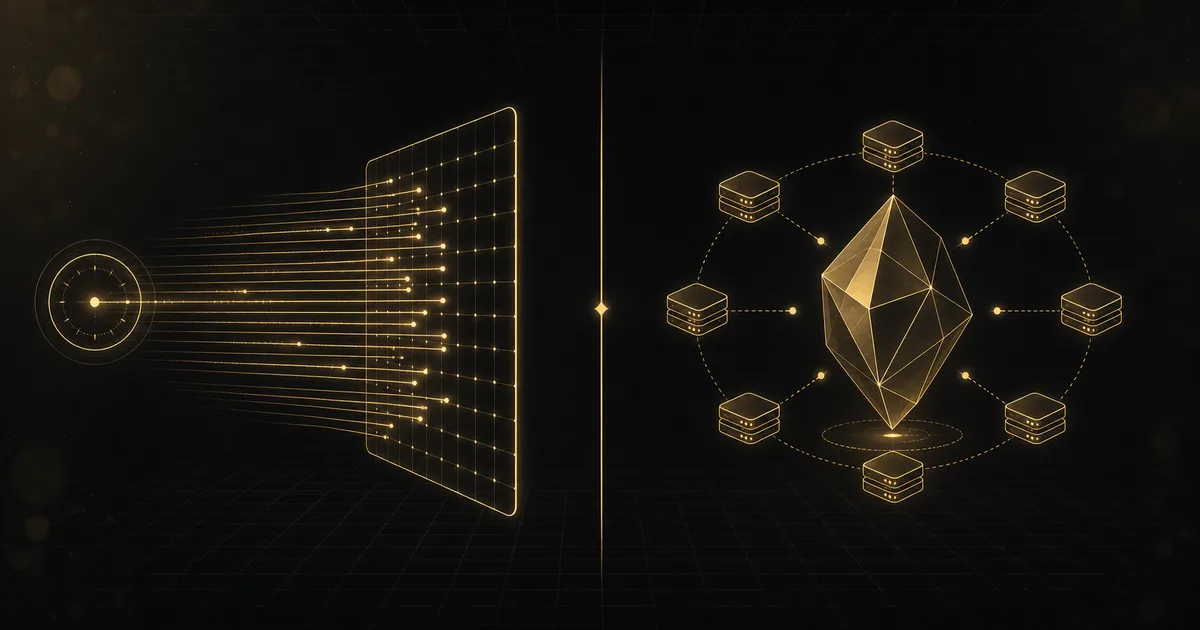
Solana and Ethereum solve scaling in opposite ways. Solana is monolithic and throughput-first: one fast layer, cheaper base fees, staking of about 5.2 per cent before validator commission as of 18 August 2026 and no live slashing — but a documented history of network halts. Ethereum is modular and settlement-first: execution pushed onto rollups, around 2.64 per cent to stakers, and enforced slashing, with no full halt on record.
Neither is the winner. Which one fits you is a matching problem, not a ranking, and this comparison works through the trade-offs — architecture, fees, staking, decentralisation and roadmap — so you can place yourself.
Two philosophies, one decision
Every meaningful difference between these two chains flows from a single design decision, so it is worth starting there rather than with a league table. Solana concentrates execution, settlement and consensus into one high-speed layer and asks every validator to keep pace with a single global state. The pay-off is low base fees and high throughput on one chain; the cost is heavier hardware and a network that shares one fate when something breaks.
Ethereum makes the opposite choice. It keeps its base layer deliberately conservative and widely reproducible, treats that layer as a settlement and consensus anchor, and expects most everyday activity to move outward onto rollups. The pay-off is redundancy, client diversity and an unbroken liveness record; the cost is higher layer-1 fees and more moving parts to reason about.
Those two starting bets — throughput-first versus settlement-first — propagate into fees, staking yield, slashing, reliability and the shape of each ecosystem. Read the sections that follow as a working-out of that split rather than as a scorecard. The goal is not to crown a winner but to help you see which philosophy matches how you actually hold and use crypto, and where holding both makes sense.
Solana vs Ethereum at a glance
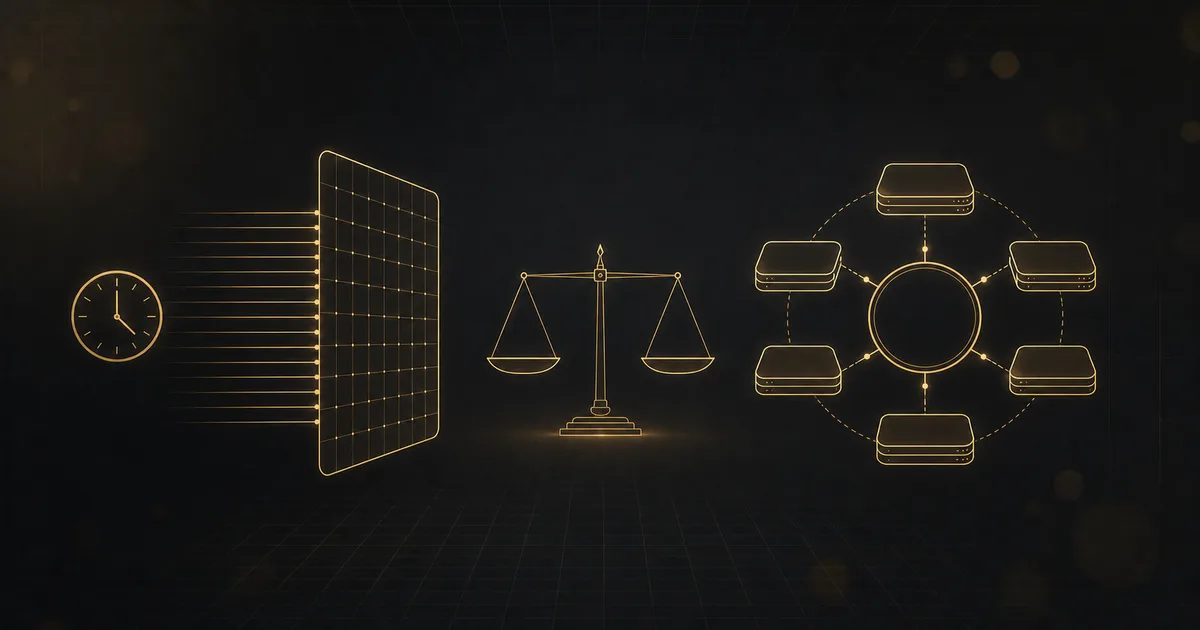
The two chains take opposite structural bets, and most of the practical differences flow from that one choice. The table below sets the headline properties side by side; each row is expanded later on this page, and the staking detail lives on the dedicated Solana staking vs Ethereum staking comparison. Figures are dated where they move.
| Property | Solana | Ethereum |
|---|---|---|
| Architecture | Monolithic high-throughput L1 with a single global state. | Modular L1 for settlement and consensus, with most execution moving to rollups (L2s). |
| Consensus | Proof of Stake with Proof of History as a verifiable clock ordering events before consensus. | Slot-based Proof of Stake (Gasper: Casper-FFG finality plus LMD-GHOST fork choice). |
| Throughput approach | Scales on the base layer: Sealevel parallel execution, Gulf Stream leader forwarding, Turbine block propagation, and no public mempool. | Scales by offloading activity to rollups; the L1 settles and secures, keeping a public mempool. |
| Typical fee | Fixed base fee of 5,000 lamports per signature plus an optional priority fee into scoped local fee markets; cheap at base, higher under contention. | EIP-1559 burned base fee plus a priority tip; L1 gas is materially higher and spikes with demand, so most low-cost activity runs on rollups. |
| Native staking yield | Around about 5.2% before validator commission (as of August 2026). | Around 2.64% base issuance APR, or roughly 3–4% all-in with execution-layer tips and MEV (as of 18 August 2026), compressed as staking participation rose. |
| Slashing | No live protocol-level slashing as of August 2026, so staked SOL cannot be slashed today; downtime and commission still matter. | Slashes staked ETH for three equivocation offences: double block proposal, surround voting, and double voting. |
| Client diversity | Full Firedancer live on mainnet since 12 December 2025 but at a low double-digit stake share (~14%); Frankendancer hybrid ~a quarter, majority Agave-lineage (Agave / Jito-Solana), as of mid-2026. | Multiple mature, independent execution and consensus clients in production. |
| Reliability | A record of dated full-network halts (2020–2024); no officially confirmed full halt since 6 February 2024 (see the public status record). | No full-network halt in its operating history. |
| Spot ETF (US) | BSOL (Bitwise), the first true US spot SOL ETF, launched 28 October 2025 with staking enabled. | US spot ETH ETFs are trading. |
Architecture: two different bets
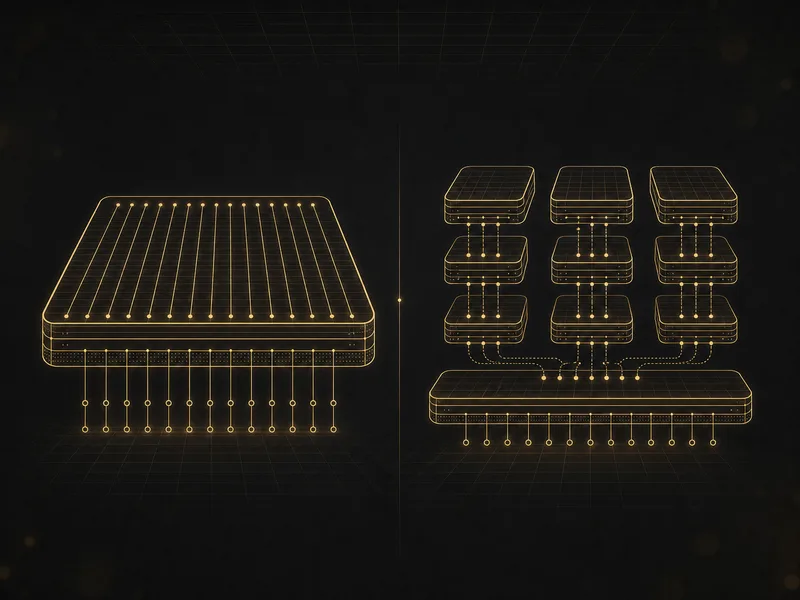
Before comparing yield or fees, it helps to see that Solana and Ethereum are not two attempts at the same design. They are two different bets about where blockchains should spend their complexity, and almost every practical difference an investor notices later traces back to this split.
Solana is monolithic. Execution, settlement and consensus happen in one layer, over a single global state that every validator keeps in sync. To make that fast, Solana leans on a stack of specialised parts. Proof of History acts as a verifiable clock that timestamps and orders events before consensus runs, so validators spend less time agreeing on sequence.
Sealevel executes transactions in parallel whenever they touch non-overlapping accounts, using the hardware you already paid for rather than processing everything single-file. Gulf Stream forwards transactions straight to the known upcoming leader instead of holding them in a public mempool. Turbine then propagates each block as small pieces, called shreds, so no single node has to ship the whole thing.
The bet here is throughput and cost first. If you can order, execute and propagate quickly enough, you can run a high volume of cheap activity on one chain without splitting users across layers. The trade-off is that hardware requirements climb and the whole network shares one fate, which is why Solana's history of dated full-network halts sits on the reliability side of the ledger rather than this one.
Ethereum makes the opposite bet. The base layer is increasingly a settlement and consensus layer, with most execution expected to move onto rollups, the layer-2 chains that batch activity and post proofs or data back to Ethereum. Consensus is slot-based proof of stake, run by Gasper: Casper-FFG supplies finality while LMD-GHOST handles fork choice.
Fees follow EIP-1559, a burned base fee plus an optional priority tip, and layer-1 gas is materially more expensive than Solana's base fee and spikes under demand, which is precisely why cheap activity has migrated to rollups. The bet is settlement assurance and diversity: keep the base layer conservative and widely reproducible, and let execution scale outward rather than upward.
That split shows up sharply in how each chain handles the value that ordering transactions can extract, usually called MEV. Because Ethereum has a public mempool, pending transactions are visible before they are included, which invites public-mempool strategies such as sandwiching. Ethereum's answer is proposer-builder separation, or PBS: specialised builders assemble blocks and compete for the right to have a proposer include them, which moves the extraction into a more structured, auction-like market rather than a free-for-all.
Solana reaches a similar destination by a different road. With Gulf Stream forwarding transactions to the leader and no public mempool to watch, there is nothing to front-run in the Ethereum sense, and there is no in-protocol equivalent of PBS. Instead, MEV is organised off-protocol, chiefly through Jito, whose Block Engine runs a bundle auction so searchers bid to have their ordered transactions included.
The activity exists on both chains; what differs is where it lives. On Ethereum it is a public-mempool phenomenon disciplined by an in-protocol builder market, while on Solana it is a private, off-protocol auction bolted alongside a chain that never exposed a mempool in the first place.
For an investor, none of this decides a winner, because the two chains are optimising for different things. Solana concentrates complexity into one fast layer and asks you to accept shared-fate risk in exchange for low base fees and high throughput. Ethereum spreads complexity across a conservative base and many rollups, asking you to accept higher layer-1 cost and more moving parts in exchange for a settlement layer built around redundancy. The rest of this comparison, from fees to staking to who each chain suits, is largely a working-out of these two starting bets.
Transaction fees and cost model
Fees are where the two chains feel most different day to day, and the gap is not an accident of tuning — it falls out of each chain's architecture. Solana is a monolithic L1 that executes everything on one global machine, so it prices congestion locally, per piece of state. Ethereum is a modular settlement layer that increasingly pushes execution onto rollups, so its L1 prices blockspace globally and expensive activity migrates elsewhere. Understanding the two mechanisms tells you more than any single price snapshot, because those snapshots date quickly.
How Solana charges
Every Solana transaction pays a fixed base fee of 5,000 lamports per signature. Half of that base fee is burned and half goes to the validator. On top of the base fee, a sender can add an optional priority fee, calculated as a compute-unit price multiplied by the compute-unit limit the transaction requests, paid to the validator. The priority fee is a bid for faster inclusion when blockspace is contested.
The important detail is that Solana runs scoped, local fee markets. Congestion is priced per set of accounts a transaction touches, not across the whole chain. A popular mint or a busy trading pair can push priority fees up for transactions writing to that specific state, while unrelated activity elsewhere stays cheap at close to the base fee. There is no single network-wide gas price that every user pays at once.
How Ethereum charges
Ethereum uses EIP-1559: each transaction pays a base fee that is burned, plus a priority tip that goes to the block proposer. The base fee adjusts block by block against a global target for the whole chain, so it rises when overall demand rises and falls when demand eases. There is one base fee for the network at any moment, not a per-account one.
Because settlement blockspace on the L1 is deliberately scarce, gas is materially more expensive than Solana's base fee, and it spikes when demand across the entire chain is high — an in-demand application can raise the base fee that every other user faces in the same block. Ethereum's answer is modular: most cheap, high-frequency activity has moved to rollups (L2s), which batch many transactions and settle proofs or data back to the L1, so the per-user cost users actually see there is far below raw L1 gas.
Why the models diverge
The contrast is local versus global pricing, and it mirrors monolithic versus modular design. Solana keeps execution on one layer and isolates congestion to the state being contested, which keeps unrelated transactions cheap but makes the base layer carry all the load. Ethereum keeps its base layer scarce and global, then scales by moving execution outward to rollups, so the L1 price signals demand for final settlement rather than for everyday transacting.
Neither approach is a free lunch. Solana's low, roughly flat base fee is inexpensive under normal conditions but can climb through priority bidding when a specific market heats up, and the monolithic base layer bears the reliability trade-offs discussed elsewhere on this page. Ethereum's L1 is pricier and its base fee more volatile, but its modular path lets users choose a rollup whose costs suit them while inheriting L1 settlement.
Any specific figure — a fraction of a cent on Solana, a few dollars of L1 gas on Ethereum — is only a snapshot and shifts with demand, so treat quoted costs as dated rather than fixed. What is durable is the shape: Solana prices congestion locally and cheaply on one layer; Ethereum prices settlement globally and scarcely, and offloads cheap activity to rollups. Which suits you depends on whether your activity is high-frequency and cost-sensitive, or settlement-heavy and willing to pay for the L1's assurances.
Staking, yield and the slashing question
Staking is where the two chains diverge most sharply for an income-focused holder — not only in headline yield, but in what you stand to lose. The figures below are nominal and date-stamped; network contention, validator commission and, on Ethereum, the balance of staked supply all move them. Read them as ranges, not fixed quotes.
| Chain | Native yield | Where the yield comes from | Protocol-level slashing |
|---|---|---|---|
| Solana | ~about 5.2% APY before validator commission | Inflation issuance (dominant), plus a share of transaction fees and MEV tips | None live as of August 2026 — staked SOL cannot be slashed today |
| Ethereum | ~2.64% base, ~3–4% all-in (25 July 2026) | Issuance plus execution-layer priority tips and MEV, compressed as staked supply grows | Yes — three equivocation offences are slashable |
Solana's higher nominal figure is inflation-driven: most of a delegator's reward is freshly issued SOL under a disinflation schedule that is still in effect — the SIMD-0228 proposal to cut emissions failed, so issuance was not reduced — topped up by a share of transaction fees and MEV tips. Roughly 69% of the total supply (~437M SOL) is staked, and commission lowers what a delegator actually receives.
Ethereum's lower APR reflects the opposite pressure: issuance is spread across a large and still-growing validator set — around 42.5M ETH, about 34.9% of supply, across ~904k validators as of 31 August 2026 — which compresses the per-validator return below the ~3.5–4% figure commonly cited in 2023–24. Neither number is a promise; both drift with participation.
The sharper difference is slashing. As of August 2026, Solana has no live protocol-level slashing, so staked SOL cannot be slashed today; staked ETH can be slashed for equivocation offences, with the initial penalty reduced under Pectra and a correlation multiplier in mass-slashing events. For an honest solo staker that Ethereum risk is usually minor, but it is a genuine principal-loss risk that Solana staking simply does not carry. The full offence list, penalty maths and correlation detail belong to the dedicated staking comparison, linked above and below.
Treat that as a design difference, not proof that Solana staking is safer overall. Solana trades slashing away and instead carries liveness and outage risk — the network has had dated full halts, most recently a roughly five-hour stop on 6 February 2024 — and single-client risk that is narrowing but not gone, since full Firedancer runs only around 4% of stake, the Frankendancer hybrid about 9%, and about 87% still runs Agave-lineage clients (Agave and Jito-Solana).
Ethereum accepts slashing in exchange for a more diverse client base and, since the Merge, an unbroken liveness record. Which posture suits you depends on whether you weight uptime and simplicity, or protection of principal — the same matching question that runs through the rest of this page.
This row is deliberately compact. For the operational detail it omits — net-of-inflation ("real") yield, lock-ups and warm-up periods, the activation and exit queues, and minimum stake sizes — see the dedicated Solana vs Ethereum staking comparison. For the outage history and single-client exposure behind Solana's side of the trade-off, the Solana risks and reliability satellite covers both as dated case studies.
Decentralisation and reliability trade-offs
Solana's throughput is not free. Processing a single global state at high speed asks more of every validator and, historically, leaned on one dominant node implementation. Weigh these costs directly against Ethereum's slower but more distributed base layer, because they shape how each network behaves when something goes wrong rather than how it performs on a good day.
Client diversity
Client diversity measures how many independent software implementations run the network. If most validators run the same code, a single bug can take the whole network down at once. Solana ran effectively one production client for most of its life. Firedancer, an independent implementation from Jump Crypto, reached full mainnet on 12 December 2025, but as of August 2026 it carries only around 4% of stake; the Frankendancer hybrid — which pairs Firedancer's networking layer with the original execution engine — runs about 9%, and about 87% still runs Agave-lineage clients (Agave and Jito-Solana). The single-client risk is narrowing, not gone.
Ethereum reached meaningful client diversity earlier. Several independent consensus and execution clients each run a share of validators, so a defect in any one implementation is more likely to be contained than to halt the chain. That maturity is a genuine resilience advantage today, and it is the benchmark Solana's client landscape is still working towards.
Reliability and network halts
Solana has a documented history of full-network halts, where the chain stopped producing blocks and required a coordinated validator restart. Confirmed incidents span December 2020, September 2021, three in 2022 (April–May, June and September), February 2023, and a roughly five-hour halt on 6 February 2024. Read as hardening rather than as a solved problem: as of August 2026 there has been no officially confirmed full network halt since 6 February 2024, a streak you can check against the public record at status.solana.com.
That improvement tracks concrete engineering work: the QUIC transport for transaction ingestion, stake-weighted quality of service that prioritises traffic from staked validators, and scoped local fee markets that stop congestion in one popular programme from stalling the entire chain. These changes address the overload conditions behind several earlier stalls. They are mitigations, not a guarantee, and the honest framing is neither "Solana is always down" nor "Solana is fixed".
Ethereum has no comparable record of full-network halts. Its slot-based consensus has continued finalising blocks through demand spikes and client incidents, and that unbroken liveness is a large part of why it remains the default settlement layer for high-value activity. For a reader weighing where to hold value through volatile conditions, this difference in track record matters as much as headline speed.
Node and hardware accessibility
Throughput also sets the price of participation. Solana's high transaction rate demands powerful, well-connected hardware to keep pace, which raises the practical bar for running a validator and tends to concentrate operators among those who can meet it. Ethereum deliberately keeps its per-node requirements modest so that a validator can run on consumer-grade hardware and a home connection; the 32 ETH solo-staking minimum is an economic threshold, not a hardware one. A lower hardware bar supports a larger, more geographically distributed node set, which reinforces the decentralisation and resilience advantages above.
The trade-off is coherent on both sides. Solana buys speed and low fees at the cost of heavier hardware and a still-consolidating client base; Ethereum accepts higher latency and cost to keep participation broad and its liveness record intact. Neither profile is universally better. The right choice depends on whether raw performance or maximal resilience matters more for what you intend to do.
Network evolution and roadmap posture
Neither network is a finished product. Both are mid-upgrade, and the shape of each upgrade says something about the trade-offs investors are being asked to accept. The distinction that matters for a reader deciding between them is timing: what has already shipped and is running in production, versus what has been approved on paper but is still waiting to go live.
Solana: a consensus upgrade awaiting activation
Solana's headline change is Alpenglow (SIMD-0326), a proposed overhaul of the network's consensus mechanism developed by Anza. Validators have approved it by a wide margin — roughly 98% of voted stake — but as of August 2026 it has not activated on mainnet; the rollout is proceeding in phases rather than as a single cutover.
Alpenglow's often-quoted target of around 150 milliseconds to finality is a post-activation goal, not a figure the network is currently delivering. Until activation completes, Solana's live finality characteristics remain governed by its existing Tower BFT and proof-of-history design. A reader comparing the two chains today should treat Alpenglow as a credible, well-supported proposal in progress, not as a feature already priced into the network's current performance.
Ethereum: shipped upgrade, ongoing scaling direction
Ethereum's most recent major protocol upgrade, Fusaka, activated on mainnet on 3 December 2025, headlined by PeerDAS blob-throughput scaling; Pectra (paired with the Electra consensus-layer changes) shipped before it, on 7 May 2025. Both are running in production now — not pending a vote — so Ethereum shipped two major upgrades in 2025 while Solana's Alpenglow still awaits activation.
Ethereum's roadmap direction is scaling through rollups: pushing execution and low-cost activity onto layer-2 networks while the base layer continues to serve as the settlement and consensus anchor, and PeerDAS is a step in exactly that direction. That direction is a continuation of a strategy already under way rather than a single upcoming event, so there is less of a "will it activate" question hanging over near-term Ethereum roadmap claims.
For an investor, the practical difference is what you are being asked to take on faith. Betting on Solana's near-term trajectory today means partly betting on Alpenglow's phased activation going smoothly, since its performance targets are not yet realised. Betting on Ethereum's trajectory means betting on the pace and adoption of an already-live rollup-centric scaling strategy, where the base-layer upgrade itself is behind you rather than ahead. Neither is a reason to avoid either chain — but a reader should distinguish, for both, between what the protocol does today and what its roadmap says it will do next.
Ecosystem, maturity and market access
Ethereum's ecosystem is the older, deeper one. Its DeFi stack — lending markets, decentralised exchanges, and the derivatives and structured-product venues built on top of them — has had years longer to accumulate liquidity, integrations and institutional counterparties, and that depth now sits mostly across a multi-rollup ecosystem (Arbitrum, Optimism, Base and others) rather than on the Ethereum base layer itself. If your interest leans toward lending, staking derivatives, or institutional-grade DeFi with the longest track record, that activity is concentrated on Ethereum and its rollups.
Solana's activity has a different shape: high-throughput consumer apps and DEX trading, where sub-second blocks and low base fees suit rapid on-chain swapping rather than deep collateralised lending. Memecoin and launchpad trading has been a major but sharply volatile driver of that activity, and it is worth treating as a distinct, higher-risk layer of the ecosystem rather than a proxy for Solana's broader usage. If your interest is fast, cheap, high-frequency on-chain activity, that is where Solana's ecosystem is strongest; if you want to gauge its DeFi depth specifically, compare it directly against Ethereum's before assuming parity.
Market access has converged somewhat on both sides. US spot ETH ETFs are already established, giving investors a traditional-brokerage route into ETH exposure. Solana followed later: BSOL, from Bitwise, became the first true US spot SOL ETF, launching 28 October 2025 with staking enabled, alongside SSK, a 1940-Act structured product from REX-Osprey that offers indirect staking exposure and launched earlier, on 2 July 2025. Neither history says anything about ongoing fund flows or institutional demand — only that regulated, exchange-listed access now exists for both assets.
One regulatory point worth flagging for SOL specifically: the SEC alleged in its 2023 lawsuits against Binance and Coinbase that SOL was an unregistered security, a claim that was never adjudicated in court and was unwound in 2025 — so it is best read as a historical allegation, not a settled classification either way.
For investors who want direct exposure to either asset rather than routing through a fund wrapper, a centralised exchange such as OKX or Kraken is a straightforward corridor for buying and holding SOL or ETH alongside standard custody and withdrawal options. Before depositing on either, our full OKX review and Kraken review weigh fees, supported assets and security in detail.
Which chain fits which investor
There is no single winner here, because Solana and Ethereum optimise for different things. The useful question is not which chain is better but which chain matches how you actually invest and use crypto. The profiles below map the design differences covered above onto four common investor types. Most readers will recognise themselves in one of them, or in a blend.
If you are a high-frequency trader, or your interest is in low-cost transactions and consumer-facing applications, Solana tends to fit better. Its base fee is fixed at 5,000 lamports per signature, priority fees bid into scoped local fee markets rather than one chain-wide auction, and parallel execution keeps throughput high.
That cost profile suits frequent on-chain activity, and much of the recent consumer-app activity — high-volume but sharply volatile memecoin and launchpad trading prominent among it — has clustered there, a cheap-transaction advantage that cuts both ways. The trade-off you accept is a younger reliability record and, despite Firedancer now live on mainnet, a single-client-family stake majority that is still narrowing rather than resolved.
If you prioritise settlement assurance, the widest client diversity and the deepest DeFi and institutional base, Ethereum is the closer match. Its modular design settles a large share of activity on rollups while the L1 anchors consensus, it runs several independent execution and consensus clients, and its DeFi ecosystem and staking infrastructure are the most established. You pay for that with materially higher L1 gas under demand — EIP-1559's base fee spikes when blockspace is contested — which is why most low-value activity has migrated to L2s rather than staying on mainnet.
If you are a yield-focused staker, the decision is genuinely two-sided and worth working through carefully. Solana offers a higher nominal staking yield — about 5.2 per cent before validator commission as of 18 August 2026 — and, importantly, has no live protocol-level slashing today, so staked SOL cannot be slashed.
Ethereum pays less — a base protocol APR of about 2.64 per cent as of 18 August 2026 — and does slash staked ETH for equivocation offences, though post-Pectra the initial penalty for an honest solo validator is usually small. Against that, Ethereum offers stronger liveness, while Solana's yield sits alongside outage and single-client risk rather than slashing risk. Nominal yield alone will mislead you here; the net, after commission, validator behaviour and downtime, is what matters. Our dedicated Solana-versus-Ethereum staking comparison works through the operational detail on both sides.
Many investors, in practice, hold both. Diversifying across the two removes the need to pick a single architectural bet: you gain Solana's low-cost throughput and Ethereum's settlement depth and client diversity, and you spread the distinct risks — outage exposure on one side, slashing and higher fees on the other — rather than concentrating them. If you cannot confidently place yourself in one of the first three profiles, holding a position in each while you learn how you actually use them is a reasonable default rather than a fence-sit.
Conclusion: a matching problem
None of this resolves into a single verdict, and that is the honest conclusion rather than a hedge. Solana and Ethereum are answering different questions about how a blockchain should scale, so the right choice depends on which question is yours.
If low, mostly flat fees, high throughput and a higher headline staking yield matter most, and you can live with an outage history and a still-consolidating client base, Solana fits. If client diversity, a slashing-backed security model and the deepest settlement and DeFi base matter more, and you accept higher layer-1 fees and a lower base staking rate, Ethereum fits. Many investors hold both and spread the distinct risks rather than concentrating them.
Put plainly, the decision sorts by temperament as much as by numbers. A cost-sensitive, high-frequency user or a yield-focused staker who accepts operational risk leans towards Solana, where staked SOL carries no live protocol-level slashing today but sits alongside outage history and single-client concentration. A holder who prioritises an unbroken liveness record and the widest client diversity leans towards Ethereum, where slashing is real yet usually minor for an honest solo validator. If you cannot place yourself cleanly on either side, holding a measured position in each while you learn how you actually use them is a defensible default rather than indecision.
Treat every figure on this page as dated. Staking yields, fee levels, stake distribution and client share all drift, so check the current numbers before you act. For the operational detail behind the staking trade-off, see our Solana vs Ethereum staking comparison, and for the wider picture on Solana specifically, the Solana complete guide pulls the cluster together.
Sources & References
- Solana Docs — transaction fees: official reference for the 5,000-lamport base fee, the burn split and priority fees into local fee markets.
- Solana — staking and inflation overview: official overview of delegation, the inflation/disinflation schedule and staking rewards.
- Anza — SIMD-0212: Slashing on Solana: the client team's write-up on the proposed slashing design and why protocol-level slashing is not live today.
- Solana network status: the public record used to verify the halt history and the streak since 6 February 2024.
- Validator Queue: live Ethereum entry and exit queue data underpinning the staking activation/exit points.
- Beaconcha.in: Ethereum beacon-chain explorer for validator count, staked ETH and current APR figures.
- Ethereum.org — gas and EIP-1559: official reference for the burned base fee, priority tip and global fee-market model.
- Ethereum.org — rewards, penalties and slashing: official documentation for the three slashable offences and the post-Electra penalty mechanics.
- Bitwise — Solana Staking ETF (BSOL): issuer announcement for the Bitwise Solana Staking ETF (BSOL), a US spot Solana ETP with staking enabled.
- SEC — 2023 complaint (SEC v. Binance): the primary filing containing the unregistered-security allegation for SOL, later unwound in 2025.
Disclaimer: This comparison is for educational purposes only and does not constitute financial advice. Cryptocurrency investing involves significant risk, and figures such as staking yields, fees and stake distribution move over time. Always conduct your own research and consult a qualified adviser before making investment decisions.
Frequently Asked Questions
- Is Solana cheaper and faster than Ethereum?
- For most everyday transactions, yes. Solana charges a fixed base fee of 5,000 lamports per signature plus an optional priority fee that bids into a scoped local fee market, so it stays cheap at the base and rises only under localised contention. Ethereum's Layer 1 uses EIP-1559 — a burned base fee plus a priority tip — and gas is materially more expensive and spikes under demand, which is why most cheap activity has moved to rollups (Layer 2s). Solana is a single high-throughput chain; Ethereum is a modular settlement layer with execution increasingly on rollups. The honest framing is different architectures, not simply one being faster.
- Can staked SOL be slashed the way staked ETH can?
- No. As of August 2026, Solana has no live protocol-level slashing, so staked SOL cannot be slashed today. Ethereum does slash: it penalises three equivocation offences — double block proposal, surround voting and double voting. Since the Pectra/Electra upgrade (live 7 May 2025) the initial penalty was cut sharply, but a correlation penalty and forced exit still apply, so ETH staking carries a real principal-loss risk that Solana's does not. Read this as a genuine design difference, not proof Solana is safer: Solana trades slashing away but carries liveness, outage and single-client risks instead. The operational detail lives on our staking comparison.
- Does Solana or Ethereum pay more for staking?
- Solana's native staking yield is higher on paper — about 5.2% before validator commission as of August 2026 — versus Ethereum's 2.64% as of 18 August 2026 — but that Ethereum figure is base issuance only, and execution-layer tips and MEV lift a typical all-in return to about 3 to 4%, so on a like-for-like all-in basis the gap is real but narrower than the headline suggests. A higher headline number does not make staking better regardless. Solana's yield is dominated by inflation issuance, so part of it offsets dilution rather than adding real value, and validator commission reduces what you actually receive. Ethereum's lower rate comes with slashing risk and entry and exit queues, while Solana carries outage and single-client risk. Compare the yields alongside those trade-offs on our staking comparison, not in isolation.
- Is Solana more centralised than Ethereum?
- On client diversity, Solana has historically been more concentrated, though the gap is narrowing. Full Firedancer went live on mainnet on 12 December 2025, but it runs only a low single-digit share of stake — around 4% — with the Frankendancer hybrid at roughly 9% and about 87% still on Agave-lineage clients (Agave and Jito-Solana), so single-client risk is reduced rather than eliminated. Ethereum spreads stake across several independent consensus and execution clients. Solana also demands high-performance hardware to keep up with its throughput, which shapes who can run a validator. Both networks are meaningfully decentralised in validator count; the difference is in client software diversity and hardware requirements, not a simple centralised-versus-decentralised split.
- How often does Solana go down now?
- Less than its reputation suggests, though the history is real. Solana had dated full-network halts in December 2020, September 2021, three times in 2022, February 2023 and — most recently — around 6 February 2024, when the network was down for roughly five hours. As of August 2026 there has been no officially confirmed full network halt since 6 February 2024. Hardening since then includes QUIC, stake-weighted quality of service and local fee markets, which target the congestion patterns behind earlier outages. It would be wrong to call reliability solved, but it is also wrong to describe Solana as constantly down. You can check current status on Solana's public status page.
- Are there spot ETFs for both SOL and ETH?
- Yes, both assets have US spot exchange-traded products. For Solana, BSOL from Bitwise launched on 28 October 2025 as the first true US spot SOL ETF with staking enabled, while the earlier SSK from REX-Osprey (2 July 2025) is a 1940-Act structure offering indirect staking exposure rather than a straight spot fund. Ethereum has US spot ETFs alongside Bitcoin's. These points describe the products' status and mechanics only — how they are structured — and are not a comment on flows, assets under management or institutional demand. If a regulated, exchange-traded wrapper matters for how you would hold either asset, both chains now offer one.
- Should I choose Solana or Ethereum for investing?
- Neither is the winner — the right choice depends on which chain matches your priorities. If you weight low, predictable fees, high throughput and a higher headline staking yield, and you accept outage history and current single-client concentration, Solana fits. If you weight client diversity, a slashing-backed security model and a modular rollup-centric roadmap, and you accept higher Layer 1 fees and a lower base staking rate, Ethereum fits. Many investors hold both, because they are answering different questions about how blockchains should scale. Treat this as a matching exercise against your own risk tolerance and time horizon, not a ranking, and let the section-by-section detail above inform where you land.
← Back to Crypto Platform Comparisons
Affiliate Disclosure
This page contains affiliate links. When you sign up through our referral links, we may earn a commission at no additional cost to you. This helps support our platform and allows us to continue providing valuable content and recommendations.
Financial Disclaimer
This content is not financial advice. All information provided is for educational purposes only. Cryptocurrency investments carry significant investment risk, and past performance does not guarantee future results. Always do your own research and consult a qualified financial advisor before making investment decisions.