Essential DeFi Tools for Beginners
A first DeFi position needs four pieces: a wallet that holds the keys, an aggregator that prices the swap, a lending protocol that pays the yield, and a way to see which contracts still hold spending approvals. From wallets to aggregators, lending platforms to educational resources - the tools below cover each step.
Introduction
Decentralised Finance (DeFi) represents one of the most transformative innovations in the cryptocurrency ecosystem, offering financial services without traditional intermediaries like banks, brokers, or exchanges. For beginners the difficulty is mechanical rather than conceptual: every protocol is reached by connecting a wallet whose keys nobody else holds, every action is a signed transaction that settles with no reversal path behind it, and the platforms claiming to offer the best services are not always the ones with the longest audit record — which is why tool selection, rather than strategy, decides how the first months go.
The right tools can make the difference between a successful DeFi experience and costly mistakes that discourage newcomers from exploring this revolutionary financial technology. Understanding which wallets, platforms, aggregators, and educational resources best serve beginner needs is essential for safe and effective participation in decentralised finance while avoiding common pitfalls that can result in significant financial losses.
Professional DeFi participants understand that success in decentralised finance requires more than just access to protocols - it demands comprehensive toolsets that provide portfolio tracking, risk assessment, yield optimisation, and security monitoring capabilities. The most effective DeFi tools for beginners combine user-friendly interfaces with powerful functionality that enables safe exploration of lending, borrowing, trading, and yield farming opportunities without requiring advanced technical knowledge.
DeFi tools have evolved significantly since the ecosystem's early days, transforming from complex, developer-focused interfaces to user-friendly applications that make sophisticated financial operations accessible to mainstream users. This evolution has created opportunities for beginners to participate in advanced financial strategies previously available only to institutional investors and technical experts.
The importance of proper tool selection in DeFi cannot be overstated, as the decentralised nature of these protocols means there are no customer service departments or account recovery options available in traditional finance. Choosing reliable, well-audited tools with strong security track records is essential, because the only recovery mechanism in DeFi is the one built into the tool itself: a seed phrase written down before it is needed, and a record of which contracts have been granted spending approvals.
Modern DeFi tools encompass a wide range of applications, from basic wallet interfaces that enable protocol interaction to sophisticated portfolio management platforms that automate complex strategies. Understanding the purpose and capabilities of different tool categories helps beginners build a comprehensive toolkit that supports their learning journey while providing the functionality needed for effective DeFi participation.
Security considerations are paramount when selecting DeFi tools, as the irreversible nature of blockchain transactions means that mistakes or security breaches can result in permanent loss of funds. Beginner-friendly tools must balance ease of use with robust security features, providing clear guidance and safeguards that help newcomers avoid common mistakes while learning proper DeFi practices.
The DeFi ecosystem in 2025 offers unprecedented opportunities for earning yield, accessing liquidity, and participating in innovative financial products that were previously unavailable to retail investors. However, realising these opportunities requires understanding how to use the right tools effectively while managing the inherent risks associated with experimental financial protocols and smart contract interactions.
This comprehensive guide examines the essential tools that every DeFi beginner should understand, from fundamental wallet selection to advanced analytics platforms that help optimise strategies and manage risks. Each tool recommendation includes practical guidance on setup, usage, and best practices that enable safe and effective DeFi participation for users at all experience levels.
This comprehensive guide examines the best DeFi tools specifically designed for beginners in 2025, focusing on platforms that balance user-friendliness with security, functionality, and educational support. We prioritise tools that minimise technical barriers while maintaining the core principles of decentralisation and self-custody that make DeFi attractive.
The DeFi ecosystem has matured significantly since its early days, with modern platforms offering intuitive interfaces, comprehensive documentation, and safety features that protect users from common mistakes. However, the fundamental responsibility for security and decision-making remains with individual users, making proper tool selection and education critical for success.
From essential wallets that enable DeFi access to swap aggregators that optimise trading costs, lending platforms that generate passive income, and portfolio trackers that monitor performance, each tool category serves specific purposes in building a complete DeFi toolkit. Understanding these categories and selecting appropriate tools within each creates a foundation for safe and profitable DeFi participation.
Security considerations remain paramount in DeFi, where smart contract vulnerabilities, phishing attacks, and user errors can result in permanent asset loss. The tools recommended in this guide prioritise security through audited smart contracts, transparent operations, and user-friendly interfaces that reduce the likelihood of costly mistakes.
Whether you're taking your first steps into DeFi or looking to expand your toolkit with more sophisticated platforms, this guide provides the knowledge needed to make informed decisions about which tools best serve your needs, risk tolerance, and investment objectives in the rapidly evolving decentralised finance landscape.
The regulatory environment for DeFi has evolved significantly, with clearer guidelines emerging that provide better consumer protection while preserving the innovative aspects that make decentralised finance attractive. This regulatory clarity has encouraged institutional participation and provided retail users with greater confidence in platform security and compliance.
Market conditions in 2025 have created unique opportunities for DeFi participation, with improved infrastructure, enhanced security measures, and user-friendly interfaces making decentralised finance more accessible to mainstream users. Understanding how to leverage these improvements while maintaining appropriate risk management is essential for successful DeFi engagement.
The integration of traditional finance principles with DeFi innovation has created hybrid solutions that combine the benefits of decentralisation with the familiarity and safety features that beginners require. These developments have significantly lowered the barriers to entry while maintaining the core advantages that make DeFi a compelling alternative to traditional financial services.
Platform diversity in the DeFi space offers beginners multiple entry points with varying complexity levels, from simple swap interfaces to sophisticated yield farming strategies. Understanding how to progress through these complexity levels systematically enables users to build expertise gradually while minimising risks associated with advanced DeFi strategies that require deeper technical knowledge and market understanding.
Educational resources and community support have become integral components of modern DeFi platforms, with comprehensive tutorials, risk warnings, and user communities providing guidance for newcomers. These resources help bridge the knowledge gap between traditional finance and decentralised protocols, enabling more confident participation in DeFi activities while maintaining awareness of associated risks and best practices.
DeFi Basics for Beginners
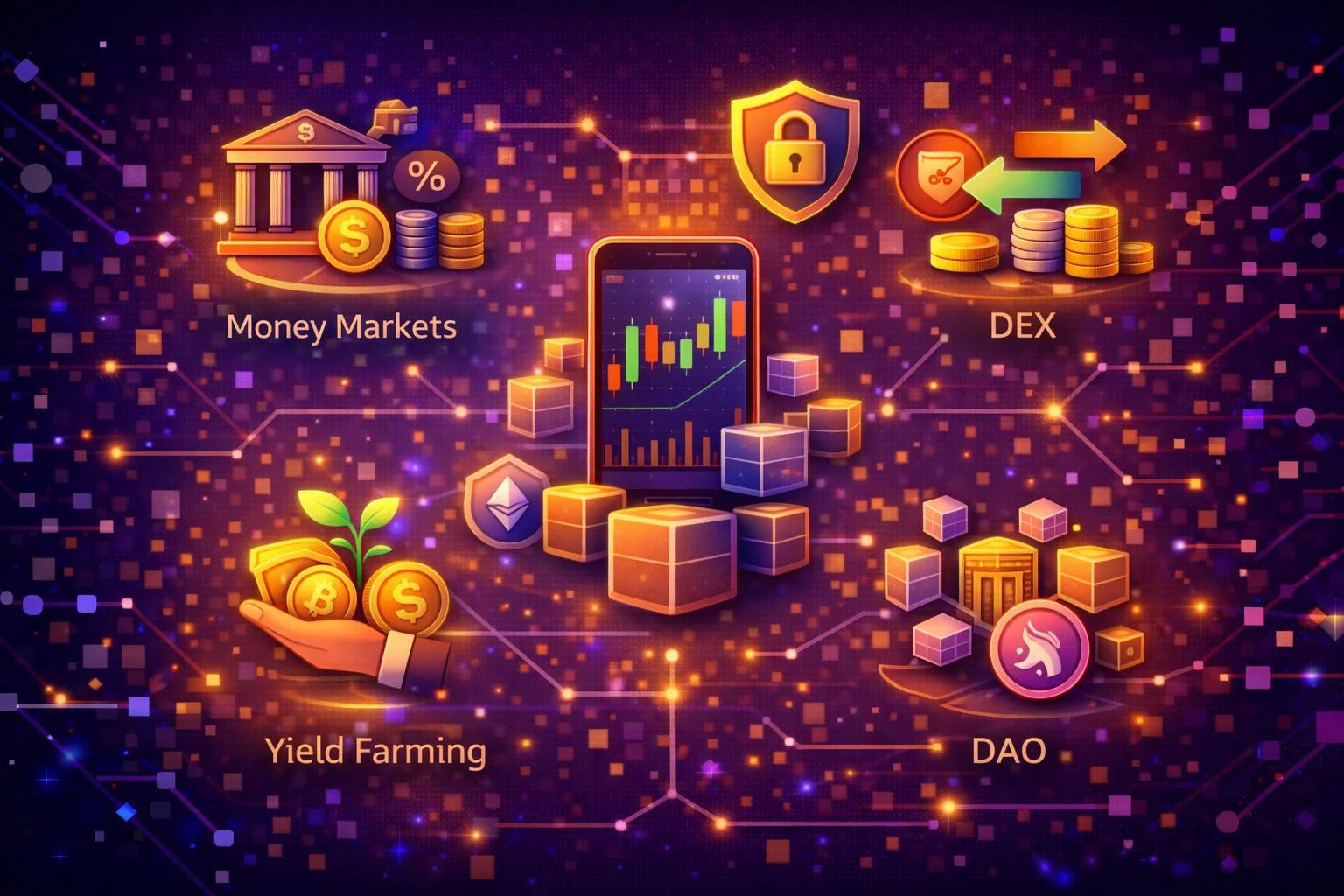
Decentralised Finance (DeFi) represents a paradigm shift from traditional banking to blockchain-based financial services. Understanding the basics helps you choose the right tools and avoid common pitfalls. For a comprehensive introduction, read our complete DeFi guide.
What Makes DeFi Different
- Permissionless: No account approval or credit checks required
- Non-custodial: You maintain control of your assets
- Transparent: All transactions visible on blockchain
- Composable: Protocols can interact with each other
- Global: Available 24/7 worldwide
Key DeFi Concepts
- Smart Contracts: Automated programs that execute financial agreements
- Liquidity Pools: Shared pools of tokens that enable trading
- Liquidity mining: Earning rewards by providing liquidity
- Governance Tokens: Tokens that give voting rights in protocols
- Gas Fees: Transaction costs on blockchain networks
Benefits for Beginners
- Higher Yields: Often better returns than traditional savings
- Financial Inclusion: Access without traditional banking requirements
- Innovation: Access to cutting-edge financial products
- Learning Opportunity: Understand blockchain technology hands-on
Essential DeFi Wallets for Beginners
Your wallet is your gateway to DeFi and serves as your primary interface with decentralised protocols. Choose wallets that balance security, usability, and compatibility with decentralised protocols. The right wallet must already list the blockchain networks a strategy depends on — a protocol living on a chain the wallet does not support is simply unreachable from it — and must expose a seed phrase backup, a password or biometric lock on the app itself, and a DApp connection for reaching protocols directly. Consider factors like multi-chain compatibility, hardware wallet integration, mobile accessibility, and community support when selecting your DeFi wallet solution. For comprehensive wallet security, also read our crypto security guide.
1. MetaMask
The most popular DeFi wallet with extensive protocol support. For detailed setup instructions, see our hardware wallet security guide. Key features:
- Platforms: Browser extension, mobile app
- Networks: Ethereum, Polygon, BSC, Avalanche, and more
- Features: Built-in token swaps, hardware wallet integration
- Best For: Beginners wanting maximum compatibility
- Security: Seed phrase backup, password protection
2. Trust Wallet
Mobile-first wallet with excellent DeFi integration. Learn more about mobile wallet security in our mobile wallet security guide:
- Platforms: Mobile app (iOS/Android)
- Networks: 100+ blockchains supported
- Features: Built-in DApp browser, staking, NFT support
- Best For: Mobile-first users
- Security: Biometric locks, secure enclave storage
3. Coinbase Wallet
User-friendly wallet from the established exchange:
- Platforms: Mobile app, browser extension
- Networks: Ethereum, Polygon, Avalanche, BSC
- Features: Easy onboarding, DApp browser, cloud backup
- Best For: Coinbase users transitioning to DeFi
- Security: Biometric authentication, secure backup
4. Rabby Wallet
Security-focused wallet with advanced features:
- Platforms: Browser extension
- Networks: Multi-chain with automatic switching
- Features: Transaction simulation, security warnings
- Best For: Security-conscious users
- Security: Pre-transaction security checks, phishing protection
Wallet Setup Best Practices
- Secure Backup: Write down seed phrase offline
- Strong Password: Use unique, complex passwords
- Regular Updates: Keep wallet software current
- Test Transactions: Start with small amounts
- Hardware Integration: Connect hardware wallet for large amounts

DeFi Swap Aggregators
Aggregators find the best prices across multiple decentralised exchanges, saving you money and time.
1. 1inch
Leading DEX aggregator with advanced routing. For direct trading, you can also start trading on Uniswap:
- Networks: Ethereum, BSC, Polygon, Arbitrum, Optimism
- Features: Best price routing, gas optimisation, limit orders
- Benefits: Often 10-20% better prices than single DEXes
- Interface: Clean, beginner-friendly design
- Advanced: Chi gas token, pathfinder algorithm
2. Velora (formerly ParaSwap)
Multi-chain aggregator with deep liquidity:
- Networks: Ethereum, Polygon, BSC, Avalanche
- Features: Multi-path routing, MEV protection
- Benefits: Competitive rates, low slippage
- Interface: Professional trading interface
- Advanced: ParaSwapPool for better rates
3. Matcha (0x)
User-friendly aggregator by 0x Protocol:
- Networks: Ethereum, Polygon, BSC
- Features: Simple interface, professional routing
- Benefits: No fees, MEV protection
- Interface: Beginner-focused design
For detailed platform comparisons and DeFi strategies, explore our DeFi protocol comparison.
Using Aggregators Safely
- Verify URLs: Always use official websites
- Check Slippage: Set appropriate slippage tolerance
- Review Transactions: Confirm details before signing
- Gas optimisation: Use gas trackers for optimal timing
- Token Approvals: Understand approval transactions
Beginner-Friendly Lending Platforms
DeFi lending allows you to earn interest on deposits or borrow against collateral. Start with established protocols. For detailed analysis of lending platforms, see our crypto lending risks guide.
1. Aave
Leading DeFi lending protocol with innovative features:
- Networks: Ethereum, Polygon, Avalanche, Arbitrum
- Assets: 30+ cryptocurrencies supported
- Features: Flash loans, rate switching, collateral swapping
- Yields: 2-6% on major assets, variable rates
- Safety: Multiple audits, $12B+ TVL across chains
2. Compound
Simple, reliable lending protocol:
- Networks: Ethereum mainnet
- Assets: 15+ major cryptocurrencies
- Features: Straightforwards lending and borrowing
- Yields: 1-5% on supported assets
- Safety: Battle-tested, strong governance
3. Sky, formerly MakerDAO (savings on stablecoin holdings)
Earn yield on DAI stablecoin:
- Networks: Ethereum mainnet
- Assets: DAI stablecoin only
- Features: Simple DAI deposits for yield
- Yields: 3-8% on DAI deposits
- Safety: decentralised, over-collateralised
Lending Safety Tips
- Start Small: Begin with small amounts to learn
- Understand Risks: Smart contract and liquidation risks
- Monitor Health: Watch collateral ratios if borrowing
- Diversify: Don't put all funds in one protocol
- Stay Informed: Follow protocol updates and governance
Portfolio Tracking Tools
Track your DeFi positions across multiple protocols and chains with these comprehensive tools.
1. DeBank
Comprehensive DeFi portfolio tracker:
- Features: Multi-chain tracking, protocol positions, NFTs
- Networks: 20+ blockchains supported
- Interface: Clean, professional dashboard
- Benefits: Real-time updates, detailed analytics
- Advanced: Transaction history, profit/loss tracking
2. Zapper
User-friendly DeFi dashboard and portfolio manager:
- Features: Portfolio overview, DeFi farming tracking
- Networks: Ethereum, Polygon, BSC, Avalanche
- Interface: Intuitive, beginner-friendly
- Benefits: Easy position management, gas tracking
- Advanced: Zap in/out of complex positions
3. Zerion
Mobile-first DeFi portfolio tracker:
- Features: Portfolio tracking, DeFi interactions
- Networks: Multi-chain support
- Interface: Mobile app and web interface
- Benefits: Real-time notifications, clean design
- Advanced: Built-in wallet functionality
4. Revoke.cash
Essential security tool for managing token approvals:
- Features: View and revoke token approvals
- Networks: 40+ blockchains supported
- Interface: Simple, security-focused
- Benefits: Prevent unauthorised token access
- Security: Essential for DeFi safety

DeFi Educational Resources
Learn DeFi concepts, smart contracts, and best practices through these interactive and comprehensive resources.
Interactive Learning Platforms
1. CryptoZombies
- Focus: Smart contract development
- Format: Interactive coding lessons
- Level: Beginner to intermediate
- Benefits: Hands-on Solidity learning
2. Chainshot
- Focus: Ethereum development
- Format: Practical coding bootcamp
- Level: Intermediate to advanced
- Benefits: Real-world project experience
3. LearnWeb3
- Focus: Comprehensive Web3 education
- Format: Structured learning tracks
- Level: All levels
- Benefits: Complete curriculum, community support
Educational Content
1. Bankless Academy
- Focus: DeFi concepts and strategies
- Format: Articles, videos, courses
- Level: Beginner to advanced
- Benefits: Comprehensive DeFi education
2. Finematics
- Focus: DeFi concepts explained
- Format: Educational videos
- Level: Beginner to intermediate
- Benefits: Clear explanations, visual learning
DeFi Security Tools
Protect your DeFi investments with these essential security tools and practices.
Transaction Security
1. Tenderly
- Features: Transaction simulation and debugging
- Benefits: Preview transaction outcomes
- Use Case: Test complex DeFi interactions
2. Pocket Universe
- Features: Real-time transaction warnings
- Benefits: Prevent malicious transactions
- Use Case: Browser extension for safety
Smart Contract Analysis
1. DeFiSafety
- Features: Protocol safety scores
- Benefits: Evaluate protocol security
- Use Case: Research before investing
2. CertiK
- Features: Smart contract audits
- Benefits: Professional security analysis
- Use Case: Verify protocol audits
Security Best Practices
- Hardware Wallets: Use for large amounts
- Separate Wallets: Different wallets for different purposes
- Regular Audits: Check approvals and positions regularly
- Stay Updated: Follow security news and updates
- Start Small: Test with small amounts first
Getting Started with DeFi: Step-by-Step Guide
Follow this comprehensive guide to enter the DeFi ecosystem safely.
Phase 1: Setup and Preparation
- Choose a Wallet: Start with MetaMask or Trust Wallet
- Secure Your Wallet: Write down seed phrase offline
- Get ETH: Purchase ETH for gas fees
- Learn Basics: Understand gas, transactions, approvals
- Test Transactions: Send small amounts between wallets
Phase 2: First DeFi Interactions
- Try Swapping: Use 1inch to swap small amounts
- Explore Lending: Deposit stablecoins on Aave
- Track Portfolio: Connect wallet to DeBank
- Learn Continuously: Follow DeFi education resources
- Join Communities: Participate in DeFi discussions
Phase 3: Advanced Strategies
- Yield generation: Explore liquidity provision
- Multi-Chain: Use protocols on different networks
- Governance: Participate in protocol governance
- Risk Management: Diversify across protocols
- Stay Informed: Follow protocol updates and news
Advanced DeFi Tools for Growing Users
As you become more comfortable with DeFi basics, these advanced tools can help optimise your strategies and access more sophisticated opportunities.
Yield Optimisation Tools
1. Yearn Finance
- Purpose: Automated farming protocols strategies
- Features: Vault strategies, automated compounding
- Benefits: Professional strategy management, gas optimisation
- Risk Assessment: Medium - smart contract risk
- Best For: Users wanting passive yield optimisation
2. Convex Finance
- Purpose: Boost Curve Finance yields
- Features: Enhanced CRV rewards, simplified staking
- Benefits: Higher yields on Curve positions
- Risk Rating: Medium - protocol dependency
- Best For: Curve liquidity providers
3. Beefy Finance
- Purpose: Multi-chain yield optimisation
- Features: Auto-compounding vaults across chains
- Benefits: Cross-chain opportunities, automated management
- Risk Factor: Medium - multi-chain complexity
- Best For: Multi-chain yield farmers
Analytics and Research Tools
1. DeFiLlama
- Purpose: DeFi protocol analytics
- Features: TVL tracking, yield comparisons, protocol data
- Benefits: Comprehensive market overview
- Use Case: Research and due diligence
2. Token Terminal
- Purpose: DeFi protocol fundamentals
- Features: Revenue, fees, and usage metrics
- Benefits: Fundamental analysis tools
- Use Case: Investment research
3. Dune Analytics
- Purpose: Custom blockchain analytics
- Features: SQL queries, custom dashboards
- Benefits: Deep data analysis capabilities
- Use Case: Advanced research and tracking
Protocol analytics covers fundamentals, but most DeFi beginners also need a charting tool to read price action alongside on-chain metrics. Our first-chart walkthrough for technical analysis beginners opens TradingView with a clean BTC/USDT layout in under ten minutes — enough to read what DeFiLlama and Token Terminal show numerically.
Trading and Arbitrage Tools
1. DeFiSaver
- Purpose: Position management and automation
- Features: Automated liquidation protection, position optimisation
- Benefits: Risk management, gas savings
- Use Case: Managing leveraged positions
2. Instadapp
- Purpose: DeFi position management
- Features: Cross-protocol interactions, batch transactions
- Benefits: Simplified complex operations
- Use Case: Advanced DeFi strategies
Beginner DeFi Strategies
Start with these proven strategies to build experience and generate returns while managing risk appropriately. For advanced strategies, check our DeFi risks guide.
Conservative Strategies (Low Risk)
Stablecoin Lending
- Strategy: Lend USDC/USDT on Aave or Compound
- Potential Returns: 2-6% APY
- Risk Rating: Low - smart contract risk only
- Minimum Investment: $500+ (consider gas fees)
- Time Required: Minimal - set and forget
Blue-Chip Token Lending
- Strategy: Lend ETH/BTC on established platforms
- Typical APY: 1-4% APY
- Risk Assessment: Low-Medium - price volatility + smart contract risk
- Starting Amount: $1000+ for meaningful returns
- Time Investment: Low - occasional monitoring
Moderate Strategies (Medium Risk)
Stablecoin Liquidity Provision
- Strategy: Provide USDC/USDT liquidity on Curve
- Expected Yield: 3-8% APY
- Risk Profile: Medium - impermanent loss, smart contract risk
- Capital Required: $1000+ for efficiency
- Management Time: Medium - regular monitoring needed
Single-Asset liquidity mining
- Strategy: Stake tokens in single-asset pools
- Expected Yield: 5-15% APY
- Risk Category: Medium - token price risk, smart contract risk
- Capital Required: $500+ depending on network
- Active Time: Medium - active management required
Advanced Strategies (Higher Risk)
Leveraged DeFi farming
- Strategy: Borrow to increase farming positions
- Expected Yield: 10-30% APY (highly variable)
- Risk Factor: High - liquidation risk, multiple protocol risk
- Capital Required: $2000+ for safe leverage ratios
- Time Commitment: High - constant monitoring required
Cross-Chain Arbitrage
- Strategy: Exploit price differences across chains
- Expected Yield: Variable - depends on opportunities
- Risk Exposure: High - bridge risk, timing risk
- Capital Required: $5000+ for meaningful profits
- Time Commitment: Very High - active trading required
DeFi Networks Comparison
Different blockchain networks offer varying advantages for DeFi activities. Choose networks based on your needs and budget. For more details on network selection, see our Layer 2 guide.
Ethereum Mainnet
- Advantages: Largest ecosystem, most protocols, highest liquidity
- Disadvantages: Gas fees higher than on Layer 2s, though far lower since the Dencun upgrade — typically well under $5 per transaction, occasionally more at peak congestion
- Best For: Large transactions, established protocols
- Popular Protocols: Aave, Compound, Uniswap, Sky
- Minimum Recommended: $100+ (gas costs are modest since the Dencun upgrade)
Polygon (Matic)
- Advantages: Low fees ($0.01-0.10), fast transactions, Ethereum compatibility
- Disadvantages: Smaller ecosystem, bridge risks
- Best For: Beginners, small amounts, frequent transactions
- Popular Protocols: Aave, QuickSwap, Curve, Balancer
- Minimum Recommended: $100+ perfect for learning
Arbitrum
- Advantages: Lower fees than Ethereum, high security, growing ecosystem
- Disadvantages: Smaller than Ethereum, withdrawal delays
- Best For: Ethereum users wanting lower fees
- Popular Protocols: GMX, Camelot, Aave
- Minimum Recommended: $500+ for meaningful activity
Optimism
- Advantages: Low fees, Ethereum security, OP token rewards
- Disadvantages: Limited ecosystem compared to Ethereum
- Best For: Users wanting Ethereum security with lower costs
- Popular Protocols: Velodrome, Synthetix, Beethoven X
- Minimum Recommended: $300+ for good experience
Avalanche
- Advantages: Fast transactions, low fees, growing ecosystem
- Disadvantages: Different from Ethereum, smaller community
- Best For: Users wanting speed and low costs
- Popular Protocols: LFJ (formerly Trader Joe), Benqi
- Minimum Recommended: $200+ for exploration
Network Selection Guide
- Budget Under $500: Start with Polygon for learning
- Budget $500-2000: Arbitrum or Optimism for better yields
- Budget Over $2000: Ethereum mainnet for maximum opportunities
- Multi-Chain: Diversify across networks for risk management
Practical DeFi Examples for Beginners
Real-world examples showing how to implement DeFi strategies step-by-step. For portfolio management strategies, also read our portfolio strategies guide.
Example 1: First DeFi Experience ($200 Budget)
Goal: Learn DeFi basics with minimal risk
Step-by-Step Process
- Setup: Install MetaMask, add Polygon network
- Funding: Buy $200 USDC on Coinbase, bridge to Polygon
- First Interaction: Deposit $100 USDC on Aave Polygon
- Learning: Use remaining $100 to try swaps on QuickSwap
- Tracking: Connect wallet to DeBank to monitor positions
Expected Outcomes
- Learning: Understand wallets, transactions, gas fees
- Yield: Earn 3-5% APY on USDC deposit
- Cost: ~$5-10 in total fees
- Time: 2-3 hours for complete setup
Example 2: Intermediate Strategy ($1000 Budget)
Goal: Diversified DeFi portfolio with moderate risk
Portfolio Allocation
- 40% ($400): USDC lending on Aave (Polygon)
- 30% ($300): ETH lending on Compound (Ethereum)
- 20% ($200): USDC/USDT LP on Curve (Polygon)
- 10% ($100): Experimental protocols (learning budget)
Expected Results
- Annual Yield: 4-7% blended APY
- Risk Grade: Low-Medium
- Management: Monthly rebalancing
- Learning: Multi-protocol experience
Example 3: Advanced Multi-Chain ($5000 Budget)
Goal: maximise yields across multiple networks
Multi-Chain Strategy
- Ethereum (40% - $2000): Blue-chip DeFi platforms
- Arbitrum (25% - $1250): GMX staking and LP positions
- Polygon (20% - $1000): High-yield farming opportunities
- Avalanche (15% - $750): Native protocol participation
Management Requirements
- Time Commitment: 5-10 hours per week
- Tools Needed: Multiple wallets, portfolio trackers
- Skills Required: Bridge usage, cross-chain operations
- Risk Management: Position limits, stop-losses
Common DeFi Mistakes to Avoid
Learn from others' mistakes to protect your investments and avoid costly errors. For additional security tips, see our hardware wallet security guide.
Security Mistakes
- Phishing Sites: Always verify URLs before connecting wallets
- Unlimited Approvals: Set limited token approvals when possible
- Public Wi-Fi: Never access DeFi on unsecured networks
- Seed Phrase Sharing: Never share or store seed phrases digitally
- Fake Tokens: Verify token contracts before interacting
- Suspicious Links: Don't click links in Discord/Telegram
Financial Mistakes
- FOMO Investing: Don't chase high APY without understanding risks
- Ignoring Gas Fees: Factor gas costs into profitability calculations
- Over-Leveraging: Avoid excessive borrowing and liquidation risk
- No Diversification: Don't put all funds in one protocol
- Impermanent Loss Ignorance: Understand LP risks before providing liquidity
- Yield Chasing: Don't constantly move funds for small yield differences
Technical Mistakes
- Wrong Networks: Verify you're on the correct blockchain
- High Slippage: Set appropriate slippage for large trades
- Expired Transactions: Check transaction deadlines
- Contract Interactions: Understand what contracts you're interacting with
- Bridge Risks: Understand cross-chain bridge security
- Gas Price Errors: Set appropriate gas prices for transaction priority
Learning Mistakes
- Skipping Research: Always research protocols before using
- Ignoring Updates: Stay informed about protocol changes
- No Testing: Test with small amounts before large investments
- Isolation: Join communities and learn from others
- Overconfidence: Don't assume you understand everything quickly
- No Documentation: Keep records of all transactions and strategies
Risk Management Mistakes
- No Exit Strategy: Plan how to exit positions before entering
- Ignoring Correlations: Understand how your positions relate to each other
- No Position Sizing: Don't risk more than you can afford to lose
- Emotional Decisions: Stick to your strategy during market volatility
- No Backup Plans: Have contingency plans for various scenarios
Real-World Beginner Success Stories
Complete Beginner: Lisa's First Month in DeFi
Lisa, a 28-year-old teacher with no crypto experience, started her DeFi journey in January 2025 with $500 and basic tools.
Tool Setup:
- MetaMask wallet (free) - Primary DeFi access
- Zerion (free) - Portfolio tracking
- Revoke.cash (free) - Security audits
- Total investment: $500 + $0 in tools
First Month Results:
- Week 1: Set up MetaMask, bought $500 USDC on Coinbase
- Week 2: Deposited $300 USDC in Aave on Polygon (4% APY)
- Week 3: Provided $200 liquidity to Uniswap V3 (earned $8 in fees)
- Week 4: Portfolio value: $512 (2.4% gain + learning experience)
Key Learnings: Lisa learnt about gas fees, smart contract approvals, and yield generation. Her conservative approach with established protocols and free tools provided safe entry into DeFi.
Tech-Savvy Beginner: Mark's Aggressive Start
Mark, a 32-year-old software developer, dove into DeFi with $2,000 and more advanced tools after 2 weeks of research.
Advanced Setup:
- MetaMask + Rabby wallet (free) - Multi-wallet strategy
- Zapper (free) - Advanced portfolio management
- DeBank (free) - Cross-chain tracking
- Dune Analytics (free) - Protocol research
Three-Month Journey:
- Month 1: Aave lending + Curve stablecoin pools ($2,000 → $2,080)
- Month 2: Added Uniswap V3 LP positions ($2,080 → $2,240)
- Month 3: Discovered Pendle yield trading ($2,240 → $2,520)
- Total return: 26% in 3 months
Success Factors: Mark's technical background helped him understand smart contracts. He used free analytics tools to research protocols and gradually increased complexity as he gained confidence.
Conservative Beginner: Sarah's Stablecoin Strategy
Sarah, a 45-year-old accountant, wanted DeFi yields without crypto volatility. She started with only stablecoins, $5,000 in total.
Minimal Tool Stack:
- Coinbase Wallet (free) - Simple interface
- Zerion (free) - Portfolio tracking
- Focus: Stablecoin yields only
Six-Month Results:
- Aave USDC lending: $3,000 at 4% APY = $60 earned
- Curve 3pool: $2,000 at 6% APY = $60 earned
- Total earnings: $120 (4.8% annualised)
- Zero volatility exposure, zero losses
Risk Management: Sarah's stablecoin-only approach eliminated price risk while generating better yields than traditional savings accounts. Her conservative strategy built confidence for future DeFi exploration.
Student Beginner: Alex's $100 Learning Experience
Alex, a 22-year-old student, started with just $100 to learn DeFi basics on Polygon (low gas fees).
Budget Setup:
- MetaMask (free) - Polygon network
- QuickSwap (free) - Polygon DEX
- Beefy Finance (free) - Auto-compounding
- Total investment: $100
Learning Journey:
- Week 1-2: Swapped tokens, learnt about slippage ($100 → $98)
- Week 3-4: Provided liquidity, earned fees ($98 → $102)
- Month 2-3: Auto-compounding strategies ($102 → $115)
- Total: 15% gain + invaluable experience
Value Beyond Returns: Alex's $100 investment taught him DeFi mechanics without significant risk. The hands-on experience prepared him for larger investments as his budget grew.
Market Dynamics and Economic Factors
Institutional DeFi Infrastructure Development
Professional cryptocurrency institutions require sophisticated DeFi tools that integrate with existing financial infrastructure while maintaining regulatory compliance and institutional-grade security standards. These advanced platforms provide comprehensive risk management frameworks, automated compliance reporting, and sophisticated portfolio management capabilities designed specifically for institutional cryptocurrency operations and professional trading environments.
Institutional DeFi platforms implement advanced authentication systems, multi-signature wallet integration, and comprehensive audit trails that meet regulatory requirements for professional financial services. These systems enable institutional users to access DeFi yield opportunities while maintaining the security, compliance, and operational standards required for professional cryptocurrency management and institutional investment strategies.
Regulatory Environment Evolution
DeFi accessibility improves through simplified user interfaces and educational resources designed for newcomers. Beginner-friendly protocols prioritise security audits and transparent documentation to build user confidence in decentralised finance. Regulatory clarity enables institutional participation through compliant DeFi tools that bridge traditional finance with decentralised protocols.
Professional DeFi implementations require comprehensive compliance frameworks that address anti-money laundering requirements, know-your-customer procedures, and regulatory reporting obligations. Advanced DeFi platforms integrate compliance monitoring systems, transaction screening capabilities, and automated reporting tools that enable professional users to participate in decentralised finance while maintaining regulatory compliance and institutional standards.
Institutional Adoption Impact
Traditional financial institutions developing DeFi tools create bridges between conventional banking and decentralised finance, offering familiar interfaces for mainstream users. This institutional involvement accelerates DeFi adoption while maintaining user-friendly experiences for cryptocurrency beginners. Professional-grade DeFi platforms provide enterprise-level security, compliance, and operational capabilities required for institutional cryptocurrency management.
Enterprise DeFi solutions integrate with existing financial systems through sophisticated API frameworks, automated settlement systems, and comprehensive risk management protocols. These professional platforms enable institutional users to access DeFi opportunities while maintaining the operational efficiency, security standards, and regulatory compliance required for professional cryptocurrency operations and institutional investment management.
Technology Innovation Cycles
DeFi tool development prioritises simplification of complex protocols through intuitive user interfaces and automated strategies. Innovation focuses on reducing technical barriers while preserving the decentralised nature and yield opportunities that make DeFi attractive to users. Advanced DeFi platforms implement sophisticated automation systems that optimise yield generation while minimising operational complexity for professional users.
Professional DeFi platforms leverage advanced algorithmic trading systems, automated rebalancing mechanisms, and sophisticated risk management protocols to optimise investment performance while minimising operational overhead. These systems enable institutional users to access complex DeFi strategies through simplified interfaces that maintain professional-grade security and operational efficiency standards.
Technical Implementation and Advanced Strategies
Mastering DeFi tools requires understanding smart contract interactions, gas optimisation, and protocol mechanics. Beginners can gradually develop these technical skills through guided experiences, educational resources, and careful experimentation with small amounts to build confidence and expertise.
Protocol-Level Considerations
DeFi protocols operate across multiple blockchain networks, each offering different advantages in terms of transaction costs, speed, and available liquidity. Ethereum provides the most mature DeFi ecosystem but higher fees, while alternative networks like Polygon, Arbitrum, and Binance Smart Chain offer lower costs but potentially different security assumptions and protocol availability.
Advanced DeFi implementations require a comprehensive understanding of cross-chain bridge mechanisms, layer-2 scaling solutions, and interoperability protocols, because no asset crosses between blockchain networks on its own: a bridge contract sits between the two chains, the crossing is a transaction that costs gas like any other, and the bridge's own security assumptions are added to those of the protocol waiting at the far end. Professional users leverage sophisticated bridge protocols, automated cross-chain arbitrage systems, and multi-chain portfolio management tools to optimise yield opportunities across diverse blockchain ecosystems while managing associated risks and operational complexity.
Smart Contract Integration and Security Protocols
Professional DeFi implementations require sophisticated smart contract integration strategies that address security vulnerabilities, gas optimisation, and protocol interoperability challenges. Advanced users employ comprehensive smart contract auditing procedures, automated security monitoring systems, and sophisticated risk assessment frameworks to evaluate protocol security and minimise exposure to smart contract vulnerabilities and protocol risks.
Enterprise-grade DeFi platforms implement advanced smart contract interaction protocols that include transaction simulation, automated security checks, and comprehensive risk assessment procedures. These systems enable professional users to interact with complex DeFi protocols while maintaining institutional-grade security standards and minimising exposure to smart contract risks through systematic security protocols and automated monitoring systems.
Yield Optimisation Techniques and Advanced Strategies
Professional yield optimisation requires sophisticated algorithmic strategies that continuously monitor yield opportunities across multiple DeFi protocols, automatically reallocating capital to maximise returns while managing risk exposure and operational complexity. Advanced yield optimisation platforms employ machine learning algorithms, predictive analytics, and sophisticated mathematical models to identify optimal yield opportunities and execute complex rebalancing strategies automatically.
Institutional yield optimisation strategies incorporate advanced risk management frameworks that address impermanent loss, smart contract risks, and market volatility through sophisticated hedging mechanisms and diversification strategies. Professional platforms implement automated risk monitoring systems, dynamic position sizing algorithms, and comprehensive portfolio optimisation tools that enable institutional users to maximise yield generation while maintaining appropriate risk management and operational efficiency standards.
Advanced Considerations and Professional Implementation
Mastering DeFi tools requires understanding protocol mechanics, smart contract interactions, and yield optimisation strategies. Beginners should focus on learning fundamental concepts like liquidity provision, governance participation, and risk assessment before advancing to complex multi-protocol strategies and automated yield farming techniques.
Starting with essential tools like MetaMask for wallet functionality, 1inch for optimised swapping, and Aave for lending provides a solid foundation for exploring DeFi opportunities while learning fundamental concepts through hands-on experience. These platforms have proven themselves through extensive use, security audits, and community trust, making them reliable choices for beginners taking their first steps into decentralised finance.
The importance of education cannot be overstated in DeFi, where user errors can result in permanent asset loss and smart contract vulnerabilities create ongoing risks. utilising educational resources, following security best practices, and starting with small amounts allows beginners to build knowledge and confidence gradually while minimising potential losses during the learning process.
Portfolio tracking tools like DeBank and security tools like Revoke.cash serve essential functions in maintaining awareness of your DeFi positions and protecting against common attack vectors. These tools help beginners develop good habits around monitoring their investments and maintaining security hygiene that becomes increasingly important as portfolio values grow.
The DeFi ecosystem continues to evolve rapidly, with new protocols, features, and opportunities emerging regularly alongside new risks and challenges. Staying informed through reliable sources, participating in educational communities, and maintaining a cautious approach to new platforms helps beginners navigate this dynamic environment successfully while avoiding common pitfalls that can derail their DeFi journey.
Remember that DeFi success comes from understanding the underlying principles, using appropriate tools, and maintaining disciplined risk management rather than chasing the highest yields or most complex strategies. By building a solid foundation with the tools and practices outlined in this guide, beginners can participate in DeFi safely and effectively while positioning themselves for long-term success in the decentralised finance ecosystem.
Advanced DeFi Strategies for Beginners
Liquidity Mining and Yield Optimisation
Liquidity mining represents one of the most sophisticated yet accessible DeFi strategies for generating passive income through cryptocurrency holdings. This process involves providing liquidity to decentralised exchanges and automated market makers in exchange for trading fees and governance tokens. Understanding liquidity mining mechanics enables beginners to optimise their cryptocurrency holdings while contributing to DeFi protocol functionality and ecosystem growth.
Advanced liquidity mining strategies include impermanent loss mitigation techniques, yield farming across multiple protocols, and sophisticated portfolio rebalancing mechanisms. Successful liquidity providers employ comprehensive risk management frameworks that account for smart contract risks, token price volatility, and protocol governance changes that may affect reward structures and investment returns.
Yield optimisation platforms automate complex liquidity mining strategies through sophisticated algorithms that continuously monitor yield opportunities across multiple DeFi protocols. These platforms employ advanced mathematical models to maximise returns while minimising risks, automatically reallocating funds to the most profitable opportunities and compounding rewards for enhanced long-term growth.
Cross-Chain DeFi Integration
Cross-chain DeFi protocols open yield opportunities on networks other than the one the capital already sits on, but reaching them means routing the asset through a bridge instead of sending it directly, so the extra yield has to cover both the gas of the crossing and the bridge risk it introduces. Understanding cross-chain mechanics allows beginners to access diverse DeFi ecosystems, optimise yield opportunities, and diversify risks across different blockchain infrastructures and protocol implementations.
Bridge protocols facilitate secure asset transfers between different blockchain networks, enabling users to access unique DeFi opportunities on various chains including Ethereum, Binance Smart Chain, Polygon, Avalanche, and emerging Layer 2 solutions. Advanced bridge mechanisms employ sophisticated security protocols and multi-signature validation to ensure safe cross-chain asset transfers.
Multi-chain yield strategies involve coordinated investments across different blockchain networks to maximise returns and minimise risks through diversification. These strategies require comprehensive understanding of different blockchain ecosystems, gas fee optimisation, and cross-chain arbitrage opportunities that can enhance overall portfolio performance.
DeFi Portfolio Management and Analytics
Sophisticated DeFi portfolio management requires comprehensive tracking tools that monitor investments across multiple protocols, chains, and asset types. Advanced analytics platforms provide real-time portfolio valuation, yield tracking, impermanent loss calculations, and comprehensive performance metrics that enable informed investment decisions and strategic optimisation.
Portfolio diversification strategies in DeFi involve balanced exposure across different protocol types, risk levels, and blockchain networks. Successful DeFi investors employ systematic approaches that include blue-chip DeFi protocols for stability, emerging protocols for growth potential, and stablecoin strategies for capital preservation and consistent yields.
Risk management frameworks for DeFi portfolios include position sizing strategies, stop-loss mechanisms, and comprehensive due diligence processes for protocol evaluation. Advanced risk management involves continuous monitoring of protocol health, governance changes, and market conditions that may affect investment performance and security.
Advanced DeFi Security and Risk Mitigation
Professional DeFi security requires a comprehensive understanding of smart contract risks, protocol vulnerabilities, and systematic approaches to risk mitigation that protect investments while enabling participation in high-yield opportunities. Advanced security practices include multi-signature wallet implementation, hardware wallet integration, and sophisticated transaction verification procedures that ensure maximum protection for DeFi investments through systematic security protocols.
Smart contract auditing and due diligence processes enable informed evaluation of DeFi protocols before investment, including analysis of code quality, security audit results, and protocol governance structures. Professional DeFi participants employ comprehensive research methodologies that evaluate protocol fundamentals, team credentials, and community engagement to identify high-quality investment opportunities while avoiding potential scams and vulnerable protocols.
Emergency response procedures for DeFi investments include rapid asset withdrawal strategies, comprehensive backup plans, and systematic monitoring systems that enable quick response to protocol vulnerabilities or market disruptions. Advanced practitioners maintain emergency funds, implement automated monitoring systems, and develop comprehensive contingency plans that protect investments under various adverse scenarios through proactive risk management and systematic preparation.
Professional DeFi Implementation Strategies
Institutional-Grade DeFi Adoption
Professional DeFi implementation requires systematic approaches that address compliance requirements, risk management protocols, and operational efficiency standards. Advanced users employ comprehensive due diligence frameworks that evaluate protocol security, governance structures, and long-term sustainability before committing significant capital to DeFi opportunities.
Sophisticated DeFi strategies integrate multiple protocols through coordinated approaches that optimise yield generation while maintaining appropriate risk diversification. Professional implementations leverage advanced analytics platforms, automated monitoring systems, and comprehensive reporting tools that enable systematic management of complex DeFi portfolios across multiple blockchain networks and protocol types for enhanced investment performance and operational efficiency.
Conclusion
The DeFi ecosystem in 2025 offers unprecedented opportunities for beginners to participate in decentralised finance through user-friendly tools and platforms that prioritise security and education. The tools outlined in this guide provide a comprehensive foundation for safe and effective DeFi participation, from essential wallets and swap platforms to advanced portfolio management and yield optimisation solutions. For those interested in earning passive income, explore our passive income guide.
Success in DeFi requires a combination of proper tool selection, continuous education, and disciplined risk management. By starting with the beginner-friendly platforms recommended in this guide and gradually expanding your toolkit as you gain experience, you can build a sophisticated DeFi strategy while minimising the risks associated with this innovative but complex financial ecosystem. Of the four pieces this guide assembles, the lending protocol is the one that keeps working while you are not watching, and it carries its own set of decisions — supply rates, collateral factors, liquidation thresholds — which our DeFi Lending Complete Guide takes one at a time.
Remember that DeFi is an evolving space with new opportunities and risks emerging regularly. Stay informed about platform updates, security best practices, and regulatory developments that may affect your DeFi activities. The tools and strategies that work today may need adjustment as the ecosystem continues to mature and evolve.
The future of DeFi looks bright, with ongoing improvements in user experience, security measures, and regulatory clarity creating a more accessible and trustworthy environment for all participants. By maintaining a focus on education, security, and gradual progression — small amounts first, established protocols before untested ones, approvals checked rather than assumed — beginners reach the point where opening a DeFi position is a considered decision rather than a leap, and benefit from the financial innovation that decentralised finance represents.
Platform integration and cross-chain compatibility continue to improve, making it easier for users to access opportunities across different blockchain networks while maintaining security and simplicity. These developments reduce the technical complexity traditionally associated with multi-chain DeFi strategies, enabling beginners to diversify their activities across various protocols and networks with minimal additional complexity.
The importance of community engagement cannot be overstated in the DeFi space, where active participation in protocol governance, community discussions, and educational initiatives enhances both individual success and ecosystem development. Engaging with DeFi communities provides valuable insights, early access to new opportunities, and support networks that help navigate challenges and optimise strategies.
Risk management remains the cornerstone of successful DeFi participation, requiring ongoing attention to smart contract audits, platform security measures, and personal security practices. As the ecosystem matures, new risk management tools and insurance products are emerging that provide additional protection layers for DeFi participants, making the space safer for beginners while maintaining the innovation and returns that make DeFi attractive.
The tools and platforms recommended in this guide represent the current state of beginner-friendly DeFi solutions, but the rapid pace of innovation means new and improved options are constantly emerging. Staying informed about platform developments, security updates, and new tool releases ensures your DeFi toolkit remains current and optimised for changing market conditions and opportunities.
Sources & References
Frequently Asked Questions
- What are the essential DeFi tools for beginners?
- Essential DeFi protocols for beginners include MetaMask wallet for accessing protocols, 1inch aggregator for optimal swap rates, Aave for lending and borrowing, DeBank for portfolio tracking, and educational platforms like CryptoZombies for learning smart contracts.
- Do I need KYC to use DeFi tools?
- No, most DeFi protocols are non-custodial and permissionless, requiring only a wallet connection. You maintain control of your private keys without requiring identity verification. This is one of the key benefits of decentralised finance.
- Are DeFi tools safe for beginners?
- DeFi protocols can be safe when used correctly. Start with established protocols, use hardware wallets for large amounts, verify contract addresses, and never invest more than you can afford to lose. Always research protocols thoroughly before using them.
- Can I use DeFi tools on mobile?
- Yes, many DeFi applications have mobile apps or mobile-optimised websites. Popular mobile wallets like MetaMask Mobile, Trust Wallet, and Coinbase Wallet provide full DeFi access on smartphones with built-in DApp browsers.
- How much money do I need to start with DeFi?
- You can start with as little as $50-100, but consider gas fees on Ethereum. For learning purposes, $200-500 allows meaningful experimentation. Consider using Layer 2 networks like Polygon for lower fees when starting.
What are the biggest risks in DeFi for beginners?
Main risks include smart contract bugs, impermanent loss in liquidity pools, high gas fees, phishing attacks, and market volatility. Mitigate risks by starting small, using established protocols, and continuously educating yourself about DeFi security.