Bybit vs OKX Complete Exchange Guide
Bybit and OKX compared on the parameters that differ between them: derivative fee tiers, funding intervals, margin ladders, insurance-fund structure, and where each venue is reachable.
Introduction
Bybit and OKX are the two venues this site covers in depth on the derivatives side of centralised exchanges, and most published comparisons of them stop at the surface: a fee headline, a contract count, an interface preference. Those figures are the least stable and the least decisive things about either platform. What separates the two are the parameters that sit underneath a position and decide what it costs to hold and what happens when it fails.
This page is scoped to those parameters. It covers the derivative fee ladders and how a tier on each venue is qualified, how often funding settles across each venue's book, the margin ladders and insurance-fund structures that drive liquidation, and the jurisdictions each venue excludes. Every number carries the date it was read, because both venues revise these settings and one of them says in writing that it does so without announcement.
The instrument mechanics themselves are deliberately absent. The funding formula, the premium index and the clamp that binds them belong to the cluster's funding page; the liquidation engine as a general design, along with oracle construction and the custody model, belongs to the market-structure page; the country-by-country access question belongs to the jurisdiction guide. Each is linked at the point it becomes relevant. This page carries only what is specific to Bybit and to OKX.
It carries no trading strategy, no position sizing and no view on what leverage is appropriate, in line with the rest of the cluster. Leverage appears here only where it is an input to a maintenance-margin calculation or to a deleveraging queue, which is the one place the number does analytical work rather than marketing.
Quick Comparison Table
| Feature | Bybit | OKX |
|---|---|---|
| Primary Focus | Derivatives Trading | Full Ecosystem |
| Spot fees, entry tier | 0.10% maker / 0.10% taker | 0.08% maker / 0.10% taker |
| Perpetual contracts listed | 797 | 447 |
| Margin tiers, flagship contract | 35 | 99 |
| Funding interval, modal setting | 4 hours | 8 hours |
| DeFi Integration | Limited | Comprehensive |
| NFT Marketplace | No | Yes |
| Maintenance margin, tier 1 of the flagship contract | 0.5% | 0.4% |
| Insurance pool backing the flagship contract | 380,905,176 USDT, shared with 158 other contracts | 78,513,351 USDT, ring-fenced to BTC-USDT |
Instrument and tier counts in the table were read at each venue's own public endpoints on 13 August 2026; the fee figures come from each venue's published schedule on the same date.
Exchange Overview
Bybit and OKX arrived at overlapping derivatives businesses from different starting points, and the difference still shows in how each one is organised. Bybit built outward from perpetual and expiry contracts and treats spot as an adjacent market. OKX built a wider surface first, with spot, derivatives, options, a Web3 wallet and an NFT marketplace under one account, and the derivatives desk sits inside that rather than defining it.
That divergence has a measurable consequence for anyone comparing the two on inventory. Read on 13 August 2026, Bybit listed 797 perpetual contracts across its linear and inverse books against OKX's 447, so the derivatives-first venue does carry the deeper perpetual inventory. The ordering reverses on dated contracts and options, where OKX listed 155 futures and, on the BTC-USD family alone, 616 option series.
Key Differences at a Glance
- Bybit: derivatives specialist, with the larger perpetual inventory and a four-hour modal funding clock
- OKX: wider product surface spanning spot, perpetuals, dated futures, options, DeFi and NFTs
- Bybit: streamlined interface built around futures and perpetuals
- OKX: feature-rich platform with multiple modes for different user levels
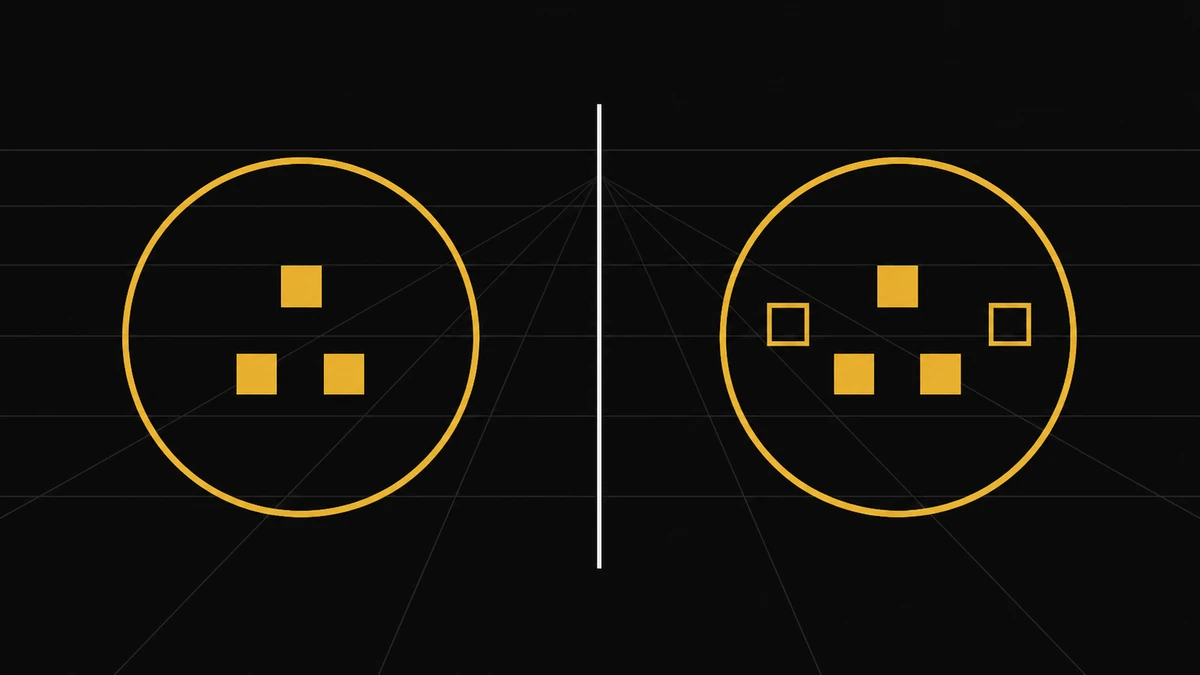
- Bybit: one insurance pool shared across 159 USDT contracts
- OKX: insurance funds ring-fenced per instrument family
Bybit: The Derivatives Specialist
Founded in 2018 and now headquartered in Dubai, Bybit specialises in perpetual and expiry contracts. Its linear book held 775 perpetual contracts and 40 dated futures on 13 August 2026, with a further 22 perpetuals and four dated futures in the inverse book, where contracts are margined and settled in the underlying coin rather than in a stablecoin.
The inverse book is the more distinctive of the two. It is a small inventory by contract count but it carries its own insurance pool, denominated in the underlying coin, and it is the part of Bybit's derivatives offering with no direct equivalent in the way OKX organises its own.
OKX: The Comprehensive Platform
Launched in 2017 as OKEx, OKX operates from the Seychelles and offers spot trading, perpetual swaps, dated futures, options, DeFi access and Web3 wallet services under a single account. Its spot market listed 1,359 trading pairs across 365 distinct base currencies on 13 August 2026, the widest spot surface of the two by pair count.
Its derivatives inventory is narrower on perpetuals and broader on everything else. Where Bybit lists 797 perpetuals, OKX lists 447, but OKX adds 155 dated futures and a substantial European-style options book that Bybit does not match.
Spot Trading Fees
Spot and derivatives sit on separate schedules at both venues, and conflating them is the most common error in published comparisons of the two. This section covers spot only; the perpetual and expiry ladder follows in its own section below.
| Fee Type | Bybit | OKX |
|---|---|---|
| Spot maker, entry tier | 0.1000% | 0.08% |
| Spot taker, entry tier | 0.1000% | 0.10% |
| Public tiers above the entry rung | 6, to Supreme VIP | 9, to VIP 9 |
| Spot maker, top public tier | 0.0300% | -0.0075% (rebate) |
| Spot taker, top public tier | 0.0450% | 0.0175% |
| Fiat pair schedule | Separate ladder, from 0.2000% | Separate ladder for TRY pairs |
Lower at the entry tier: OKX — a regular OKX user pays 0.08 per cent to make and 0.10 per cent to take, where Bybit's VIP 0 charges 0.10 per cent on both sides. The gap is two basis points on the maker side and nothing on the taker side, which is a narrower difference than the round numbers suggest.
The gap widens with the ladder, and it changes sign. OKX publishes nine tiers above its regular rung, and the maker fee crosses into a rebate at VIP 7, reaching minus 0.0075 per cent at VIP 9. Bybit's public spot ladder has six rungs above VIP 0 and stops at 0.0300 per cent, never turning negative on the published table. An account large enough to reach the top of either ladder is paid to supply spot depth at one venue and charged to supply it at the other.
Bybit also publishes several spot schedules rather than one. Crypto-to-crypto pairs use the headline table; fiat-to-crypto pairs, the Adventure Zone and the xStocks listings each carry their own ladder, and the fiat ladder starts at 0.2000 per cent for takers. A comparison that quotes a single Bybit spot number is quoting whichever of those tables it happened to find.
Derivative Fee Tiers
Perpetual and expiry contracts are priced on their own ladder at both venues, and the ladder is qualified on its own criteria too. The figures below were read at each venue's published document on 13 August 2026. Bybit's fee page was last updated on 30 July 2026 and carries the venue's own reservation over the whole table.
Bybit's published derivatives ladder
| VIP level | Perpetual and futures taker | Perpetual and futures maker |
|---|---|---|
| VIP 0 | 0.0550% | 0.0200% |
| VIP 1 | 0.0400% | 0.0180% |
| VIP 2 | 0.0375% | 0.0160% |
| VIP 3 | 0.0350% | 0.0140% |
| VIP 4 | 0.0320% | 0.0120% |
| VIP 5 | 0.0320% | 0.0100% |
| Supreme VIP | 0.0300% | 0.0000% |
Two features of that ladder matter more than the individual rungs. The taker rate stops falling between VIP 4 and VIP 5, which both pay 0.0320 per cent, so the step between those two tiers buys a lower maker rate and nothing else. And the maker rate reaches zero only at the top of the public table rather than turning negative anywhere on it, which is the structural difference between the two venues covered in the cluster's market-structure analysis.
Bybit attaches a condition to the entire table that is easy to read past. Its fee page states that the actual rates applied may vary depending on the account's region, and directs verified account holders to their own fee page for the rate that will be charged. A published schedule at this venue is a default rather than a quotation.
That table is also not the only derivatives ladder Bybit runs. Contracts in its Pre Market Perpetual and Innovation Zone categories are priced separately and considerably higher: at VIP 0 both charge 0.0400 per cent to make, against 0.0200 per cent on the main schedule, with takers paying 0.1000 per cent in the pre-market category and 0.1100 per cent in the innovation zone, roughly twice the 0.0550 per cent charged elsewhere. A newly listed contract can therefore cost double to trade without any of that appearing in the headline derivatives table.
How a tier is qualified, and why that differs from spot
Bybit's tier test is a disjunction rather than a single threshold: the level is set by asset balance or by 30-day trading volume, whichever qualifies the account higher, and levels are refreshed daily at 07:00 UTC. A tier is therefore a daily state rather than a standing status, and an account can hold one without ever having traded at the volume the table implies.
The volume half of that test is split by product, and this is where a derivatives comparison separates from a spot one. Bybit publishes distinct 30-day volume columns for spot, derivatives, options and structured products. VIP 1 opens at 1 million dollars of spot volume or 10 million dollars of derivatives volume, so the same tier costs ten times the turnover on the derivatives ladder. From VIP 4 upward a composition rule also applies, with API trading volume counted toward qualification only up to 20 per cent.
Bybit's qualifying volume carries one further rule with no OKX equivalent on the published page. Contract-for-difference turnover counts toward the derivatives figure, but only after conversion at ratios that differ by asset class: metals and non-oil commodities are divided by 60, while oil, foreign exchange, indices and stocks are divided by 15. Fifteen million dollars of oil turnover therefore qualifies as one million dollars of derivatives volume.
OKX applies the same disjunction on its own fee page, over a longer ladder. A regular user sits below 100,000 dollars of assets and 1 million dollars of 30-day volume, with VIP 1 beginning where either threshold is crossed and VIP 9 requiring 500 million dollars of assets or 5 billion dollars of volume. OKB holdings act as a further qualifying axis alongside both.
One figure is absent from this section on purpose. OKX publishes its derivatives ladder on the interactive fee page linked in the sources, and that ladder did not resolve into a readable table on the reading date, so this page prints no OKX perpetual maker or taker rate rather than carrying one it could not confirm at source. Its spot ladder above is quoted because that one did resolve, and the venue's own page is the authority for both, since neither exchange undertakes to announce a revision.
Funding Intervals
A perpetual contract has no expiry, and a periodic funding payment stands in for one. How often that payment settles is a venue parameter rather than a property of the instrument, and the two venues answer it differently across their books. The mechanics of the payment itself — the premium index, the interest component and the clamp that binds them — belong to the cluster's funding-rate page and are not repeated here.
What the two books actually carry
Bybit publishes the interval per contract in its own instruments endpoint, as a number of minutes. Read on 13 August 2026, its linear book held 775 perpetual contracts: 410 of them settled every 240 minutes, 364 every 480 minutes and one every 60 minutes. The four-hour clock is therefore the modal setting on Bybit's linear perpetuals, and the eight-hour figure that general writing treats as the standard describes a minority of them.
The same response separates perpetuals from dated contracts cleanly. Bybit's 40 linear futures return an interval of zero, which is the endpoint recording that a contract with a settlement date pays no funding at all.
OKX exposes the equivalent through its funding-rate endpoint, which returns the previous, current and next settlement timestamps rather than an interval field. Six USDT-margined swaps sampled on the same date, covering the BTC, ETH, SOL, DOGE, XRP and PEPE contracts, returned eight hours between consecutive settlements in every case, on both the elapsed leg and the scheduled one.
The rate limit is a per-contract parameter too
Neither venue applies one cap across its whole book. Bybit's BTCUSDT perpetual carried limits of plus or minus 0.5 per cent per settlement, while the modal limit across its linear book was plus or minus 2 per cent on 393 contracts, followed by 2.5 per cent on 174. OKX's BTC-USDT swap sat at plus or minus 0.375 per cent, its ETH, SOL, DOGE and XRP swaps at 0.75 per cent, and its PEPE swap at 1 per cent.
The interval is not fixed on either venue either. Both escalate the settlement frequency automatically when the funding rate reaches its limit, and the two escalation designs are not the same: one moves a rung at a time and the other jumps straight to hourly. The rules, the reversion condition and the dates on which they changed are set out on the funding-rate page linked above, along with each venue's own wording on how much notice it gives.
The Liquidation Engine, Venue by Venue
Both venues run the same three-stage design: a margin requirement that rises with position size, an insurance fund that absorbs closures worse than the bankruptcy price, and auto-deleveraging when that fund cannot. The design as a general architecture, along with the formulas and the oracle question, is covered on the market-structure page. What follows is only what separates these two implementations of it.
The margin ladder, and why the two cannot be compared rung for rung
The published ladders differ first in granularity. Bybit's risk-limit response for BTCUSDT returned 35 tiers on 13 August 2026; OKX's position-tier response for the BTC-USDT swap family returned 99. A finer ladder raises the maintenance requirement in smaller steps as a position grows, which changes where a liquidation lands rather than whether one happens at all.
They differ second in unit, and that is the harder problem. Bybit denominates its rungs in USDT of position value, running to a final tier at 1,200,000,000 USDT where the maintenance requirement reaches 60 per cent and the ceiling falls to one times. OKX denominates its rungs in contracts, from 1,000 in the first tier to 1,940,000 in the ninety-ninth, where maintenance reaches 48.75 per cent and the ceiling stops at two times. The BTC-USDT contract is worth 0.01 BTC, so OKX's first tier caps at 10 BTC of notional, a quantity that cannot be set against a USDT figure without introducing a price.
The first rung survives the unit problem, because both venues express it as a rate rather than a size: OKX requires 0.4 per cent maintenance margin in its opening tier against the 0.5 per cent Bybit publishes in its own. The formula each venue applies to that rate, and the deduction constant that travels with it, are quoted at source on the market-structure page.
What the margin mode changes
Margin mode is where the two designs diverge most, and where the published documents are least alike. Querying OKX's position-tier endpoint under cross and again under isolated returns the same table: identical tier boundaries, identical maintenance and initial rates, identical ceilings. On OKX the mode decides what collateral stands behind a position, not what the position is required to hold.
On Bybit the mode reaches further, into the auto-deleveraging queue itself. Bybit ranks positions for deleveraging on leveraged return, and computes that return differently by mode: an isolated position is ranked using its own position margin rate, while cross and portfolio positions are ranked using the account's maintenance margin rate. Two accounts holding the same contract at the same profit can sit at different points in the queue because they are configured differently, which is a consequence of the mode that the mode's own documentation does not advertise.
When auto-deleveraging fires, and what it costs
Bybit publishes two quantified triggers rather than a discretionary one. The first is a drawdown line: deleveraging begins when a single trading pair's drawdown over the previous eight hours reaches or exceeds that pair's published trigger line, measured against the highest balance its insurance pool held during the window. The consequence is under-reported. The pool does not have to be empty; a pair whose fund still holds a positive balance can enter deleveraging because the balance fell far enough, fast enough.
The second trigger is exhaustion across pooled contracts. Deleveraging begins when the combined balance of several pairs holding independent funds falls to or below zero, at which point Bybit redistributes what remains between them in proportion to each pair's profit and loss before recomputing. Both conditions carry a matching stop condition, so deleveraging on this venue is a state the engine enters and leaves rather than a single event.
It is also not free for the trader it selects. Bybit's documentation states that A maker fee will be charged to the ADL traders whose positions are reduced
, with the taker fee falling on the liquidation that triggered the event. A position closed by the engine settles at the bankruptcy price of the position it absorbed, which is a price the holder did not choose, and the holder pays a fee for the closure.
OKX describes the same mechanism from the opposite direction, as the outcome its fund exists to avoid. Its security-fund document calls deleveraging a last-resort process used by exchanges that forcibly closes profitable traders' positions
and presents the fund's purpose as reducing the pressure to engage it. The published ranking mechanics on both venues, and the comparable wording from an on-chain venue, are set out on the market-structure page.
Fund size, and what a headline balance actually covers
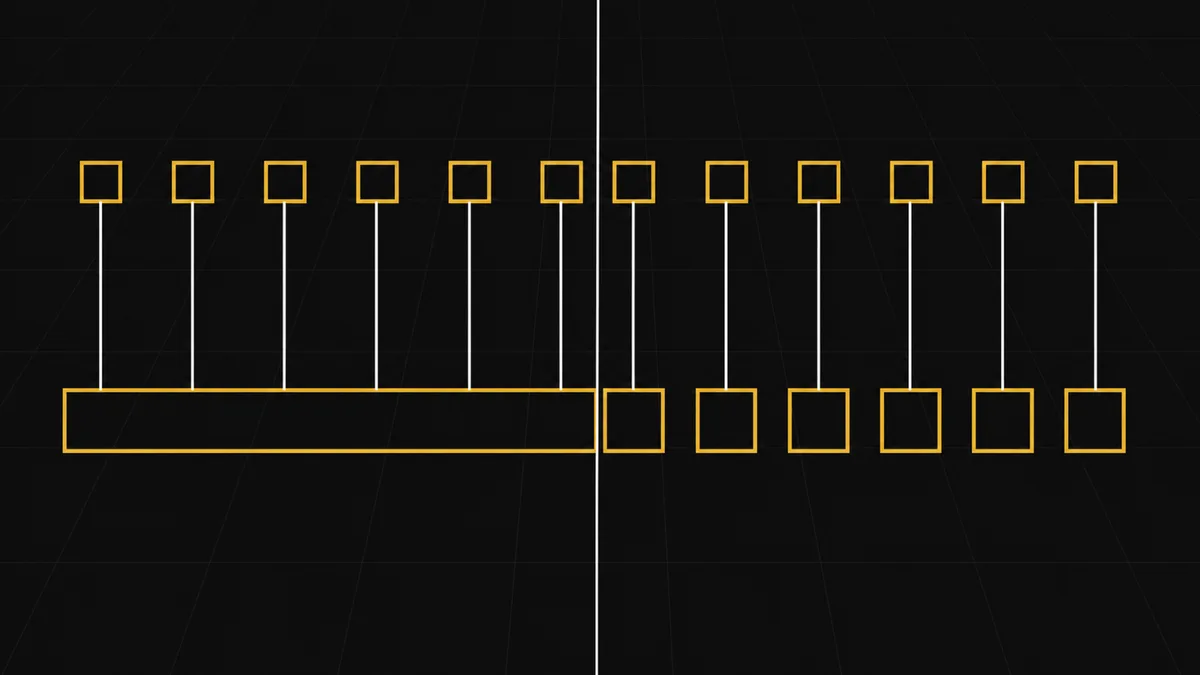
Both venues publish balances, and the balances are not measuring the same thing. Read on 13 August 2026 at 10:53 UTC, Bybit's insurance endpoint returned 76 separate pools, 51 of them denominated in USDT. The pool backing BTCUSDT held 380,905,176 USDT — and it backs 158 other contracts alongside it, ETHUSDT among them. Its inverse BTCUSD pool held 5,089.03 BTC.
OKX ring-fences more tightly. On the same date its BTC-USDT swap family held a fund of 78,513,351 USDT covering that family alone, its ETH-USDT family held 49,619,575 USDT, and its inverse BTC-USD fund held 348.362 BTC. The OKX figure for BTC is smaller in absolute terms and larger per contract covered, which is why a ratio between the two headline numbers ranks nothing.
Neither figure is live in the sense the word implies. Bybit's public balance page is updated once a day at midnight UTC, while its interface refreshes isolated pools every minute and shared pools every 24 hours, so two Bybit surfaces can disagree by design. OKX warns that its interface and its API may not be exactly identical and states that the interface is the recommended reference. A number taken from an endpoint and a number read on a screen can legitimately differ at the same instant.
OKX has also changed the shape of what is being measured. Its security-fund document, updated 5 August 2026, records that the fund previously maintained separate pools for each product and each index, and that a portion is now centralised into what it calls the Security Vault, holding mainstream assets including USDT, BTC and ETH, with the total fund size unchanged. A comparison drawn against an older description of OKX's per-product segregation is describing a superseded structure.
What neither fund is
The two venues' legal framing of these funds is closer than their engineering, and blunter than the marketing around them. OKX states that the fund is the sole property of OKX
, that users have no beneficial interest, ownership rights, legal claim
over it, and that OKX retains sole discretion over its size and deployment. It also states directly that the fund is not an insurance policy, a custodial protection fund
.
Bybit's own description makes the same structural point in gentler language, presenting the fund as a reserve pool the system can use and as a mechanism that decreases the possibility of deleveraging rather than one that prevents it. On both venues the fund is a buffer owned by the exchange, sized at the exchange's discretion, and no part of it is a claim any account holder can assert.
Derivatives Product Range
Bybit Derivatives Products
- Perpetual contracts: USDT-margined, USDC-margined and coin-margined inverse
- Expiry contracts: 44 dated futures across the linear and inverse books
- Order types: market, limit, conditional, stop-loss, take-profit
- Margin modes: isolated, cross and portfolio, each ranked differently for deleveraging
- Copy trading: available on derivatives contracts
- Trading bots: grid and DCA automation
OKX Derivatives Products
- Perpetual swaps: USDT-margined, USDC-margined and coin-margined
- Expiry contracts: 155 dated futures on weekly, monthly and quarterly cycles
- Options: European-style, with 616 series listed on the BTC-USD family alone
- Margin modes: cross and isolated, sharing one published tier table
- Spread trading: calendar and inter-commodity spreads
- Block trading: large order execution away from the book
Deeper on perpetuals: Bybit — 797 contracts against 447, read at both venues' instrument endpoints on 13 August 2026. Broader across contract classes: OKX, which carries three and a half times Bybit's dated-futures inventory and an options book Bybit does not match.
Security Features
Bybit Security
- Cold Storage: majority of user funds held in cold wallets
- Multi-Signature: Multi-sig wallet technology
- Two-Factor Authentication: SMS, email, and authenticator app
- IP Whitelist: Restrict access to approved IP addresses
- Hardware Security Modules: HSM for key management
- Proof of Reserves: Monthly Merkle-tree reports verified by the independent firm Hacken, with an open-source validator so an individual balance can be checked for inclusion
- Insurance Fund: Pooled derivatives fund, shared across contract groups
OKX Security
- Cold Storage: majority of funds in offline storage
- Multi-Party Computation: MPC wallet technology
- Two-Factor Authentication: Multiple 2FA options
- Anti-Phishing: Personalised anti-phishing codes
- Proof of Reserves: Monthly zk-STARK reports verified by the independent firm Hacken, covering 22 assets
- Insurance Coverage: Derivatives fund ring-fenced per instrument family
Level on custody disclosure — both exchanges publish monthly proof-of-reserves attestations verified by the same independent firm, using different cryptographic constructions.
Security Comparison
- Insurance Fund: Both maintain derivatives funds covering liquidation shortfalls rather than custody, and neither is insurance
- Fund segregation: Bybit pools 159 USDT contracts into one, OKX ring-fences per instrument family
- Proof of Reserves: Both publish monthly reports verified by the same independent firm, Hacken — Bybit via Merkle tree (latest snapshot 22 July 2026, all 50 in-scope assets above 100%), OKX via zk-STARK (45th consecutive report in July 2026, 22 assets). These are point-in-time attestations of on-chain reserves, not full financial audits, so proof of reserves is not a reason to prefer one over the other
- Hardware Security: Bybit HSM, OKX advanced key management
Supported Assets
Bybit Asset Coverage
- Spot Trading: 555 pairs across 409 distinct base assets
- Derivatives: 797 perpetual contracts and 44 dated futures
- Fiat Support: USD, EUR, GBP via third-party
- Staking: 50+ assets for earning rewards
- Launchpad: New token launches
OKX Asset Coverage
- Spot Trading: 1,359 pairs across 365 distinct base currencies
- Derivatives: 447 perpetual swaps and 155 dated futures
- Fiat Support: 20+ fiat currencies
- DeFi Integration: 100+ DeFi protocols
- NFT Marketplace: Multi-chain NFT support
Wider by pair count: OKX — but the ordering reverses on distinct assets, where Bybit lists 409 base coins against OKX's 365. OKX carries more markets on fewer underlyings, which is a different kind of breadth from the one a headline coin count implies.
Pair and contract counts were read at each venue's public instruments endpoint on 13 August 2026. Both venues list and delist continuously, so these are a snapshot rather than a standing figure.
User Experience
Interface Comparison
- Design: Bybit derivatives-focused, OKX multiple modes
- Charting: Bybit TradingView integration, OKX native tools
- Web3 wallet: Bybit separate, OKX integrated with DeFi and NFT access
- Learning curve: Bybit one surface, OKX beginner to advanced modes
- Support: both 24/7 in multiple languages
The interface difference follows from the product difference rather than from design philosophy. Bybit's surface is narrower because its inventory is narrower outside perpetuals, and OKX's mode switching exists because a single account spans spot, perpetuals, dated futures, options, a wallet and a marketplace. Neither arrangement is better in the abstract; they are solving different layout problems.
One practical consequence is worth recording. Because OKX's fee, margin and funding parameters are surfaced through an interactive interface rather than static tables, its published figures are harder to read at source and harder to archive, which is why several of the OKX numbers on this page come from the venue's public API rather than from its web pages.
Advanced Trading Features
Bybit Advanced Tools
Bybit's order management includes bracket orders, which set stop-loss and take-profit levels at the same time a position is opened. The exchange offers REST and WebSocket API access supporting algorithmic connectivity, and publishes API rate limits that scale with account tier.
Its copy-trading product replicates the positions of other accounts automatically, with per-trader statistics covering win rate, maximum drawdown and total return. The relevant point for a derivatives comparison is that copied positions are ordinary positions: they sit in the same margin ladder and the same deleveraging queue as any other, ranked by the same leveraged-return formula.
OKX Advanced Tools
OKX's unified account allows one collateral pool to support spot, derivatives and options positions together, which is the mechanism behind its cross-product margin efficiency. The exchange also offers iceberg, time-weighted average price and volume-weighted average price order types, which exist to reduce the market impact of executing a large position in one direction.
Its block-trading network handles large over-the-counter transactions away from the public book, connecting counterparties directly so that a negotiated price replaces a series of fills. Bybit publishes no equivalent. Both venues expose institutional API tiers with rate limits that differ by endpoint class rather than by a single figure, and both provide reporting covering trade history, execution quality and profit and loss.
Advanced Features Comparison
- Cross-margin trading: both, with OKX unifying collateral across product classes
- Portfolio margin: both, and on Bybit it changes the deleveraging ranking formula
- Block trading: Bybit no, OKX yes
- Algorithmic trading: Bybit grid and DCA bots, OKX multiple strategies
- Multi-asset collateral: Bybit limited, OKX full support
Broader tooling: OKX — the unified account and the block-trading network have no direct Bybit equivalent, and the advanced order types cover a wider set of execution problems.
Where Each Venue Is Reachable
Neither venue serves the United States on the platform these derivatives trade on. Bybit's terms of service, updated 23 January 2026, name excluded jurisdictions including the United States, the Chinese Mainland, Hong Kong, Singapore, Canada, France
, The United Kingdom is not in that clause — UK spot and peer-to-peer trading resumed in December 2025 via Archax under the FCA financial-promotions regime. OKX's global platform is closed to US persons; a separate US entity operates under FinCEN registration and state money-transmitter licences, and its product set includes no derivatives at all.
Two Bybit documents disagree about the list, and the hierarchy between them matters. A restricted-countries page updated 6 August 2026 states that Bybit does not offer services or products to Users in a few excluded jurisdictions
and lists Singapore. Where a help-centre article and the terms of service diverge, the terms of service is the governing document and the article is a secondary rendering of it. Bybit publishes no derivatives-specific tier of that list either: the restricted-countries page runs to 2,581 characters and contains none of the words derivative, futures, perpetual, margin or leverage.
Two further entries belong on the record. MAS added Bybit to its Investor Alert List on 17 June 2026, describing that register as naming entities that may be or may have been wrongly perceived as being licensed or [...] regulated by MAS
and stating that This list is not exhaustive and is based on what was known to MAS
, which makes a listing a warning entry rather than an enforcement action, and no kind of clearance. Separately, OKX's Seychelles entity pleaded guilty in February 2025 to operating an unlicensed money transmitting business and must retain an external compliance consultant through February 2027.
Compliance Summary
- Bybit licences: headquartered in Dubai but not licensed by VARA — its full UAE authorisation is a Virtual Asset Platform Operator licence from the federal Securities and Commodities Authority (SCA, October 2025), alongside a MiCA CASP licence through Bybit EU GmbH; not licensed by Singapore's MAS, and on the MAS Investor Alert List since June 2026
- Bybit restricted regions: US, Canada, Singapore and others per its terms of service; UK spot trading resumed December 2025 via Archax under FCA promotion rules
- OKX licences: multiple jurisdictions including the EU, plus a separate US entity with no derivatives
- OKX restricted regions: US persons excluded from the global platform
- KYC: mandatory at Bybit, tiered verification at OKX
Which of these restrictions is law and which is a venue's own commercial decision is a separate question from whether an account can be opened, and it is answered country by country in our jurisdiction-by-jurisdiction guide, which carries the primary citations and the reading dates for each entry.
Pros and Cons
Every entry a pros-and-cons list would carry here is set out with its reasoning in the verdict below, and a bullet that drops the reasoning is the half a reader cannot check. The short version: Bybit is ahead on perpetual inventory and on publishing its derivative fee ladder and deleveraging triggers as static, datable tables; OKX is ahead on margin-ladder granularity and on ring-fencing insurance per instrument. Both claims are quantified below.
Final Verdict
Where Bybit measures ahead
Bybit carries the deeper perpetual inventory, publishes its derivative fee ladder and its deleveraging triggers as static tables that can be read and dated, and runs an inverse book with a coin-denominated insurance pool of its own. Its documentation is more quotable, which for anyone checking a claim at source is a real property rather than a stylistic one.
Where OKX measures ahead
OKX publishes a substantially finer margin ladder and ring-fences its insurance funds per instrument family rather than pooling them. It also spans more contract classes, with three and a half times Bybit's dated-futures inventory and an options book Bybit does not match.
Key Takeaways
- Perpetual inventory favours Bybit; contract-class breadth favours OKX
- Margin granularity favours OKX, at 99 tiers against 35
- Insurance-fund structure differs in kind, not only in size
- Funding intervals differ by contract, and four hours is Bybit's modal setting
- Spot fees favour OKX at the entry tier by two basis points on the maker side
- Both funds are exchange property, and neither is insurance
- Both venues exclude the United States from the platform carrying these contracts
Overall: the venues separate on structure, not on quality
Conclusion
Bybit and OKX are not distinguished by the things most comparisons of them measure. Their spot fees differ by two basis points at the entry tier, their proof-of-reserves programmes are verified by the same firm, and their interfaces are solving different layout problems rather than competing at the same one. Reading either venue's marketing against the other produces a tie, which is roughly what a tie between two large custodial exchanges should be expected to look like.
The differences that hold up under verification sit further down. OKX publishes a margin ladder nearly three times as granular as Bybit's on the flagship contract, and ring-fences its insurance fund per instrument family where Bybit pools 159 contracts into a single balance. Bybit publishes quantified deleveraging triggers, including one that can fire while a pool still holds a positive balance, and charges a fee to the traders its engine selects. Those are the parameters that decide what a position costs to hold and what happens when it fails.
Both venues are custodial, and the counterparty exposure that follows is the same in kind on each. Neither insurance fund is insurance: OKX states in its own document that the fund is not an insurance policy and that users hold no legal claim over it, and Bybit's description of a reserve pool the system may use amounts to the same position in softer wording. A fund balance is a measure of the exchange's buffer, not of any account holder's protection.
Every figure on this page carries the date it was read at the venue's own document or endpoint, because the parameters described here are revised without notice and one venue says so explicitly. Anyone acting on a specific number should re-read it at source; anyone comparing the two venues structurally will find the structural differences more durable than the numbers that express them.
Sources & References
- Bybit Trading Fee Structure — spot, derivative and options ladders, VIP qualification, updated 30 July 2026
- Bybit Auto-Deleveraging (ADL) Mechanism — trigger and stop conditions, ranking by margin mode, ADL fees
- Bybit Insurance Fund — pool segregation and the daily balance-publication cadence
- Bybit API: instruments, insurance and risk limits — funding intervals, rate limits and margin tiers as published fields
- Understanding OKX's Security Fund — fund purpose, the Security Vault, ownership and disclaimers, updated 5 August 2026
- OKX Trading Fees — spot and derivative ladders and tier qualification thresholds
- OKX API v5 documentation — instruments, funding rates, position tiers and insurance fund endpoints
- Bybit Official Website — exchange capabilities and trading information
- OKX Official Website — platform information and services
- Bybit Referral Guide — getting started with Bybit
- OKX Referral Guide — getting started with OKX
Frequently Asked Questions
- Which is better for derivatives trading: Bybit or OKX?
- Neither is better in the abstract, and the published parameters differ in ways that suit different books. Bybit lists the larger perpetual inventory and runs most of its linear book on a four-hour funding clock. OKX publishes the finer margin ladder, 99 tiers on its flagship contract against Bybit's 35. Every figure on this page was read at the venue's own document or endpoint on 13 August 2026.
- Which exchange has lower spot trading fees?
- OKX, at the entry tier. Its published spot schedule charges 0.08 per cent maker and 0.10 per cent taker for a regular user, against 0.10 per cent on both sides at Bybit's VIP 0. Derivatives sit on a separate ladder at both venues, and Bybit's schedule states that the rate actually applied can vary by region.
- How often does funding settle on Bybit and OKX?
- It differs by contract, and the eight-hour figure that general writing treats as standard is not universal. Read on 13 August 2026, 410 of Bybit's 775 linear perpetuals settled every four hours and 364 every eight. Six OKX swaps sampled on the same date all settled every eight hours. Both venues escalate the frequency automatically when the funding rate reaches its limit.
- Is Bybit or OKX more secure?
- The question splits into custody and counterparty, and the two venues separate on the second. Both publish monthly proof-of-reserves attestations audited by Hacken OU, so neither holds an advantage on custody disclosure. On the derivatives side OKX ring-fences an insurance fund per instrument family while Bybit pools 159 contracts into one, which changes what a headline balance means rather than which balance is larger.
- Does the margin mode change anything beyond collateral?
- On OKX it does not change the requirement. Querying its position-tier endpoint under cross and under isolated returns the same tiers, the same maintenance rates and the same ceilings. On Bybit the mode reaches into the auto-deleveraging queue, which ranks isolated positions on their own position margin rate and cross or portfolio positions on the account maintenance margin rate.
- What does auto-deleveraging cost the trader it selects on Bybit?
- A fee, on top of a closure the holder did not choose. Bybit charges a maker fee to the traders whose positions are reduced by auto-deleveraging and a taker fee to the liquidation that triggered it. Its published trigger is quantified rather than discretionary: deleveraging can begin on an eight-hour drawdown in a single pair's insurance pool, so the pool does not have to be empty first.
- Can I use both Bybit and OKX in the US?
- Not in the same way. Bybit does not serve US customers at all. OKX runs a separate, spot-only US platform (OKX US, launched April 2025) available in most states except New York and Texas — its global app, and therefore the derivatives compared on this page, remain closed to US residents. For US derivatives, neither platform is the answer.