Staking vs Yield Farming
The cryptocurrency earning landscape has reached unprecedented sophistication in 2025. Staking and yield optimisation have emerged as the two dominant strategies. You can generate passive income from your digital assets.
Both approaches offer compelling ways for you to earn returns with your crypto holdings. However, they represent fundamentally different philosophies. They represent different methodologies for generating returns in the decentralised finance ecosystem.
Staking involves your participation in blockchain consensus mechanisms. You lock or delegate tokens to validators. You earn protocol-native rewards. You contribute to network security. You contribute to decentralisation.
This approach has evolved from simple token locking to sophisticated liquid staking derivatives. These maintain your earning potential. They preserve your liquidity. Staking typically offers you more predictable yields. These range from 4-15% annually. You face lower complexity requirements.
Yield farming, also known as yield optimisation, involves you providing assets to DeFi protocols. You receive interest in exchange. You receive trading fees. You receive bonus token rewards.
This strategy leverages the composable nature of DeFi. It creates complex earning opportunities for you. These can generate significantly higher returns for you. They often exceed 20-100% annually during favourable market conditions.
However, these higher potential returns come with increased complexity. You need active management. They also expose you to additional risk factors. These include impermanent loss. They include smart contract vulnerabilities.
The landscape of cryptocurrency earning strategies has evolved dramatically in 2025. Both staking and yield optimisation have become more sophisticated. They're more accessible to you as a mainstream investor.
Institutional adoption has brought greater liquidity. It has brought stability to both markets. Regulatory clarity has given you confidence. You can trust the platform's long-term viability.
Traditional barriers have been significantly reduced. These included technical complexity. They included high minimum requirements. They included poor user interfaces. This improvement comes through innovative protocol designs. It comes through improved accessibility tools for you.
Modern staking solutions now offer liquid alternatives. These eliminate traditional lock-up periods. You maintain full earning potential. This makes staking more flexible for you. It's more attractive if you're an active trader.
Modern yield optimisation protocols have evolved to include comprehensive risk assessment tools and automated portfolio rebalancing mechanisms. These platforms now offer intuitive dashboards that streamline complex operations for newcomers while providing detailed analytics and customisation options for experienced traders seeking maximum control over their investment strategies.
The choice between staking and yield optimisation has become increasingly nuanced. Many successful investors employ hybrid strategies that combine both approaches to optimise risk-adjusted returns.
Understanding the fundamental differences, risk profiles, and implementation strategies for each approach is crucial. This knowledge helps inform decisions on portfolio allocation and income generation in the current market environment.
This comprehensive analysis examines every aspect of both strategies. We cover basic mechanics. We cover yield potential. We cover advanced risk management. We cover optimisation techniques. We'll explore real-world performance data from 2025 market conditions. We'll analyse the latest protocol innovations. We'll provide practical guidance for implementing either strategy effectively.
Whether you're a conservative investor seeking stable returns or an active trader looking for maximum yield opportunities, this guide will help you. You'll understand how to leverage these powerful earning strategies. You'll achieve your financial objectives.
The Evolution of Crypto Earning Strategies
The cryptocurrency landscape has matured significantly. The early days of simple HODLing are gone. Today's investors have access to sophisticated earning mechanisms. These were unimaginable just a few years ago. Staking and farming represent two distinct philosophies. Network participation versus market-making. Each has a unique risk-reward profile.
Current Market Context
The extreme yields of 2020-2021 have normalised to more sustainable levels. Staking now offers APYs of 4-10% on major networks. Yield optimisation provides 10-100%+, depending on strategy complexity. It depends on market conditions. This normalisation has made both strategies more predictable. They're suitable for your long-term investment planning.
Quick Comparison Table
| Aspect | Staking | Yield Farming |
|---|---|---|
| Risk Level | Low to Medium | Medium to High |
| Rewards (APR) | 4–10% | 10–100%+ |
| Complexity | Beginner-friendly | Advanced |
| Liquidity | Often Locked | Variable / Often Flexible |
| Best For | Long-term holders | Active DeFi users |
| Examples | Ethereum, Cosmos, Cardano | Aave, Curve, PancakeSwap |
| Time Commitment | Minimal (set and forget) | High (active monitoring) |
| Technical Knowledge | Basic | Advanced DeFi understanding |
Deep Dive: Staking Strategies
Staking involves locking up your crypto assets to support a blockchain network’s operations (like validating transactions). In return, you receive rewards - usually paid in the same token.
Most popular with proof-of-stake (PoS) chains, staking is ideal for passive investors. You want to contribute to network security. You want to earn steady returns. For detailed platform analysis and setup guides, check our comprehensive Nexo staking review.
Comprehensive Yield Farming Analysis
Liquidity mining, also known as farming, means providing liquidity to decentralised finance (DeFi) protocols in exchange for interest, fees, or bonus tokens. It typically involves pairing assets in liquidity pools, lending platforms, or complex multi-protocol strategies.
Types of Liquidity Mining
- Liquidity Provision: You provide tokens to DEX pools. You earn trading fees.
- Lending: You supply assets to lending protocols. You earn interest.
- Leveraged Farming: You use borrowed funds. You amplify your returns.
- Auto-Compounding: You use automated strategies. These reinvest your rewards.
- Cross-Chain Farming: You utilise opportunities across multiple blockchains.
Liquidity Mining Advantages
- Higher Potential Returns: You can significantly outperform staking during favorable conditions
- Diverse Opportunities: You have multiple protocols and strategies available
- Flexibility: You can adjust your strategies based on market conditions
- Innovation Access: You get early access to new protocols and tokens
- Composability: You combine multiple DeFi protocols for enhanced yields
Liquidity Mining Risks
Rewards can be much higher than staking - but so are the risks:
- Impermanent Loss: Value loss when token prices diverge in liquidity pools
- Smart Contract Risk: Bugs or exploits can result in total loss
- Rug Pulls: Malicious projects can drain funds
- Oracle Manipulation: Price feed attacks can cause liquidations
- Regulatory Risk: Uncertain regulatory treatment of DeFi activities
- Gas Fee Volatility: High transaction costs can erode profits
Popular Liquidity Mining Protocols
- Curve Finance: Stablecoin and similar-asset liquidity pools
- Uniswap: decentralised exchange with LP rewards
- Aave: Lending and borrowing protocol
- Compound: Algorithmic money market protocol
- Convex: Curve yield optimisation platform
- Yearn Finance: Automated farming strategies
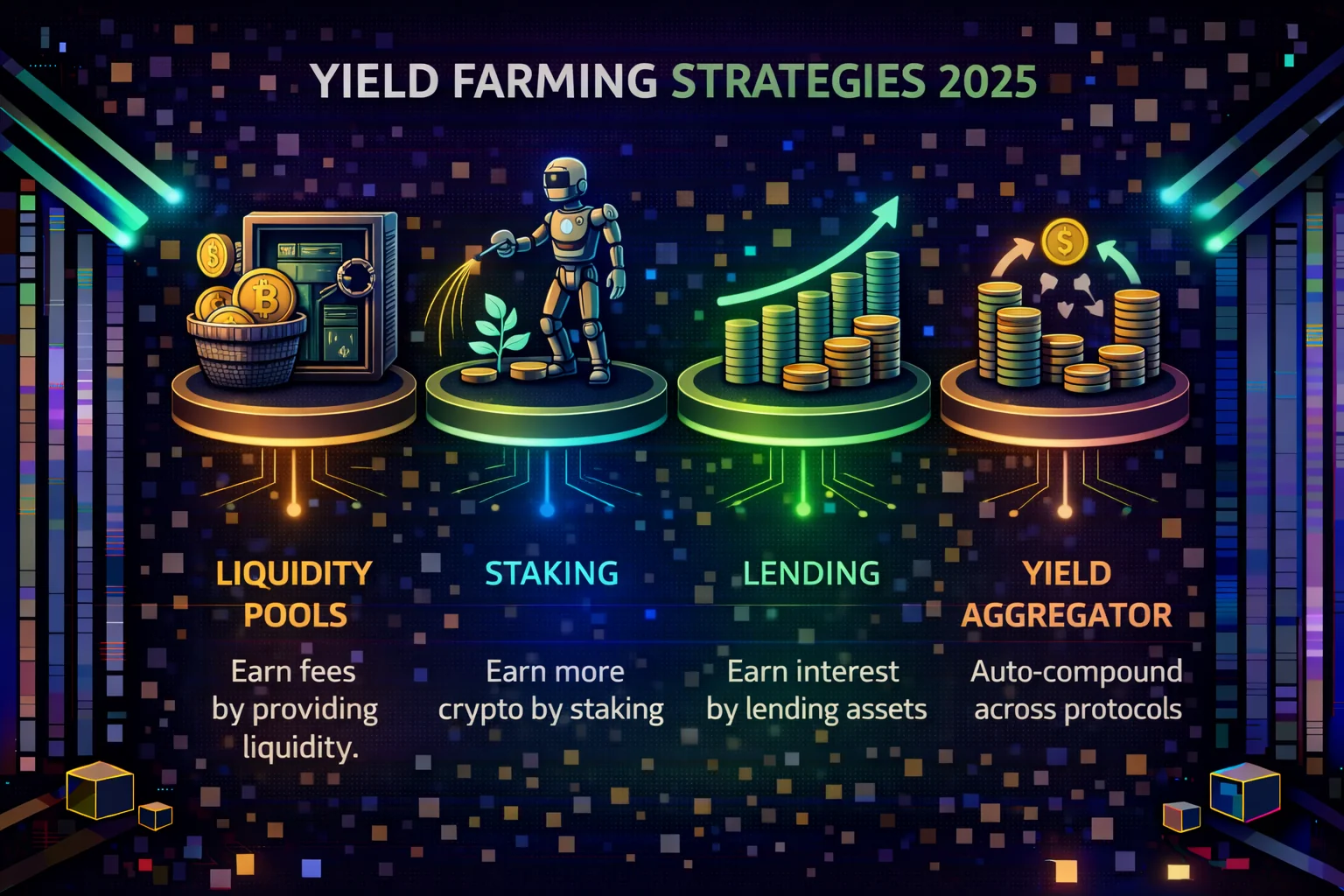
Strategic Decision Framework
Choose Staking If You:
- Prefer Simplicity: You want a set-and-forget investment strategy
- Seek Predictability: You value stable, predictable returns over maximum yield
- Have Long-Term Horizon: You plan to hold assets for years, not months
- Want Lower Risk: You prefer established protocols with proven track records
- Limited Time: You cannot actively monitor and manage positions
- Support Networks: You want to contribute to blockchain security and decentralisation
Choose Liquidity Mining If You:
- Seek Higher Returns: You're willing to accept higher risk for potentially higher yields
- Enjoy Active Management: You like researching and optimising strategies
- Have Technical Knowledge: You understand DeFi protocols and smart contracts
- Can Monitor Markets: You're able to track positions and market conditions regularly
- Accept Complexity: You're comfortable with impermanent loss and protocol risks
- Want Diversification: You seek exposure to multiple DeFi protocols and tokens
Hybrid Strategies
Many sophisticated investors use both strategies simultaneously. You can too:
- Core-Satellite Approach: You use staking as core holding with farming satellites
- Risk-Adjusted Allocation: You adjust ratios based on market conditions
- Seasonal Strategies: You increase farming during high-incentive periods
- Liquid Staking + DeFi: You use staked tokens in yield optimisation strategies
Risk Management and Best Practices
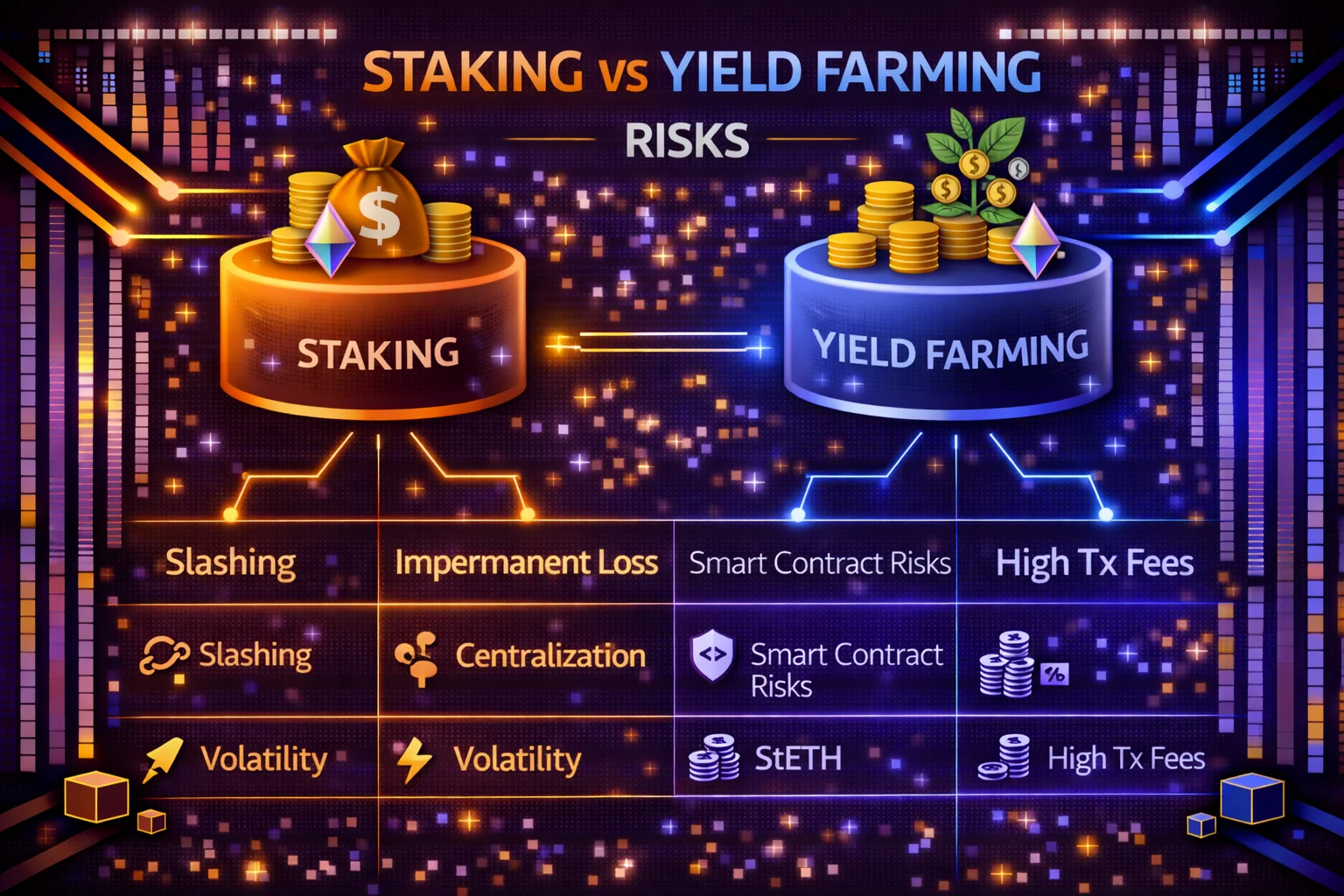
Staking Risk Mitigation
- Validator Selection: You choose reputable validators with good uptime records
- Diversification: You spread stakes across multiple validators or protocols
- Liquid Staking: You use liquid staking to maintain your flexibility
- Regular Monitoring: You track validator performance and network changes
Liquidity Mining Risk Management
- Protocol Research: You thoroughly audit smart contracts and team backgrounds
- Position Sizing: You never risk more than you can afford to lose
- Diversification: You spread your funds across multiple protocols and strategies
- Impermanent Loss Hedging: You use correlated pairs or single-sided strategies
- Exit Strategies: You set clear profit-taking and stop-loss levels
Future Trends and Market Outlook
Staking Evolution
- Restaking Protocols: You use staked ETH to secure additional networks
- Cross-Chain Staking: You stake assets across multiple networks simultaneously
- Institutional Products: You access professional-grade staking services
- Regulatory Clarity: You benefit from clearer frameworks enabling mainstream adoption
Advanced Strategy Integration and Professional Portfolio Management
Professional cryptocurrency investors increasingly implement hybrid strategies. These combine staking and yield optimisation. You use sophisticated portfolio management frameworks. These advanced approaches utilise quantitative models. You optimise allocation between low-risk staking positions. You optimise higher-yield optimisation opportunities. This is based on market volatility. It's based on correlation analysis. It's based on risk-adjusted return calculations.
Institutional investors employ dynamic rebalancing algorithms. These automatically adjust your exposure. You balance between staking and farming. This is based on predetermined risk parameters. It's based on market conditions.
Advanced practitioners utilise cross-protocol arbitrage opportunities. They utilise leveraged staking strategies. They utilise complex derivative positions. These enhance returns. You manage downside risk through sophisticated hedging mechanisms. These strategies require a deep understanding. You need to understand the mechanics of DeFi protocols. You need to understand smart contract interactions. You need advanced risk management techniques.
These include value-at-risk calculations. They include stress testing scenarios. They include correlation modelling. You model across different cryptocurrency assets. You model across yield generation mechanisms.
Institutional Infrastructure and Regulatory Compliance Framework
The evolution of staking and yield optimisation infrastructure includes institutional-grade custody solutions, comprehensive audit frameworks, and regulatory compliance systems that enable professional asset managers to participate in cryptocurrency earning strategies while meeting fiduciary obligations. Advanced platforms provide multi-signature security, comprehensive reporting capabilities, and sophisticated risk monitoring systems that meet institutional requirements for transparency, security, and operational control in professional investment environments.
Regulatory technology (RegTech) implementations include automated compliance monitoring, tax reporting integration, and comprehensive audit trails that ensure institutional participants can maintain regulatory compliance while accessing high-yield cryptocurrency earning opportunities. These systems incorporate know-your-customer (KYC) verification, anti-money laundering (AML) screening, and sophisticated transaction monitoring that meets international regulatory standards while preserving the efficiency and innovation advantages of decentralised finance protocols and staking mechanisms.
Yield Farming Innovation
- AI-Powered Strategies: Machine learning for yield optimisation
- Cross-Chain Farming: Seamless farming across multiple blockchains
- Real Yield Focus: Emphasis on sustainable, fee-based yields
- Insurance Integration: Built-in protection against smart contract risks
Professional Yield Strategy Analysis and Institutional Implementation
Institutional Staking versus Yield Farming optimisation
Professional cryptocurrency yield generation requires sophisticated analysis. You need to compare staking versus yield optimisation strategies. These optimise risk-adjusted returns. You must manage operational complexity. You must manage regulatory compliance for institutional cryptocurrency operations.
Enterprise applications include systematic yield strategy selection. They include comprehensive risk management frameworks. They include advanced portfolio allocation techniques. These balance staking stability with yield optimisation opportunities. You maintain appropriate diversification. You maintain security standards for institutional cryptocurrency treasury management.
Advanced Strategies and Professional Implementation
Portfolio Diversification and Risk Management
Professional cryptocurrency investors implement sophisticated diversification strategies. These combine staking and yield optimisation. You work across multiple protocols. You work across multiple networks. You work across multiple risk profiles. This optimises returns. You manage exposure to various risk factors. These include smart contract vulnerabilities. These include market volatility. These include protocol-specific risks.
Advanced portfolio construction includes correlation analysis. It includes risk-adjusted return optimisation. It includes systematic rebalancing protocols. These maintain optimal asset allocation. You balance different yield generation strategies. You adapt to market conditions.
Risk management frameworks include a comprehensive assessment. You assess counterparty risk. You assess smart contract risk. You assess market risk. These affect both staking and yield optimisation activities. Professional practitioners implement position sizing strategies. They implement diversification requirements. They implement automated risk monitoring systems. These protect your capital. They enable participation in high-potential yield opportunities.
Institutional Implementation and Compliance
Institutional investors require comprehensive compliance frameworks. These address regulatory requirements. They address tax optimisation. They address reporting obligations. You implement staking and yield optimisation strategies at scale. Professional implementation includes understanding the implications of securities law. You understand tax treatment differences. Staking rewards differ from yield optimisation returns. Regulatory compliance requirements vary across different jurisdictions.
Compliance considerations include comprehensive record-keeping systems. They include automated reporting tools. They include professional-grade audit trails. These meet institutional standards. They enable optimal yield generation performance. Institutional users work with specialised legal professionals. They work with tax professionals. This ensures full compliance with applicable regulations. You implement sophisticated strategies. You optimise returns. You maintain appropriate risk levels.
Technology Integration and Automation
Advanced practitioners leverage sophisticated technology solutions. These include automated yield optimisation. They include systematic rebalancing. They include comprehensive monitoring systems. These optimise strategy performance. You minimise manual intervention. You minimise operational complexity. Technology integration includes application programming interfaces. It includes automated trading systems. It includes comprehensive analytics platforms. These enable a systematic approach to yield generation.
Automation capabilities include intelligent strategy selection. They include automated compound optimisation. They include comprehensive performance tracking. These enable continuous optimisation of yield generation activities. You adapt to changing market conditions. You adapt to opportunity sets. Professional users implement custom algorithms. They implement machine learning applications. They implement advanced analytics. These identify optimisation opportunities. You maintain appropriate risk levels. You maintain operational efficiency.
Market Analysis and Strategic Intelligence
Professional yield generation requires comprehensive market analysis capabilities. These incorporate macroeconomic factors. They incorporate cryptocurrency market dynamics. They incorporate protocol-specific developments. These affect yield opportunities. They affect risk profiles across different staking and yield optimisation strategies. Advanced practitioners implement systematic research methodologies. These evaluate market trends. They evaluate competitive dynamics. They evaluate technological developments.
Strategic intelligence includes comprehensive monitoring. You monitor protocol developments. You monitor governance proposals. You monitor ecosystem changes. These create opportunities and risks within staking and yield optimisation markets. Professional users utilise advanced analytics platforms. They utilise comprehensive data sources. They utilise systematic research methodologies. These enable informed decision-making. You maintain competitive advantages through superior market intelligence.
Comprehensive Market Analysis and Implementation Strategies
Economic Fundamentals and Market Dynamics
Understanding the economic fundamentals underlying staking and yield optimisation requires a comprehensive analysis of tokenomics, inflation mechanisms, and market dynamics that drive reward generation and sustainability across different protocols and blockchain networks. Staking rewards typically derive from network inflation and transaction fees, creating predictable yet variable returns that depend on network usage and monetary policy decisions implemented through governance mechanisms and protocol upgrades.
Yield farming economics involve more complex mechanisms, including liquidity incentives, protocol revenue sharing, and token emission schedules that create higher potential returns but with significantly increased complexity and risk exposure. Market dynamics affect both strategies through price volatility, liquidity fluctuations, and competitive pressures, which influence reward rates and optimal strategy selection across different market conditions and investment objectives.
Economic analysis includes understanding correlation structures between different assets, market cycles that affect optimal strategy timing, and macroeconomic factors that influence cryptocurrency markets and decentralised finance adoption. Professional practitioners implement systematic approaches to economic analysis that incorporate fundamental research, technical analysis, and market sentiment evaluation to optimise strategy selection and timing for maximum risk-adjusted returns.
Technical Implementation and Operational Excellence
Professional implementation of staking and yield optimisation strategies requires sophisticated technical infrastructure. You need automated monitoring systems. You need risk management protocols. You need optimisation algorithms. These maximise returns. You minimise operational complexity. You minimise risk exposure. Technical implementation includes understanding the mechanics of smart contracts. You understand protocol governance structures. You understand network-specific considerations.
Operational excellence includes systematic approaches. You manage positions. You use rebalancing protocols. You monitor performance. These enable consistent execution of complex strategies. You work across multiple protocols. You adapt to market conditions. Advanced practitioners implement comprehensive monitoring systems. These track performance metrics. They track risk indicators. They track market conditions. You get automated alerts. You get optimisation recommendations.
Infrastructure requirements include secure wallet management. They include automated transaction execution. They include comprehensive record-keeping systems. These meet professional standards. They enable efficient strategy execution. They enable performance tracking. Technical excellence enables sophisticated strategy implementation. You maintain appropriate security standards. You maintain operational efficiency.
Regulatory Landscape and Compliance Considerations
The regulatory environment for staking and yield optimisation continues evolving. Different jurisdictions implement varying approaches. These cover cryptocurrency taxation. They cover securities regulation. They cover decentralised finance oversight. Understanding regulatory implications includes analysing tax treatment. You analyse staking rewards versus yield optimisation returns. You analyse securities law considerations. You analyse reporting requirements.
Compliance frameworks include comprehensive record-keeping systems, tax optimisation strategies, and regulatory monitoring that ensure full compliance with applicable laws while maximising after-tax returns and operational efficiency. Professional practitioners work with specialised legal and tax professionals to implement appropriate compliance systems that meet regulatory requirements while enabling optimal strategy execution and performance optimisation.
Regulatory considerations include understanding jurisdiction-specific requirements, international tax implications for cross-border activities, and evolving regulatory frameworks that may affect future strategy viability and compliance requirements. Proactive regulatory compliance enables confident strategy implementation while maintaining appropriate legal and tax optimisation for different investment structures and jurisdictional requirements.
Top Yield Farming Protocols
- Curve Finance: Stablecoin and similar-asset pools with CRV rewards
- Aave: Lending protocol with variable and stable rate options
- Yearn Finance: Automated farming strategies
- Convex Finance: Curve yield optimisation with simplified management
Tax and Compliance Considerations
Both staking and farming have tax implications that vary by jurisdiction. Staking rewards are typically treated as income when received, while farming may involve more complex calculations including impermanent loss considerations. Keep detailed records and consult with tax professionals familiar with cryptocurrency regulations in your specific location.
Implementation Roadmap
Beginner's Path to Staking
- Education Phase: Learn about proof-of-stake consensus mechanisms and validator economics fundamentals
- Platform Selection: Choose between centralised exchanges or liquid staking protocols based on preferences
- Initial Investment: Start with small amounts to understand the process and gain confidence
- Monitoring Setup: Track rewards and validator performance using appropriate tools and dashboards
- Scaling Strategy: Gradually increase stake as confidence grows and understanding deepens
Yield Farming Progression
- DeFi Fundamentals: Understand AMMs, liquidity pools, and smart contracts
- Risk Assessment: Learn to evaluate protocol safety and audit reports
- Small Experiments: Test strategies with minimal capital
- Tool Mastery: Use portfolio trackers and yield aggregators
- Advanced Strategies: Explore leveraged farming and cross-chain opportunities
Performance optimisation
Staking optimisation
- Compound Rewards: Regularly restake rewards for compound growth
- Validator Rotation: Monitor and switch validators for optimal performance
- Network Timing: Stake during low-congestion periods to minimise fees
- Liquid Staking Benefits: Use staked tokens in DeFi for additional yield
Yield Farming optimisation
- Gas Efficiency: Batch transactions and use Layer 2 solutions
- Yield Aggregation: Use platforms like Yearn for automated optimisation
- Impermanent Loss Mitigation: Choose correlated pairs or single-sided strategies
- Reward Timing: Harvest and compound rewards at optimal intervals
Market Cycle Adaptation
Successful crypto investors adapt their earning strategies to market cycles. During bull markets, risk appetite typically increases, making yield optimisation more attractive as investors chase higher returns. Conversely, bear markets often favor conservative staking approaches as investors prioritise capital preservation over maximum yield.
- Bull Market Strategy: Increase farming allocation for higher returns, explore new protocols with attractive incentives
- Bear Market Approach: Focus on staking for stable income during downturns, reduce exposure to volatile farming strategies
- Volatility Management: Adjust position sizes based on market conditions, use stop-losses and profit-taking levels
- Opportunity Recognition: Identify new protocols and incentive programs early, monitor governance proposals for yield changes
- Seasonal Patterns: Recognise that certain farming opportunities peak during specific market phases or protocol launches
- Risk Rebalancing: Regularly reassess risk tolerance and adjust portfolio allocation between staking and farming accordingly
Conclusion and Strategic Recommendations
Both staking and yield farming offer you compelling opportunities to generate passive income from your cryptocurrency holdings. Your choice depends on your risk tolerance, time commitment, and technical expertise, with each strategy serving different investor profiles and financial goals.
If you prefer simplicity and predictability, staking is your best choice. You get steady returns whilst contributing to network security without needing constant monitoring. The straightforward nature of staking makes it ideal for beginners and those seeking a hands-off approach to earning cryptocurrency rewards.
If you seek higher returns and enjoy active management, yield farming offers you greater potential rewards in exchange for increased complexity and risk. You need to understand the risks thoroughly, monitor your positions regularly, and develop technical knowledge of DeFi protocols to succeed in this more advanced strategy.
Many successful investors use both strategies to balance risk and reward effectively. You can start with staking to build your foundation and understanding of cryptocurrency earning mechanisms, then gradually explore yield farming as you gain experience and confidence. Diversifying your approach based on market conditions and personal circumstances helps optimise returns whilst managing risk appropriately.
The cryptocurrency landscape continues evolving rapidly, with new opportunities emerging regularly. Stay informed about protocol updates, security developments, and market trends to make educated decisions about your passive income strategies. Consider starting small with both approaches to understand their mechanics before committing significant capital.
Remember: you should never invest more than you can afford to lose. You should always do your own research and understand the risks before committing your funds. Seek advice from financial professionals when needed, and maintain realistic expectations about potential returns whilst acknowledging the inherent volatility of cryptocurrency markets.
Sources & References
Frequently Asked Questions
- Which is safer: staking or farming?
- Staking is generally safer with lower risks and more predictable returns (3–8% APY). Farming offers higher returns (10–50%+ APY) but involves risks such as smart contract vulnerabilities, impermanent loss, and complex strategies.
- Can I do both staking and farming?
- Yes, many investors use both strategies. Allocate 60–70% to staking for stable base returns and 30–40% to farming for higher yields.
- What is impermanent loss?
- Impermanent loss occurs when providing liquidity to pools with volatile token pairs. If token prices diverge significantly, your position may be worth less than simply holding the tokens.
- Which requires more active management?
- Farming requires constant monitoring and active strategy adjustments. Staking is passive — you stake once and earn consistent rewards without ongoing management.
- Do I need technical knowledge for farming?
- Yes. Farming requires understanding DeFi protocols, liquidity pools, and gas optimisation. Staking requires minimal technical knowledge.
- Which offers better returns?
- Farming typically offers higher returns (15–50%+ APY) compared to staking (3–8% APY), but with significantly higher risks. Your choice should depend on your risk tolerance, time commitment, and investment goals. Consider starting with staking to understand cryptocurrency earning mechanisms before exploring more complex farming strategies. Many successful investors combine both approaches to balance risk and reward effectively.