Convex Finance: CRV Boosting and vlCVX
Convex Finance's CRV boosting mechanics, cvxCRV and vlCVX token economics, 16% platform fee structure, bribe market dynamics, and yield performance for Curve LP depositors.
Introduction
Convex Finance launched in May 2021 with a singular focus: maximise Curve Finance LP yields by aggregating veCRV voting power across thousands of individual depositors. Rather than competing with Curve, Convex built a symbiotic layer on top of it, allowing Curve LP token holders to earn boosted CRV rewards without the complexity of managing veCRV locks, gauge voting, or boost calculations. This focused approach propelled Convex to become the single largest holder of veCRV within months of launch, fundamentally reshaping the Curve governance landscape and creating what the DeFi community calls the "Curve Wars."
By early 2026, Convex controls roughly 41-47% of all circulating veCRV — the largest single holding, though short of a majority, giving its depositors access to near-maximum boost multipliers on virtually every Curve gauge. The protocol has expanded beyond its original CRV focus to support Frax Finance through cvxFXS staking and Prisma Finance through cvxPRISMA, creating a multi-protocol yield aggregation layer for ve-tokenomics ecosystems. Convex's smart contract suite has been audited by MixBytes, Peckshield, ChainSecurity and Nomoi, with no critical vulnerabilities disclosed since launch and four years of continuous operation behind it. Trail of Bits, named here previously and still cited elsewhere on the web, is not among them.
Convex Finance earns a 4.0 out of 5.0 rating — strong technical execution and a defensible market position, with points deducted for concentration risk from deep dependency on Curve Finance and the declining CRV emission schedule that affects long-term yield sustainability.
Convex Finance is a Green Zone trusted partner in our yield optimisation strategies framework. For a detailed explanation of the ve-tokenomics model that underpins Convex's value proposition, see our ve-tokenomics explained guide.
Convex Finance Overview and History
Convex Finance emerged from a simple but powerful observation: Curve Finance's vote-escrow tokenomics created a significant barrier for ordinary LP depositors. To earn maximum CRV rewards on Curve, liquidity providers needed to lock large amounts of CRV as veCRV for up to four years, a commitment that most retail users could not or would not make. This meant that the majority of Curve LP depositors earned base CRV rewards at 1x multiplier while a small number of large veCRV holders captured the maximum 2.5x boost. Convex solved this fundamental asymmetry by pooling veCRV from many depositors and applying the aggregated boost to all Curve LP deposits made through the platform.
Founding and Rapid Growth
Convex launched in May 2021 with an anonymous founding team, which remains anonymous to this day. Despite the anonymity, the protocol gained rapid trust through its fully open-source code, multiple independent security audits, and a fair token launch that distributed CVX tokens to early depositors without venture capital allocation or team pre-mine. Within three months of launch, Convex accumulated more veCRV than any other single entity, surpassing even Curve's own treasury holdings. This rapid accumulation triggered the "Curve Wars" narrative, where protocols competed aggressively to acquire CVX tokens to influence Curve gauge voting through Convex's aggregated veCRV position.
The Curve Wars and Governance Influence
The Curve Wars represent one of the most significant governance dynamics in DeFi history. Because Convex controls the largest block of veCRV voting power, protocols that want their Curve pools to receive CRV emissions must either acquire CVX tokens directly or pay bribes to vlCVX holders to vote for their gauges. This created a secondary market for governance influence where protocols like Frax, Badger, and numerous stablecoin projects spend millions of dollars in bribes to secure Curve gauge votes through Convex. The bribe market, facilitated by platforms like Votium and Hidden Hand, generates significant yield for vlCVX holders and has become a core component of Convex's value proposition beyond simple CRV boosting.
vlCVX governance remains structurally active rather than dormant. Over 40% of circulating CVX is still vote-locked as of mid-2026, and Convex's wallets continue to vote on contentious proposals — most visibly in the December 2025 Curve DAO vote where Convex and Yearn addresses together accounted for roughly 90% of the votes against a proposed 17.4 million CRV allocation to Swiss Stake AG. That outcome illustrates that vlCVX is not a passive yield wrapper: the locked block is an active governance lever that can move major Curve-side decisions even years after the initial Curve Wars cooled.
Expansion Beyond Curve
While Curve remains Convex's primary integration, the protocol has expanded to support other ve-tokenomics protocols. Convex launched support for Frax Finance (cvxFXS) and, earlier, Prisma Finance (cvxPRISMA — dormant since Prisma wound down under PIP-46 and was succeeded by Resupply Finance), applying the same aggregation model to these protocols' vote-escrow systems. This expansion diversifies Convex's revenue sources beyond Curve alone, though Curve-related activities still account for the vast majority of Convex's TVL and revenue. The multi-protocol strategy positions Convex as a general-purpose ve-token aggregation layer rather than a Curve-specific tool.
The cvxFXS integration follows the same model as cvxCRV: users convert FXS tokens to cvxFXS, which permanently locks the FXS as veFXS through Convex. cvxFXS stakers earn Frax protocol revenue and governance influence, while Frax LP depositors on Convex receive boosted FXS rewards. The Prisma integration operates similarly with cvxPRISMA tokens. These expansions demonstrate the generalisability of Convex's aggregation model to any protocol using vote-escrow tokenomics, though the success of each integration depends on the underlying protocol's adoption and trading volume.
The expansion strategy carries both opportunity and risk. Successfully aggregating ve-tokens across multiple protocols would make Convex a critical infrastructure layer for DeFi governance, generating diversified revenue streams that reduce dependency on any single protocol. However, each new integration adds smart contract complexity and requires the Convex team to monitor and maintain additional protocol relationships. The Prisma integration, in particular, demonstrated the risks of expanding to newer protocols when Prisma experienced governance challenges that affected cvxPRISMA holders. This experience highlights the importance of careful protocol selection when evaluating future expansion targets.
CRV Boosting Mechanics Deep Dive
Understanding Convex's core value proposition requires a detailed understanding of how Curve's boost mechanism works and how Convex optimises it for depositors.
How Curve Boost Works
Curve Finance rewards liquidity providers with CRV token emissions distributed through gauge contracts. The base CRV reward rate applies to all LP depositors, but depositors who also hold veCRV (vote-escrowed CRV) receive a boost multiplier of up to 2.5x on their CRV earnings. The boost calculation depends on the ratio between a depositor's veCRV balance and the total veCRV supply, relative to their share of the liquidity pool. Achieving maximum 2.5x boost on a large LP position requires holding a proportionally large amount of veCRV, which means locking substantial CRV for up to four years.
For example, a depositor providing 100,000 USD of liquidity to the 3pool (USDC/USDT/DAI) might need to lock 50,000 USD worth of CRV for four years to achieve maximum boost. Without any veCRV, the same depositor earns only the base 1x CRV reward rate. This creates a significant capital efficiency problem: earning maximum yield requires locking additional capital in an illiquid position for years.
Convex Aggregation Model

Convex solves this by aggregating veCRV from CRV depositors (who convert CRV to cvxCRV) and applying the pooled veCRV balance to boost all Curve LP deposits made through Convex. Because Convex holds the largest single veCRV position in existence, it can achieve near-maximum boost on most Curve pools without requiring individual depositors to lock any CRV themselves. Depositors simply stake their Curve LP tokens on Convex and automatically receive boosted CRV rewards plus CVX token emissions.
The aggregation model creates a positive flywheel: more CRV deposited as cvxCRV increases Convex's veCRV position, which enables higher boost for LP depositors, which attracts more LP deposits, which generates more CRV rewards, which incentivises more CRV-to-cvxCRV conversions. This flywheel drove Convex's rapid growth and continues to sustain its dominant veCRV position.
Boost Calculation Mechanics
The Curve boost formula calculates a depositor's effective boost based on their veCRV balance relative to total veCRV supply and their LP position relative to total pool liquidity. The formula ensures that achieving maximum 2.5x boost requires holding veCRV proportional to your share of the pool. For a depositor providing 1% of a pool's liquidity, achieving maximum boost requires holding approximately 1% of total veCRV supply. This proportional requirement makes maximum boost practically unattainable for most individual depositors, which is precisely the problem Convex solves through aggregation.
Convex's aggregated veCRV position is large enough to achieve near-maximum boost across most Curve pools simultaneously. The protocol's boost efficiency varies slightly by pool depending on how much of each pool's liquidity is deposited through Convex versus directly on Curve. Pools where Convex represents a larger share of total liquidity may see marginally lower effective boost due to the proportional nature of the boost formula, but in practice, Convex consistently delivers 2.0-2.5x boost across major pools.
Boost Efficiency and Limitations
While Convex achieves near-maximum boost on most pools, the actual boost varies by pool depending on the ratio of Convex's veCRV to the total veCRV supply and the proportion of each pool's liquidity deposited through Convex. Pools where Convex represents a very large share of total liquidity may see slightly lower effective boost because the boost formula accounts for the depositor's share of the pool. In practice, Convex typically achieves 2.0-2.5x boost across most major Curve pools, which is significantly higher than what individual depositors can achieve without substantial veCRV holdings.
cvxCRV and vlCVX Token Economics
Convex's token system consists of three interconnected tokens that serve different functions within the protocol ecosystem. Understanding each token's mechanics is essential for evaluating Convex as an investment or yield strategy.
cvxCRV: Tokenised Vote-Escrowed CRV
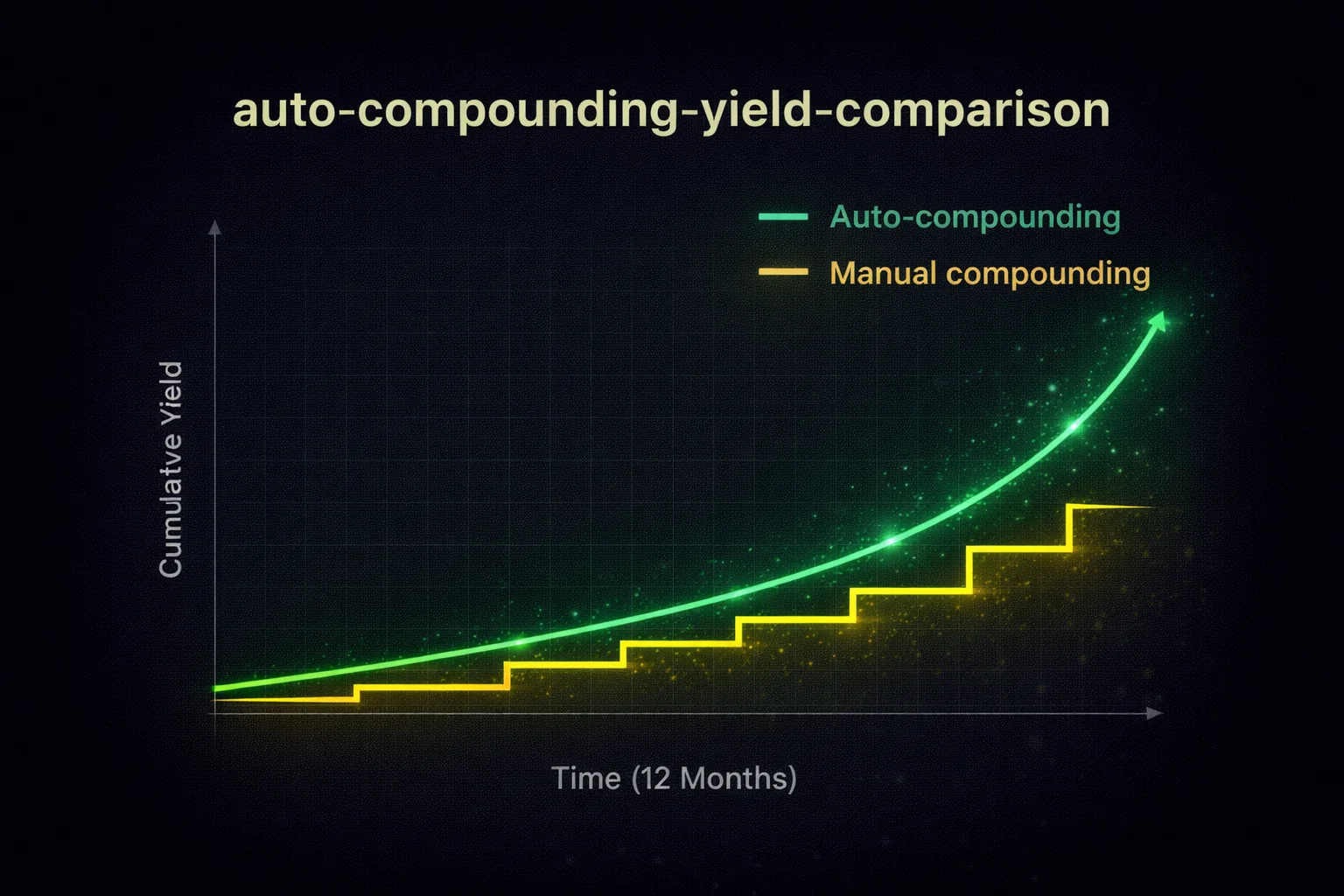
cvxCRV is created when users deposit CRV into Convex, which permanently locks the CRV as veCRV on Curve Finance. The conversion from CRV to cvxCRV is irreversible at the protocol level — once CRV is locked as veCRV through Convex, it cannot be unlocked. However, cvxCRV is a freely tradeable ERC-20 token that can be sold on secondary markets (primarily Curve's cvxCRV/CRV pool) for users who want to exit their position.
cvxCRV stakers earn three revenue streams: a share of Convex's CRV platform revenue (10% of all CRV earned by LP depositors), Curve admin fees — paid in crvUSD since June 2024, not 3CRV — and additional CVX token incentives. The combined yield for cvxCRV staking has historically ranged from 10-30% APR depending on CRV price, Curve trading volume, and CVX emission rates. The cvxCRV/CRV exchange rate on secondary markets fluctuates based on demand, and cvxCRV has historically traded at a 5-15% discount to CRV due to the irreversibility of the conversion and liquidity preferences.
vlCVX: Vote-Locked CVX for Governance
vlCVX (vote-locked CVX) is created when CVX holders lock their tokens for 16-week periods to participate in Convex governance. The primary function of vlCVX is voting on Curve gauge weight allocations — vlCVX holders decide which Curve pools receive Convex's veCRV voting power, which directly determines CRV emission distribution across Curve pools. This governance power is extremely valuable because protocols seeking CRV emissions for their pools must either hold vlCVX or pay bribes to vlCVX voters.
The bribe market for vlCVX votes has become a significant revenue source. Platforms like Votium and Hidden Hand facilitate bribe payments from protocols to vlCVX voters, with bribe yields historically ranging from 15-50% APR depending on the intensity of gauge competition. During periods of active "Curve Wars" when multiple protocols compete for gauge allocations, bribe yields can spike significantly. vlCVX holders also earn a 5% share of Convex's CRV platform revenue in addition to bribe income.
The Bribe Market Ecosystem
The bribe market that emerged around vlCVX governance represents one of the most innovative economic mechanisms in DeFi. Protocols seeking CRV emissions for their Curve pools calculate the expected value of gauge allocations (in terms of CRV rewards directed to their pool) and offer bribes to vlCVX voters at a fraction of that value. This creates a market where vlCVX holders earn yield from selling their governance influence, while protocols acquire CRV emissions more cheaply than purchasing CRV directly on the open market.
Votium is the primary bribe aggregation platform, collecting bribe deposits from protocols and distributing them to vlCVX holders who delegate their votes. Hidden Hand provides a competing marketplace with similar functionality. The bribe-per-vote ratio fluctuates based on supply and demand — when many protocols compete for limited gauge allocations, bribe rates increase, and when competition subsides, rates decrease. Sophisticated vlCVX holders monitor bribe rates across platforms and voting rounds to maximise their governance yield.
The bribe market creates interesting game theory dynamics. Protocols must decide how much to spend on bribes versus directly acquiring CVX tokens for permanent governance influence. Short-term bribe payments provide flexibility but create ongoing costs, while CVX acquisition provides permanent voting power but requires larger upfront capital. Major protocols like Frax Finance and Redacted Cartel have adopted hybrid strategies, holding significant CVX positions for baseline governance influence while supplementing with bribes during periods of intense gauge competition.
CVX Token Supply and Emissions
The CVX token has a maximum supply of 100 million tokens with a declining emission schedule tied to CRV earned by the platform. CVX emissions decrease as more total CRV is earned, following a reduction curve that ensures the majority of CVX supply is distributed in the protocol's early years. By 2026, CVX emissions have decreased substantially from their peak, which reduces the additional yield that Curve LP depositors earn from CVX rewards but also reduces sell pressure on the CVX token price. The declining emission schedule means that Convex's long-term value proposition increasingly depends on CRV boosting efficiency and bribe revenue rather than CVX token emissions.
CVX Distribution and Tokenomics
The CVX emission formula allocates tokens based on cumulative CRV earned by the platform, with emission rates decreasing at predefined thresholds. The first 50 million CRV earned by Convex triggered the highest CVX emission rates, with subsequent CRV earnings generating progressively fewer CVX tokens. This front-loaded distribution rewarded early depositors and created strong initial adoption incentives, but it also means that current depositors receive significantly lower CVX yields than early participants. Understanding this emission curve is essential for setting realistic yield expectations.
CVX token utility centres on governance participation through vlCVX locking. Unlike many DeFi governance tokens that provide only voting rights, vlCVX generates direct economic value through bribe revenue and protocol fee sharing. This utility creates genuine demand for CVX beyond speculation, supporting the token price even as emission rates decline. The 16-week lock period for vlCVX creates a committed holder base that is less likely to sell during market downturns, providing price stability relative to tokens with no lock requirements.
Fee Structure and Revenue Distribution
Convex's fee structure is notably simpler and lower than many competing yield protocols, which is a significant competitive advantage for cost-conscious depositors.
Fee Breakdown
Convex charges 17% on CRV rewards earned by Curve LP depositors. It applies only to CRV token rewards, not to Curve trading fees or CVX emissions, which depositors receive in full. The split is 10% to cvxCRV stakers in CRV, 4.5% to CVX stakers paid as cvxCRV, 2% to the Convex treasury in CRV, and 0.5% to whoever calls the harvest.
Critically, Convex charges no management fees on deposited principal, no deposit fees, and no withdrawal fees. This fee structure is higher than Yearn Finance V3's 10% performance fee on generated yield, though Yearn charges no management fee either. For a Curve LP position earning 10% APY in CRV rewards, Convex takes 1.6 percentage points (16% of 10%), leaving the depositor with 8.4% from CRV alone plus additional CVX emissions and Curve trading fees. Despite the higher fee rate, Convex typically delivers better net yields on Curve-specific positions because its concentrated veCRV holdings achieve higher boost multipliers than Yearn can access through its smaller aggregated position.
Revenue Sustainability
Convex's revenue model depends primarily on CRV emission rates, which decline over time according to Curve's emission schedule. As CRV emissions decrease, the absolute amount of CRV flowing through Convex decreases, which reduces revenue for cvxCRV stakers, vlCVX holders, and the protocol treasury. However, this decline is partially offset by growth in Curve trading volumes (which generate trading fees independent of CRV emissions) and the bribe market for vlCVX governance power (which generates revenue based on demand for gauge allocations rather than CRV emission rates).
The long-term sustainability of Convex's revenue model is the protocol's most significant uncertainty. If Curve trading volumes grow sufficiently to compensate for declining CRV emissions, Convex remains viable. If trading volumes stagnate while emissions decline, the protocol's yield proposition weakens over time. This uncertainty is reflected in our rating and should be a key consideration for long-term Convex depositors.
Fee Comparison with Alternatives
Convex's 16% fee on CRV rewards is higher than some alternatives on a percentage basis. Yearn Finance V3 charges a 10% performance fee on generated yield only, with no management fee on deposited capital — making it lower than Convex's rate but often delivering lower net yields on Curve positions because Yearn's aggregated veCRV is smaller. StakeDAO charges 15% on rewards, marginally lower than Convex but with a smaller veCRV position that may deliver slightly lower boost on some pools. Direct veCRV locking incurs no protocol fees but requires significant capital commitment and active management of lock periods and gauge voting.
The fee structure becomes particularly relevant when comparing net yields across platforms. For a Curve LP position earning 10% gross APY in CRV rewards, Convex takes 1.6 percentage points and StakeDAO takes 1.5 percentage points. Yearn charges 1 percentage point on the same position (10% of 10%), but its boost level may be lower without Convex's concentrated veCRV. The absence of management fees on deposited principal across all three platforms is a shared structural advantage, and direct CRV comparisons should focus on the combined effect of fee rate and boost level rather than fee rate alone.
Security Audit History and Risk Assessment
Convex Finance's security posture is notable for a protocol that has managed billions in TVL since 2021 without suffering a major smart contract exploit. This track record provides meaningful confidence, though the layered risk profile requires careful evaluation.
Audit History and Code Review
Convex has been audited by MixBytes and Peckshield, covering the core staking contracts, cvxCRV conversion logic, vlCVX locking mechanism, and reward distribution systems. MixBytes conducted the initial audit before launch, identifying and resolving several medium-severity issues related to reward calculation edge cases. Peckshield performed a follow-up audit focusing on the vlCVX governance contracts and bribe integration points. Both audit reports are publicly available, demonstrating transparency in the security review process.
The protocol maintains a bug bounty programme through Immunefi, offering rewards for vulnerability discoveries proportional to their severity. The bug bounty has successfully identified several low-severity issues that were resolved before they could be exploited. Convex's smart contracts are fully open-source and have been extensively reviewed by independent security researchers beyond the formal audit engagements.
Layered Risk Assessment
Convex depositors face risk from multiple protocol layers. The first layer is Convex's own smart contracts, which handle LP token staking, reward distribution, and CVX emissions. The second layer is Curve Finance's contracts, which manage the underlying liquidity pools, gauge rewards, and veCRV voting mechanics. A vulnerability in either layer could result in loss of deposited funds. The third risk layer involves the specific assets within Curve pools — if a stablecoin in a Curve pool depegs or a wrapped asset loses its backing, LP token holders (including those staking through Convex) bear the loss.
The anonymous founding team represents an additional trust consideration. While the protocol's open-source code and audit history mitigate some concerns, the inability to hold identifiable individuals accountable introduces a governance risk that protocols with known teams do not carry. The multi-signature wallet controlling protocol upgrades includes both anonymous Convex team members and known community figures, providing a partial check on unilateral actions.
Curve Finance Dependency Risk
Convex's entire value proposition depends on Curve Finance's continued operation and relevance. If Curve suffered a major exploit, governance attack, or significant loss of market share to competing DEXs, Convex's TVL and revenue would decline proportionally. This concentration risk is the most significant systemic concern for Convex depositors. The protocol's expansion to support Frax and Prisma partially diversifies this dependency, but Curve-related activities still represent the overwhelming majority of Convex's operations.
Operational Security and Multi-Sig Controls
Convex's smart contract upgrade authority is controlled by a multi-signature wallet that requires multiple signers to approve any changes. The multi-sig includes both anonymous Convex team members and known community figures, providing a check against unilateral actions by any single party. This governance structure means that even if one signer's keys are compromised, the attacker cannot unilaterally modify protocol contracts or drain deposited funds. The multi-sig threshold and signer composition are publicly verifiable on-chain, allowing users to independently assess the governance security model.
The protocol's reward distribution contracts operate autonomously once deployed, meaning that CRV boosting, CVX emissions, and fee distribution continue functioning without manual intervention from the team. This autonomous operation reduces the risk of operational failures or team-related disruptions affecting depositor yields. The keeper infrastructure that triggers reward claims and distributions is permissionless, ensuring that rewards flow to depositors even if specific keeper operators go offline.
TVL Trends and Yield Performance
Convex's TVL trajectory reflects both the protocol's strong product-market fit and the broader cyclical dynamics of DeFi yield markets.
TVL History and Current Position
Convex reached peak TVL of approximately 20 billion USD in early 2022, driven by the Curve Wars narrative and high CRV emission rates. The 2022 bear market reduced TVL significantly as DeFi activity contracted and CRV prices declined. As of mid-July 2026, Convex TVL sits near $492M on DeFiLlama, against the backdrop of Curve's own TVL stabilising in January 2026 after months of outflows. That reverses the 2024-2025 decline trajectory, though Convex remains well below its 2022 peak. The current TVL profile reflects both reduced CRV emissions (which lower the yield incentive for depositing) and the maturation of the Curve Wars narrative as gauge competition has stabilised.
Despite the TVL decline from peak levels, Convex remains the single largest holder of veCRV, controlling a substantial percentage of total veCRV supply. This dominant position ensures that Convex can continue to provide near-maximum boost to LP depositors and maintains the protocol's relevance in Curve governance. The veCRV position is permanently locked and cannot be withdrawn, providing a structural floor for Convex's governance influence regardless of TVL fluctuations. This permanence is both a strength and a limitation — it guarantees ongoing boost capability but also means the locked CRV cannot be redeployed if Curve's relevance diminishes significantly.
Current Yield Analysis
Curve LP yields through Convex vary significantly by pool and market conditions. Stablecoin pools (3pool, FRAX/USDC) typically generate 3-8% APY from a combination of Curve trading fees, boosted CRV rewards, and CVX emissions. Volatile asset pools (ETH/stETH, tricrypto) can generate 5-15% APY due to higher trading volumes and additional incentive programmes. The highest yields are found in newer pools with active gauge incentive campaigns, though these yields tend to compress as more capital enters the pool.
cvxCRV staking yields have compressed from their early highs of 30-50% APR to approximately 8-15% APR in 2026, reflecting lower CRV emission rates and reduced Curve trading volumes relative to the protocol's peak. vlCVX bribe yields remain more variable, ranging from 10-40% APR depending on the intensity of gauge competition during each voting round. Periods of active protocol launches or stablecoin competition tend to drive higher bribe yields as protocols compete for Curve gauge allocations.
Yield Comparison with Direct Curve Staking
For users without significant veCRV holdings, Convex consistently delivers higher net yields than direct Curve LP staking. The boost multiplier alone can double or triple CRV earnings compared to unboosted deposits, and the additional CVX emissions provide yield that direct Curve stakers do not receive. For users who already hold large veCRV positions and can achieve near-maximum boost independently, the 16% CRV fee makes Convex slightly less efficient than direct staking, though the convenience of automated reward claiming and the CVX emissions may still justify the fee for some users.
Pool Selection and Yield Optimisation
Not all Curve pools on Convex offer equal risk-adjusted returns. Stablecoin pools like 3pool and FRAX/USDC carry minimal impermanent loss risk but generate lower yields, making them suitable for conservative depositors seeking steady returns. Volatile asset pools like tricrypto (USDT/WBTC/ETH) generate higher yields from trading fees but expose depositors to impermanent loss from price divergence between pool assets. Factory pools for newer tokens may offer the highest yields due to incentive programmes but carry additional smart contract risk from less-audited pool implementations.
When selecting pools on Convex, evaluate the composition of yield sources. Pools where the majority of yield comes from Curve trading fees are more sustainable than pools dependent primarily on CRV emissions, because trading fees reflect genuine economic activity while CRV emissions decline over time. Check the pool's historical trading volume relative to its TVL — pools with high volume-to-TVL ratios generate more fee income per unit of deposited capital. Also consider the pool's gauge weight, which determines the CRV emission allocation and directly affects the boosted CRV yield available through Convex.
Pros and Cons
Pros
- Maximum CRV Boost: Near-2.5x boost on most Curve pools without requiring personal veCRV holdings
- Low Fee Structure: 16% on CRV rewards only, no management fees, no deposit or withdrawal fees
- No Lock Requirements: Curve LP deposits can be withdrawn at any time without lock periods
- Additional CVX Rewards: Depositors earn CVX token emissions on top of boosted CRV and trading fees
- Strong Security Record: No major exploits since May 2021 launch despite billions in TVL
- Dominant veCRV Position: Largest veCRV holder ensures sustained boost capability
- Bribe Revenue: vlCVX holders earn significant yields from gauge vote bribes
- Open Source: Fully audited, transparent smart contract code
- Multi-Protocol Expansion: Support for Frax and Prisma diversifies revenue sources
- Gas Efficiency: Pooled reward claiming reduces individual gas costs
Cons
- Curve Dependency: Entire value proposition depends on Curve Finance's continued relevance
- Declining CRV Emissions: Reducing emission schedule lowers yields over time
- Anonymous Team: Founding team remains unidentified, creating accountability concerns
- cvxCRV Irreversibility: CRV-to-cvxCRV conversion is permanent, requiring secondary market for exit
- cvxCRV Discount: cvxCRV typically trades at 5-15% discount to CRV on secondary markets
- vlCVX Lock Period: 16-week lock for governance participation limits liquidity
- Complexity: Three-token system (CRV, cvxCRV, CVX/vlCVX) requires significant understanding
- Concentrated Risk: Large veCRV position creates systemic risk if Curve governance is compromised
- Reduced CVX Emissions: Declining CVX emission rate reduces additional yield component
- Bribe Yield Volatility: vlCVX bribe income varies significantly between voting rounds
Comparison with Alternative CRV Strategies
Several approaches exist for maximising Curve LP yields. Understanding the trade-offs between Convex and alternatives helps investors choose the right strategy for their situation. For a detailed three-way comparison including Pendle and Yearn, see our Pendle vs Yearn vs Convex comparison.
CRV Yield Strategy Comparison Table
| Feature | Convex Finance | Direct veCRV Locking | Yearn Curve Vaults | StakeDAO Liquid Lockers |
|---|---|---|---|---|
| CRV Boost Level | Near-maximum (2.0-2.5x) | Variable (depends on veCRV held) | Via Convex integration | Near-maximum |
| Lock Requirement | None for LP deposits | 1 week to 4 years | None | None for LP deposits |
| Fee on CRV Rewards | 16% | 0% | 10% performance (no management fee) | 15% |
| Additional Token Rewards | CVX emissions | None | None (compounded) | SDT emissions |
| Governance Participation | Via vlCVX (16-week lock) | Direct veCRV voting | None | Via veSDT |
| Bribe Revenue Access | vlCVX holders earn bribes | Direct bribe collection | None | veSDT holders earn bribes |
| Capital Efficiency | High (no CRV lock needed) | Low (requires large CRV lock) | High (automated) | High (no CRV lock needed) |
| Audit Coverage | MixBytes, Peckshield | Curve audits (extensive) | MixBytes, Peckshield, ChainSecurity, Nomoi | Multiple audits |
| Best For | Curve LP yield maximisation | Large CRV holders seeking control | Hands-off diversified yield | Alternative to Convex |
Competitive Position Assessment
Convex's primary competitive advantage is its dominant veCRV position, which ensures near-maximum boost that no other aggregator can currently match at the same scale. StakeDAO operates a similar model but with a smaller veCRV position, resulting in slightly lower boost on some pools. Yearn Finance routes much of its Curve strategy capital through Convex, making Yearn a customer of Convex rather than a direct competitor for Curve LP yields. Direct veCRV locking remains the most capital-efficient option for large CRV holders who can achieve maximum boost independently, but requires active management of lock periods and gauge voting.
Convex's primary competitive weakness is its complete dependency on Curve Finance. If Curve loses market share to competing DEXs (Uniswap V4, Balancer V3, or newer entrants), Convex's yield proposition weakens proportionally. The protocol's expansion to Frax and Prisma partially addresses this, but Curve remains the dominant revenue source. The anonymous team is also a competitive disadvantage compared to protocols with known, accountable leadership.
Who Should Use Convex Finance
Ideal User Profiles
Convex Finance is best suited for users who want to maximise their Curve LP yields without the complexity of managing veCRV locks and gauge voting. If you already provide liquidity on Curve or plan to start, depositing your LP tokens through Convex is almost always more profitable than direct Curve staking unless you hold a very large veCRV position. The no-lock, no-minimum-deposit design makes Convex accessible to retail users who cannot achieve meaningful boost through direct veCRV locking.
CRV holders who want ongoing yield from their CRV position without managing 4-year lock periods should consider converting to cvxCRV, understanding that the conversion is irreversible and cvxCRV trades at a discount on secondary markets. Governance-oriented users who want to earn bribe revenue from Curve gauge voting should consider acquiring CVX and locking as vlCVX, which provides access to the lucrative bribe market without requiring direct veCRV management.
Who Should Consider Alternatives
Users who want diversified yield exposure across multiple DeFi protocols (not just Curve) should consider Yearn Finance, which deploys capital across lending, liquidity provision, and yield tokenisation strategies. Users seeking fixed-rate yields should explore Pendle Finance directly. Users with very large CRV holdings (100,000+ CRV) who can achieve maximum boost independently may prefer direct veCRV locking to avoid the 16% fee, though they must weigh the management overhead against the fee savings.
Risk-averse users who are uncomfortable with anonymous teams or single-protocol dependency should diversify across multiple yield sources rather than concentrating in Convex. The protocol's strong security record mitigates but does not eliminate these concerns.
Practical Deposit Guidance
Before depositing on Convex, you need Curve LP tokens, which means first providing liquidity on Curve Finance. The process involves depositing assets into a Curve pool to receive LP tokens, then staking those LP tokens on Convex. Gas costs for this two-step process can range from 50-200 USD on Ethereum mainnet depending on network congestion, so ensure your deposit size justifies the transaction costs. As a general guideline, deposits under 2,000 USD may find the gas costs disproportionate to the expected yield over short time horizons.
Monitor the cvxCRV/CRV peg if you hold cvxCRV positions. During periods of market stress or high CRV selling pressure, the cvxCRV discount can widen beyond the typical 5-15% range, creating both risk and opportunity. A widening discount means cvxCRV holders face larger losses if they need to exit to CRV, but it also creates an attractive entry point for new cvxCRV buyers who can acquire CRV exposure at a discount while earning staking yields. Understanding this dynamic helps you time entries and manage risk around your cvxCRV position.
Conclusion
Convex Finance occupies a unique and defensible position in the DeFi ecosystem as the dominant CRV boost aggregator. Its permanently locked veCRV position, no contract exploit since 2021 — the June 2022 incident was a front-end DNS hijack — and low fee structure make it the default choice for Curve LP depositors seeking maximum yield without the complexity of direct veCRV management. The protocol's role in catalysing the Curve Wars and creating the bribe market for gauge governance demonstrates genuine innovation in DeFi tokenomics.
The primary concerns are structural rather than operational. Convex's complete dependency on Curve Finance creates concentration risk that cannot be fully mitigated through the Frax and Prisma expansions alone. The declining CRV emission schedule means Convex's yield proposition will increasingly depend on Curve trading volume growth and bribe market activity rather than on token emissions, introducing uncertainty about long-term yield sustainability. The anonymous team, while not unusual in DeFi, remains a governance consideration for risk-conscious investors.
For Curve LP depositors, Convex remains the most efficient yield maximisation tool available. For broader yield optimisation across the DeFi ecosystem, Convex should be viewed as one component of a diversified strategy rather than a standalone solution. Combining Convex for Curve-specific yields with protocols like Yearn for multi-strategy diversification and Pendle for fixed-rate exposure creates a more resilient yield portfolio than relying on any single protocol.
Looking ahead, Convex's trajectory depends on several factors outside the protocol's direct control. Curve Finance's ability to maintain and grow trading volumes in the face of competition from Uniswap V4 and newer DEX designs will directly affect Convex's revenue base. The evolution of the bribe market and gauge competition dynamics will determine whether vlCVX governance yields remain attractive. The broader regulatory environment for DeFi protocols may also affect Convex's operations, particularly given its anonymous team structure, which could complicate regulatory compliance if required. Despite these uncertainties, Convex's structural advantages — its permanently locked veCRV position, low fee structure, and proven security record — provide a solid foundation for continued relevance in the Curve ecosystem.
Investors evaluating Convex should also consider the protocol's composability within the broader DeFi stack. The cvxCRV and vlCVX tokens integrate with multiple yield aggregators and governance platforms, creating additional utility layers beyond direct Curve LP boosting. This composability strengthens Convex's network effects and increases switching costs for participants who have built strategies around its token ecosystem.
Sources and References
Frequently Asked Questions
- What is Convex Finance, and how does CRV boosting work?
- Convex Finance is a DeFi protocol built on top of Curve Finance that allows Curve LP token holders to earn boosted CRV rewards without locking CRV tokens themselves. Convex aggregates veCRV voting power from CRV depositors and applies the maximum 2.5x boost to all Curve LP deposits made through the platform. When you deposit Curve LP tokens into Convex, you earn boosted CRV rewards, CVX token rewards, and your share of Curve trading fees, all without needing to manage veCRV locks or gauge voting directly.
- What fees does Convex Finance charge?
- Convex Finance charges a 16% fee on all CRV rewards earned by Curve LP depositors. This fee is split between cvxCRV stakers who receive 10% of CRV earnings, the Convex platform treasury which receives 1%, and CVX stakers who receive the remaining 5% as a share of protocol revenue. There are no deposit fees, withdrawal fees, or management fees on the principal amount. The 16% fee applies only to CRV rewards, not to Curve trading fees or CVX token emissions which depositors receive in full.
- Is Convex Finance safe to use in 2026?
- Convex Finance has operated since May 2021 without any major smart contract exploits, which is a strong security signal for a protocol managing billions in TVL. The protocol has been audited by MixBytes and Peckshield, and maintains an active bug bounty programme. However, Convex carries layered smart contract risk from both its own contracts and the underlying Curve Finance contracts. The protocol also depends on the continued health of the CRV token economy and Curve governance system. Limiting Convex exposure to a position size appropriate to risk tolerance and diversifying across multiple yield sources is prudent.
- What is the difference between cvxCRV and vlCVX?
- cvxCRV is a tokenised representation of CRV that has been permanently locked as veCRV through Convex. When you convert CRV to cvxCRV, the conversion is irreversible at the protocol level, though you can trade cvxCRV on secondary markets. cvxCRV stakers earn a share of Convex platform CRV revenue plus Curve trading fees, paid in crvUSD since June 2024. vlCVX (vote-locked CVX) is CVX tokens locked for 16-week periods to participate in Convex governance, specifically voting on which Curve gauges receive Convex's veCRV voting power. vlCVX holders earn bribe revenue from protocols seeking gauge votes, which can generate significant yields during periods of active gauge competition.
- How does Convex compare to directly locking veCRV?
- Directly locking CRV as veCRV gives you full control over gauge voting and earns you 50% of Curve trading fees plus any bribes you receive for your votes. However, veCRV locks require a minimum 1-week lock period up to 4 years, and your voting power decays linearly over time. Convex provides an alternative where you convert CRV to cvxCRV permanently but receive ongoing yield from Convex platform revenue without managing lock periods or gauge votes yourself. For most users with smaller CRV holdings, Convex provides better risk-adjusted returns because the aggregated veCRV position achieves maximum boost that individual holders cannot reach without locking large amounts of CRV for extended periods.
Affiliate Disclosure
This page contains affiliate links. When you sign up through our referral links, we may earn a commission at no additional cost to you. This helps support our platform and allows us to continue providing valuable content and recommendations.
Financial Disclaimer
This content is not financial advice. All information provided is for educational purposes only. Cryptocurrency investments carry significant investment risk, and past performance does not guarantee future results. Always do your own research and consult a qualified financial advisor before making investment decisions.