Crypto Borrowing for Business
Discover how businesses can leverage crypto assets for working capital. Complete guide covering enterprise platforms, use cases, accounting, compliance, and treasury management for 2025.
Introduction
If your business holds Bitcoin or Ethereum, you can borrow against it instead of selling. The core advantage: no taxable event. A company sitting on $1M in BTC with a $200K cost basis would owe capital gains tax on $800K of gains if it sold. Borrowing $500K against that BTC at 50% LTV and 6-8% APR costs roughly $30K-40K in annual interest -- potentially far less than the tax bill, and the interest is often deductible as a business expense.
Business crypto loans differ from personal loans in three important ways: higher limits ($100K to $50M+), dedicated account managers, and corporate compliance features including KYB verification, multi-signatory controls, and detailed statements compatible with GAAP/IFRS reporting. The trade-off is more documentation upfront -- you will need articles of incorporation, beneficial ownership disclosure, and recent financial statements for larger loans.
The platforms serving business borrowers in 2025 include Nexo Institutional ($100K-$50M+, starting from 0% APR for premium status), Ledn (BTC-focused, $50K+), and Galaxy Digital (institutional, $500K+ minimums). For DeFi-native companies comfortable with smart contract risk, Aave and MakerDAO offer permissionless borrowing with no minimums but higher technical complexity.
This guide covers the practical details: which platform fits which business type, how to structure loans for tax efficiency, what LTV ratio to maintain (spoiler: never above 60% for BTC collateral), and the accounting treatment your finance team needs to know. We also address the elephant in the room -- what happens during a 40% market crash to your collateral, and how to prepare for it.
Why Businesses Borrow Against Crypto
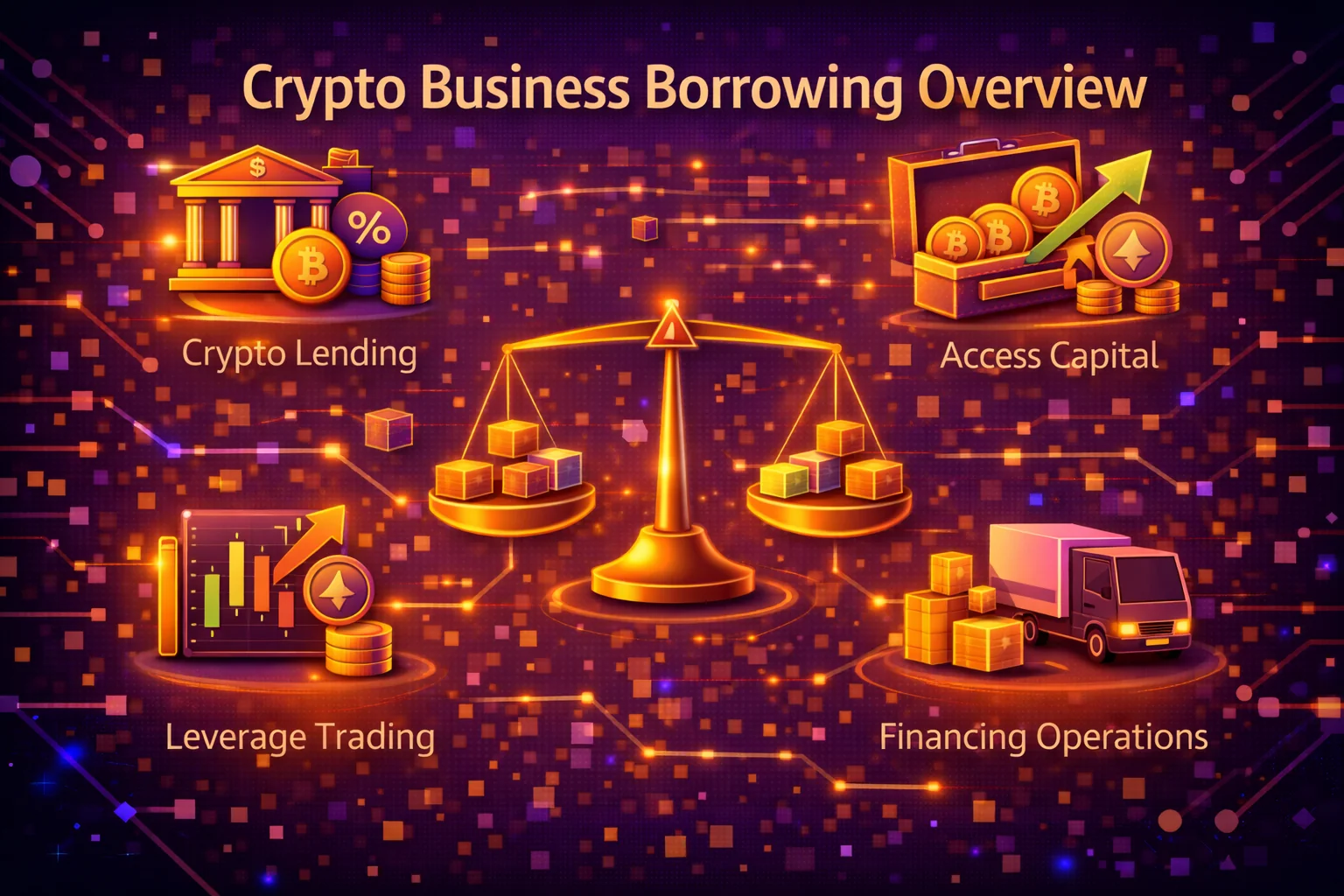
Four primary use cases drive business crypto borrowing:
- Working capital without selling: Access cash in hours (not the 2-8 weeks a bank loan takes) without triggering capital gains tax or diluting equity. A company with $1M in BTC at 50% LTV can access $500K for operations whilst keeping full BTC exposure.
- Treasury optimisation: Some businesses simultaneously earn staking yield on a portion of holdings whilst borrowing against another portion, effectively reducing the net cost of the loan.
- Growth financing: Fund inventory, hiring, equipment, or marketing campaigns. Particularly useful for seasonal businesses that need capital for 3-6 months and can repay from revenue.
- Cash flow bridging: Cover payroll or supplier payments during the gap between incurring costs and receiving customer payments. Faster than invoice factoring and does not require giving up receivables.
Business Advantages Over Personal Loans
| Feature | Business Loans | Personal Loans |
|---|---|---|
| Loan Amounts | $100K - $50M+ | $1K - $1M |
| Interest Deductibility | Often deductible | Not deductible |
| Verification | KYB (Know Your Business) | KYC (Know Your Customer) |
| Documentation | Corporate docs required | Personal ID only |
| Support | Dedicated account managers | Standard support |
| Rates | Often better (volume) | Standard rates |
Real-World Business Scenarios
Scenario 1: Tech Startup
Company: SaaS startup with 500 ETH treasury
Need: $500K for 6-month runway
Solution:
- Borrow $500K USDC against 250 ETH
- LTV: 50% (conservative)
- Use for payroll and operations
- Maintain 250 ETH exposure
- Repay from revenue over 12 months
Scenario 2: E-commerce Business
Company: Online retailer holding 20 BTC
Need: $300K for holiday inventory
Solution:
- Borrow $300K against 10 BTC
- Purchase inventory in October
- Sell inventory November-December
- Repay loan from sales
- Keep 10 BTC long-term investment
Scenario 3: Crypto-Native Company
Company: Blockchain development firm
Need: $1M for office expansion
Solution:
- Borrow $1M against a diversified crypto portfolio
- Lock in low rates (5% APR)
- Avoid selling crypto at current prices
- Repay from client contracts
- Maintain crypto exposure for potential gains
Key Considerations for Businesses
Legal Structure Requirements
- LLC/Corporation: Most platforms require formal business entity registration
- Sole proprietorship: May be treated as personal lending with limited options
- Partnership: Complex approval process requiring all partner documentation
- Offshore entities: Limited platform support and additional compliance requirements
Compliance Requirements
- Business registration: Articles of incorporation and operating agreements
- Tax identification: EIN (US) or equivalent business tax numbers
- Beneficial ownership: Disclosure of ultimate beneficial owners and control persons
- Financial statements: Recent balance sheets and profit/loss statements for large loans
- Board approval: Corporate resolutions for material borrowing decisions
Risk Management Framework
- Asset segregation: Separate business and personal cryptocurrency holdings
- Conservative ratios: Maintain LTV ratios well below maximum limits
- Repayment planning: Establish clear repayment sources before borrowing
- Volatility buffers: Account for cryptocurrency price volatility in planning
- Emergency reserves: Maintain additional collateral for market downturns
Tax Implications for Businesses
**Business crypto loans have unique tax considerations that differ greatly from personal lending:**
- Interest Deductibility: Business loan interest is typically tax-deductible as an operating expense. Consult a tax advisor for specific rules in your jurisdiction and business structure.
- Collateral Treatment: Pledging cryptocurrency as collateral is generally not a taxable event. No capital gains are triggered until actual sale or liquidation occurs.
- Loan Proceeds: Borrowed funds are not considered taxable income. Only interest payments and fees affect the business tax liability.
- Liquidation Events: If collateral is liquidated due to default, this triggers capital gains or losses. Maintain detailed cost basis records for accurate reporting.
- Accounting Standards: Follow GAAP or IFRS guidelines for cryptocurrency asset reporting. Loans appear as liabilities on the corporate balance sheet.
- Documentation Requirements: Maintain complete records of all transactions for audit purposes. Most enterprise platforms provide detailed monthly statements.
Corporate Governance Framework
**Proper governance is essential for business cryptocurrency lending operations:**
- Board Approval: Large loans may require formal board resolution. Document the decision-making process thoroughly for corporate records.
- Treasury Policy: Establish written policies for cryptocurrency loan limits, LTV thresholds, and approval workflows that align with corporate risk tolerance.
- Risk Disclosure: Inform stakeholders (investors, partners, lenders) about cryptocurrency collateral risks and potential impacts on business operations.
- Insurance Consideration: Evaluate the need for additional insurance coverage specifically for cryptocurrency holdings and lending activities.
- Succession Planning: Ensure multiple authorized signers can access accounts and manage positions if key personnel become unavailable.
Crypto borrowing works well for businesses that already hold digital assets and need fiat liquidity. It does not make sense for traditional businesses that would need to buy crypto first just to borrow against it -- at that point, a conventional business loan is simpler and cheaper.
Crypto Loans vs Traditional Business Loans: A Direct Comparison
Before diving into platform details, here is how crypto-backed business loans compare to the alternatives you are already familiar with:
| Factor | Crypto-Backed Loan | Traditional Bank Loan | Equity Financing |
|---|---|---|---|
| Approval time | Hours to days | 2-8 weeks | 3-12 months |
| Credit check required | No (collateral-based) | Yes | N/A |
| Interest rate (2025) | 5-12% APR | 7-15% APR | N/A (equity dilution) |
| Equity dilution | None | None | 10-30% typical |
| Tax event on collateral | No (until liquidation) | N/A | N/A |
| Downside risk | Collateral liquidation if price drops | Personal guarantee common | Permanent ownership loss |
| Best for | Companies holding crypto | Traditional businesses | High-growth startups |
The key risk that does not exist with traditional loans: a 40-50% drop in your collateral asset triggers liquidation. If you borrow $500K at 50% LTV against $1M in BTC, a price drop from $100K to $55K puts you in liquidation territory. This is why conservative businesses maintain 40-50% LTV rather than the maximum 70% most platforms allow. The extra 20% buffer costs you in capital efficiency but saves you from forced liquidation during a crash.
Interest on business crypto loans is typically tax-deductible as a business expense. Consult your tax adviser, but the general principle: if the loan funds business operations, the interest deduction applies just as it would for a traditional business loan. This makes the effective cost of a 6% crypto loan closer to 4-4.5% after tax benefits for profitable businesses.
Institutional Platforms
The four platforms below serve different business sizes. Each requires KYB (Know Your Business) verification with corporate documents, beneficial ownership disclosure, and financial statements for larger loans.
1. Nexo Institutional
Nexo is the most accessible option for mid-size businesses. Loan range: $100K-$50M+. LTV up to 50% for BTC/ETH, 90% for stablecoins. Interest starts at 0% APR for Platinum-tier Nexo token holders (realistically 5.9-13.9% for most businesses). 40+ supported collateral assets. Dedicated account manager for loans above $500K. $775M custodial insurance through Lloyd's of London. Licensed in EU and multiple jurisdictions. Provides GAAP-compatible monthly statements for corporate accounting. Requires LLC/Corporation, KYB documents, and beneficial ownership disclosure.

2. Galaxy Digital
Galaxy serves large institutions: $1M-$100M+ loans with bespoke structures. US-regulated, publicly traded (GLXY on TSX). Clients include hedge funds, corporate treasuries, and mining operations. Custom terms, negotiated rates, dedicated relationship managers. Not suitable for businesses under $1M in borrowing needs.
3. Ledn
Canadian-regulated platform serving mid-size businesses. Loan range: $50K-$10M. Focused on BTC, ETH, and USDC collateral. Competitive rates with volume discounts. Transparent proof-of-reserves published regularly. Good middle ground between Nexo's accessibility and Galaxy's institutional focus.
4. Unchained Capital
Bitcoin-only lending with a unique advantage: collaborative multi-signature custody. You hold one of three keys, Unchained holds one, and a third-party backup provider holds another. This means Unchained cannot unilaterally move your collateral. Loan range: $10K-$10M. Texas-regulated, US-focused. If your business holds BTC and values custody control above all else, Unchained is the strongest option.
Platform Comparison
| Platform | Min Loan | Max Loan | Best For | Regulation |
|---|---|---|---|---|
| Nexo | $100K | $50M+ | Most businesses | EU/US licensed |
| Galaxy Digital | $1M | $100M+ | Large institutions | US public company |
| Ledn | $50K | $10M | Mid-size businesses | Canadian |
| Unchained | $10K | $10M | Bitcoin holders | Texas-regulated |
Choosing the Right Platform
- $50K-$500K: Nexo or Ledn. Easier onboarding, lower minimums, standard terms.
- $500K-$5M: Nexo Institutional. Negotiable rates, dedicated account manager, scalable facilities.
- $5M+: Galaxy Digital. Bespoke structures, institutional-grade compliance, publicly traded counterparty.
- BTC-only, custody-focused: Unchained Capital at any size. Multi-sig custody is the differentiator.
Accounting Considerations
Proper accounting treatment of crypto loans is essential for financial reporting and tax compliance.
Balance Sheet Treatment
Assets Side
- Crypto Holdings: Record at fair market value
- Collateral: Note as pledged/restricted
- Loan Proceeds: Cash or stablecoin asset
Liabilities Side
- Loan Principal: Current or long-term liability
- Accrued Interest: Current liability
- Disclosure: Note collateral pledged
Example Balance Sheet Entry:
Assets:
  Cash (from loan): $500,000
  Cryptocurrency (pledged): $1,000,000

Liabilities:
  Crypto-backed loan: $500,000
  Accrued interest: $2,083

Notes:
  "1,000 ETH pledged as collateral for a loan"
Income Statement Impact
Interest Expense
- Deductible: If loan is for business purposes
- Accrual: Record monthly even if not paid
- Classification: Operating or financing expense
Example P&L Entry:
Operating Expenses:
  Interest expense - crypto loan: $25,000

Or:

Non-Operating Expenses:
  Financing costs: $25,000
Crypto Asset Valuation
Fair Value Accounting
- Mark-to-market: Revalue quarterly or annually
- Gains/losses: Unrealized gains/losses on balance sheet
- Volatility: Can impact financial statements greatly
Cost Basis Method
- Historical cost: Record at purchase price
- Impairment: Write down if value declines
- No write-up: Can't increase value above cost
Audit Considerations
Documentation Required
- Loan agreements and terms
- Collateral valuation reports
- Platform statements
- Interest calculations
- Blockchain transaction records
Auditor Concerns
- Custody: Who controls the crypto?
- Valuation: How is fair value determined?
- Disclosure: Are risks properly disclosed?
- Going concern: Can business repay if crypto crashes?
Tax Accounting
Interest Deductibility
- Business purpose: Interest is deductible
- Documentation: Prove business use
- Limitations: Interest expense limitations may apply
- Form: Report on Schedule C or corporate return
Liquidation Events
- Capital gain/loss: On liquidated collateral
- Ordinary income: If inventory or business property
- Section 1231: May apply to business assets
GAAP vs Tax Accounting
Differences
- GAAP: Fair value, mark-to-market
- Tax: Cost basis, realised gains only
- Reconciliation: Book-tax differences must be tracked
Software and Tools
- QuickBooks: Can track crypto loans
- Xero: Crypto-friendly accounting
- Cryptio: specialised crypto accounting
- Bitwave: Enterprise crypto accounting
Compliance Requirements
Business digital asset loans involves regulatory compliance beyond personal loans.
KYB (Know Your Business)
Required Documents
- Formation Documents: Articles of incorporation, operating agreement
- Tax ID: EIN (US) or equivalent
- Business License: State/local business licenses
- Beneficial Ownership: FinCEN Form (US) or equivalent
- Financial Statements: Recent balance sheet and P&L
- Bank Statements: 3-6 months of business banking
Verification Process
- Timeline: 1-4 weeks typically
- Enhanced Due Diligence: For loans >$1M
- Ongoing Monitoring: Annual re-verification
Regulatory Frameworks
United States
- FinCEN: Beneficial ownership reporting
- SEC: Securities law compliance (if applicable)
- State Regulations: Money transmitter licenses
- IRS: Tax reporting requirements
European Union
- MiCA: Markets in Crypto-Assets regulation
- AML5: Anti-money laundering directive
- GDPR: Data protection compliance
United Kingdom
- FCA Registration: Required for crypto businesses
- AML Compliance: Strict requirements
- Companies House: Public disclosure
Corporate Governance
Board Approval
- Resolution Required: For material loans
- Documentation: Board minutes
- Disclosure: To shareholders if applicable
Internal Controls
- Authorization: Who can borrow?
- Limits: Maximum loan amounts
- Monitoring: Regular position reviews
- Reporting: To management and board
Legal Considerations
Loan Agreements
- Terms and Conditions: Review carefully
- Default Provisions: Understand consequences
- Jurisdiction: Which law applies?
- Dispute Resolution: Arbitration clauses
Corporate Authority
- Signatory Rights: Who can sign?
- Corporate Seal: If required
- Power of Attorney: For authorized representatives
Industry-Specific Regulations
Crypto Companies
- Additional scrutiny
- Source of funds verification
- Business model explanation
- Compliance program documentation
Traditional Businesses
- Explain crypto holdings
- Treasury policy documentation
- Risk management procedures
Ongoing Compliance
- Annual Reviews: Re-verification required
- Material Changes: Report ownership changes
- Financial Updates: Provide updated statements
- Regulatory Changes: Adapt to new rules
Corporate Risk Management
Effective treasury management is critical when using digital asset loans for business operations.
Treasury Best Practices
Collateral Management
- Diversification: Spread collateral across multiple assets (BTC, ETH, stablecoins)
- LTV Monitoring: Maintain conservative loan-to-value ratios (50-60% vs 70-80% maximum)
- Buffer Reserves: Keep 20-30% additional collateral ready for market volatility
- Automated Alerts: Set up notifications for LTV threshold breaches
Liquidity Management
- Cash Flow Planning: Match loan terms with business cash flow cycles
- Emergency Fund: Maintain 3-6 months operating expenses in liquid assets
- Stablecoin Reserves: Keep USDC/USDT for quick collateral top-ups
- Credit Lines: Establish backup credit facilities for emergencies
Risk Mitigation Strategies
- Hedging: Use derivatives to hedge crypto price exposure
- Insurance: Consider DeFi insurance systems (Nexus Mutual, InsurAce)
- Multi-Platform: Diversify across 2-3 lending platforms
- Regular Audits: Monthly review of all crypto positions and exposures
Governance and Controls
- Multi-Signature Wallets: Require 2-3 approvals for large transactions
- Segregation of Duties: Separate treasury management from operations
- Policy Documentation: Written policies for digital asset loan limits and procedures
- Board Oversight: Regular reporting to board on crypto exposures
Stress Testing
- Price Scenarios: Model 30%, 50%, 70% crypto price drops
- Liquidity Crises: Plan for inability to access funds for 30-90 days
- Platform Failures: Contingency plans if lending platform becomes insolvent
- Regulatory Changes: Prepare for sudden regulatory restrictions
Key Performance Indicators
- Average LTV Ratio: Target 50-60%
- Collateral Coverage: Minimum 150% of loan value
- Liquidation Distance: Maintain 30%+ buffer to liquidation price
- Cost of Capital: Compare crypto loan rates vs traditional financing
- Platform Concentration: No more than 40% on single platform
Real Business Case Studies
Case Study 1: E-Commerce Company
Situation: Online retailer with $500K in Bitcoin from early adoption needed $300K for inventory expansion without selling BTC
Solution: Used Nexo enterprise account to borrow $300K USDC at 60% LTV against Bitcoin collateral.
Results:
- Maintained Bitcoin exposure (which appreciated 40% during the loan period)
- Funded inventory purchase for holiday season
- Repaid loan from sales revenue in 6 months
- Net benefit: $200K Bitcoin appreciation + $150K sales profit - $12K interest = $338K gain
Case Study 2: Tech Startup
Situation: SaaS company received $1M in ETH from token sale, needed bridge financing for payroll. waiting for customer payments.
Solution: Borrowed $400 USDC at 40% LTV through Galaxy Digital, maintaining a conservative ratio for volatility protection.
Results:
- Covered 3 months' payroll without diluting equity
- Repaid loan when customer payments arrived
- Avoided selling ETH at unfavorable prices
- Total cost: $8K interest vs $50K+ in equity dilution from VC funding
Case Study 3: Real Estate Developer
Situation: Property developer with $2M in mixed crypto portfolio needed $1M deposit for commercial property purchase.
Solution: Structured loan through Ledn with 50% LTV using BTC and stablecoins as collateral.
Results:
- Secured property purchase within 2-week deadline
- Maintained crypto holdings for long-term appreciation
- Property rental income covers loan interest
- Plan to refinance with a traditional mortgage after 12 months
Key Lessons from Case Studies
- Conservative LTV: All successful cases used 40-60% LTV, not maximum 90%
- Clear Repayment Plan: Each business had defined revenue source for repayment
- Strategic Timing: Borrowed during stable markets, not peak volatility
- Professional Advice: All consulted tax advisors and legal counsel
- Risk Management: Maintained emergency reserves to add collateral if needed
Future Trends and Outlook
Institutional Adoption Acceleration
The business digital asset lending landscape is rapidly evolving as enterprise adoption accelerates. Major corporations are increasingly viewing crypto assets as legitimate treasury reserves, driving demand for advanced borrowing solutions. This trend is supported by clearer regulatory structures and improved enterprise system.
Traditional banks are beginning to offer crypto-backed lending services, bridging the gap between traditional finance and digital assets. This enterprise validation is reducing the stigma around crypto borrowing and making it more accessible to mainstream businesses.
Regulatory Clarity and Compliance
Regulatory structures continue to mature. providing businesses with clearer guidelines for cryptocurrency lending activities. The useation of complete digital asset regulations in major jurisdictions is creating standardised compliance requirements, making it easier for businesses to navigate legal obligations.
This regulatory clarity is particularly important for public companies and regulated industries that previously avoided digital asset financing due to compliance uncertainties. As structures solidify, we expect to see increased involvement from these sectors.
Technology Integration and Automation
Advanced treasury management systems are integrating digital asset lending capabilities, allowing businesses to automate collateral management, monitor loan-to-value ratios. and execute hedging strategies. These technological improvements are reducing the operational complexity of managing crypto-backed loans.
Smart contract innovations are also enabling more advanced loan structures, including dynamic interest rates, automated collateral adjustments. and cross-chain borrowing capabilities. These developments are making cryptocurrency lending more efficient and cost-effective for businesses of all sizes.
The future of business digital asset financing looks promising, with continued innovation in products, services. and regulatory structures. Companies that establish crypto borrowing capabilities now will be well-positioned to capitalise on these emerging opportunities. maintaining competitive advantages in their respective markets.
Enterprise Implementation and Institutional Considerations
Corporate Governance and Risk Management Frameworks
Enterprise cryptocurrency borrowing needs advanced governance structures that address board oversight, risk management systems. and complete compliance procedures that meet enterprise standards. enabling efficient utilisation of digital assets for business operations. Corporate governance encompasses development of complete policies, useation of multi-signature approval processes, establishment of risk limits and monitoring systems. and creation of detailed reporting procedures that ensure enterprise-grade oversight and control over cryptocurrency borrowing activities.
Professional risk management structures include systematic assessment of counterparty risks, complete evaluation of collateral requirements, useation of advanced monitoring systems. and development of contingency plans that address potential market disruptions and operational challenges. Advanced governance structures also include establishment of specialised committees, useation of complete audit procedures. and creation of detailed documentation that ensures regulatory compliance and fiduciary responsibility. maintaining operational efficiency and strategic flexibility for corporate cryptocurrency borrowing operations.
Institutional Platform Selection and Due Diligence
Corporate cryptocurrency borrowing needs complete due diligence processes that evaluate platform security, regulatory compliance, operational capabilities. and enterprise service levels that meet enterprise requirements for professional cryptocurrency lending relationships. Institutional due diligence encompasses assessment of platform licensing, evaluation of security architectures, analysis of insurance coverage, and complete review of operational procedures that ensure platform suitability for corporate cryptocurrency borrowing activities.
Professional platform evaluation includes systematic assessment of enterprise features, analysis of custody arrangements, evaluation of reporting capabilities. and complete review of legal and regulatory compliance that ensures platform alignment with corporate requirements and fiduciary responsibilities. Advanced due diligence procedures also include assessment of platform financial stability, evaluation of business continuity plans. and complete analysis of service level agreements that provide enterprise-grade assurance for corporate cryptocurrency borrowing relationships and operational requirements.
Regulatory Compliance and Professional Standards
Corporate cryptocurrency borrowing must address complex regulatory requirements that vary across jurisdictions. maintaining operational efficiency and strategic flexibility for business operations. Compliance considerations include complete transaction reporting, detailed audit trail maintenance, advanced tax optimisation strategies. and integration with regulatory reporting systems that ensure corporate compliance obligations. benefiting from cryptocurrency borrowing opportunities within professional business operations and strategic financial management structures.
Professional compliance useation includes development of complete policies and procedures, establishment of systematic monitoring and reporting systems, useation of advanced record-keeping structures. and creation of detailed documentation that ensures regulatory compliance. maintaining operational efficiency and strategic flexibility. Advanced compliance strategies also include engagement with regulatory authorities, useation of proactive compliance monitoring. and development of complete training programs that ensure organisational understanding and adherence to regulatory requirements for corporate cryptocurrency borrowing activities and professional financial management operations.
Future-Proofing and Strategic Planning
Corporate cryptocurrency borrowing strategies must address long-term market evolution, regulatory developments. and technological innovations that influence the viability and effectiveness of digital asset lending for business operations. Strategic planning encompasses assessment of market trends, evaluation of emerging technologies. and development of adaptive structures that ensure continued effectiveness of cryptocurrency borrowing strategies. maintaining operational flexibility and competitive advantage in evolving business environments and regulatory landscapes.
Professional strategic planning includes systematic evaluation of industry developments, useation of scenario planning methodologies. and creation of complete roadmaps that guide long-term cryptocurrency borrowing strategies. addressing potential challenges and opportunities. Advanced strategic considerations include assessment of technological innovations, evaluation of regulatory trends. and development of complete contingency plans that ensure business continuity and strategic flexibility whilstmaximising the benefits of cryptocurrency borrowing for corporate financial management and operational excellence in dynamic market conditions.
Advanced Implementation Strategies
Multi-Platform Diversification
Smart businesses spread their crypto borrowing across multiple platforms to reduce counterparty risk and optimise terms. Consider using 2-3 platforms simultaneously:
- Primary Platform (60%): Your main lending relationship with best terms
- Secondary Platform (30%): Backup option with different collateral requirements
- Emergency Platform (10%): Quick access for urgent needs
This approach protects against platform failures. giving you negotiating power and access to different loan products. Monitor each platform's health through their insurance coverage, regulatory status, and user reviews.
Seasonal Cash Flow Management
Many businesses experience seasonal fluctuations that crypto borrowing can smooth out effectively:
Retail Businesses
- Borrow in Q2/Q3 to build inventory for holiday season
- Repay loans from Q4 revenue surge
- Maintain crypto holdings through slow periods
B2B Services
- Bridge payment delays from large clients
- Fund project expenses before milestone payments
- Cover payroll during contract negotiations
Construction/Real Estate
- Finance material purchases before project funding
- Cover carrying costs during development
- Bridge financing gaps between projects
Integration with Traditional Banking
Crypto borrowing works best when integrated with your existing banking relationships, not as a replacement:
| Use Case | Traditional Banking | Crypto Borrowing |
|---|---|---|
| Long-term expansion | SBA loans, term loans | Bridge financing |
| Working capital | Lines of credit | Quick access funds |
| Equipment financing | Equipment loans | Down payments |
| Real estate | Commercial mortgages | Earnest money, deposits |
Tax-Efficient Strategies
Structure your crypto borrowing to maximise tax benefits:
Business Expense Deductions
- Interest payments are typically deductible for business loans
- Keep detailed records of loan proceeds usage
- Separate business and personal crypto borrowing
- Consult with tax professionals for complex structures
Capital Gains Deferral
- Avoid selling appreciated crypto by borrowing instead
- Time asset sales for optimal tax treatment
- Consider like-kind exchanges where applicable
- Plan for eventual tax obligations
Crisis Management Protocols
Prepare for various crisis scenarios that could affect your crypto borrowing:
Market Crash Response
- Monitor LTV ratios hourly during high volatility
- Have additional collateral ready to deploy
- Consider partial loan repayment to reduce risk
- Communicate with platform support proactively
Platform Issues
- Maintain relationships with multiple platforms
- Keep emergency cash reserves for collateral calls
- Document all transactions for legal protection
- Have legal counsel familiar with crypto lending
Regulatory Changes
- Stay informed about regulatory developments
- Maintain compliance documentation
- Have exit strategies for different scenarios
- Consider geographic diversification of platforms
Performance optimisation
Continuously improve your crypto borrowing strategy through systematic analysis:
Key Metrics to Track
- Effective Interest Rate: Total cost including fees
- Collateral Efficiency: Loan amount vs collateral value
- Time to Funding: Speed of loan approval and disbursement
- Platform Reliability: Uptime and customer service quality
optimisation Strategies
- Negotiate better terms based on loan history
- Time borrowing during favorable market conditions
- Use stablecoins for higher LTV ratios when appropriate
- Consider yield-bearing collateral where available
Future-Proofing Your Strategy
Position your business for the evolving crypto lending landscape:
Emerging Trends
- Traditional Bank Integration: Major banks adding crypto services
- Regulatory Clarity: Clearer rules enabling broader adoption
- DeFi Integration: Institutional DeFi lending systems
- Cross-Chain Lending: Multi-blockchain collateral options
Preparation Steps
- Build relationships with multiple platform types
- Stay educated about new lending products
- Maintain flexible collateral portfolios
- Develop internal expertise and processes
The crypto lending landscape continues evolving rapidly. Businesses that establish solid foundations now. remaining adaptable to change will be best positioned to capitalise on future opportunities in digital asset financing.
Industry-Specific Implementation Strategies
Different industries can leverage crypto borrowing in unique ways that align with their specific business models and cash flow patterns:
Technology Startups
Tech companies often hold significant crypto assets from early investments or payments. These businesses can use crypto borrowing to:
- Fund product development without diluting equity
- Bridge funding rounds during investor negotiations
- Maintain crypto holdings. accessing growth capital
- Cover operational expenses during revenue scaling
E-commerce and Retail
Retail businesses face seasonal fluctuations and inventory financing needs that crypto borrowing can address effectively:
- Finance inventory purchases before peak seasons
- Cover marketing spend during customer acquisition campaigns
- Bridge payment processing delays from major sales events
- Fund expansion into new markets or product lines
Professional Services
Service-based businesses often experience irregular cash flows that crypto borrowing can smooth:
- Cover payroll during client payment delays
- Finance equipment upgrades and office expansions
- Fund business development and marketing initiatives
- Bridge seasonal fluctuations in client demand
Real Estate and Construction
Property-related businesses can use crypto borrowing for time-sensitive opportunities:
- Secure earnest money deposits for property acquisitions
- Finance material purchases before project funding arrives
- Cover carrying costs during development phases
- Bridge financing gaps between project completions and sales
Building Long-Term Lending Relationships
Successful crypto borrowing needs building strong relationships with lending platforms over time:
Relationship Building Strategies
- Start Small: Begin with smaller loans to establish payment history
- Maintain Communication: Keep platforms informed about business developments
- Provide Documentation: Share financial statements and business updates regularly
- Pay Consistently: Build a track record of on-time payments
Benefits of Strong Relationships
- Access to higher loan amounts and better terms
- Priority support during market volatility
- Early access to new lending products
- Flexible terms during temporary business challenges
Common Implementation Mistakes to Avoid
Learn from common mistakes that businesses make when useing crypto borrowing strategies:
Over-Leveraging
- Using maximum LTV ratios without safety buffers
- Borrowing more than business cash flow can support
- Failing to account for crypto volatility in planning
- Not maintaining emergency collateral reserves
Platform Concentration Risk
- Putting all borrowing on a single platform
- Not researching platform security and insurance
- Ignoring regulatory status and compliance
- Failing to monitor platform health indicators
Inadequate Documentation
- Poor record-keeping for tax and accounting purposes
- Not documenting business use of loan proceeds
- Failing to maintain audit trails for compliance
- Not preparing proper financial reporting
Regulatory Oversights
- Not understanding local regulations and requirements
- Failing to use proper compliance procedures
- Not consulting with legal and tax professionals
- Ignoring reporting requirements and deadlines
Success Metrics and Performance Tracking
Establish clear metrics to measure the success of your crypto borrowing strategy:
Financial Metrics
- Cost of Capital: Compare crypto loan rates to traditional financing
- Return on Borrowed Capital: Measure returns generated from loan proceeds
- Collateral Efficiency: Track loan amount relative to collateral value
- Interest Coverage Ratio: Ensure business cash flow covers interest payments
Operational Metrics
- Time to Funding: Speed of loan approval and disbursement
- Platform Uptime: Availability of lending platforms when needed
- Support Quality: Responsiveness and helpfulness of platform support
- Process Efficiency: Time spent managing crypto borrowing operations
Risk Metrics
- Average LTV Ratio: Maintain conservative ratios for safety
- Liquidation Distance: Buffer between current and liquidation prices
- Platform Concentration: Percentage of borrowing on each platform
- Collateral Diversification: Spread across different crypto assets
Advanced Risk Management Techniques
Sophisticated businesses use advanced risk management strategies to protect against various scenarios:
Dynamic Hedging Strategies
Protect against crypto volatility. maintaining upside exposure:
- Options Strategies: Buy put options on collateral assets to limit downside
- Futures Hedging: Short futures contracts to hedge price exposure
- Stablecoin Allocation: Use stablecoins for portion of collateral to reduce volatility
- Delta Hedging: Adjust hedge ratios based on market conditions
Liquidity Management Protocols
Ensure adequate liquidity for various scenarios:
- Tiered Reserves: Maintain 30-day, 90-day, and 180-day liquidity buffers
- Credit Line Backup: Establish traditional credit lines for emergencies
- Asset Laddering: Structure collateral with different maturity profiles
- Cross-Platform Coordination: Coordinate collateral management across platforms
Stress Testing Frameworks
Regular stress testing helps prepare for adverse scenarios:
- Price Shock Scenarios: Model 50%, 70%, and 90% crypto price declines
- Liquidity Crises: Plan for inability to access funds for extended periods
- Platform Failures: Prepare for lending platform insolvency or shutdown
- Regulatory Shocks: Model impact of sudden regulatory restrictions
Integration with Corporate Treasury Systems
Modern treasury management systems can integrate crypto borrowing for seamless operations:
Technology Integration
- API Connections: Connect lending platforms to treasury systems
- Real-Time Monitoring: Track LTV ratios and collateral values continuously
- Automated Alerts: Set up notifications for threshold breaches
- Reporting Dashboards: Create complete views of all crypto positions
Workflow Automation
- Collateral Management: Automate collateral top-ups when needed
- Interest Payments: Schedule automatic interest payments
- Rebalancing: Automatically rebalance collateral portfolios
- Compliance Reporting: Generate required regulatory reports automatically
Scaling Crypto Borrowing Operations
As businesses grow, their crypto borrowing strategies must scale accordingly:
Organizational Development
- Dedicated Team: Build internal expertise in crypto treasury management
- Training Programs: Educate staff on crypto borrowing best practices
- Policy Development: Create complete policies and procedures
- Vendor Management: Establish relationships with multiple service providers
Process Standardization
- Standard Operating Procedures: Document all crypto borrowing processes
- Approval Workflows: Establish clear approval hierarchies
- Risk Limits: Set and enforce borrowing limits by business unit
- Performance Reviews: Regular assessment of borrowing strategies
Technology Scaling
- Enterprise Platforms: Upgrade to enterprise-grade solutions
- Multi-Signature Security: Implement robust security systems
- Disaster Recovery: Prepare backup systems and procedures
- Audit Trails: Maintain complete transaction records
Future Opportunities and Innovations
The crypto borrowing landscape continues evolving with new opportunities emerging:
Emerging Technologies
- Cross-Chain Lending: Use assets from multiple blockchains as collateral
- Yield-Bearing Collateral: Earn returns on collateral. borrowing
- Dynamic Interest Rates: Rates that adjust based on market conditions
- Automated Liquidation Protection: Smart contracts that prevent liquidations
Regulatory Developments
- Clearer Guidelines: More specific rules for business crypto lending
- Tax optimisation: Better understanding of tax implications
- Insurance Products: specialised insurance for crypto lending risks
- Traditional Bank Integration: Major banks offering crypto lending services
Businesses that stay informed about these developments and adapt their strategies accordingly will be best positioned to capitalise on the evolving opportunities in cryptocurrency borrowing. The key is maintaining flexibility. building solid operational foundations that can support growth and innovation in this dynamic market.
Getting Started: Implementation Roadmap
For businesses ready to use crypto borrowing, follow this systematic approach:
Phase 1: Foundation (Weeks 1-2)
- Assess current crypto holdings and potential collateral
- Research and evaluate lending platforms
- Consult with legal and tax professionals
- Develop internal policies and procedures
Phase 2: Setup (Weeks 3-4)
- Complete KYB verification with chosen platforms
- Set up secure custody solutions
- Implement monitoring and alert systems
- Train relevant staff on procedures
Phase 3: Testing (Weeks 5-6)
- Start with small test loans
- Verify all systems and processes work correctly
- Test emergency procedures and contingency plans
- Refine processes based on initial experience
Phase 4: Scaling (Ongoing)
- Gradually increase loan amounts as comfort grows
- Add additional platforms for diversification
- optimise terms and strategies based on performance
- Continuously monitor and improve operations
Remember that crypto borrowing is a powerful financial tool that needs careful planning, proper risk management, and ongoing attention. Start conservatively, learn from experience, and scale gradually as your expertise and confidence grow. With proper useation, crypto borrowing can become a valuable component of your business financial strategy.
Conclusion: Mastering Cryptocurrency Borrowing for Business Success
**Cryptocurrency borrowing has emerged as a transformative financial strategy** for businesses seeking to optimise their capital structure. preserving their digital asset investments. As we've explored throughout this complete guide. the opportunities for strategic useation of crypto-backed lending extend far beyond simple working capital needs to encompass advanced treasury management, growth financing, and operational optimisation strategies that can provide significant competitive advantages.
**The enterprise system supporting business cryptocurrency borrowing has matured dramatically in 2025**, with dedicated platforms offering enterprise-grade security, complete compliance structures. and advanced financial products that meet the complex needs of corporate clients. This evolution has addressed many of the operational and regulatory concerns that previously limited business adoption of cryptocurrency lending strategies.
Strategic Implementation Success Factors
**Successful useation of business cryptocurrency borrowing needs complete planning** that addresses multiple dimensions of corporate financial management. The most successful companies approach crypto borrowing as part of a broader treasury strategy that considers risk management, regulatory compliance, accounting implications, and operational requirements within a cohesive structure that aligns with overall business objectives.
**Platform selection remains crucial for long-term success**. with different platforms serving different business needs and scales. Small businesses benefit from accessible platforms like Nexo and Ledn that offer reasonable minimums and good support. whilstlarger corporations require enterprise-scale solutions like Galaxy Digital that can handle complex structures and substantial credit facilities.
**Risk management structures must address the unique characteristics** of cryptocurrency collateral, including price volatility, platform counterparty risk, and operational security considerations. The most successful businesses use conservative loan-to-value ratios, maintain adequate collateral buffers, and develop complete contingency plans that address various market scenarios and operational challenges.
Regulatory and Compliance Excellence
**The regulatory environment for business cryptocurrency borrowing has stabilised greatly**. providing clearer structures for compliance. enabling legitimate business development through transparent lending relationships. Companies that invest in proper compliance system, maintain complete documentation. and work with experienced legal and tax advisors position themselves for sustainable success in this evolving landscape.
**Corporate governance considerations extend beyond traditional lending relationships** to encompass board oversight, stakeholder disclosure, and fiduciary responsibility management. Businesses must use appropriate approval processes, risk disclosure procedures. and monitoring systems that ensure responsible management of cryptocurrency borrowing activities. maintaining operational efficiency and strategic flexibility.
**Tax optimisation opportunities through cryptocurrency borrowing** can provide significant advantages for businesses holding appreciated digital assets. By borrowing against cryptocurrency rather than selling it, companies can access needed capital whilstdeferring capital gains tax liabilities and preserving their long-term investment positions in digital assets.
Future Opportunities and Strategic Positioning
**The cryptocurrency borrowing landscape continues evolving rapidly**, with new platforms, products. and services regularly emerging that create additional opportunities for businesses seeking flexible financing solutions. Companies that stay informed about industry developments and maintain relationships with multiple service providers position themselves to capitalise on emerging opportunities. managing concentration risk.
**Traditional financial institutions are increasingly entering the cryptocurrency lending space**, creating additional options for businesses. providing enterprise validation of cryptocurrency borrowing strategies. This trend is likely to accelerate as regulatory structures continue to mature and enterprise adoption of cryptocurrency increases across various industries and market segments.
**Success in business cryptocurrency borrowing needs ongoing education, careful risk management, and adaptation to changing market conditions.** By useing the principles, strategies, and best practices outlined in this guide, businesses can effectively leverage their digital assets to support growth, optimise capital structure. and achieve their financial objectives. managing risks appropriately and maintaining compliance with applicable regulations and standards.
The future of business finance increasingly includes cryptocurrency borrowing as a legitimate and valuable component of corporate treasury management. Companies that master these strategies now will be well-positioned to capitalise on the continued evolution and expansion of the cryptocurrency lending system whilstbuilding sustainable competitive advantages through innovative financial management approaches.
Sources & References
Frequently Asked Questions
- Can businesses borrow against crypto assets?
- Yes, businesses can borrow against crypto assets through enterprise platforms like Nexo, Galaxy Digital, and others. These platforms offer KYB verification, higher loan limits, and corporate-grade security.
- What are the typical loan-to-value ratios for business crypto loans?
- Business crypto loans typically offer 50-70% LTV ratios depending on the collateral type. Bitcoin and Ethereum usually get higher ratios (60-70%),. altcoins may be limited to 40-50%. Conservative businesses maintain LTVs of 50-60% to avoid liquidation risk.
- How do crypto loan interest rates compare to traditional business loans?
- Crypto-backed business loans typically range from 5-12% APR, compared to 7-15% for traditional business loans. Rates depend on LTV ratio, loan size, and platform. Larger loans ($500K+) often get better rates, and stablecoin loans have lower rates than fiat.
- What are the tax implications of digital asset loans for businesses?
- Crypto loans are generally not taxable events since they are not income. However, using crypto as collateral may trigger capital gains if you later sell it. Interest payments may be tax-deductible as business expenses. Consult a crypto-specialised tax advisor for your jurisdiction.
- Can startups use digital asset loans for working capital?
- Yes, crypto-native startups often use digital asset loans for working capital instead of diluting equity. This works well if the startup holds crypto treasury (BTC, ETH) and needs fiat for operations. However, startups must manage volatility risk carefully and maintain adequate collateral buffers.
- What happens if my business can't repay a crypto loan?
- If you can't repay, the lender liquidates your collateral to recover the loan. On CeFi platforms, they may work with you on restructuring. On DeFi, liquidation is automatic when LTV exceeds the threshold. This can result in the loss of more collateral than the loan value due to liquidation penalties and fees.
- Is cryptocurrency lending suitable for traditional businesses without crypto holdings?
- Generally, no. Cryptocurrency lending works best for businesses that already hold crypto assets. Traditional businesses would need first to acquire crypto (creating tax events and volatility risk), making traditional financing more suitable. Exception: businesses wanting crypto exposure. accessing capital.
- What's the minimum loan size for business digital asset financing?
- Minimum loan sizes vary by platform. CeFi platforms like Nexo start at $50K-100K for business accounts. DeFi systems have no minimums but become economical at $100K+ due to gas fees. Institutional lenders typically require $500K+ minimums.
← Back to Crypto Investing Blog Index
Financial Disclaimer
This content is not financial advice. All information provided is for educational purposes only. Cryptocurrency investments carry significant investment risk, and past performance does not guarantee future results. Always do your own research and consult a qualified financial advisor before making investment decisions.