Top Non-Custodial Crypto Wallets
Explore the best self-custody wallets giving full control over your private keys and on-chain assets. Compare security, features, and usability across mobile, desktop, and browser platforms throughout 2026 with detailed hands-on testing notes.
Introduction
The cryptocurrency landscape has undergone a fundamental shift towards self-custody solutions throughout recent years. Non-custodial wallets have become the preferred choice for anyone who prioritises security, privacy, and complete practical control over their digital assets. In 2026, the importance of self-custody has never been more apparent. Regulatory uncertainties, exchange failures, and increasing institutional surveillance have highlighted the inherent risks of relying on third-party custodians for cryptocurrency storage.
Non-custodial wallets represent the purest expression of cryptocurrency's founding principles for you: financial sovereignty, censorship resistance, and individual control over your assets. Unlike custodial solutions, where exchanges or service providers hold your private keys, non-custodial wallets ensure that you maintain complete ownership and control of your cryptocurrency holdings. This fundamental difference provides not only enhanced security for you but also the freedom to interact with the broader DeFi ecosystem without intermediaries.
The evolution of non-custodial wallet technology has been remarkable for you. Modern solutions offer sophisticated features that rival those of traditional financial applications. They maintain the security and privacy advantages of self-custody for you. Today's leading wallets offer direct DEX integration, support for DeFi protocols (the wallet still surfaces gas, slippage, and contract approvals), advanced security features such as hardware wallet integration, and user-friendly interfaces that make self-custody accessible to users regardless of experience level.
Choosing the right non-custodial wallet has become increasingly complex for you as the market has matured and diversified. Different wallets excel in different areas for you: some prioritise maximum security through hardware integration and advanced encryption, while others focus on user experience and DeFi integration. Some specialise in specific blockchain ecosystems or use cases for you. Understanding these differences is crucial to selecting a wallet that aligns with your specific needs, technical expertise, and security requirements.
This comprehensive comparison examines the leading non-custodial wallets available in 2025. We analyse their security features, supported cryptocurrencies, user experience, DeFi integration capabilities, and overall suitability for your different user profiles. We'll explore both mobile and desktop solutions, evaluate their strengths and limitations, and provide practical guidance to help you make an informed decision about your cryptocurrency storage and management needs.
Self-Custody Revolution: Why Decentralised Wallets Matter
The collapse of major centralised exchanges and custodial services has reinforced a fundamental principle in cryptocurrency: "Not your keys, not your coins." Self-custody solutions represent true financial sovereignty, giving users complete control over their digital assets without relying on third-party custodians who can freeze accounts, impose withdrawal limits, or even mismanage or fraudulently lose customer funds.
The Centralised Exchange Risk
Recent history demonstrates the catastrophic risks of centralised custody. FTX, once the third-largest cryptocurrency exchange, collapsed in November 2022, leaving billions of dollars in customer funds inaccessible. Celsius Network, BlockFi, and Voyager Digital all filed for bankruptcy, freezing customer withdrawals and leaving users unable to access their own cryptocurrency. These failures weren't isolated incidents but systemic problems inherent to centralised custody models.
When you store cryptocurrency on an exchange, you don't actually own the private keys to your funds. The exchange controls your assets, and you merely have a claim against the exchange's balance sheet. If the exchange becomes insolvent, your cryptocurrency becomes part of the bankruptcy estate, potentially lost forever or recovered only partially after years of legal proceedings. Self-custody eliminates this counterparty risk entirely.
True Ownership and Financial Sovereignty
Non-custodial wallets provide genuine ownership of your cryptocurrency. You control the private keys, meaning you have exclusive access to your funds at all times. No third party can freeze your account, impose withdrawal limits, require identity verification, or prevent you from accessing your assets. This represents the original vision of cryptocurrency: permissionless, censorship-resistant digital money that you truly own.
Financial sovereignty extends beyond just security. Self-custody enables you to interact directly with blockchain networks and decentralised applications without intermediaries. You can participate in DeFi protocols, stake your assets, vote in governance proposals, and access emerging blockchain features immediately without waiting for exchange support. This direct blockchain access unlocks the full potential of cryptocurrency beyond simple buying and selling.
Privacy and Anonymity Benefits
Centralised exchanges require extensive identity verification through Know Your Customer (KYC) procedures. They collect personal information, including government-issued identification, proof of address, and, sometimes, source-of-funds documentation. This information creates privacy risks through data breaches, government surveillance, and potential misuse by the exchange itself.
Non-custodial wallets require no identity verification. You can create a wallet instantly without providing any personal information. Your transactions are pseudonymous, linked to your wallet address rather than your real-world identity. Whilst blockchain transactions are publicly visible, they're not automatically linked to your personal information unless you choose to reveal that connection.
Regulatory Independence
Centralised exchanges must comply with local regulations, which can change rapidly and unpredictably. Governments can order exchanges to freeze accounts, block transactions to certain addresses, or even shut down entirely. Users in certain jurisdictions may find themselves unable to access their funds due to regulatory changes beyond their control.
Self-custody solutions operate independently of regulatory frameworks. Your ability to access and use your cryptocurrency doesn't depend on any company's regulatory compliance or business decisions. This independence proves particularly valuable for users in jurisdictions with restrictive financial regulations or unstable political environments.
Educational Value and Technical Understanding
Using non-custodial wallets requires understanding fundamental cryptocurrency concepts like private keys, seed phrases, transaction fees, and blockchain confirmations. This learning process, whilst initially challenging, provides valuable technical knowledge that makes you a more sophisticated cryptocurrency user. You understand how blockchain technology actually works rather than treating it as a black box managed by an exchange.
This technical understanding enables better security practices, more informed investment decisions, and the ability to troubleshoot problems independently. You become self-sufficient rather than dependent on customer support for basic operations. This knowledge compounds over time: the same concepts of keys, seed phrases, fees and confirmations recur across chains and DeFi protocols, so each new one takes less effort to evaluate safely.
Long-Term Viability and Resilience
Self-custody solutions are inherently more resilient than centralised services. A non-custodial wallet doesn't depend on any company's continued operation. Even if the wallet software company goes out of business, your funds remain accessible through your seed phrase. You can import your seed phrase into any compatible wallet software and regain full access to your cryptocurrency.
This resilience extends to network disruptions, regulatory crackdowns, and business failures. Your cryptocurrency remains accessible regardless of external circumstances. This long-term viability makes self-custody the only truly sustainable approach to cryptocurrency storage for serious investors and users who plan to hold assets for years or decades.
In 2025, the landscape of non-custodial wallets has evolved dramatically. It offers users unprecedented security, functionality, and ease of use. These wallets have become essential tools for anyone serious about cryptocurrency ownership. It provides the perfect balance between security and accessibility that was once thought impossible.
The importance of self-custody has never been more apparent, as recent events have highlighted the risks of trusting centralised entities with your digital assets. Non-custodial wallets eliminate these risks by ensuring that you, and only you, control your private keys and therefore your funds.
The evolution of non-custodial wallet technology has transformed these tools from complex, developer-focused applications into user-friendly interfaces that rival traditional banking apps in terms of usability. Modern wallets now offer direct integration with major DeFi protocols (Uniswap, Aave, Compound), multi-chain support, and advanced security features that make self-custody accessible to users of all technical backgrounds. This democratisation of financial sovereignty represents one of the most significant developments in the cryptocurrency space. This enables millions of users to take direct control of their digital assets. participating in the growing decentralised economy.
The Custodial vs Self-Custody Divide
Unlike exchange accounts, where companies control your cryptographic keys, decentralised wallets ensure that only you have access to your funds. This eliminates counterparty risk, censorship concerns, and the possibility of assets being frozen or seized by centralised entities.

Growing Adoption and Innovation
The self-custody space has seen tremendous innovation in 2025, with improved user interfaces, multichain support, and advanced security features. Modern decentralised solutions now rival centralised alternatives in terms of usability. Maintaining the security benefits of user-controlled storage.
Key Benefits of Self-Custody
- True Ownership: Complete control over your cryptographic keys and digital assets
- Censorship Resistance: No third party can freeze or restrict your holdings
- Privacy: Transactions don't require KYC or identity verification
- Global Access: Use your storage solution anywhere without geographic restrictions
- DeFi Integration: Direct access to decentralised finance protocols
- Innovation Access: First access to new blockchain features and protocols
Comprehensive Storage Solution Comparison
| Solution | Platforms | Recovery Method | Multi-Chain | DApp Support | Open Source | Hardware Integration | Best For |
|---|---|---|---|---|---|---|---|
| Trust Wallet | iOS, Android | 12/24 words | 100+ chains | ✅ | ❌ | ❌ | Mobile beginners |
| MetaMask | Chrome, iOS, Android | 12 words | EVM chains | ✅ | Partial | ✅ | DApp users |
| Rabby Wallet | Chrome, Edge | 12 words | EVM chains | ✅ | ✅ | ✅ | DeFi power users |
| Ctrl (formerly XDEFI) | Chrome | 12 words | 30+ chains | ✅ | Partial | ✅ | Multi-chain users |
| Keplr Wallet | Chrome, iOS, Android | 12/24 words | Cosmos ecosystem | ✅ | ✅ | ✅ | Cosmos users |
| Simple Wallet | iOS, Android | 12 words | Limited | ❌ | ❌ | ❌ | Simplicity seekers |
| Phantom | Chrome, iOS, Android | 12 words | Solana + EVM | ✅ | ❌ | ✅ | Solana users |
| Coinbase Wallet | iOS, Android, Chrome | 12 words | Ethereum + L2s | ✅ | ❌ | ❌ | DeFi beginners |
In-Depth Storage Solution Analysis
Trust Wallet - Mobile-First Simplicity
Trust Wallet has established itself as the leading mobile self-custody solution, supporting 100+ blockchains and millions of tokens. Acquired by Binance in 2018 and now run as a separate company associated with founder Changpeng Zhao rather than the exchange group, it provides a user-friendly interface that makes decentralised storage accessible to beginners.
Key Features
- Multi-Chain Support: 100+ blockchains including Ethereum, BSC, Solana, and Cosmos
- Built-in DApp Browser: Access decentralised applications directly on Android; removed from iOS in 2021 under Apple's rules, where a curated Discover tab and WalletConnect stand in
- NFT Support: View, send, and receive NFTs across multiple networks
- Staking Integration: Stake supported cryptocurrencies directly from the interface
- Token Swaps: Built-in DEX aggregator for token exchanges
- WalletConnect: Connect to external DApps and services
Security Features
- Biometric Authentication: Face ID and fingerprint unlock
- PIN Protection: Additional security layer
- Secure Enclave: Cryptographic keys stored in device secure element
- Transaction Signing: Manual approval for all transactions
Limitations
- Closed source code limits transparency
- No hardware device integration
- Limited advanced features for power users
- Binance ownership may concern some users
Best Use Cases
Trust Wallet excels for mobile-first users who need multi-chain support with straightforward interfaces. The built-in DApp browser enables direct interaction with decentralised applications without switching between multiple applications. Regular updates ensure compatibility with emerging blockchain networks and protocols.
MetaMask - The DeFi Gateway
MetaMask remains the most popular Ethereum storage solution, serving as the primary gateway to DeFi protocols and Web3 applications. Its browser extension and mobile apps provide one-click access to the Ethereum ecosystem and EVM-compatible chains.
Core Capabilities
- Universal DeFi Access: Compatible with 99% of Ethereum DApps
- Custom Networks: Add any EVM-compatible blockchain
- Hardware Integration: Connect Ledger and Trezor devices
- Token Management: Automatic token detection and custom imports
- Transaction Control: Adjust gas fees and transaction speed
- Snap Extensions: Extend functionality with community plugins
Advanced Features
- Multiple Accounts: Manage multiple addresses from one interface
- Account Abstraction: Support for smart contract addresses
- Transaction Simulation: Preview transaction outcomes
- Phishing Protection: Built-in security warnings
Considerations
- Limited to EVM-compatible chains
- Can be complex for beginners
- Closed source mobile applications
- High gas fees on Ethereum mainnet
Ideal User Profile
MetaMask serves DeFi enthusiasts and Web3 developers who require extensive Ethereum ecosystem access. Hardware wallet integration provides enhanced security for larger holdings whilst maintaining convenient access for frequent transactions.
Rabby Wallet - DeFi Power User's Choice
Rabby has gained significant traction amongst DeFi power users for its superior user experience, transaction simulation, and multi-chain capabilities. Built by the DeBank DeFi team, it focuses on addressing common DeFi user pain points.
Innovative Features
- Transaction Simulation: Preview all transaction effects before signing
- Multi-Chain Management: in-wallet EVM chain switching (per-chain gas confirmation still required)
- Security Alerts: Advanced phishing and scam detection
- Gas optimisation: Intelligent gas fee recommendations
- Portfolio Tracking: Integrated DeFi position monitoring
- Open Source: Fully auditable codebase
User Experience Excellence
- Clean Interface: Intuitive design focused on usability
- Smart Defaults: Optimal settings for most users
- Context Awareness: Understands DeFi protocols and interactions
- Fast Performance: optimised for speed and responsiveness
Ctrl, formerly XDEFI - True Multi-Chain Experience
XDEFI — renamed Ctrl Wallet in 2024, and now found at ctrl.xyz — stands out for its genuine multi-chain support, including Bitcoin, Ethereum, Cosmos, and THORChain. It's designed for users who need to manage assets across diverse blockchain ecosystems.
Multi-Chain Excellence
- Native Bitcoin Support: True Bitcoin transactions without wrapped tokens, providing authentic Bitcoin network interaction and security
- Cosmos Integration: IBC transfers within the Cosmos ecosystem (~6-7 sec per-chain finality, no third-party bridge required)
- THORChain Native: Direct access to cross-chain swaps through native THORChain integration for decentralised asset exchange
- EVM Compatibility: Full Ethereum and EVM chain support including all major layer-2 networks and sidechains
- Solana Integration: Native Solana token and NFT support with complete SPL token compatibility and Solana DeFi access
Ctrl's comprehensive multi-chain approach eliminates the need for multiple wallets, providing unified management of diverse cryptocurrency portfolios across different blockchain architectures. This integration simplifies portfolio management whilst maintaining the security and functionality expected from specialised single-chain wallets, making it ideal for users with diversified cryptocurrency holdings across multiple ecosystems.
Advanced Capabilities
- Cross-Chain Swaps: Native integration with DEX aggregators
- NFT Management: Multi-chain NFT support
- Staking Services: Native staking for supported networks
- Hardware Integration: Ledger and Trezor compatibility
Keplr - Cosmos Ecosystem Leader
Keplr is the definitive solution for the Cosmos ecosystem. It offers native support for IBC transfers, staking, and governance across over 100 Cosmos chains.
Cosmos-Specific Features
- IBC Transfers: cross-chain transfers within Cosmos with ~6-7 sec per-chain finality
- Native Staking: Stake tokens directly to validators
- Governance Participation: Vote on chain proposals
- Multi-Chain Support: 100+ Cosmos SDK chains
- Liquid Staking: Support for liquid staking derivatives
Technical Excellence
- Open Source: Fully transparent and auditable code
- Hardware Integration: Ledger device support
- Developer Tools: Extensive API for dApp integration
- Mobile Apps: Full-featured iOS and Android applications
Simple Wallet - Minimalist Approach
Simple is a hybrid rather than a pure wallet, and it is worth knowing which half you are using. The wallet side is self-custodial and covers 150+ tokens; bolted onto it is a custodial euro account — a Mastercard and IBAN provided through Unlimit EU with custody by Stored Assets Ltd — which requires full KYC. That combination is the appeal for everyday spending, but it means the card balance is not self-custody, and the account is subject to the same freezes and checks as any regulated e-money account.
Simplicity Features
- Clean Interface: Minimal, distraction-free design
- Easy Setup: Quick onboarding process
- Basic Functions: Send, receive, and store cryptocurrencies
- Security Focus: Strong encryption and backup procedures
Target Audience
- Cryptocurrency beginners
- Users who prefer simplicity to features
- Long-term holders who rarely transact
- Those intimidated by complex interfaces
Phantom - Solana Specialist
Phantom has become the leading solution for the Solana ecosystem. It offers native support for Solana tokens, NFTs, and DeFi protocols, and is expanding to support Ethereum and other chains.
Solana Excellence
- Native Solana Support: optimised for Solana's unique features
- NFT Integration: Best-in-class Solana NFT support
- DeFi Access: direct integration with Jupiter, Raydium, and Marinade
- Low Fees: Take advantage of Solana's low transaction costs
- Fast Transactions: Near-instant transaction confirmation
Security Best Practices for Self-Custody Solutions
Recovery Phrase Management
The recovery phrase is the master key to your storage solution. Proper management is crucial for maintaining security and access to your funds.
Backup Strategies
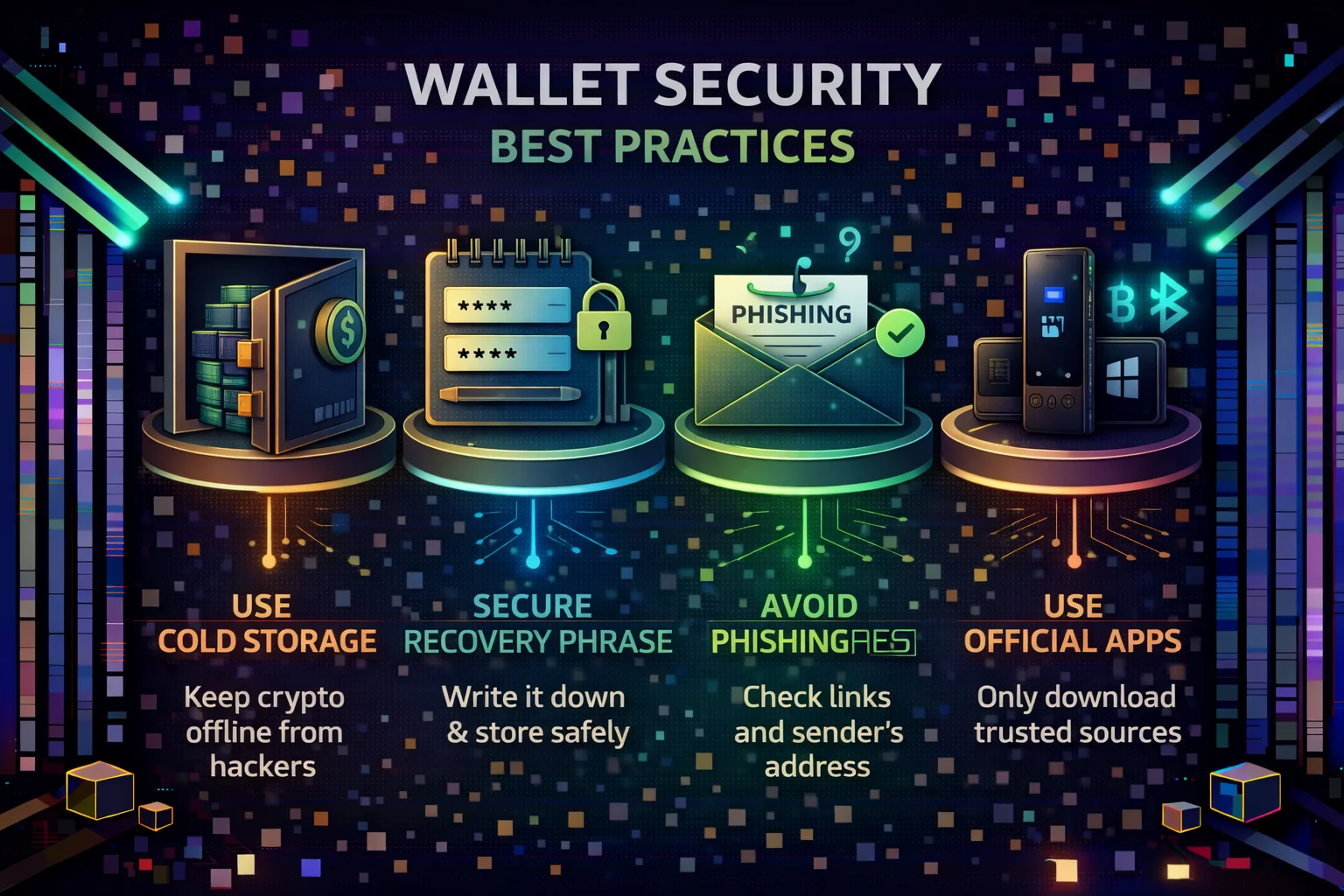
- Physical Backup: Write recovery phrases on paper or engrave on metal
- Multiple Locations: Store backups in separate, secure locations
- Offline Storage: Never store recovery phrases digitally or in cloud services
- Verification: Test recovery process with small amounts
- Regular Checks: Periodically verify backup integrity
Common Mistakes to Avoid
- Storing recovery phrases in photos or screenshots
- Sharing recovery phrases via messaging apps or email
- Using cloud storage for backup files
- Writing recovery phrases on easily damaged materials
- Storing all backups in one location
Device Security
Mobile Security
- Device Encryption: Enable full device encryption
- Screen Lock: Use strong PINs, passwords, or biometrics
- App Permissions: Review and limit application permissions
- Regular Updates: Keep OS and applications updated
- Secure Networks: Avoid public WiFi for crypto access
Browser Security
- Dedicated Browser: Use separate browser for crypto activities
- Extension Verification: Only install extensions from official sources
- Regular Cleanup: Clear browser data and check extensions
- Phishing Protection: Verify website URLs before connecting
Transaction Security
Pre-Transaction Checks
- Address Verification: Double-check recipient addresses
- Amount Confirmation: Verify transaction amounts
- Gas Fee Review: Understand transaction costs
- Contract Interaction: Review smart contract permissions
- Simulation Tools: Use transaction preview features
Storage Solution Selection Guide
Choose Based on Your Needs
Beginners
Recommended: Trust or Simple
- User-friendly interfaces with guided setup
- Strong security defaults
- Good customer support and documentation
- Mobile-first design for everyday use
DeFi Users
Recommended: MetaMask or Rabby
- Universal DApp compatibility
- Advanced transaction controls
- Hardware device integration
- Transaction simulation and security features
Multi-Chain Users
Recommended: Ctrl (formerly XDEFI) or Trust
- Support for diverse blockchain ecosystems
- Cross-chain swap capabilities
- Unified portfolio management
- Native support for multiple token standards
Privacy-Conscious Users
Recommended: Rabby or Keplr
- Open source code for transparency
- No data collection or tracking
- Strong encryption and security practices
- Community-driven development
Ecosystem Specialists
- Solana: Phantom for native Solana features
- Cosmos: Keplr for IBC and staking
- Ethereum: MetaMask for maximum DApp compatibility
- Bitcoin: Ctrl (formerly XDEFI) for native Bitcoin support
Future of Self-Custody Solutions
Emerging Trends
- Account Abstraction: Smart contract addresses with advanced features
- Card and IBAN in the app: Spend the balance directly via a Mastercard, with a euro account attached
- Device-level protection: Face ID, two-factor authentication and real-time scam detection
- 150+ tokens: Bitcoin, Ethereum, stablecoins and major altcoins on the self-custody side
- What it does not have: No multi-signature, no social recovery, no hardware wallet pairing and no built-in bridging — if you need any of those, this is the wrong wallet for that job
Technology Developments
- Zero-Knowledge Proofs: Enhanced privacy and security
- Quantum Resistance: Preparation for quantum computing threats
- Biometric Authentication: Advanced biometric security methods
- AI Integration: Smart transaction analysis and fraud detection
Conclusion and Final Recommendations
Self-custody solutions embody the true spirit of cryptocurrency, giving users complete control over their digital assets. The choice of storage solution depends on your specific needs, technical expertise, and the blockchain ecosystems you plan to use.
For beginners, Trust offers the best balance of simplicity and functionality. DeFi users should consider MetaMask or Rabby for their advanced features and universal compatibility. Multi-chain users will benefit from XDEFI's broad blockchain support, while Cosmos users should choose Keplr for its ecosystem-specific features.
Remember that with great power comes great responsibility. Self-custody solutions require careful management of recovery phrases, secure device setup, and ongoing vigilance against scams and phishing attempts. Start with small amounts, practice good security hygiene, and gradually increase your holdings as you become more comfortable with decentralised storage.
The future of self-custody appears promising, with ongoing innovation in user experience, security, and cross-chain functionality. As the cryptocurrency ecosystem matures, decentralised storage solutions will become even more user-friendly while maintaining the security and sovereignty that make them essential tools for financial freedom.
The transition to self-custody represents a fundamental shift in how we think about digital asset ownership and financial sovereignty. Whilst the learning curve may seem steep initially, the benefits of true ownership, enhanced privacy, and direct access to decentralised finance protocols make this journey worthwhile. As regulatory frameworks continue to evolve and institutional adoption increases, non-custodial wallets will play an increasingly important role in the broader cryptocurrency ecosystem, serving as the gateway to a more decentralised and user-controlled financial future.
The cryptocurrency industry's maturation is driving improved user experiences, enhanced security features, and better integration across different blockchain networks through non-custodial wallet innovations. Modern wallets now offer features that rival centralised exchanges whilst maintaining the security and sovereignty advantages of self-custody. This convergence of usability and security makes 2025 an ideal time to embrace non-custodial solutions for cryptocurrency management.
Looking ahead, the development of account abstraction, social recovery mechanisms, and improved key management solutions will further reduce the barriers to self-custody adoption. These innovations promise to make non-custodial wallets as user-friendly as traditional banking applications whilst preserving the fundamental principles of decentralisation and user sovereignty that define the cryptocurrency movement. By choosing self-custody today, you're not just protecting your assets - you're participating in the evolution of financial infrastructure towards a more open, transparent, and user-controlled system.
For users transitioning from custodial services to self-custody, start with a small portion of your holdings to familiarise yourself with the wallet interface, backup procedures, and security practices. Gradually increase your self-custodied holdings as your confidence grows and you develop robust security habits. Remember that the cryptocurrency community offers extensive resources, tutorials, and support to help newcomers navigate the self-custody journey successfully. The investment in learning proper self-custody practices pays dividends in the form of enhanced security, privacy, and control over your financial future.
The choice between different non-custodial wallets ultimately depends on your specific use cases, preferred blockchain networks, and technical comfort level. Hardware wallets like Ledger and Trezor offer maximum security for long-term holdings, whilst software wallets provide convenient access for active trading and DeFi participation. Many experienced users employ a hybrid approach, using hardware wallets for significant holdings and software wallets for smaller amounts needed for regular transactions. This strategy balances security with usability, ensuring both protection of major assets and convenient access to funds for everyday cryptocurrency activities. As you gain experience with self-custody, you'll develop your own preferences and security practices that align with your individual needs and risk tolerance.
Sources & References
Frequently Asked Questions
- What is a self-custody solution?
- A self-custody solution gives you complete control of your cryptographic keys and crypto assets. Unlike custodial services (exchanges), You are solely responsible for security and recovery. This provides maximum security and privacy but requires careful key management.
- Are decentralised storage solutions safer than exchanges?
- Yes, self-custody eliminates counterparty risk (such as exchange bankruptcy or hacks). However, you must secure your own recovery phrase. If you lose it, your crypto is permanently lost. Exchanges offer recovery options, but control your cryptographic keys.
- Can I recover a self-custody solution if I lose my phone?
- Yes, using your recovery phrase (12–24 words). This phrase can restore your storage on any compatible device. Store it securely offline — never digitally or online. Without this phrase, recovery is impossible.
- Which decentralised solution is best for DeFi?
- MetaMask is best for DeFi with extensive protocol support and browser integration. Trust also offers strong DeFi access with a built-in DApp browser. Both support major DeFi platforms like Uniswap, Aave, and Curve.
- Do self-custody solutions charge fees?
- The applications themselves are free. You only pay the blockchain network's transaction fees (gas). These fees vary by network. Ethereum mainnet is far cheaper than its reputation suggests at the moment: at roughly 0.13 gwei in early August 2026, a token transfer costs around a cent and a swap a few cents. It does still spike during congestion, which is when the double-digit figures people remember come from, so check a live gas tracker before a large transaction. Polygon and BSC stay in fractions of a cent.
- Can I use the same storage solution on multiple devices?
- Yes, you can import your recovery phrase on multiple devices to access the same storage. However, this increases security risks. Best practice is to use one primary device and keep your recovery phrase as a backup only.