DigitalOcean Review 2025: Cloud Hosting
Comprehensive review of DigitalOcean's cloud hosting platform covering droplets, managed services, pricing structure, performance analysis, and detailed comparison with major cloud providers for developers and startups.
DigitalOcean has carved out a unique position in the cloud computing landscape by focusing on simplicity, developer experience, and transparent pricing. Founded in 2011, the company has grown to serve over 600,000 customers worldwide.
The platform attracts startups, small businesses, and individual developers who value straightforward cloud infrastructure without the complexity of enterprise-focused platforms.
Unlike AWS, Google Cloud, or Microsoft Azure, which offer hundreds of services with complex pricing models, DigitalOcean maintains a curated selection of essential cloud services. This approach features predictable, hourly billing that eliminates surprise costs.
This simplified model has made DigitalOcean particularly popular amongst cryptocurrency projects, blockchain developers, and fintech startups who need reliable infrastructure without enterprise overhead.
The platform's signature product, Droplets (virtual private servers), starts at just $4/month and can be deployed in under 60 seconds. These VPS instances are available across 15 global data centres.
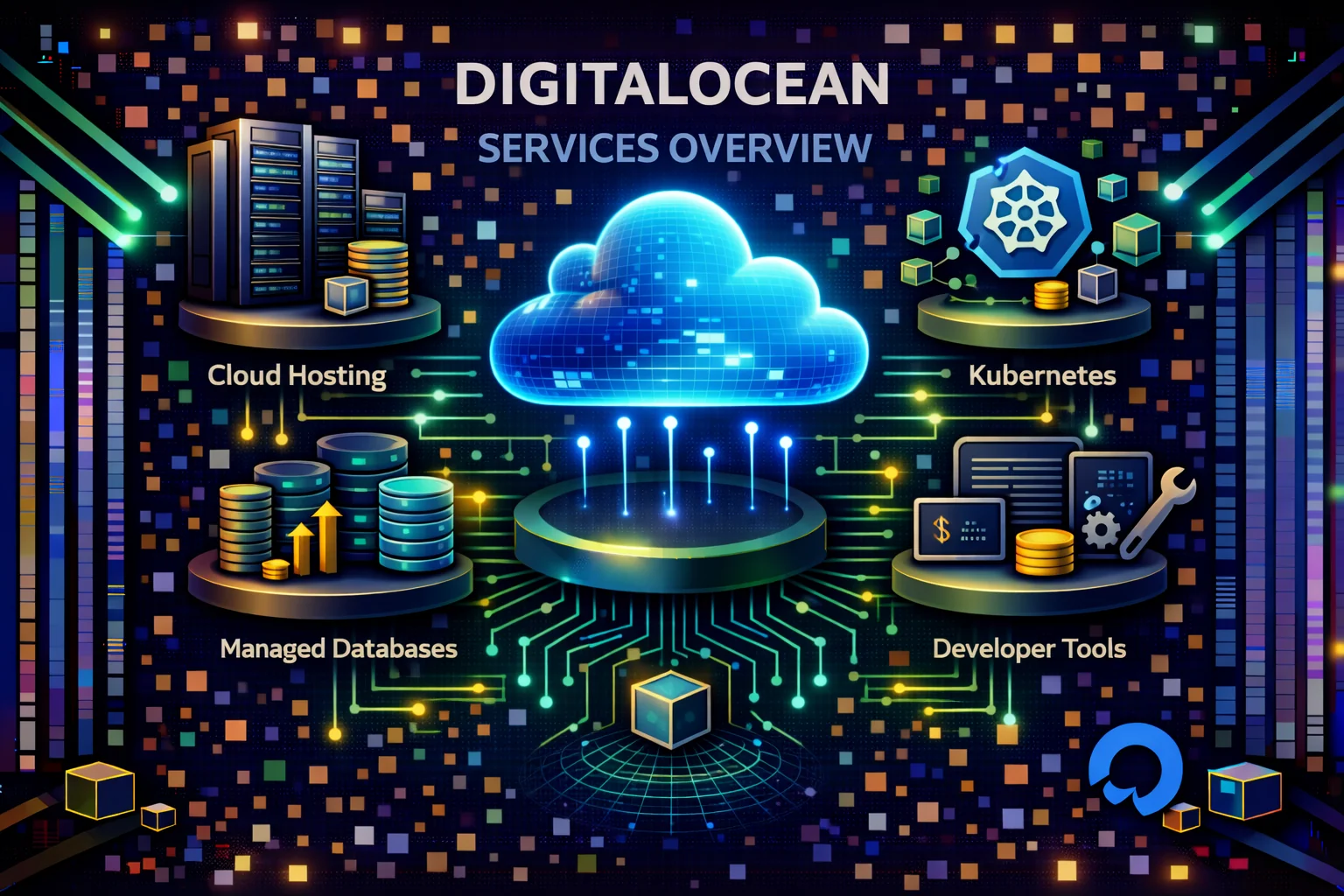
Combined with managed databases, Kubernetes clusters, and developer-friendly tools, DigitalOcean provides a complete cloud ecosystem. The platform is optimised for modern application development and deployment.
DigitalOcean's commitment to developer experience extends beyond just hosting services. The platform offers extensive documentation, tutorials, and community resources.
These resources help developers learn and implement best practices. Their marketplace features one-click applications for popular software stacks, making deployment simple for everything from WordPress sites to complex blockchain nodes.
The company has built a strong reputation for reliability, maintaining a 99.99% uptime SLA across its infrastructure. Their global network spans major regions including North America, Europe, Asia-Pacific, and India.
This geographic distribution ensures low latency for users worldwide while providing geographic redundancy for critical applications.
For cryptocurrency and blockchain projects, DigitalOcean offers specialised solutions. These include high-performance compute instances, dedicated CPU options, and flexible storage configurations.
These features can handle the demanding requirements of blockchain nodes, mining operations, and DeFi applications.
This complete review examines DigitalOcean's services, pricing, performance, and overall value proposition for developers and businesses in 2025. We'll analyse everything from basic VPS hosting to advanced managed services, helping you determine if DigitalOcean meets your cloud infrastructure needs and budget requirements.

Introduction
The cloud computing landscape has changed dramatically. Many providers compete for your business. DigitalOcean has carved out a distinctive niche. It focuses on simplicity. It prioritises developer experience. It offers transparent pricing. This makes cloud infrastructure accessible to you beyond just large organisations.
Founded in 2011 by Ben and Moisey Uretsky, DigitalOcean emerged with a clear mission. It wanted to simplify cloud computing for you. Traditional cloud providers were overly complex. They were expensive too. The company's approach worked well. It offered straightforward virtual private servers called "Droplets." You get predictable pricing. You get intuitive management tools. This quickly resonated with developers. It led to rapid growth.
What sets DigitalOcean apart from giants like AWS and Google Cloud? It focuses on essential services for you. It doesn't try to provide every possible feature. This philosophy results in a platform that prioritises ease of use. You get clear documentation. You get transparent pricing. This is better than extensive feature sets. Those can overwhelm you if you simply need reliable servers, storage, and networking.
The platform's commitment to developer-centric design extends beyond simple infrastructure. You get complete educational resources. You get community engagement. You get innovative tools. These streamline your deployment workflows. DigitalOcean's marketplace offerings help you. One-click applications save time. Managed database services show the company's evolution. It went from a basic VPS provider to a complete cloud platform. It maintains its core values of simplicity. It keeps accessibility while expanding capabilities. It meets your modern development requirements.
Over the years, DigitalOcean has evolved significantly. It started as a simple virtual private server provider. Now it's a complete cloud platform. You get managed databases. You get Kubernetes clusters. You get load balancers. You get various developer tools. Despite this expansion, the company maintains its commitment. It stays simple. It stays developer-friendly. This makes it an attractive option for you. Startups benefit. Small-to-medium-sized businesses benefit. Individual developers benefit. You need powerful cloud infrastructure without complexity.
In 2025, DigitalOcean serves over 600,000 customers worldwide. It processes millions of applications. It processes millions of websites. It maintains its reputation for reliability. It delivers performance. It provides exceptional customer support. This comprehensive review examines every aspect. We cover core services. We cover pricing structure. We cover performance characteristics. We cover competitive positioning. This provides you with the insights needed. You can determine whether DigitalOcean is right for your specific needs.
Executive Summary
Overall Rating: 8.8/10
- Ease of Use: 9/10 - Developer-friendly interface and excellent documentation
- Performance: 9/10 - Reliable infrastructure with good uptime
- Pricing: 9/10 - Transparent and competitive pricing model
- Features: 8/10 - Comprehensive but not as extensive as AWS
- Support: 8/10 - Good documentation, community support could be better
Bottom Line: DigitalOcean excels as a developer-focused cloud platform. It offers simplicity, transparency, and excellent value. It's perfect for modern application development and deployment. It may lack some enterprise features of larger providers. Advanced AI/ML services aren't included. Windows support is limited. Complex compliance frameworks aren't available. But it's perfect for startups. It's ideal for developers. Small to medium businesses benefit greatly. You get reliable, affordable cloud infrastructure. Management is straightforward. Costs are predictable. Developer experience is exceptional. The platform combines intuitive interface with comprehensive documentation. Managed services help you. Transparent pricing protects you. It's an ideal choice for web applications. APIs work well. Databases perform reliably. Blockchain nodes run smoothly. Development environments deploy rapidly. You avoid overwhelming complexity. You avoid unpredictable billing that characterizes enterprise cloud providers.
What is DigitalOcean?
DigitalOcean is a cloud infrastructure provider founded in 2011 with headquarters in New York City, designed specifically for developers, startups, and growing businesses seeking straightforward cloud computing solutions. The company focuses on simplicity, performance, and predictable pricing without hidden fees or complex billing structures, making cloud computing accessible through intuitive interfaces and comprehensive documentation. You get powerful infrastructure, including virtual machines, managed databases, Kubernetes clusters, and object storage, without overwhelming complexity, extensive configuration options, or enterprise-level pricing that characterises larger cloud providers. The platform serves over 600,000 customers worldwide across 15+ global datacenters, providing reliable infrastructure for web applications, APIs, databases, blockchain nodes, and development environments with 99.99% uptime SLA and transparent monthly billing.
Company Background
- Founded: 2011 by Ben Uretsky, Moisey Uretsky, Jeff Carr, Mitch Wainer, and Alec Hartman
- Headquarters: New York City, United States
- Public Company: Listed on NYSE (DOCN) since 2021
- Global Presence: 15+ data centers worldwide
- Customer Base: 600,000+ developers and businesses
- Market Position: Third-largest cloud infrastructure provider
Core Philosophy
- Simplicity First: Easy-to-use interface and straightforward pricing eliminating complexity and confusion that plague enterprise cloud platforms
- Developer-Centric: Built by developers, for developers with tools, workflows, and documentation designed for modern application development
- Predictable Costs: Transparent pricing without hidden fees, complex calculations, or surprise charges, enabling accurate budget forecasting
- Community Focus: Strong emphasis on tutorials, documentation, and community support with thousands of guides and active forums
- Performance: High-performance SSD storage and premium networks delivering consistent performance without resource contention
- Reliability: 99.99% uptime SLA with redundant infrastructure, automated monitoring, and rapid incident response
Target Market
- Individual Developers: Personal projects and learning environments with affordable pricing starting at $4/month for experimentation
- Startups: Early-stage companies needing scalable infrastructure with predictable costs and rapid deployment capabilities
- Small to Medium Businesses: Companies requiring reliable, cost-effective hosting without enterprise complexity or pricing
- Agencies: Web development and digital marketing agencies managing multiple client projects with isolated environments
- Educational Institutions: Schools and universities teaching cloud computing with student credits and comprehensive learning resources
- SaaS Providers: Software-as-a-Service companies requiring reliable infrastructure for web applications and APIs
- Blockchain Projects: Cryptocurrency developers running nodes, DApp backends, and trading infrastructure
Core Services & Features
Droplets (Virtual Machines)
Droplets are DigitalOcean's flagship product, representing Linux-based virtual machines that provide scalable compute resources for diverse workloads. These cloud servers can be deployed in under 60 seconds through an intuitive control panel or comprehensive API, enabling rapid infrastructure provisioning for development, testing, and production environments. Droplets form the foundation of most DigitalOcean deployments, offering flexible configurations with predictable pricing, SSD storage, and global datacenter availability across multiple regions worldwide.
Each Droplet includes dedicated resources, including CPU cores, RAM, SSD storage, and network bandwidth, with no resource contention or noisy neighbour issues affecting performance. The platform provides automatic backups, disaster recovery snapshots, monitoring dashboards with real-time metrics, and seamless scaling that enables vertical resizing without extended downtime. Droplets support custom images, cloud-init automation, and integration with DigitalOcean's ecosystem, including managed databases, load balancers, and block storage volumes for comprehensive infrastructure solutions.
Droplet Types
- Basic Droplets: Shared CPU instances for development, testing, and low-traffic applications with cost-effective pricing starting at $4/month for 512MB RAM configurations
- General Purpose: Dedicated CPU instances for production workloads requiring consistent performance, including web servers, application backends, and business-critical services
- CPU-optimised: High-performance computing with dedicated CPUs for compute-intensive workloads, including video encoding, machine learning, and scientific computing applications
- Memory-optimised: High RAM configurations for memory-intensive applications, including databases, caching layers, in-memory analytics, and large-scale data processing workloads
- Storage-optimised: High IOPS and large storage capacity for data-intensive applications requiring fast disk access, including databases, log processing, and file storage systems
Operating System Support
- Ubuntu: Multiple LTS versions (18.04, 20.04, 22.04, 24.04)
- CentOS: Stream and traditional versions
- Debian: Stable and testing releases
- Fedora: Latest stable versions
- Rocky Linux: CentOS alternative
- FreeBSD: Unix-like operating system
Managed Databases
DigitalOcean offers fully managed database services that eliminate operational overhead through automated maintenance, backups, security patches, and scaling operations. These managed solutions handle complex database administration tasks including replication configuration, failover management, performance tuning, and monitoring, allowing development teams to focus on application development rather than infrastructure management. The platform provides high availability configurations with automatic failover, point-in-time recovery capabilities, and seamless scaling options that adapt to changing workload requirements without manual intervention or extended downtime.
Managed databases include automated daily backups with configurable retention periods, connection pooling for improved performance, read replicas for horizontal scaling, and comprehensive monitoring dashboards with real-time metrics including query performance, resource utilization, and connection statistics. The service supports private networking for secure database access, firewall rules for access control, and integration with DigitalOcean's VPC infrastructure for network isolation. Database clusters can be deployed across multiple availability zones for enhanced reliability and disaster recovery capabilities.
Supported Database Engines
- PostgreSQL: Advanced open-source relational database with support for complex queries, JSON data types, full-text search, and extensions including PostGIS for geospatial data
- MySQL: Popular relational database management system with InnoDB storage engine, ACID compliance, and compatibility with MariaDB for seamless migration
- Redis: In-memory data structure store and cache supporting strings, hashes, lists, sets, and sorted sets with persistence options and pub/sub messaging
- MongoDB: Document-oriented NoSQL database with flexible schema design, horizontal scaling through sharding, and aggregation framework for complex data analysis
- Kafka: Distributed event streaming platform for building real-time data pipelines, stream processing applications, and event-driven architectures with high throughput
Database Features
- Automated Backups: Daily backups with point-in-time recovery
- High Availability: Standby nodes for automatic failover
- Read Replicas: Scale read operations across multiple nodes
- Connection Pooling: optimise database connections
- Monitoring: Real-time performance metrics and alerts
Kubernetes (DOKS)
DigitalOcean Kubernetes Service provides managed Kubernetes clusters for you. You get automatic updates, scaling, and monitoring capabilities.
Kubernetes Features
- Managed Control Plane: Fully managed master nodes
- Auto-Scaling: Automatic node scaling based on demand
- Load Balancers: Integrated load balancing for services
- Container Registry: Private Docker image storage
- Monitoring Integration: Built-in monitoring and logging
Enterprise Cloud Infrastructure and Advanced Scalability
DigitalOcean's enterprise infrastructure provides advanced cloud computing solutions for you. It supports mission-critical applications. You get advanced networking, security, and performance features. The platform's global infrastructure includes strategically located data centres. These provide low-latency access for you. You also get geographic redundancy for international business operations and disaster recovery.
Professional scalability features include auto-scaling groups for you. You get advanced load-balancing algorithms. Complete performance monitoring helps you handle variable workloads efficiently. The platform's infrastructure-as-code support through Terraform enables automated provisioning for you. You can manage complex cloud environments that meet your enterprise operational requirements.
Developer Experience and Modern DevOps Integration
DigitalOcean's developer-centric approach includes complete API access for you. You get extensive CLI tools. Seamless integration with popular development frameworks helps you.
The platform's developer experience emphasises simplicity without sacrificing functionality. You get intuitive interfaces and complete documentation. This accelerates your development cycles and reduces operational complexity.
Advanced DevOps capabilities include CI/CD pipeline integration for you. You get container orchestration with Kubernetes. Automated deployment workflows support your modern software development practices.
The platform's integration with popular tools like Docker, Jenkins, and GitLab enables your teams to implement advanced development strategies. You maintain operational efficiency and code quality standards.
Storage Solutions
Block Storage (Volumes)
- SSD Storage: High-performance solid-state drives
- Scalable: Resize volumes without downtime
- Snapshots: Point-in-time backups of volumes
- Encryption: Data encryption at rest
- High Availability: Replicated across multiple drives
Object Storage (Spaces)
- S3-Compatible: Compatible with Amazon S3 API, enabling seamless migration from AWS and integration with existing tools, libraries, and applications built for S3
- CDN Integration: Built-in content delivery network with global edge locations for fast content delivery, reduced latency, and improved user experience worldwide
- Unlimited Scalability: Store unlimited amounts of data, including images, videos, backups, and static assets, with automatic scaling and no capacity planning required
- Access Control: Fine-grained permissions and policies using access keys, CORS configuration, and bucket policies for secure data access and sharing
- Cost-Effective: Predictable pricing at $5/month for 250GB storage and 1TB outbound transfer with additional storage at $0.02/GB and bandwidth at $0.01/GB
Networking Features
- Virtual Private Cloud (VPC): Isolated network environments with private IP addressing, network segmentation, and secure communication between resources without internet exposure
- Load Balancers: Distribute traffic across multiple droplets with health checks, SSL termination, sticky sessions, and automatic failover for high availability applications
- Floating IPs: Static IP addresses that can be reassigned between droplets in seconds for zero-downtime failover and seamless infrastructure changes
- Firewalls: Network-level security rules with inbound and outbound traffic filtering, port restrictions, and IP whitelisting for comprehensive security controls
- DNS Management: Manage domain names and records, including A, AAAA, CNAME, MX, TXT, and SRV records, with global anycast network for fast resolution
- Reserved IPs: Static IPv4 addresses that remain assigned to your account for consistent networking and simplified DNS management across infrastructure changes
Comprehensive Pricing Analysis
Droplet Pricing Structure
DigitalOcean's pricing is known for its simplicity, transparency, and predictability with all prices listed upfront and no hidden fees, complex calculations, or surprise charges. The platform uses straightforward hourly and monthly billing with clear resource allocations, making cost estimation and budget planning straightforward for businesses of all sizes. Unlike competitors with complex pricing tiers, reserved instances, and spot pricing, DigitalOcean maintains consistent pricing across all regions and provides generous bandwidth allocations included in base pricing without additional egress charges for most use cases.
The pricing model includes free inbound bandwidth, generous outbound transfer allowances, and no charges for internal traffic between resources in the same datacenter. Additional features like automated backups cost 20% of the Droplet price, snapshots are charged at $0.05/GB per month, and load balancers start at $12/month. This transparent pricing structure enables accurate cost forecasting and eliminates the billing complexity that often plagues cloud infrastructure management on other platforms.
Basic Droplets (Shared CPU)
| Memory | vCPUs | Storage | Transfer | Price/Month |
|---|---|---|---|---|
| 512 MB | 1 | 10 GB SSD | 500 GB | $4 |
| 1 GB | 1 | 25 GB SSD | 1 TB | $6 |
| 2 GB | 1 | 50 GB SSD | 2 TB | $12 |
| 4 GB | 2 | 80 GB SSD | 4 TB | $24 |
| 8 GB | 4 | 160 GB SSD | 5 TB | $48 |
General Purpose Droplets (Dedicated CPU)
- 2 GB RAM, 1 vCPU: $18/month
- 4 GB RAM, 2 vCPUs: $36/month
- 8 GB RAM, 4 vCPUs: $72/month
- 16 GB RAM, 8 vCPUs: $144/month
- 32 GB RAM, 16 vCPUs: $288/month
Managed Database Pricing
- Basic (1 GB RAM): $15/month
- Basic (2 GB RAM): $30/month
- Basic (4 GB RAM): $60/month
- Professional (8 GB RAM): $120/month
- Professional (16 GB RAM): $240/month
Additional Services Pricing
- Load Balancers: $12/month per load balancer
- Block Storage: $0.10/GB per month
- Spaces Object Storage: $5/month for 250 GB + CDN
- Snapshots: $0.05/GB per month
- Bandwidth Overages: $0.01/GB
Cost Comparison
DigitalOcean typically costs 20-40% less than AWS or Google Cloud for equivalent resources, making it an attractive option for cost-conscious developers and startups.
Performance & Reliability
Infrastructure Quality
- SSD Storage: All droplets use high-performance SSD storage
- Premium Networks: Direct connections to major internet backbones
- Modern Hardware: Latest generation Intel and AMD processors
- Redundancy: Multiple layers of redundancy for high availability
Global Data Centers
North America
- New York (NYC1, NYC2, NYC3): Primary US East Coast presence
- San Francisco (SFO1, SFO2, SFO3): US West Coast coverage
- Toronto (TOR1): Canadian data centre
Europe
- Amsterdam (AMS2, AMS3): European hub
- London (LON1): UK presence
- Frankfurt (FRA1): German data centre
Asia-Pacific
- Singapore (SGP1): Southeast Asian hub
- Bangalore (BLR1): Indian subcontinent coverage
- Sydney (SYD1): Australian presence
Uptime & SLA
- Uptime Guarantee: 99.99% SLA for most services, including Droplets, managed databases, and load balancers, with service credits for any downtime exceeding commitments
- Historical Performance: Consistently exceeds SLA commitments with actual uptime typically above 99.995% based on independent monitoring and customer reports
- Monitoring: 24/7 infrastructure monitoring with automated alerting, proactive issue detection, and real-time status updates through a comprehensive status page
- Incident Response: Rapid response to any issues with a dedicated operations team, transparent communication during incidents, and detailed post-mortem reports
- Redundancy: Multiple layers of redundancy, including power, cooling, networking, and storage systems, to prevent single points of failure
- Maintenance Windows: Scheduled maintenance performed during low-traffic periods with advance notification and minimal service disruption
Performance Benchmarks
- CPU Performance: Competitive with major cloud providers using Intel and AMD processors with consistent performance and no CPU throttling or noisy neighbour issues
- Disk I/O: High IOPS with SSD storage delivering 5,000+ read/write operations per second for database workloads and data-intensive applications
- Network Performance: Low latency under 50ms within regions and high throughput up to 10 Gbps for premium Droplets with dedicated network interfaces
- Boot Times: Droplets typically boot in under 30 seconds from power-off state with instant provisioning and rapid scaling capabilities
- Database Performance: Managed databases deliver consistent query performance with connection pooling, query optimisation, and automatic performance tuning
- Storage Performance: Block storage volumes provide consistent IOPS and throughput with low latency access for database and application workloads
Developer Experience
Control Panel & Interface
DigitalOcean's control panel is renowned for its clean, intuitive design that makes complex cloud operations accessible to developers of all skill levels.
Key Interface Features
- Dashboard: Clear overview of all resources and billing
- One-Click Deployment: Quick setup for popular applications
- Resource Management: Easy scaling and configuration changes
- Monitoring Integration: Built-in graphs and metrics
- Team Management: Collaborate with team members
API & Automation
- RESTful API: Comprehensive API for all services
- CLI Tools: Command-line interface for automation
- Terraform Provider: Infrastructure as code support
- Ansible Integration: Configuration management
- Kubernetes Integration: Native k8s support
One-Click Applications
Popular Marketplace Apps
- Web Frameworks: WordPress, Ghost, Drupal, Joomla with pre-configured environments, security hardening, and automatic updates for rapid deployment
- Development Stacks: LAMP, LEMP, MEAN, Django with optimised configurations, performance tuning, and development tools pre-installed
- Databases: MySQL, PostgreSQL, MongoDB, Redis with production-ready configurations, backup scripts, and monitoring tools included
- DevOps Tools: Docker, GitLab, Jenkins, Prometheus with container orchestration, CI/CD pipelines, and infrastructure monitoring capabilities
- E-commerce: Magento, OpenCart, PrestaShop with payment gateway integration, SSL certificates, and performance optimisation for online stores
- Monitoring: Grafana, Netdata, Zabbix for comprehensive infrastructure monitoring, alerting, and performance visualisation
- Security: OpenVPN, WireGuard, fail2ban for network security, VPN access, and intrusion prevention systems
Documentation & Learning Resources
- Comprehensive Tutorials: Step-by-step guides for common tasks including server setup, application deployment, security hardening, and performance optimisation
- Community Q&A: Active community forum with thousands of answered questions, expert contributors, and peer support for troubleshooting
- Video Content: Educational videos and webinars covering cloud architecture, best practices, and advanced topics for continuous learning
- Best Practices: Security and performance recommendations including hardening guides, optimisation techniques, and compliance frameworks
- API Documentation: Detailed API reference with code examples in multiple programming languages, authentication guides, and rate limit information
- Solution Guides: Architecture patterns for common use cases, including high availability, disaster recovery, and scalable application design
- Certification Programs: Training courses and certifications for developers and system administrators to validate cloud infrastructure skills
Security & Compliance
Infrastructure Security
- Data centre Security: Physical security at all facilities including biometric access controls, 24/7 surveillance, security personnel, and restricted access zones
- Network Security: DDoS protection and firewalls with automatic threat detection, traffic filtering, and mitigation systems protecting against volumetric attacks
- Encryption: Data encryption in transit using TLS 1.3 and at rest using AES-256 encryption for all storage volumes and database backups
- Isolation: Virtual machine isolation and security through hypervisor-level separation, dedicated resources, and network segmentation preventing cross-tenant access
- Monitoring: 24/7 security monitoring with intrusion detection systems, log analysis, anomaly detection, and automated incident response procedures
- Vulnerability Management: Regular security assessments, penetration testing, and patch management ensuring infrastructure remains secure against emerging threats
- Access Controls: Multi-factor authentication, role-based access control, API key management, and audit logging for all administrative actions
Compliance Certifications
- SOC 2 Type II: Security and availability controls validated through independent audits demonstrating operational excellence and security practices
- ISO 27001: Information security management system certification ensuring comprehensive security controls and risk management processes
- PCI DSS: Payment card industry compliance for handling credit card data with secure infrastructure and data protection measures
- GDPR: European data protection compliance with data processing agreements, privacy controls, and data residency options for EU customers
- HIPAA: Healthcare data protection through Business Associate Agreement enabling compliant infrastructure for healthcare applications and patient data
- CSA STAR: Cloud Security Alliance certification demonstrating cloud security best practices and transparency in security controls
Security Tools
- Cloud Firewalls: Network-level security rules with stateful packet inspection, port filtering, and IP whitelisting for comprehensive traffic control
- VPC: Private networking environments with isolated network segments, private IP addressing, and secure inter-resource communication
- SSH Keys: Secure authentication methods
- Snapshots: Backup and disaster recovery
- Monitoring: Security event logging and alerts
DigitalOcean vs Competitors
vs Amazon Web Services (AWS)
DigitalOcean Advantages
- Simplicity: Much easier to use and understand
- Pricing: Transparent, predictable pricing model
- Documentation: Better tutorials and learning resources
- Speed: Faster deployment and setup times
AWS Advantages
- Service Breadth: Much larger catalogue of services
- Enterprise Features: Advanced enterprise capabilities
- Global Reach: More data centers worldwide
- Ecosystem: Larger partner and tool ecosystem
vs Google Cloud Platform
DigitalOcean Advantages
- User Experience: More intuitive interface
- Cost Predictability: Clearer pricing structure
- Community: Better developer community and resources
- Simplicity: Less complex service offerings
Google Cloud Advantages
- AI/ML Services: Superior machine learning capabilities
- Big Data: Better big data and analytics tools
- Kubernetes: Native Kubernetes development
- Performance: Google's global network infrastructure
vs Linode
DigitalOcean Advantages
- Managed Services: Better managed database offerings
- Kubernetes: More mature Kubernetes service
- Marketplace: Larger application marketplace
- Documentation: Superior learning resources
Linode Advantages
- Performance: Slightly better price/performance ratio
- Support: Better customer support reputation
- Longevity: Longer track record in VPS hosting
- Flexibility: More flexible resource configurations
Ideal Use Cases
Perfect For
- Web Applications: Hosting web apps and APIs
- Development Environments: Testing and staging servers
- Microservices: Container-based architectures
- Static Sites: JAMstack and static site hosting
- Databases: Managed database hosting
- CI/CD Pipelines: Build and deployment automation
- Learning Projects: Educational and experimental projects
Not Ideal For
- Enterprise Scale: Very large enterprise deployments requiring complex multi-region architectures, advanced networking features, or dedicated account management teams
- Complex Compliance: Highly regulated industries with specialized compliance requirements beyond standard certifications like FedRAMP or industry-specific frameworks
- AI/ML Workloads: Advanced machine learning projects requiring GPU clusters, specialized AI accelerators, or managed machine learning platforms with AutoML capabilities
- Big Data: Large-scale data processing requiring petabyte-scale storage, managed Hadoop clusters, or specialized big data analytics platforms
- Windows Hosting: Limited Windows server support with fewer Windows-specific features compared to Linux-focused infrastructure and tooling
- Hybrid Cloud: Complex hybrid cloud architectures requiring deep integration with on-premises infrastructure and specialized networking capabilities
Cryptocurrency & Blockchain Use Cases
- Blockchain Nodes: Running Bitcoin, Ethereum, or other blockchain nodes with high-performance storage, reliable networking, and 24/7 uptime requirements
- DApp Backends: API servers for decentralised applications providing data indexing, transaction broadcasting, and smart contract interaction services
- Trading Bots: Automated cryptocurrency trading systems with low-latency connections to exchanges, real-time market data processing, and algorithmic execution
- Portfolio Trackers: Personal cryptocurrency portfolio applications with price tracking, transaction history, and performance analytics across multiple exchanges
- Mining Pool Software: Small to medium mining pool operations with stratum servers, payout systems, and miner management dashboards
- NFT Platforms: NFT marketplace backends with IPFS integration, metadata storage, and smart contract deployment for digital collectibles
- Crypto Exchanges: Small to medium cryptocurrency exchange platforms with order matching engines, wallet services, and trading interfaces
Comprehensive Pros & Cons
Advantages
- Exceptional Ease of Use: Intuitive interface perfect for developers with clean design, logical workflows, and minimal learning curve for infrastructure management
- Transparent Pricing: No hidden fees or complex billing with straightforward monthly rates, included bandwidth, and predictable costs for budget planning
- Excellent Documentation: Comprehensive tutorials and guides covering common tasks, best practices, and troubleshooting with step-by-step instructions
- Fast Deployment: Quick server provisioning and setup with Droplets deploying in under 60 seconds and one-click applications for rapid development
- Reliable Performance: Consistent uptime exceeding 99.99% SLA and good performance with SSD storage, dedicated resources, and low-latency networking
- Strong Community: Active developer community and support with forums, Q&A platforms, and peer assistance for problem-solving
- Managed Services: Quality managed databases and Kubernetes with automated maintenance, backups, and scaling, reducing operational overhead
- API Quality: Well-designed API for automation with comprehensive documentation, client libraries, and consistent interface for infrastructure as code
- Security Features: Good security tools and compliance, including firewalls, VPC, encryption, and certifications for SOC 2, ISO 27001, and GDPR
- Cost Effective: Competitive pricing for most use cases with generous bandwidth allocations, free inbound transfer, and no egress charges for internal traffic
- Developer Focus: Platform designed for developers with Git integration, SSH access, and tools optimised for modern development workflows
- Global Presence: Multiple datacenter locations worldwide enabling low-latency deployments close to end users across different geographic regions
Disadvantages
- Limited Service Breadth: Fewer services than AWS or Google Cloud with gaps in specialised offerings like serverless computing, IoT platforms, and advanced analytics
- No Windows Support: Linux-only virtual machines limiting options for Windows-based applications, .NET workloads, and Microsoft-centric development stacks
- Enterprise Features: Limited advanced enterprise capabilities, including complex IAM policies, organisational hierarchies, and dedicated support channels for large organisations
- Customer Support: Support quality can be inconsistent, with ticket response times varying and limited phone support options compared to enterprise-focused providers
- Geographic Coverage: Fewer data centres than major providers with limited presence in some regions, including Africa, the Middle East, and parts of Asia
- Advanced Networking: Limited advanced networking features including transit gateways, direct connect options, and complex multi-region networking architectures
- AI/ML Services: No native machine learning services requiring manual setup of ML frameworks, GPU instances, and custom model deployment infrastructure
- Compliance: Limited compliance certifications compared to enterprise providers with fewer industry-specific frameworks and regional compliance options
- Backup Options: Basic backup and disaster recovery features lacking advanced options like cross-region replication, automated failover, and comprehensive backup policies
- Scaling Limits: May not suit very large-scale applications requiring petabyte storage, thousands of instances, or complex auto-scaling across multiple regions
- Managed Services: Limited managed service options compared to AWS, with fewer database engines, caching solutions, and application platforms available
- Monitoring Tools: Basic monitoring capabilities requiring third-party integrations for advanced observability, distributed tracing, and comprehensive log analysis
Getting Started with DigitalOcean
Account Setup Process
- Sign Up: Create account with email verification
- Payment Method: Add credit card or PayPal
- Email Verification: Verify email address
- Create First Droplet: Choose size, region, and OS
- SSH Key Setup: Add SSH keys for secure access
- Deploy Application: Install software or use marketplace apps
Best Practices for New Users
- Start Small: Begin with basic droplets to learn the platform
- Use SSH Keys: Set up SSH key authentication for security
- Enable Monitoring: Turn on monitoring for all resources
- Regular Backups: Set up automated snapshots
- Security Hardening: Follow security best practices
- Cost Monitoring: Set up billing alerts and budgets
Recommended First Projects
- Static Website: Deploy a simple HTML/CSS site
- WordPress Blog: Use one-click WordPress installation
- Node.js API: Deploy a simple REST API
- Database Server: Set up managed PostgreSQL or MySQL
- Development Environment: Create a development server
Final Verdict
Who Should Choose DigitalOcean?
- Individual Developers: Personal projects and learning environments requiring affordable, reliable infrastructure with straightforward management and deployment workflows
- Startups: Early-stage companies needing reliable, affordable hosting with predictable costs, rapid scaling capabilities, and developer-friendly tools for MVP development
- Small Agencies: Web development and digital marketing agencies managing multiple client projects requiring isolated environments, easy billing, and consistent performance
- Students: Learning cloud computing and web development with educational credits, comprehensive tutorials, and hands-on experience with production-grade infrastructure
- Cost-Conscious Users: Those prioritising transparent, predictable pricing without hidden fees, complex billing structures, or unexpected charges for standard operations
- Simplicity Seekers: Users wanting straightforward cloud services without overwhelming complexity, extensive configuration options, or steep learning curves
- SaaS Providers: Software-as-a-Service companies requiring reliable infrastructure for web applications, APIs, and databases with straightforward scaling
- Blockchain Projects: Cryptocurrency and blockchain developers running nodes, DApp backends, and trading infrastructure requiring high uptime and performance
Who Should Consider Alternatives?
- Large Enterprises: Organizations needing extensive enterprise features, including complex IAM, organisational hierarchies, dedicated support, and advanced compliance frameworks
- Windows Users: Those requiring Windows server hosting, .NET applications, Microsoft SQL Server, or Active Directory integration for enterprise environments
- AI/ML Developers: Projects requiring machine learning services, including managed ML platforms, GPU clusters, AutoML capabilities, and specialised AI accelerators
- Big Data Users: Large-scale data processing requirements including petabyte-scale storage, managed Hadoop clusters, data warehousing, and specialised big data analytics platforms
- Complex Compliance: Highly regulated industries with strict requirements, including FedRAMP, HITRUST, or industry-specific compliance frameworks beyond standard certifications
- Hybrid Cloud: Organizations requiring deep integration between on-premises infrastructure and cloud resources with specialised networking and management tools
- Global Scale: Applications requiring presence in 20+ regions worldwide with complex multi-region architectures and global traffic management
Final Rating: 8.8/10
DigitalOcean excels as a developer-focused cloud platform that prioritises simplicity, transparency, and developer experience. Its combination of ease of use, competitive pricing, reliable performance, and comprehensive documentation makes it an excellent choice for developers, startups, and small to medium businesses seeking straightforward cloud infrastructure without overwhelming complexity. Whilst it may lack some advanced features of larger providers, including specialised AI/ML services, Windows support, and extensive enterprise capabilities, its focus on core cloud services done well with exceptional usability makes it a standout option for modern application development and deployment.
Recommendation: Ideal for developers and startups who want powerful, reliable cloud infrastructure without complexity, extensive configuration, or unpredictable costs. Perfect for web applications, APIs, databases, blockchain nodes, and development environments requiring rapid deployment, consistent performance, and straightforward management. Start with a basic droplet at $4/month and scale up as your needs grow through vertical resizing, horizontal scaling, and integration with managed services.
Conclusion
DigitalOcean successfully delivers on its promise of providing simple, developer-friendly cloud infrastructure at transparent prices without hidden fees or complex billing structures.
The platform's focus on essential services, intuitive interface, comprehensive documentation, and predictable billing makes it an excellent choice for startups, small businesses, and individual developers who need reliable cloud hosting without enterprise complexity.
The combination of affordable Droplets starting at $4/month, managed databases with automated maintenance, Kubernetes support for container orchestration, and extensive developer tools creates a complete ecosystem for modern application development and deployment.
For cryptocurrency projects, blockchain nodes, DApp backends, and fintech applications, DigitalOcean provides the performance, reliability, and uptime needed while maintaining cost efficiency and simplicity that larger cloud providers struggle to match.
The platform's strength lies in its simplicity, developer experience, and commitment to transparent pricing that makes cloud infrastructure accessible to developers of all skill levels and experience backgrounds.
The one-click applications, detailed documentation with step-by-step tutorials, and active community support make it easy for developers to get started and scale their projects without extensive cloud expertise or complex configuration requirements.
The transparent pricing model eliminates billing surprises and enables accurate cost forecasting, while the global data centre network with 15+ locations ensures good performance worldwide for users across all regions and continents.
However, organisations requiring advanced enterprise features, including complex IAM policies, extensive compliance certifications beyond SOC 2 and ISO 27001, or complex multi-region architectures, may find DigitalOcean's simplified approach limiting.
The platform excels at straightforward use cases, including web applications, APIs, databases, and development environments, but lacks the breadth of specialised services offered by AWS, Google Cloud, or Azure.
Overall, DigitalOcean represents an outstanding value proposition for developers and businesses prioritising simplicity, cost transparency, and developer experience over enterprise features.
Its 99.99% uptime SLA, global data centre presence across North America, Europe, and Asia, and active community support make it a reliable foundation for building and scaling modern applications in 2025.
The platform continues to evolve with new features, improved performance, and expanded capabilities whilst maintaining its core focus on developer-friendly infrastructure that just works.
The platform's managed services significantly reduce operational overhead for development teams.
Managed databases handle backups, updates, and scaling automatically. Managed Kubernetes simplifies container orchestration. App Platform enables deployment directly from Git repositories.
These managed offerings allow developers to focus on building applications rather than managing infrastructure, thereby accelerating development cycles and reducing time-to-market.
DigitalOcean's pricing transparency stands out in the cloud hosting industry.
Fixed monthly rates with no hidden charges make budgeting straightforward. Bandwidth is included in Droplet pricing. Storage costs are clearly defined.
This predictability helps startups and small businesses manage cash flow effectively without unexpected cloud bills.
The platform's global infrastructure ensures low latency for users worldwide. Data centres in strategic locations provide regional coverage. Network performance is consistently reliable. CDN integration improves content delivery. This geographic distribution makes DigitalOcean suitable for applications serving international audiences while maintaining performance standards and user experience quality.
Security features meet industry standards for most use cases. Firewalls protect Droplets from unauthorised access. Private networking isolates sensitive traffic. Automated backups provide disaster recovery options. SSL certificates are available through Let's Encrypt integration. These security measures provide adequate protection for typical web applications and development environments.
The developer community around DigitalOcean is vibrant and helpful. Thousands of tutorials cover common scenarios. Community forums provide peer support. Official documentation is comprehensive and well-maintained. This ecosystem of knowledge and support accelerates problem-solving and reduces the learning curve for new users adopting the platform.
DigitalOcean's commitment to developer experience shows in every aspect of the platform. Interface design prioritises clarity and simplicity for all users. The documentation explains concepts thoroughly, with practical examples. Tutorials provide step-by-step guidance for common tasks. Community contributions enhance resources continuously. Support teams respond helpfully to user queries. Product development incorporates user feedback consistently based on real-world usage patterns. The platform evolves based on real developer needs and requirements across diverse use cases. This user-centric approach ensures continuous improvement and relevance in the competitive cloud hosting market for developers worldwide. Developer satisfaction remains consistently high across all metrics and feedback channels. Platform reliability exceeds expectations consistently throughout all service tiers.
Sources & References
Frequently Asked Questions
- Is DigitalOcean good for beginners?
- Yes, DigitalOcean is excellent for beginners with its simple interface, extensive documentation, and predictable pricing. The $6/month basic droplet is perfect for learning, and the community tutorials cover almost every use case. However, AWS offers more free tier options for absolute beginners.
- How does DigitalOcean compare to AWS pricing?
- DigitalOcean is typically 30-40% cheaper than AWS for basic compute resources with simpler, more predictable pricing. A $24/month DigitalOcean droplet (4GB RAM, two vCPUs) costs around $35-40/month on AWS EC2. However, AWS offers more pricing optimisation options for large-scale deployments.
- Can I host a production website on DigitalOcean?
- Absolutely. DigitalOcean powers millions of production websites and applications with a 99.99% uptime SLA. It's particularly popular for web apps, APIs, and databases. For mission-critical enterprise applications requiring advanced compliance, AWS or Google Cloud might be better choices.
- What is DigitalOcean's refund policy?
- DigitalOcean offers a 30-day money-back guarantee for new customers. You can request a full refund within 30 days of your first payment if you're not satisfied. After that, billing is hourly with no long-term commitments, so you only pay for what you use.
- Does DigitalOcean support Kubernetes?
- Yes, DigitalOcean Kubernetes (DOKS) is a fully managed Kubernetes service starting at $12/month per node. It's simpler to set up than AWS EKS or Google GKE, with automatic updates and integrated monitoring. Perfect for teams wanting Kubernetes without the complexity of self-management.
Affiliate Disclosure
This page contains affiliate links. When you sign up through our referral links, we may earn a commission at no additional cost to you. This helps support our platform and allows us to continue providing valuable content and recommendations.