Best Staking Platforms 2025 – CeFi & DeFi
Compare leading staking options in 2025: liquid ETH staking (stETH/rETH), decentralised validators, and exchange-based “Earn”. See APR context, risks, UX, and who each fits best.

Introduction
Cryptocurrency staking has evolved into one of the most reliable methods for generating passive income. The digital asset ecosystem has grown significantly. 2025 marks a pivotal year for both centralised and decentralised staking solutions. The landscape now offers unprecedented diversity in staking options. Fluid staking protocols maintain liquidity while earning rewards. Traditional exchange-based staking services prioritise simplicity and user experience. This evolution has democratised access to network validation rewards. Users with any amount of cryptocurrency can participate. You can secure blockchain networks and earn competitive returns.
The maturation of staking infrastructure has created distinct categories of platforms. Each serves different user needs and risk profiles. Dynamic staking protocols like Lido and Rocket Pool have revolutionised Ethereum staking. They eliminate the 32 ETH minimum requirement. They provide immediate liquidity through derivative tokens. Centralised exchanges offer user-friendly staking services. They include customer support and simplified interfaces. Decentralised protocols provide maximum transparency. They give you control over staked assets. Understanding these differences is crucial. It helps you optimise your staking strategy. You can maximise returns while managing risk appropriately.
This comprehensive comparison analyses the leading staking platforms available in 2025, evaluating their security measures, reward rates, supported cryptocurrencies, and user experience to help you make informed decisions about where to stake your digital assets.
Security considerations have become paramount in platform selection, with users needing to evaluate smart contract risks, validator performance, and platform reliability. The best staking platforms in 2025 combine competitive yields with robust security measures, transparent operations, and strong track records of protecting user funds. This comprehensive comparison examines the leading staking platforms across multiple dimensions, helping you choose the optimal solution for your investment goals, comfort level with technology, and risk tolerance in the rapidly evolving staking landscape. Our analysis covers yield optimisation strategies, platform security assessments, and practical considerations for both beginners and experienced stakers seeking to maximise their cryptocurrency earnings through strategic staking platform selection.
Staking Landscape in 2025
The cryptocurrency staking ecosystem has matured significantly in 2025. It has transformed from a niche activity for technical users. Now it's a mainstream investment strategy. Retail investors have embraced this evolution. Institutions have joined in. Decentralised autonomous organisations worldwide participate. Ethereum successfully transitioned to proof-of-stake in 2022. Flexible delegation protocols have grown since then. Users now have unprecedented choice. You can stake your assets in many ways.
Modern staking options range from simple exchange-based solutions to sophisticated DeFi protocols that maximise yield while maintaining liquidity. These protocols offer composability across the broader Web3 ecosystem, allowing users to earn staking rewards while participating in other DeFi activities. The integration of liquid rewards derivatives has revolutionised how investors approach passive income generation in cryptocurrency.
The total value locked in staking protocols has exceeded $200 billion in 2025, representing a fundamental shift in cryptocurrency investment strategies. This growth has been driven by several key factors: improved user experience through fluid delegation derivatives, enhanced security through battle-tested smart contracts, and competitive yields that often exceed traditional finance alternatives.
Additionally, the maturation of regulatory frameworks has provided clarity for institutional participation in proof-of-stake networks. This regulatory clarity has opened the door for traditional financial institutions to offer staking services to their clients, further legitimising cryptocurrency staking as an investment vehicle.
This comprehensive comparison analyses the leading staking platforms of 2025, covering both centralised finance (CeFi) solutions and decentralised finance (DeFi) protocols. We examine exchange staking programs, dynamic delegation derivatives, and validator-as-a-service providers. Each platform is evaluated across critical dimensions, including yield optimisation, security architecture, liquidity provision, and user experience.
Whether you're seeking maximum yields through high-risk DeFi strategies, optimal liquidity through flexible earning tokens, enhanced security through decentralised validator networks, or simplified user experience through centralised exchange programs, understanding the trade-offs is crucial. This analysis helps investors make informed decisions about where to stake their digital assets in the rapidly evolving cryptocurrency landscape.
Platform Overview Comparison
| Platform | Type | Primary Assets | APR Range | Minimum Stake | Liquidity |
|---|---|---|---|---|---|
| Lido | liquid earning | ETH, MATIC, SOL | 3-8% | Any amount | Instant (stTokens) |
| Rocket Pool | decentralised Staking | ETH | 3-6% | 0.01 ETH | DEX trading |
| Binance Earn | CeFi Staking | 50+ assets | 1-15% | Varies by asset | Flexible/Locked |
| OKX Earn | Hybrid CeFi/DeFi | 40+ assets | 2-12% | Varies by asset | Flexible/DeFi |
| Kraken Staking | CeFi Staking | 20+ assets | 2-10% | Varies by asset | Flexible |
| Coinbase Staking | CeFi Staking | 15+ assets | 2-8% | Varies by asset | Flexible |
| Nexo Staking | CeFi Staking | 10+ assets | 3-12% | $1 minimum | Flexible |
| Frax Finance | fluid earning | ETH | 4-7% | Any amount | sfrxETH tokens |
Detailed Platform Analysis
Lido - dynamic earning Leader
Lido has established itself as the dominant flexible staking protocol, controlling over 30% of all staked ETH in 2025. The protocol allows users to stake ETH and receive stETH tokens that represent their staked position while maintaining liquidity for DeFi activities.
Key Features:
- Instant liquidity through stETH tokens
- No minimum staking requirement
- Broad DeFi integration across major protocols
- Multi-chain support (Ethereum, Polygon, Solana)
- Professional validator network with 30+ operators
- Governance through LDO token holders
- Insurance coverage through protocol treasury
Advantages:
- Highest liquidity for staked ETH derivatives
- Extensive DeFi composability opportunities
- No lock-up periods or withdrawal delays
- Competitive staking rewards (typically 3-5% APR)
- Battle-tested smart contracts with a strong security record
Considerations:
- Smart contract risk and potential bugs
- stETH/ETH peg risk during market stress
- centralisation concerns with large market share
- Dependency on validator performance
Best For: DeFi users seeking liquidity, yield farmers, and those who want to maintain exposure to staking rewards while using their ETH in other protocols.
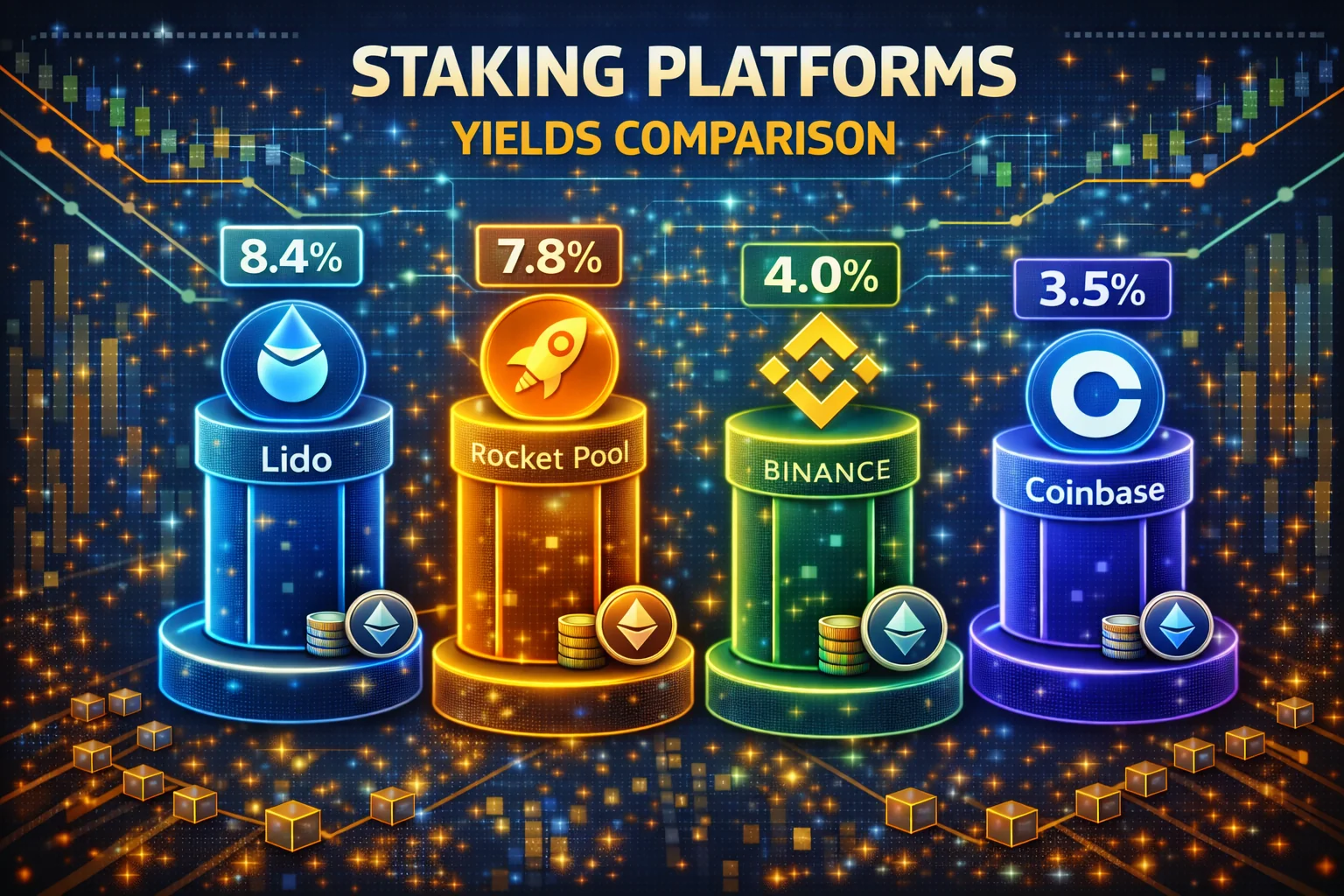
Rocket Pool - decentralised Alternative
Rocket Pool offers a more decentralised approach to liquid delegation, featuring a permissionless validator network and innovative tokenomics. The protocol emphasises decentralisation while providing competitive staking yields through rETH tokens.
Key Features:
- Permissionless validator network
- Dual-token system (rETH for stakers, RPL for operators)
- Lower minimum requirements for node operators
- decentralised governance structure
- Insurance through RPL token collateral
- Smoothing pool for consistent rewards
- MEV rewards sharing with stakers
Advantages:
- Higher degree of decentralisation
- Competitive yields with MEV sharing
- Strong community governance
- Innovative economic design
- Growing DeFi integration
Considerations:
- Lower liquidity compared to Lido
- More complex tokenomics
- Smaller validator network
- Less established DeFi integrations currently
Best For: Users prioritising decentralisation, those interested in running validators, and DeFi participants seeking alternatives to dominant protocols.
Binance Earn - CeFi Simplicity
Binance Earn provides the most user-friendly staking experience, offering both flexible and locked staking options across 50+ cryptocurrencies. As part of the world's largest exchange, it combines simplicity with extensive asset support.
Key Features:
- 50+ stakeable cryptocurrencies
- Flexible and fixed-term staking options
- Auto-staking for supported assets
- Integration with Binance trading platform
- Launchpool participation opportunities
- Simple one-click staking interface
- 24/7 customer support
Advantages:
- Extremely user-friendly interface
- Broad cryptocurrency support
- Flexible redemption options
- Integration with trading activities
- Competitive rates for many assets
- SAFU insurance fund protection
Considerations:
- Custodial risk - not your keys, not your crypto
- Regulatory risks and potential restrictions
- centralised control over staking operations
- Terms can change at platform discretion
Best For: Beginners seeking simplicity, users with diverse cryptocurrency portfolios, and those who prioritise ease of use over self-custody.
OKX Earn - Hybrid Approach
OKX Earn combines traditional CeFi staking with integrated Web3 wallet functionality, allowing users to access both centralised and decentralised staking opportunities from a single platform.
Key Features:
- 40+ stakeable assets with competitive rates
- Integrated Web3 wallet for DeFi access
- Cross-chain staking opportunities
- Flexible and fixed-term options
- DeFi protocol integration
- Multi-chain support (80+ networks)
- Professional trading tools
Advantages:
- Best of both CeFi and DeFi worlds
- Seamless Web3 integration
- Competitive staking rates
- Cross-chain functionality
- Professional-grade platform
Considerations:
- More complex than pure CeFi solutions
- Web3 features add smart contract risks
- Regulatory uncertainty in some regions
Best For: Intermediate users wanting both CeFi convenience and DeFi access, multi-chain investors, and those seeking comprehensive crypto services.
Kraken Staking - Security Focus
Kraken's staking services emphasise security and transparency, offering on-chain staking for major proof-of-stake networks with detailed reporting and institutional-grade security measures.
Key Features:
- 20+ stakeable cryptocurrencies
- On-chain staking with full transparency
- Institutional-grade security measures
- Detailed staking reports and analytics
- Flexible unstaking options
- Governance participation support
- 24/7 customer support
Best For: Security-conscious users, institutional investors, and those who value transparency and detailed reporting.
Coinbase Staking - Regulated Simplicity
Coinbase offers regulated staking services with a focus on compliance and user education, making it ideal for users in jurisdictions with strict cryptocurrency regulations.
Key Features:
- 15+ major cryptocurrencies supported
- Regulatory compliance focus
- Educational resources and tutorials
- Integration with Coinbase ecosystem
- Insurance coverage for digital assets
- Simple, beginner-friendly interface
Best For: US-based users, beginners prioritising regulatory compliance, and those who value educational resources.
Yield and Reward Comparison
Ethereum Staking Yields (2025)
| Platform | Base APR | MEV Rewards | Total APR | Fees | Net APR |
|---|---|---|---|---|---|
| Lido (stETH) | 3.2% | 0.8% | 4.0% | 10% | 3.6% |
| Rocket Pool (rETH) | 3.2% | 1.0% | 4.2% | 15% | 3.6% |
| Binance Earn | Variable | Included | 3.5% | 0% | 3.5% |
| OKX Earn | Variable | Included | 3.8% | 0% | 3.8% |
| Kraken | Variable | Included | 3.0% | 15% | 2.6% |
| Coinbase | Variable | Included | 3.2% | 25% | 2.4% |
Multi-Asset Staking Opportunities
| Asset | Binance Earn | OKX Earn | Kraken | Coinbase | Network APR |
|---|---|---|---|---|---|
| Solana (SOL) | 6.5% | 7.2% | 6.0% | 5.8% | 7.5% |
| Cardano (ADA) | 4.8% | 5.1% | 4.5% | 3.7% | 5.2% |
| Polkadot (DOT) | 12.5% | 13.2% | 12.0% | 11.5% | 14.0% |
| Cosmos (ATOM) | 15.8% | 16.5% | 15.2% | Not available | 18.0% |
| Polygon (MATIC) | 5.2% | 5.8% | Not available | Not available | 6.5% |
Risk Analysis and Mitigation
DeFi Staking Risks
Smart Contract Risk: DeFi protocols like Lido and Rocket Pool rely on smart contracts that could contain bugs or vulnerabilities. Whilst these protocols have been audited extensively, the risk cannot be eliminated.
Liquidity Risk: fluid staking tokens (stETH, rETH) may trade at a discount to their underlying assets during market stress, potentially causing temporary losses for users who need to exit positions quickly.
Validator Risk: Poor validator performance can result in reduced rewards or slashing penalties, though this risk is distributed across multiple validators in dynamic staking protocols.
CeFi Staking Risks
Custodial Risk: Exchange staking requires trusting the platform with your assets. Whilst major exchanges have strong security measures, the risk of hacks, regulatory actions, or business failures remains.
Regulatory Risk: Changes in regulations could affect staking services, potentially leading to service suspensions or modified terms.
Platform Risk: Exchanges may change staking terms, reduce rewards, or suspend services at their discretion.
Risk Mitigation Strategies
- Diversification: Spread staking across multiple platforms and protocols
- Position Sizing: Never stake more than you can afford to lose
- Regular Monitoring: Stay informed about protocol updates and market conditions
- Exit Strategy: Understand unstaking procedures and timeframes
- Insurance: Consider platforms with insurance coverage or protection funds
Advanced Staking Strategies
flexible delegation Arbitrage
Experienced users can take advantage of price discrepancies between liquid rewards tokens and their underlying assets. When stETH trades below ETH, users can buy stETH at a discount and either hold for the eventual convergence or use it in DeFi protocols.
Yield Farming with Staked Assets
fluid delegation tokens can be used as collateral in lending protocols or provided as liquidity in DEXs for additional yield. Popular strategies include:
- Lending stETH on Aave or Compound
- Providing liquidity to stETH/ETH pools on Curve
- Using staked assets as collateral for leveraged positions
Multi-Chain Staking Portfolio
Diversifying across different blockchain networks can optimise risk-adjusted returns:
- Ethereum staking for stability and liquidity
- Cosmos ecosystem for higher yields
- Solana for growth potential
- Polkadot for parachain opportunities
Tax and Regulatory Considerations
Tax Treatment of Staking Rewards
Staking rewards are generally treated as income in most jurisdictions, with tax implications varying by country:
- United States: Staking rewards taxed as ordinary income at fair market value when received
- European Union: Treatment varies by member state, generally taxed as income
- United Kingdom: Staking rewards considered miscellaneous income
- Australia: Rewards taxed as ordinary income for individuals
Record Keeping Requirements
- Track all staking rewards received with dates and values
- Maintain records of staking start and end dates
- Document any fees paid to staking platforms
- Keep records of dynamic delegation token transactions
Future of Staking in 2025 and Beyond
Emerging Trends
- Restaking Protocols: EigenLayer and similar protocols allowing staked ETH to secure additional networks
- flexible earning Derivatives: More sophisticated financial products built on staked assets
- Cross-Chain Staking: Protocols enabling staking across multiple networks simultaneously
- Institutional Adoption: Growing enterprise and institutional participation in staking
- Regulatory Clarity: Clearer guidelines for staking services and taxation
Technology Improvements
- Enhanced validator efficiency and MEV optimisation
- Improved liquid earning token stability mechanisms
- Better risk management and insurance products
- More sophisticated return optimisation strategies
Final Recommendations by User Profile
Complete Beginner
Recommended: Binance Earn or Coinbase Staking
Start with simple, custodial solutions that handle all technical aspects. Focus on learning basics before advancing to DeFi protocols.
DeFi Enthusiast
Recommended: Lido (stETH) + Rocket Pool (rETH)
Use fluid earning tokens for DeFi composability while diversifying across protocols. Take advantage of yield farming opportunities.
Security-Conscious Investor
Recommended: Kraken + Hardware Wallet Integration
Prioritise platforms with strong security track records and transparent operations. Consider running your own validator for maximum control.
Multi-Chain Investor
Recommended: OKX Earn + specialised Protocols
Use OKX for broad asset coverage and Web3 integration, supplement with specialised protocols for specific networks.
Yield optimiser
Recommended: Multi-Platform Strategy
Combine dynamic earning, CeFi earn products, and DeFi yield farming for maximum returns. Actively manage positions based on market conditions.
Institutional Investor
Recommended: Coinbase Institutional + Lido
Use regulated, institutional-grade services with proper custody solutions and compliance features.
Advanced Staking Analysis and Professional Strategies
Institutional Staking Infrastructure and Compliance
Enterprise staking operations require comprehensive infrastructure solutions that address regulatory compliance, fiduciary responsibilities, and operational risk management while accessing institutional-grade staking services. Professional implementation includes establishing governance frameworks, implementing audit trails, and developing risk management protocols that meet institutional standards for cryptocurrency asset management and professional staking operations with enhanced security protocols.
Advanced Staking Considerations for 2025
Professional staking strategies require a comprehensive understanding of validator performance metrics, network governance participation, and long-term protocol development roadmaps. Institutional staking approaches include diversified validator selection, systematic risk assessment procedures, and comprehensive performance monitoring systems that optimise returns while maintaining appropriate security standards. Advanced staking participants should consider validator commission structures, slashing risk mitigation strategies, and network upgrade participation requirements that affect long-term staking profitability and operational efficiency through systematic approach to cryptocurrency staking excellence and professional asset management optimisation with enhanced performance monitoring.
Institutional staking infrastructure includes dedicated validator nodes, professional custody solutions, and comprehensive reporting systems that enable traditional financial institutions to participate in proof-of-stake networks while maintaining regulatory compliance and operational excellence standards required for fiduciary asset management and institutional cryptocurrency operations that serve professional investors and corporate treasuries with advanced security frameworks.
Risk Management and Performance Attribution Analysis
Professional staking operations require comprehensive risk management frameworks that address validator performance risks, network upgrade risks, and market volatility impacts on staking returns. Advanced risk assessment includes monitoring validator uptime statistics, analysing slashing risks, and implementing diversification strategies that minimise concentration risks while maintaining optimal yield generation across different blockchain networks and staking protocols.
Performance attribution analysis enables professional stakers to understand the sources of their returns, identify optimisation opportunities, and make data-driven decisions about validator selection and network allocation. Sophisticated analytics include tracking reward consistency, analysing network participation rates, and evaluating the impact of governance decisions on long-term staking profitability for institutional cryptocurrency investment strategies and professional portfolio management excellence.
Advanced staking platform evaluation encompasses a comprehensive assessment of technical infrastructure, security protocols, and operational excellence that ensures sustainable long-term staking performance while maintaining appropriate risk management standards for institutional investors. Professional staking strategies require systematic platform comparison, comprehensive due diligence procedures, and ongoing performance monitoring that enables optimal platform selection and strategic asset allocation for institutional cryptocurrency staking operations and professional digital asset management that demands comprehensive platform analysis and sophisticated risk assessment frameworks designed for sustainable staking success and institutional portfolio optimisation through professional excellence and strategic innovation with enhanced security measures and comprehensive operational frameworks for optimal performance and strategic excellence with success optimisation excellence.
Advanced Staking Strategies and Professional Implementation
Institutional Staking Operations and Enterprise Solutions
Professional staking operations require sophisticated infrastructure that addresses institutional security requirements, regulatory compliance obligations, and operational efficiency needs while maintaining the decentralisation benefits and yield generation capabilities of proof-of-stake networks. Enterprise staking solutions include comprehensive validator selection strategies, advanced risk management frameworks, and sophisticated monitoring systems that enable institutional participation while maintaining appropriate oversight and control mechanisms through professional staking infrastructure and institutional validator management systems designed for large-scale cryptocurrency staking operations.
Institutional staking includes comprehensive due diligence processes for validator selection, advanced performance monitoring systems, and sophisticated risk assessment frameworks that optimise staking returns while maintaining capital preservation and operational security requirements. Professional staking operations utilise multi-signature governance structures, comprehensive audit trail capabilities, and advanced reporting systems that meet fiduciary obligations while enabling efficient staking management through institutional-grade staking infrastructure and professional validator management solutions designed for institutional cryptocurrency staking and professional asset management requirements.
flexible earning Integration and DeFi profit optimisation
Advanced staking strategies incorporate liquid earning protocols that enable users to maintain liquidity whilstearning staking rewards, creating opportunities for additional yield generation through decentralised finance applications and sophisticated reward optimisation strategies. fluid earning integration includes comprehensive protocol evaluation, advanced risk assessment, and sophisticated income optimisation that maximises returns while maintaining appropriate risk management and operational efficiency through professional dynamic earning implementation and DeFi return optimisation strategies designed for advanced cryptocurrency investment and professional portfolio management.
DeFi profit optimisation includes systematic evaluation of flexible staking derivatives, comprehensive risk analysis of protocol integrations, and advanced portfolio management strategies that combine staking rewards with additional DeFi yield opportunities while maintaining appropriate risk distribution and capital preservation requirements. Professional liquid delegation strategies utilise sophisticated monitoring systems, comprehensive performance tracking, and advanced risk management frameworks that optimise total returns while maintaining security standards and operational efficiency through professional DeFi integration and advanced reward optimisation designed for institutional cryptocurrency investment and professional asset management excellence.
Staking Platforms Comparison
| Platform | Type | APY Range | Min Stake | Liquidity |
|---|---|---|---|---|
| Lido | flexible staking | 3-5% | Any amount | Instant (stETH) |
| Rocket Pool | decentralised | 3-5% | 0.01 ETH | Instant (rETH) |
| Binance | CeFi | 2-8% | $1 | Flexible |
| Kraken | CeFi | 4-6% | $1 | Instant |
Conclusion: Choosing Your Staking Strategy
The cryptocurrency staking landscape in 2025 offers unprecedented opportunities for digital asset holders to generate passive income while contributing to network security and decentralisation. The maturation of this ecosystem has created diverse options catering to different investor profiles, risk tolerances, and liquidity requirements. From liquid delegation protocols that maintain DeFi composability to centralised exchanges offering simplified user experiences, the variety of available platforms ensures that every investor can find suitable staking solutions.
Each platform category serves distinct investor needs and preferences. fluid staking protocols like Lido provide maximum flexibility and DeFi composability, allowing users to earn staking rewards while participating in other yield-generating activities. Decentralised solutions like Rocket Pool offer enhanced security and censorship resistance through distributed validator networks. Centralised exchanges provide simplicity and comprehensive asset support, making staking accessible to mainstream users who prioritise convenience over maximum decentralisation.
For most investors, a diversified approach across multiple platforms and staking methods provides the optimal balance of risk, reward, and liquidity. A strategic allocation might include 40% to dynamic staking protocols for DeFi opportunities, 30% to decentralised protocols for enhanced security, and 30% to centralised platforms for convenience and diverse asset exposure. This diversification strategy maximises yield potential while minimising the risk of single-point-of-failure risks that could impact your entire staking portfolio.
Risk management remains crucial in any staking strategy, as these activities involve various potential losses, including smart contract vulnerabilities, slashing penalties, platform failures, and market volatility. Successful stakers implement comprehensive risk mitigation strategies, including platform diversification, position sizing based on risk tolerance, and maintaining adequate emergency funds in liquid assets. Never stake more than you can afford to lose, and consider the opportunity cost of locking funds versus other investment alternatives.
The staking ecosystem continues evolving rapidly with new protocols, improved user experiences, enhanced security measures, and clearer regulatory frameworks. Staying informed about platform developments, yield optimisation strategies, and regulatory changes will be crucial for maintaining a competitive edge in passive income generation. Start with smaller amounts to test different platforms, gradually increase your stakes as you gain confidence and experience, and always prioritise security and diversification over maximum yield to build sustainable long-term wealth.
As institutional adoption increases and traditional financial services integrate cryptocurrency staking, the landscape will continue to professionalise with improved infrastructure, better insurance products, and more sophisticated risk management tools. The platforms that successfully balance innovation with security, user experience with decentralisation, and yield optimisation with sustainability will emerge as the long-term winners in the competitive staking market of 2025 and beyond.
Staking platform evaluation involves analysing validator performance, reward distribution mechanisms, and network security factors that determine optimal delegation strategies. Different staking platforms offer varying approaches to blockchain validation, with each service providing unique advantages for specific cryptocurrencies and staking objectives that align with individual investment timelines and comprehensive risk management preferences throughout various market conditions and economic cycles for optimal results.
Sources & References
Frequently Asked Questions
- What is the safest staking platform?
- Kraken and Coinbase are considered the safest CeFi options, with strong regulatory compliance and insurance coverage. For DeFi, Lido and Rocket Pool have extensive security audits and proven track records. Always diversify across multiple platforms to minimise risk.
- Can I lose money staking crypto?
- Yes, risks include slashing penalties (validator misbehaviour), platform insolvency (CeFi), and smart contract bugs (DeFi), and market volatility. Liquid staking tokens can also depeg from their underlying assets. Use reputable platforms and never stake more than you can afford to lose.
- What's the difference between flexible and locked staking?
- Flexible staking allows instant withdrawals with lower APY (2–4%). Locked staking requires commitment for fixed periods (30–90 days) but offers higher APY (5–12%). Choose based on your specific liquidity needs and comprehensive risk tolerance.
- How long does it take to unstake?
- CeFi platforms typically offer instant unstaking for flexible products. Ethereum native staking has a withdrawal queue (1–7 days). liquid rewards tokens (stETH, rETH) can be swapped instantly but may experience slippage during market stress.
- Which platform offers the highest staking rewards?
- Binance and Bybit often offer the highest APYs (8–12%) through promotional campaigns and DeFi integration. However, higher yields come with higher risks. Established platforms like Lido and Kraken offer more sustainable returns (3–6%) with better security.
- Do I need 32 ETH to stake Ethereum?
- No, only for running your own validator. fluid delegation platforms like Lido and Rocket Pool allow staking any amount of ETH. CeFi platforms like Binance and Kraken also accept small amounts starting at $1–$ 10.