CeFi vs DeFi - Which Is Better
Traditional solutions offer simplicity and fiat on-ramps; decentralised applications offer transparency and higher yields. Here’s how they compare in 2025.
Introduction
The cryptocurrency ecosystem has evolved into two distinct paradigms. These paradigms fundamentally shape how you interact with digital assets. You can choose custodial solutions (centralised services) or DeFi applications (decentralised services). This division represents more than just a technological choice. It reflects different philosophies about financial sovereignty, risk control, and intermediaries.
Custodial finance platforms operate like traditional financial institutions. They provide familiar user experiences with customer support. You get regulatory compliance and professional management of your funds. These platforms have made cryptocurrency accessible to mainstream users. They offer simple interfaces, fiat on-ramps, and established companies. You don't need to understand technical blockchain complexities.
DeFi protocols leverage smart contracts differently. They create financial services without central authorities. You get direct control over your assets. You can access innovative financial products. This approach offers unprecedented transparency and higher potential yields. You can participate in cutting-edge financial experiments. However, you must take full responsibility for security and transaction management.
The choice between custodial services and DeFi applications isn't binary. Many successful cryptocurrency investors use both approaches strategically. You can leverage the strengths of each approach. This helps you create diversified portfolios that balance convenience, yield potential, and risk mitigation. Understanding when and how to use each approach is crucial. You can maximise returns while managing cryptocurrency investment risks.
In 2025, both centralised lending and decentralised applications have matured significantly. You can benefit from improved security measures and better user experiences. Clearer regulatory frameworks help you make informed decisions. This complete comparison examines the current state of both ecosystems. You'll learn their respective advantages and disadvantages. We offer practical guidance to help you determine the best approach. You can choose based on your investment goals, risk tolerance, and technical expertise.
The landscape continues to evolve rapidly. New hybrid models are emerging that combine the best aspects. You can use both centralised and decentralised approaches. This creates opportunities for advanced investors to optimise strategies. You can diversify throughout multiple platforms and protocols.
The Evolution of centralised and DeFi ecosystem
The cryptocurrency landscape in 2025 presents you with two distinct paradigms. You can earn passive income and access financial services through different approaches. Choose Centralised Finance (centralised earning) or Decentralised Finance (decentralised networks). Both approaches have matured significantly. They offer unique advantages and address different user needs. You should consider your risk tolerance when choosing.
Traditional earning platforms like Binance, Coinbase, and Kraken provide traditional financial services. They use cryptocurrency assets and emphasise user experience. You get regulatory adherence and customer support. Meanwhile, DeFi protocols such as Aave, Compound, and Uniswap work differently. They offer permissionless, transparent financial services built on blockchain technology. You can prioritise self-custody and innovation.
Understanding the fundamental differences is crucial for you. Learn the advantages and risks of each approach. This helps you make informed decisions about your cryptocurrency investments in 2025. You can choose where to allocate your funds wisely.
Comprehensive Comparison Overview
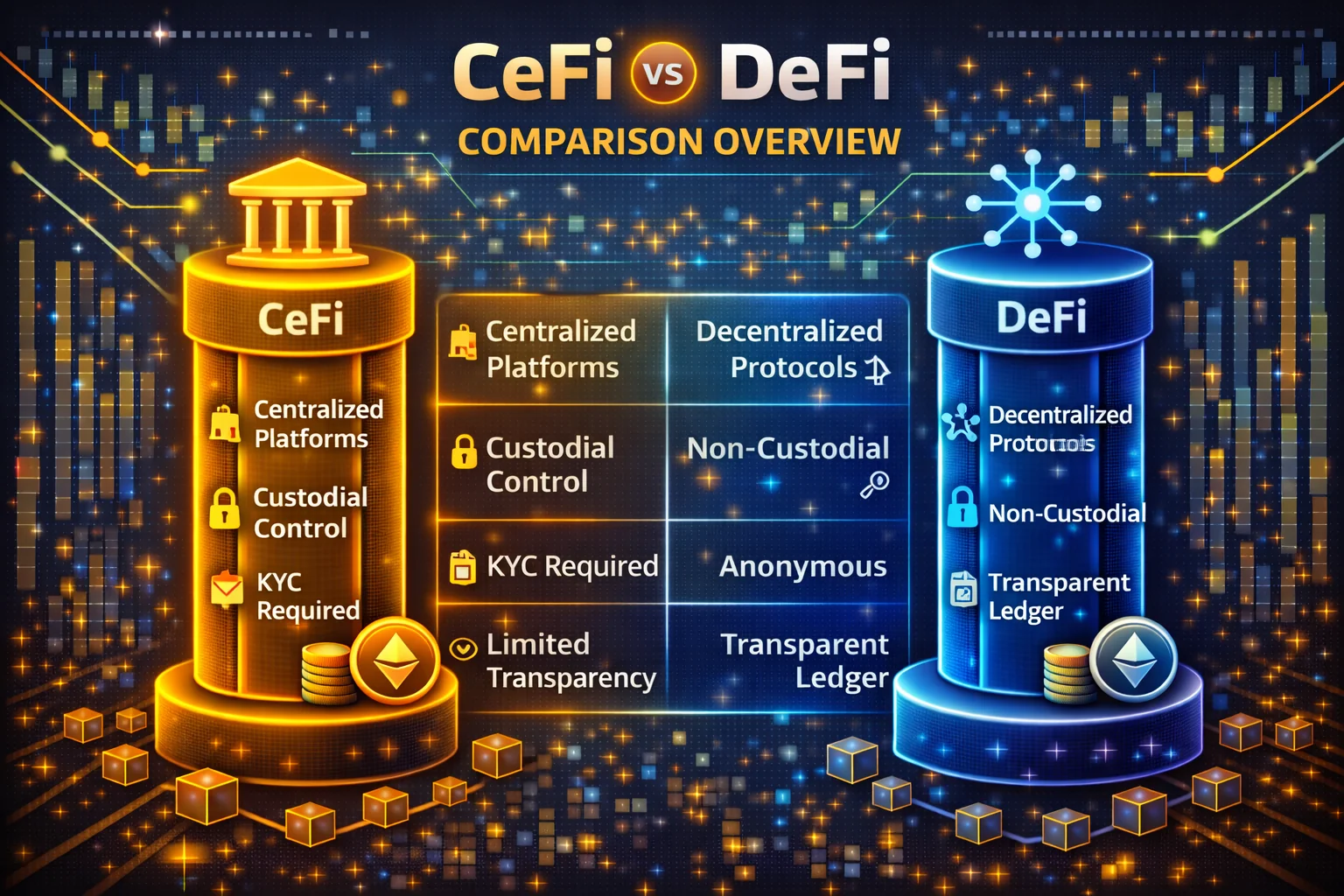
| Aspect | traditional finance (centralised) | DeFi networks (decentralised) |
|---|---|---|
| Custody Model | Platform holds your assets | You control private keys |
| User Experience | Simple, familiar interface | Requires wallet management |
| Yield Potential | Stable, predictable returns | Higher but variable yields |
| Transparency | Limited operational visibility | Fully transparent on-chain |
| Regulatory Status | Compliant, licensed operations | Regulatory uncertainty |
| Innovation Speed | Slower, compliance-focused | Rapid, experimental |
| Customer Support | 24/7 human support | Community-driven help |
| Insurance Coverage | Often insured deposits | Limited insurance options |
Custodial finance Deep Dive: custodial services
What is centralised platforms?
Centralised Finance (traditional platforms) refers to cryptocurrency financial services. These are provided by centralised entities such as exchanges and lending platforms. You can also use custodial services. These platforms operate like traditional financial institutions. They maintain control over your funds while offering financial products and services.
Key custodial finance Platforms and Services
Major custodial platforms Exchanges
- Binance: World's largest exchange with complete Earn products
- Coinbase: US-regulated platform with institutional-grade security
- Kraken: Security-focused exchange with transparent operations
- OKX: Global platform with integrated Web3 capabilities
- Bybit: Derivatives-focused with growing spot and earn services
Specialised Centralised systems Lending Platforms
- Nexo: crypto-backed lending with instant credit lines; not yet MiCA-authorised (application pending)
- YouHodler: Swiss-based multi-currency lending; not FINMA-licensed (AML-only PolyReg/SRO membership, not a banking or e-money licence). It is not FCA-authorised and gives UK customers no UK consumer protections, but GBP deposits, withdrawals and crypto-backed lending up to 90% LTV remain available to UK residents (the loyalty programme, the Miner and the Yield Account are withheld from UK retail users alongside the promotions); EU/EEA new-account onboarding has been suspended under MiCA since 1 July 2026, but that suspension does not apply to the UK.
- Celsius (Historical): Lessons learnt from platform failures
Custodial finance Advantages
User Experience Excellence
CeFi platforms prioritise your user experience. They offer intuitive interfaces, mobile apps, and familiar banking-like capabilities. You can easily deposit funds, earn interest, and withdraw. You don't need to manage private keys or understand blockchain technology.
Legal compliance and Protection
Licensed CeFi platforms operate under regulatory oversight. This provides you with legal protections and compliance benefits. You get anti-money laundering (AML) requirements and know-your-customer (KYC) standards. This helps protect your investments.
Customer Support and Service
Professional customer support teams provide 24/7 assistance. You can use multiple channels to get help. They help you resolve issues, understand products, and navigate platform capabilities. This support is crucial for your success.
Insurance and Security Measures
Some custodial platforms carry insurance, but it typically covers custodian cold-storage theft or a hot-wallet breach rather than user balances against platform insolvency. They employ institutional-grade security measures. They maintain reserve funds to protect your deposits. This gives you peace of mind.
Fiat Integration
Fiat on-ramps and off-ramps sit inside the same account: you deposit traditional currency, convert it to crypto, and convert back out without leaving the platform. DeFi protocols carry no fiat rail, so reaching one means buying crypto on a centralised exchange first, under KYC. That entry step is what makes custodial platforms the usual starting point for new users.
Traditional solutions Disadvantages and Risks
Custodial Risk
You must trust platforms with your assets. This creates counterparty risk for you. Platform failures, hacks, or mismanagement can result in total loss. FTX, Celsius, and other platform collapses demonstrate this risk. You should be aware of these dangers.
Limited Transparency
Custodial finance platforms operate as "black boxes". You get limited visibility into their operations. You cannot see reserve management and risk practices. You cannot independently verify platform solvency or operational practices. This lack of transparency should concern you.
Regulatory Risk
Changing regulations can impact platform operations for you. This potentially leads to service restrictions or asset freezes. Complete shutdowns in certain jurisdictions can affect you. You must monitor regulatory developments.
Centralised Control
Platforms can unilaterally change terms that affect you. They can freeze your accounts or restrict access to funds. This happens based on their policies or external pressures. You have limited control in these situations.
DeFi infrastructure Deep Dive: Decustodial solutions
What is DeFi?
Decentralised Finance (decentralised ecosystem) encompasses financial services built on blockchain networks. These primarily use Ethereum and operate without central authorities. Smart contracts automate financial functions for you. This enables permissionless access to lending, borrowing, trading, and decentralised infrastructure farming. You can participate without traditional gatekeepers.
Leading blockchain protocols and Categories
Lending and Borrowing Protocols
- Aave: Leading lending protocol with innovative capabilities like flash loans
- Compound: Algorithmic money market with governance tokens
- Sky (formerly MakerDAO, rebranded August 2024): decentralised stablecoin creation and lending; DAI continues to circulate alongside its sibling stablecoin USDS
Decentralised Exchanges (DEXs)
- Uniswap: Automated market maker with deep liquidity
- Curve: specialised in stablecoin and similar asset trading
- Balancer: Automated portfolio manager and liquidity provider
Liquid Staking Protocols
- Lido: Dominant liquid staking with stETH tokens
- Rocket Pool: decentralised Ethereum staking alternative
- Frax: Algorithmic stablecoin with staking derivatives
Yield generation and Aggregators
- Yearn Finance: Automated yield optimisation strategies
- Convex: Curve yield optimisation and governance
- Beefy: Multi-chain yield farming aggregator
DeFi Advantages
Self-Custody and Control
You maintain complete control over your assets via private key ownership. This eliminates counterparty risk associated with centralised platforms. You don't need to trust third parties with your funds. Your assets remain under your direct control.
Transparency and Verifiability
All transactions and smart contract code are publicly visible on the blockchain. You can see protocol operations clearly. This enables independent verification and audit. You can verify everything yourself without trusting others.
Permissionless Access
Anyone with an internet connection can access DeFi services. You need a compatible wallet to start. No KYC requirements, geographic restrictions, or approval processes limit you. You can begin immediately.
Composability and Innovation
Smart contract platforms can be combined like "money legos". You can create complex financial strategies. This enables innovative products not possible in centralised services. You can build custom solutions for your needs.
Higher Yield Potential
DeFi lending often offers higher yields for you. You can benefit from liquidity mining, governance token rewards, and efficient capital allocation. These mechanisms can boost your returns significantly.
Global Accessibility
DeFi services are available 24/7 globally. You don't need traditional banking infrastructure. This serves unbanked and underbanked populations. You can access services from anywhere.
Decentralised infrastructure Disadvantages and Risks
Smart Contract Risk
Bugs, vulnerabilities, or exploits in smart contract code can affect you. This can lead to total loss of your funds. Even audited protocols face ongoing security risks. You must understand these technical risks.
Technical Complexity
Decentralised lending requires understanding of wallets and private keys. You need to learn about gas fees and protocol mechanics. This creates barriers for non-technical users like you. You must invest time in learning.
Regulatory Uncertainty
Unclear regulatory frameworks create compliance risks for you. Potential restrictions on DeFi protocol access can affect you. Token usage limitations may impact your strategies. You should monitor regulatory developments.
Impermanent Loss
Liquidity providers face impermanent loss risks. This happens when you provide assets to automated market makers. This can potentially reduce your overall returns. You must understand this risk before participating.
Gas Fees and Network Congestion
High transaction fees during network congestion can affect you. This makes small transactions uneconomical for you. This can reduce your overall profitability. You should consider transaction costs in your strategy.
Yield Comparison
Traditional services Yield Opportunities
| Platform | Stablecoin APY | ETH Staking | BTC Lending | Altcoin Yields |
|---|---|---|---|---|
| Binance Earn | 3-8% | 3.5% | 1-3% | 5-15% |
| Coinbase | 2-5% | 3.2% | 1-2% | 3-8% |
| Kraken | 2-6% | 3.0% | 1-2% | 4-12% |
| Nexo | 4-12% | Not available | 3-8% | 6-15% |
| YouHodler | 3-10% | Not available | 2-6% | 5-12% |
DeFi infrastructure Yield Opportunities
| Protocol | Stablecoin APY | ETH Yields | Liquidity Mining | Governance Rewards |
|---|---|---|---|---|
| Aave | 2-8% | 1-4% | Variable | AAVE tokens |
| Compound | 1-6% | 1-3% | Variable | COMP tokens |
| Curve | 3-15% | 2-8% | 5-50% | CRV + CVX |
| Lido | Not applicable | 3.6% | Not applicable | LDO tokens |
| Uniswap V3 | Variable | Variable | 0.05-1% | UNI tokens |
Yield Considerations
- Custodial services yields are typically more stable but capped by platform policies
- DeFi earning yields can be higher but are more volatile and complex
- Risk-adjusted returns may favour different approaches based on your market conditions
- Tax implications vary between custodial finance and DeFi earnings
Comprehensive Risk Analysis
Centralised lending Risk Assessment
Platform Risk (High)
The collapse of major platforms like FTX, Celsius, and Voyager demonstrated important lessons. Even large, seemingly stable traditional lending platforms can fail catastrophically. You face total loss of funds when platforms become insolvent. You should understand this risk before investing.
Regulatory Risk (Medium)
Changing regulations can force platforms to restrict services. They may freeze your assets or exit certain markets. However, compliant platforms may benefit from regulatory clarity. You should monitor regulatory developments that affect your investments.
Operational Risk (Medium)
Technical failures and security breaches can impact platform operations. Management decisions can affect your access to funds. You should choose platforms with strong operational track records.
Decentralised lending Risk Assessment
Smart Contract Risk (High)
Bugs, exploits, or design flaws in smart contracts can affect you. This can lead to permanent loss of your funds. Even audited protocols face ongoing security risks. New vulnerabilities are discovered regularly. You must understand these technical risks.
Liquidity Risk (Medium-High)
Decentralised protocols depend on liquidity providers and market makers. During stress periods, liquidity can dry up for you. This leads to high slippage and difficulty exiting positions. You should plan for liquidity constraints.
Governance Risk (Medium)
Decentralised governance can lead to poor decisions. Protocol changes can harm you as a user. Governance attacks by malicious actors can affect your investments. You should understand governance mechanisms.
Risk Mitigation Strategies
For custodial finance Users
- You should diversify throughout multiple reputable platforms
- Research platform financials and regulatory status before you invest
- Use platforms with insurance coverage to protect your funds
- Monitor platform news and user sentiment regularly
- Withdraw your funds during uncertainty periods
For decentralised finance Users
- You should use battle-tested protocols with long track records
- Understand smart contract risks and audit reports before you start
- Start with small amounts to learn protocols safely
- Monitor protocol governance and upgrades that can affect you
- Use hardware wallets for large amounts to protect your assets
Choosing Based on User Profile
Complete Beginner
Recommended: custodial exchanges (Coinbase, Kraken)
You should start with regulated, user-friendly platforms. These offer educational resources and customer support. Focus on learning basics before you explore decentralised lending protocols. This approach helps you build confidence.
Intermediate Investor
Recommended: Hybrid approach (centralised earning + simple DeFi lending)
You can use custodial finance for stability and fiat access. Try established DeFi platforms like Lido or Aave for higher yields. This balanced approach helps you learn while earning.
Advanced DeFi lending protocols User
Recommended: DeFi-focused with traditional earning backup
You should primarily use decentralised earning for maximum yields and innovation. Maintain some custodial earning exposure for liquidity and fiat access. This strategy maximises your opportunities.
Risk-Averse Investor
Recommended: Regulated custodial finance platforms
You should prioritise platforms with insurance and regulatory framework. Choose strong security track records over maximum yields. This approach protects your capital better.
Yield optimiser
Recommended: Multi-platform strategy
You can actively manage positions throughout both traditional finance and DeFi protocols. This helps you capture the best risk-adjusted returns available. You must monitor opportunities constantly.
Future Trends: centralised and decentralised convergence
Emerging Hybrid Models
The line between custodial services and noncustodial lending protocols continues to blur in 2025. You can see several emerging trends that will help you:
- CeFi-decentralised finance Integration: Platforms like OKX now offer both centralised services and DeFi systems access
- Institutional decentralised earning protocols: Traditional financial institutions are building DeFi platforms products
- Regulated decentralised systems: Compliant DeFi earning protocols with KYC and regulatory capabilities
- Cross-Chain Bridges: Assets moving between chains, so funds withdrawn from a custodial account can reach protocols running on a different network
Technology Improvements
- Layer 2 Solutions: Reducing DeFi solutions transaction costs and improving your accessibility
- Account Abstraction: Simplifying DeFi user experience for you
- Insurance Protocols: Better risk assessment for DeFi systems users like you
- Institutional Infrastructure: Professional-grade DeFi services tools and custody you can use
Practical Implementation Strategies

The 70-30 Strategy
Conservative Approach: 70% custodial finance, 30% DeFi applications
- You should use established custodial platforms for the majority of your funds
- Experiment with DeFi using smaller amounts
- Gradually increase your decentralised services allocation as your comfort grows
The 50-50 Balance
Balanced Approach: 50% centralised systems, 50% decentralised applications
- You can use equal allocation between custodial-finance stability and DeFi yields
- Use traditional systems for fiat access and decentralised applications for innovation
- You should rebalance based on market conditions and opportunities
The DeFi-First Strategy
Aggressive Approach: 80% DeFi networks, 20% custodial systems
- You can maximise yields via DeFi protocols
- Use custodial finance primarily for fiat on/off ramps
- This requires advanced knowledge and active management from you
Implementation Tips
- You should start small and gradually increase your exposure
- Diversify throughout multiple platforms and protocols
- Keep detailed records for your tax purposes
- Stay informed about platform updates and risks that can affect you
- Have exit strategies for both centralised solutions and DeFi applications positions
When to Choose Each Approach
Choose traditional solutions When:
- You're new to cryptocurrency and need simple interfaces
- You require customer support and assistance
- You need frequent fiat conversions
- You prioritise compliance standards and insurance
- You want stable, predictable yields
- You're managing institutional or large amounts
Choose decentralised networks When:
- You want maximum control over your assets
- You're seeking higher yield opportunities
- You value transparency and verifiability
- You want to participate in protocol governance
- You're comfortable with technical complexity
- You want access to innovative financial products
Use Both When:
- You want to balance risk and reward
- You need both stability and growth potential
- You want to hedge against platform-specific risks
- You're building a complete crypto strategy
- You want to learn and experiment gradually
Performance Metrics and Analytics
Historical Performance Comparison
Analysing historical data from 2020-2025 reveals interesting patterns in centralised vs non-custodial platforms' protocols performance:
| Metric | custodial finance Average | decentralised networks Average | Volatility |
|---|---|---|---|
| Annual Yield (Stablecoins) | 4-8% | 6-15% | DeFi ecosystem Higher |
| Annual Yield (ETH) | 3-5% | 4-12% | DeFi higher |
| Platform Uptime | 99.5% | 99.9% | DeFi networks Better |
| User Losses (Hacks) | $2.1B (2024) | $1.8B (2024) | Similar Risk |
| Regulatory Issues | Higher | Lower | custodial solutions Risk |
Market Share Evolution
The market dynamics between centralised services and decentralised ecosystem continue evolving:
- 2020: custodial finance dominated with 85% market share
- 2021: DeFi surge, reduced traditional services to 60% market share
- 2022: custodial services collapse (FTX, Celsius) boosting decentralised ecosystem to 55%
- 2023: Regulatory clarity helped custodial finance recover to 50%
- 2024: Hybrid platforms emerged, market stabilised at 45% centralised lending, 55% DeFi infrastructure
- 2025: Convergence continues with integrated solutions
Real-World Case Studies
Case Study 1: Conservative Investor (Sarah, 45)
Profile: Traditional finance background, $50,000 to invest, risk-averse
Strategy: 80% custodial exchanges (Coinbase, Kraken), 20% DeFi (Lido staking)
Results: 6.2% annual return, minimal stress, gradual DeFi ecosystem learning
Lessons: custodial finance provided confidence to enter crypto, decentralised infrastructure exposure enabled learning
Case Study 2: DeFi Power User (Alex, 28)
Profile: Software developer, $25,000 portfolio, high risk tolerance
Strategy: 20% custodial lending (emergency liquidity), 80% decentralised infrastructure (yield farming, LP)
Results: 18.5% annual return, high volatility, significant time investment
Lessons: DeFi lending rewards active management, centralised earning offers stability, anchor
Case Study 3: Institutional Investor (Hedge Fund)
Profile: $10M AUM, regulatory adherence required
Strategy: 70% custodial finance (institutional custody), 30% DeFi (via compliant protocols)
Results: 8.8% annual return, full regulatory compliance, scalable operations
Lessons: Institutions need traditional earning infrastructure but benefit from DeFi infrastructure yields
Hybrid CeFi-DeFi Strategies and Portfolio optimisation
Balanced Portfolio Allocation and Risk Control
Professional cryptocurrency portfolio management increasingly uses hybrid strategies that combine custodial finance and DeFi opportunities to optimise returns while managing risks throughout different platforms and protocols. Balanced allocation strategies include diversification throughout centralised and decentralised applications, enabling investors to leverage the regulatory compliance and user experience benefits of centralised lending while accessing the higher yields and innovative opportunities available via DeFi protocols.
Risk management for hybrid strategies means a full assessment of platform-specific risks, regulatory considerations, and operational complexities that enable informed allocation decisions throughout traditional lending and DeFi opportunities. Portfolio optimisation uses analytics, automated rebalancing systems, and full risk assessment that maximises returns while maintaining appropriate diversification and security planning objectives through strategic allocation across centralised and decentralised financial services.
Institutional Adoption and Professional Integration
Institutional adoption of cryptocurrency financial services increasingly includes both custodial finance and decentralised networks components, with professional investors leveraging the strengths of each approach to optimise their cryptocurrency operations while maintaining regulatory compliance and fiduciary obligations. Institutional integration strategies use custodial lending platforms for regulatory compliance and custody services while accessing DeFi protocols for yield optimisation and innovative financial products via advanced protective measures and operational frameworks.
Professional integration requires a full understanding of regulatory requirements, operational considerations, and risk reduction frameworks that enable institutional participation throughout both centralised earning and DeFi. Institutional strategies use compliance frameworks, thorough risk-control systems, and professional custody solutions that enable safe participation in both centralised and decentralised financial services while maintaining appropriate oversight and stakeholder protection via professional operational and compliance management.
Future Evolution and Technology Integration
The future evolution of cryptocurrency financial services increasingly involves convergence between custodial finance and DeFi, with traditional financial institutions adopting blockchain technology while DeFi protocols implement regulatory compliance capabilities and institutional-grade security measures. Technology integration includes cross-chain interoperability, automated compliance systems, and advanced user interfaces that bridge the gap between centralised and decentralised financial services via innovative technological solutions.
Emerging trends include institutional DeFi platforms that combine decentralised protocols with regulatory compliance frameworks, centralised exchanges offering DeFi ecosystem integration services, and hybrid platforms that put a custodial account and a non-custodial wallet behind one interface. A shared interface leaves the two custody models separate: the exchange balance stays with the operator, while the wallet balance answers only to the keys its holder controls. Future development focuses on creating complete financial ecosystems that leverage the benefits of both approaches while addressing their respective limitations via technological innovation and regulatory evolution that allows mainstream adoption of cryptocurrency financial services.
Regulatory Landscape and Compliance Considerations
The regulatory landscape for cryptocurrency financial services continues evolving with increasing clarity around custodial earning operations while non-custodial protocols face ongoing regulatory uncertainty and compliance challenges. Regulatory considerations include licensing requirements for centralised platforms, tax implications for decentralised infrastructure participation, and compliance obligations that vary significantly between jurisdictions and platform types, requiring full legal analysis and professional guidance for optimal participation strategies.
Compliance frameworks for hybrid CeFi-decentralised infrastructure strategies include thorough record-keeping, automated tax reporting, and advanced compliance monitoring that guarantees adherence to applicable regulations while maintaining operational efficiency and investment optimisation. Professional compliance management requires ongoing monitoring of regulatory developments, thorough documentation procedures, and advanced compliance systems that enable sustainable participation throughout both custodial finance and DeFi while maintaining appropriate legal protection and regulatory compliance via professional legal and compliance frameworks.
Future Evolution and Market Convergence
The cryptocurrency ecosystem continues evolving towards greater integration between traditional finance and DeFi, creating hybrid solutions that combine the security and compliance advantages of custodial services with the innovation and yield potential of decentralised protocols. Future developments include institutional DeFi lending adoption, regulatory clarity improvements, and technological advancement that bridge centralised platforms with decentralised innovation while maintaining appropriate risk mitigation and compliance standards.
Market convergence includes development of regulated DeFi protocols, institutional custody solutions for decentralised lending participation, and advanced risk assessment tools that enable professional participation throughout both ecosystems. Professional investors benefit from emerging hybrid products, improved regulatory frameworks, and technological innovation that optimise the advantages of both traditional platforms and decentralised lending while addressing traditional limitations via integrated strategies and professional investment management excellence designed for sustainable cryptocurrency ecosystem participation and long-term portfolio optimisation.
Final Verdict: centralised and decentralised lending
The future belongs to both custodial earnings and DeFi earnings. Rather than viewing them as competing alternatives, successful cryptocurrency investors in 2025 recognise that custodial finance and DeFi serve complementary roles in a well-rounded portfolio strategy.
Traditional finance offers the stability, user experience, and regulatory compliance that make cryptocurrency accessible to mainstream clients. Decentralised lending offers the innovation, transparency, and yield opportunities that represent the cutting edge of financial technology.
The optimal approach depends on your experience level, risk tolerance, and investment goals. Beginners should start with custodial services to learn the basics, while experienced clients can leverage both ecosystems to maximise opportunities and manage risks.
As the cryptocurrency industry continues to mature, the distinction between custodial finance and decentralised finance will likely blur further, with hybrid platforms offering the best of both worlds. The key is to stay informed, start conservatively, and gradually expand your comfort zone as you gain experience. Professional cryptocurrency management increasingly involves advanced strategies that leverage both centralised platforms and DeFi to optimise returns while managing risks via diversification and strategic allocation throughout different platforms and protocols. Advanced clients implement full security frameworks that use the stability of traditional platforms for core holdings while leveraging DeFi lending protocols for enhanced yield generation and innovative financial products. This hybrid approach allows optimal portfolio construction that balances security, yield, and innovation by combining both centralised and decentralised financial services and platforms.
Key Takeaways
- Neither custodial finance nor DeFi platforms is inherently superior - both have distinct advantages
- Diversification throughout both ecosystems reduces overall portfolio risk
- Regulatory developments will continue shaping both sectors
- Hybrid platforms represent the future of cryptocurrency finance
- User education remains crucial for success in either ecosystem
- Security practices must evolve with technological advances
Sources & References
Frequently Asked Questions
- What is the main difference between custodial finance and DeFi protocols?
- Traditional systems (Centralised Finance) involve trusting a company to manage your crypto assets, similar to traditional banks. DeFi (decentralised finance) use smart contracts, allowing you to maintain complete control via a non-custodial wallet. custodial systems offer customer support and insurance, while decentralised finance offers transparency and permissionless access.
- Which is safer: custodial finance or DeFi systems?
- Both have different risk profiles. centralised solutions carries counterparty risk (platform bankruptcy) but offers insurance and regulatory oversight. decentralised lending protocols carries smart contract risk (code vulnerabilities) but remains non-custodial. Diversifying throughout both reduces overall risk. Recent traditional solutions failures (Celsius, BlockFi) highlight the importance of careful platform selection.
- Can beginners use DeFi platforms?
- Yes, but it requires learning about wallets, gas fees, and smart contracts. Beginners should start with user-friendly protocols like Lido or Aave, use small amounts at first, and consider Layer 2 solutions to reduce fees. Many clients begin with custodial finance and transition gradually into decentralised systems as they gain experience.
- Do I need KYC for DeFi lending protocols?
- No, DeFi protocols are permissionless and do not require identity verification. You only need a compatible wallet to interact with smart contracts. However, some DeFi platforms are adding optional KYC for regulatory compliance, and centralised exchanges used to acquire crypto for non-custodial lending protocols typically require KYC.
- Which offers better returns: custodial solutions or DeFi systems?
- decentralised solutions generally offers higher yields (5–20% APY) due to lower operational costs and innovative strategies like yield farming. centralised services offers more stable returns (3–8% APY) with less volatility. Higher decentralised earning protocols returns come with increased complexity and risk, so choose based on your risk tolerance.
- Can I use both custodial finance and decentralised solutions together?
- Absolutely. Most experienced clients diversify throughout both ecosystems. Use traditional services for stable passive income and customer support, and use DeFi services for higher yields and innovative strategies. A common approach is to allocate 60% to custodial services for stability and 40% to DeFi earning protocols for growth opportunities.