Crypto Earning Methods Compared
Comprehensive comparison of staking, lending, CeFi yields, DeFi yields, liquidity pools, and digital asset cards — analysing risks, returns, effort levels, and optimal allocation approaches for 2025.
Introduction
The digital asset landscape has evolved dramatically, offering experienced investors multiple pathways to generate returns across a sophisticated ecosystem of financial instruments and protocols. Unlike traditional finance with its limited operating hours and geographical restrictions, crypto markets operate continuously, providing 24/7 earning opportunities that span an extensive range of risk profiles and financial approaches tailored to different investor needs and objectives. For readers weighing these income streams against conventional equity dividends, our crypto vs stocks 2025 comparison maps out the correlation and return profiles side by side.
This comprehensive guide examines six primary revenue generation methods available in 2025, providing detailed analysis of their risk-return characteristics, operational requirements, technical implementation considerations, and optimal portfolio allocation approaches. Whether you're a conservative investor seeking stable returns or an aggressive trader pursuing maximum yields, understanding these strategies and their interrelationships is essential for building a successful and resilient crypto portfolio that can adapt to changing market conditions.
Each method presents unique advantages and challenges that must be carefully evaluated. Staking offers network participation rewards and governance rights, however it requires technical knowledge, involves lock-up periods, and exposes participants to slashing risks. Lending provides steady returns with predictable cash flows, however it carries counterparty risk and platform dependency concerns. Decentralised protocols offer enhanced yields through composability and innovation, however they involve risks associated with smart contract vulnerabilities, impermanent loss exposure, and rapidly evolving protocol economics. Centralised platforms provide convenience and user-friendly interfaces, however they sacrifice decentralisation benefits and introduce custodial risks.
The key to successful revenue generation lies in strategic diversification across multiple earning methods, rigorous risk management practices, and continuous strategy optimisation based on changing market conditions and protocol developments. This guide provides the comprehensive framework you need to make informed decisions that align with your risk tolerance, match your investment timeline, and fit your specific financial objectives whilst maintaining appropriate security measures and tax efficiency.
We'll explore real-world case studies from successful crypto investors, examine complex tax implications across different jurisdictions, and provide actionable insights that help you build a robust yield portfolio capable of weathering market volatility whilst generating consistent returns throughout 2025 and beyond. Advanced techniques covered include cross-chain arbitrage opportunities, automated rebalancing methods, yield optimisation strategies, and sophisticated risk hedging approaches that professional investors employ.
Market Evolution and Opportunities
The crypto revenue landscape has matured significantly since DeFi's explosive emergence in 2020, when early protocol farming opportunities offered unsustainable returns exceeding 1000% APY that attracted speculative capital but proved economically unviable. The market has since stabilised, now offering more realistic and sustainable yield ranges between 3-20% APY depending on risk profile and strategy complexity. Today's opportunities focus on protocol sustainability, comprehensive security audits, long-term value creation, and avoiding speculative token emissions that characterised earlier DeFi experiments.
Institutional adoption has brought enterprise-grade infrastructure, regulatory compliance frameworks, and sophisticated risk management tools to the crypto revenue space that were previously unavailable to retail participants. Major financial institutions including traditional banks, asset managers, and pension funds now offer crypto staking services, whilst traditional banks explore digital asset yield products for their high-net-worth clients. This institutional participation has improved market liquidity, reduced volatility, and established professional standards for custody, reporting, and risk management.
Regulatory clarity continues improving globally as governments and financial authorities develop comprehensive frameworks covering cryptocurrency lending, staking rewards taxation, and DeFi protocol compliance. Major jurisdictions including the European Union, United Kingdom, Singapore, and progressive US states have established clear guidelines that provide greater certainty for long-term revenue generation strategies. This regulatory evolution supports sustainable growth whilst establishing consumer protections and institutional standards that benefit all market participants.
Technology Infrastructure Improvements
Layer 2 scaling solutions including Optimism, Arbitrum, Polygon, and zkSync have dramatically reduced transaction costs for DeFi participation, making smaller investments economically viable where previously high gas fees created prohibitive barriers to entry. Ethereum's successful transition to Proof-of-Stake has created new opportunities for staking participation whilst improving network energy efficiency by over 99% and enhancing overall security through increased validator participation and economic incentives.
Cross-chain bridges and multi-chain protocols enable sophisticated capital deployment across different blockchain networks, allowing investors to optimise yields whilst diversifying technical risks across multiple ecosystems. Advanced yield aggregators like Yearn Finance, Beefy Finance, and Convex automatically compound rewards, rebalance positions based on changing yields, and provide institutional-quality portfolio management tools that individual investors can access with minimal technical knowledge.
Security improvements including formal verification of smart contracts, opt-in third-party cover from protocols like Nexus Mutual, and rigorous expert auditing by firms like Trail of Bits and OpenZeppelin have significantly reduced smart contract risks. Multi-signature wallets, hardware security modules, and institutional custody solutions from providers like Fireblocks and Copper provide enterprise-grade asset protection for various earning methods, making crypto yield generation safer than ever before.
Investment Philosophy and Approach
Successful crypto revenue generation requires a disciplined approach emphasising long-term thinking and prioritising risk management over chasing maximum yields that often come with unsustainable economics or excessive risk exposure. The most profitable strategies typically involve deploying patient capital, conducting careful platform selection based on security audits and track records, and implementing systematic diversification spanning multiple earning methods and protocols to reduce concentration risk.
This guide advocates for a balanced portfolio approach combining conservative base methods receiving 40-60% allocation for stability, moderate-risk opportunities receiving 30-40% allocation for enhanced returns, and limited exposure to high-risk experimental approaches receiving 5-20% allocation for upside potential. This framework provides steady income generation whilst capturing upside potential during favourable market conditions without exposing your entire portfolio to catastrophic loss scenarios.
Understanding your personal risk tolerance, investment timeline, and liquidity needs is crucial before deploying capital into any earning strategy. Conservative investors should focus on established platforms with proven track records, transparent proof-of-reserves, and audited custody arrangements. Experienced investors comfortable with higher risk can explore emerging opportunities and experimental protocols, but should always use appropriate position sizing that limits potential losses to acceptable levels relative to overall portfolio size.
Yield Optimisation and Portfolio Construction
Professional crypto investors employ sophisticated yield optimisation techniques that go beyond simple platform selection. These include strategic timing of entries and exits based on market cycles, tax-loss harvesting to minimise tax obligations, automated compounding to maximise returns through exponential growth, and dynamic rebalancing that shifts capital between strategies as relative yields and risk profiles change over time.
Portfolio construction for crypto yield generation requires careful consideration of correlation between different earning methods. Staking and lending often move together during market downturns, whilst liquidity provision and yield farming may offer diversification benefits due to different risk drivers. Understanding these correlations helps construct portfolios that maintain stable returns across various market conditions rather than concentrating risk in correlated strategies.
Advanced investors implement hedging strategies using derivatives, maintain emergency liquidity reserves for opportunistic rebalancing, and establish systematic monitoring procedures that track performance metrics, risk indicators, and protocol health signals. These professional practices separate successful long-term yield generation from speculative gambling that often results in capital loss during market stress periods.
Overview of earning opportunities Strategies
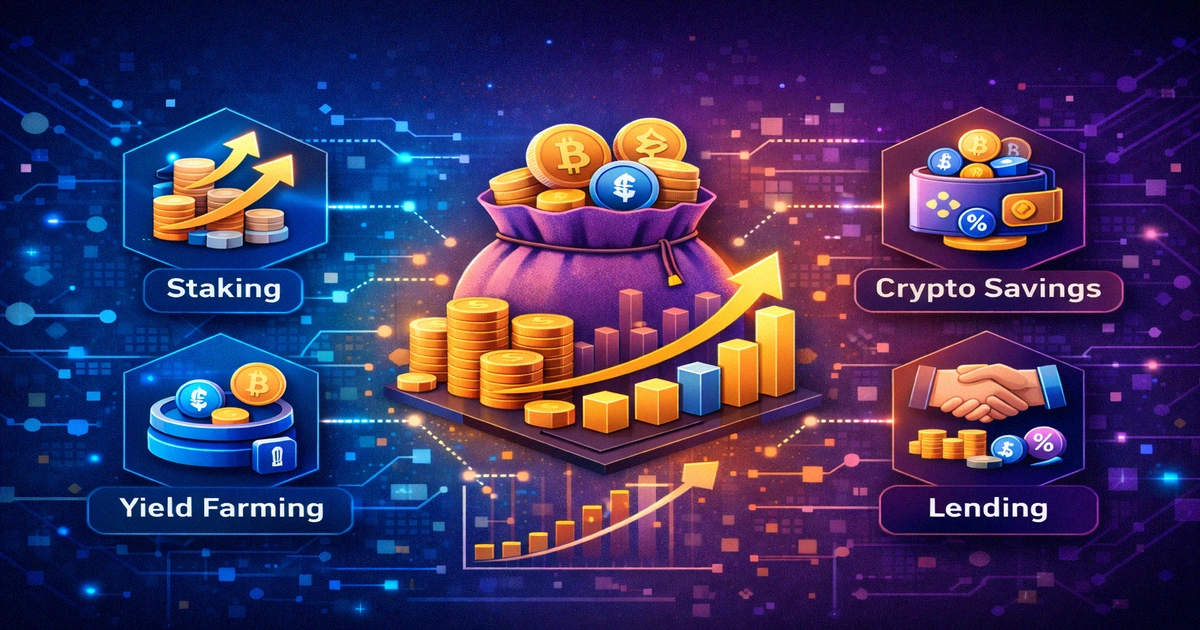
The digital asset ecosystem offers numerous opportunities to generate earning strategies, each with distinct risk-return profiles and operational requirements. Understanding these differences is crucial for building an effective income portfolio in 2025.

Passive crypto income generally falls into six main categories:
- Staking: Earning rewards by participating in network consensus
- Lending: Providing capital to borrowers for interest payments
- Centralised earning: centralised exchange savings and earning programs
- Farming incentives: Providing liquidity to blockchain protocols for enhanced rewards
- Liquidity Pools: Earning fees from automated market makers
- Blockchain cards: Cashback and rewards from spending
Each strategy requires different levels of technical knowledge, capital commitment, and risk tolerance. This guide offers a thorough analysis to help you make informed decisions tailored to your specific circumstances and goals.
Cryptocurrency Staking Analysis
Staking involves locking digital assets to support network operations and earn rewards. It's one of the most straightforward earning methods, particularly suitable for long-term holders.
How Staking Works
When you stake digital assets, you're essentially participating in the network's consensus mechanism. Your staked tokens help validate transactions and secure the network, earning you a portion of block rewards and transaction fees.
Popular Staking Options
- Ethereum (ETH): 3.5-4.5% APY through flexible staking providers like Rocket Pool
- Solana (SOL): 6-8% APY with various validators
- Cardano (ADA): 4-6% APY through staking pools
- Polkadot (DOT): 10-14% APY with 28-day unbonding period
- Cosmos (ATOM): about 15.7% gross (September 2026), set by inflation against the bonded share
Ethereum remains the default staking anchor for most portfolios thanks to its deep liquidity and mature validator set — our Ethereum 2025 review walks through the tokenomics behind these yields.
Staking Advantages
- Predictable returns with lower volatility than trading
- Supports network security and decentralisation
- No counterparty risk with native staking
- Compound growth through automatic reward reinvestment
Staking Risks
- Lock-up periods preventing immediate access to funds
- Slashing risk if validators misbehave
- Price volatility of the underlying asset
- Technical risks with validator selection
For beginners, tokenised staking solutions like Lido or Rocket Pool offer the benefits of staking without lock-up periods, though they introduce additional smart contract risks. Learn more in our comprehensive staking guide.
Crypto Lending Platforms
Digital asset lending allows you to earn interest by providing your cryptocurrency to borrowers. This can be done through centralised platforms (CeFi) or decentralised protocols (DeFi).
CeFi Lending Platforms
Centralised lending platforms like Nexo and exchange-based earn programmes (Coinbase, Binance, OKX) offer user-friendly interfaces and customer support, but require trusting a centralised entity with your funds. The 2022-2023 bankruptcies of BlockFi, Celsius and Voyager are a reminder that this implicit trust is itself the central source of CeFi lending risk — verify counterparty health before any deposit.
Current CeFi Options (2025)
- Nexo: 4-12% APY on various cryptocurrencies; not yet MiCA-authorised (CASP application pending)
- YouHodler: 3-8% APY; not FINMA-licensed — its Swiss cover is AML-only PolyReg/SRO membership, not a banking licence (EU/EEA new-account onboarding suspended, and not served in the US or UK, as of July 2026)
- Binance Earn: 1-6% APY integrated with exchange services
DeFi Lending Protocols
Decentralised lending protocols like Aave and Compound operate through smart contracts, offering transparency but requiring more technical knowledge.
Leading DeFi Lending Protocols
- Aave: Variable rates, flash loans, multiple collateral types - see our detailed Aave review
- Compound: Algorithmic interest rates, governance token rewards
- Sky (formerly MakerDAO): stablecoin savings — the Sky Savings Rate on sUSDS is the current flagship, with the older DAI Savings Rate still running for legacy DAI holders
Lending Strategy Considerations
Successful lending requires careful platform selection, diversification across multiple protocols, and regular monitoring of interest rates and platform health. Stablecoin lending typically offers more predictable returns, while lending against volatile assets can provide higher yields but with additional price risk.
For detailed analysis of lending platforms and strategies, see our 2025 lending platform comparison.
CeFi yields Programs
Centralised Finance (CeFi) earn programs offered by major exchanges provide simple, user-friendly ways to earn returns on digital asset holdings.
Major custodial earning Programs
- Binance Earn: Flexible savings, locked staking, DeFi staking options
- Coinbase Earn: Educational rewards and staking services
- Kraken Staking: On-chain staking with competitive rates
- OKX Earn: Flexible and fixed-term earning products
Exchange earning Advantages
- Simple user interface suitable for beginners
- No need to manage private keys or interact with smart contracts
- Customer support and custodial security handled for you — cold storage and proof-of-reserves — though the earn balance itself is generally not insured (varies by platform)
- Integration with trading and other exchange services
CeFi Earn Limitations
- Lower yields compared to DeFi alternatives
- Counterparty risk and potential platform failures
- Limited transparency in fund management
- Regulatory risks and potential service restrictions
CeFi earn programs are ideal for beginners or those prioritising convenience over maximum yields. However, the collapse of platforms like Celsius and FTX highlights the importance of due diligence and diversification. Read our CeFi vs DeFi comparison for more insights.
DeFi Yield Farming
Earning involves providing liquidity to smart contract platforms in exchange for rewards, often including governance tokens that can significantly boost returns.
Popular Yield Farming Protocols
- Curve Finance: Stablecoin pools with low liquidity risk
- Convex Finance: Boosted Curve rewards through vote-locked CRV
- Yearn Finance: Automated yield optimisation strategies
- Uniswap V3: Concentrated liquidity positions for higher capital efficiency
For comprehensive DeFi protocol analysis and yield farming strategies, explore our DeFi yield platform comparison.
Additional Protocols
- Pendle: Yield trading and fixed-rate products
- Beefy Finance: Auto-compounding yield optimisation
- Yearn Finance: Automated yield farming strategies
Earning Strategies
Conservative Strategies (5-15% APY)
- Stablecoin pools on Curve with minimal impermanent loss
- Blue-chip token pairs with established protocols
- Auto-compounding vaults for hands-off management
Aggressive Strategies (15-50%+ APY)
- New protocol launches with high token incentives
- Volatile token pairs with higher impermanent loss risk
- Leveraged DeFi farming through borrowing protocols
DeFi farming Risks
- IL risk: Value reduction from price divergence in liquidity pairs
- Smart Contract Risk: Bugs or exploits in protocol code
- Token Risk: Governance token price volatility and inflation
- Complexity: Requires active management and technical understanding
LP rewards can provide attractive returns but requires significant research, risk management, and active monitoring. Begin with conservative strategies and gradually explore more complex opportunities as your experience grows. Our yield farming guide provides detailed strategies and risk management techniques.
Liquidity Pool Strategies
Providing liquidity to automated market makers (AMMs) allows you to earn trading fees and additional rewards while facilitating decentralised trading.
Types of Liquidity Pools
Stablecoin Pools
- Lower risk with minimal impermanent loss
- Steady returns from trading fees (2-8% APY)
- Examples: USDC/USDT, DAI/USDC pools
Correlated Asset Pools
- Assets that tend to move together (ETH/stETH)
- Reduced IL risk
- Moderate returns with additional token rewards
Volatile Asset Pools
- Higher potential returns from fees and rewards
- Significant liquidity risk
- Requires active management and market timing
Popular AMM Platforms
- Uniswap V3: Concentrated liquidity with customizable ranges
- Curve: optimised for stablecoin and similar asset trading
- Balancer: Multi-asset pools with flexible weightings
- SushiSwap: Community-driven with additional SUSHI rewards
Liquidity Pool Optimisation
Successful liquidity provision requires understanding fee structures, impermanent loss calculations, and optimal range selection (for concentrated liquidity). Tools like Revert Finance and DeBank can help track performance and optimise positions.
Crypto Cashback Cards
Digital asset cashback cards offer a simple way to earn cryptocurrency rewards on everyday spending, providing returns through regular purchases.
Leading crypto debit cards
- Coinbase Card: US-only, so not an option from the UK; Coinbase publishes no fixed rate schedule and no annual fee
- Crypto.com Visa: tiered cashback up to several percent on the higher CRO-staking tiers (verify current rates at crypto.com/cards as the schedule changed materially in 2023-2024)
- Gemini Credit Card: 1-3% crypto rewards with redemption flexibility
- Wirex Card: multi-currency travel card with cashback in WXT or BTC, available in UK, EEA and select APAC markets
The BlockFi Rewards Visa, often listed in older comparison articles, is no longer available — BlockFi exited the consumer business through Chapter 11 in November 2022.
Crypto Card Benefits
- Earn crypto on purchases you'd make anyway
- No additional investment required beyond normal spending
- Potential for rewards appreciation if crypto prices rise
- Often include additional perks like airport lounge access
Considerations for cryptocurrency cards
- Rewards rates are typically lower than other earning methods
- May require staking significant amounts for higher tiers
- Tax implications for rewards received
- Credit requirements and spending patterns affect benefits
Whilst digital asset cards provide modest returns (1-4% on spending), they're an excellent complement to other income methods. For detailed comparisons, see our best crypto debit cards guide.
Detailed Comparison Table
This comprehensive comparison helps you understand the key characteristics of each earning method:
| Strategy | APY Range | Risk Level | Effort Required | Minimum Investment | Liquidity | Best For |
|---|---|---|---|---|---|---|
| Staking | 3-20% | Low-Medium | Low | $100-$1000 | Variable (0-28 days) | Long-term holders |
| CeFi Lending | 4-12% | Medium | Low | $100 | High (flexible) | Beginners, convenience seekers |
| DeFi Lending | 2-15% | Medium-High | Medium | $500 | High (instant) | Tech-savvy users |
| CeFi Earn | 1-8% | Medium | Very Low | $50 | High (flexible) | Exchange users, beginners |
| Earning | 10-100%+ | High | High | $1000+ | Medium-High | Experienced DeFi users |
| Liquidity Pools | 5-50% | Medium-High | Medium-High | $500+ | High (instant) | Active DeFi participants |
| Crypto Cards | 1-8% | Low | Very Low | $0 (spending) | N/A | Regular spenders |
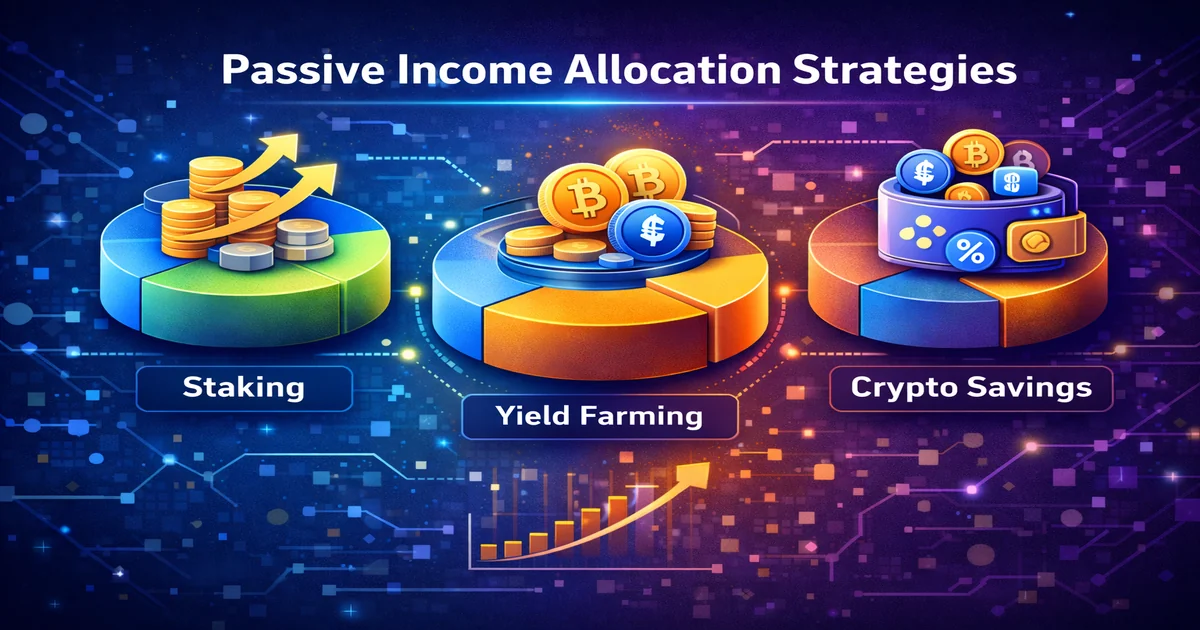
Portfolio Allocation Strategies
Effective earnings generation requires strategic allocation across different strategies based on your risk tolerance, experience level, and investment goals.
Conservative Portfolio (Low Risk)
- 50% Staking: ETH, SOL, ADA through reputable validators
- 30% CeFi Lending: Stablecoins in regulated platforms
- 15% CeFi Earn: Exchange savings programs
- 5% Crypto Cards: Cashback on regular spending
Expected Return: 4-8% APY with moderate risk
Balanced Portfolio (Medium Risk)
- 35% Staking: Mix of major cryptocurrencies
- 25% CeFi Lending: Diversified across platforms
- 20% DeFi Lending: Established protocols like Aave
- 15% Conservative Yield Farming: Stablecoin pools
- 5% Crypto Cards: Daily spending rewards
Expected Return: 6-12% APY with balanced risk
Aggressive Portfolio (High Risk)
- 25% Staking: High-yield newer protocols
- 20% DeFi Lending: Multiple protocols
- 30% DeFi farming: High-APY opportunities
- 20% Liquidity Pools: Volatile pairs with rewards
- 5% Crypto Cards: Premium tier benefits
Expected Return: 12-25%+ APY with high risk
Risk Management Framework
Successful earnings generation requires comprehensive risk management across multiple dimensions:
Platform Risk Mitigation
- Diversify across multiple platforms and protocols
- Research team backgrounds and audit histories
- Monitor platform health and user feedback regularly
- Never invest more than 20% in any single platform
Smart Contract Risk Management
- Prefer audited protocols with long track records
- Start with small amounts when trying new protocols
- Understand the risks of experimental features
- Consider insurance options like Nexus Mutual
Market Risk Strategies
- Balance stablecoin and volatile asset exposure
- Use dollar-cost averaging for entries and exits
- Set stop-loss levels for high-risk strategies
- Maintain emergency funds outside of locked positions
Liquidity Risk Management
Understanding liquidity constraints is crucial for effective yield earning strategies. Staking often involves lock-up periods ranging from days to months, during which assets cannot be accessed. Decentralised protocols may experience liquidity crunches during market stress, making withdrawals difficult or expensive.
Effective liquidity management involves maintaining a portion of assets in flexible earning products that allow immediate withdrawals. This provides financial flexibility for emergencies while ensuring continuous asset earning from the majority of your portfolio.
Regulatory Risk Considerations
The regulatory landscape for cryptocurrency income approaches continues evolving globally. Changes in tax treatment, platform licensing requirements, or protocol compliance standards can significantly impact returns and accessibility of various earning methods.
Diversifying across jurisdictions and staying informed about regulatory developments helps mitigate these risks. Prefer platforms with strong compliance records and transparent regulatory approaches when building long-term yield opportunities strategies.
Operational Risk Management
Technical risks include smart contract bugs, oracle failures, bridge exploits, and governance attacks. These risks can result in partial or total loss of deposited funds, making due diligence and risk assessment critical components of any earning strategy.
Mitigation strategies include using established protocols with extensive audit histories, participating in bug bounty programs, monitoring protocol governance decisions, and maintaining appropriate position sizing relative to your overall portfolio.
Portfolio Rebalancing Strategies
Regular portfolio rebalancing ensures optimal risk-return characteristics as market conditions change. Monthly or quarterly rebalancing helps capture profits from outperforming strategies while maintaining target allocations across various earning methods.
Rebalancing triggers can include significant changes in APY rates, platform risk assessments, or overall market conditions. Automated rebalancing through yield aggregators can help maintain optimal allocations without constant manual intervention.
Real-World Case Studies and Performance Examples
Conservative investors allocating $10,000 across Ethereum staking (40%), USDC lending on Aave (30%), and Binance Earn flexible products (30%) typically generate $350-450 annually with minimal active management requirements. This approach prioritises capital preservation while earning steady returns through established protocols with strong security track records and regulatory compliance.
Moderate risk portfolios combining liquid staking tokens, DeFi lending, and selective yield farming can achieve 8-12% annual returns on $25,000 investments. For example, holding stETH (earning 3.8% APY), providing USDC liquidity on Curve (earning 4-6% APY), and participating in Pendle yield trading (earning 8-15% APY) creates diversified income streams with manageable risk exposure.
Advanced practitioners managing $100,000+ portfolios often implement sophisticated strategies including delta-neutral farming, cross-chain arbitrage, and automated yield optimisation. These approaches can generate 15-25% annual returns but require significant technical expertise, continuous monitoring, and higher risk tolerance due to smart contract exposure and market volatility impacts.
Institutional allocations typically focus on regulated platforms and established protocols, with pension funds and treasury departments preferring Coinbase Institutional staking, Kraken Intelligence services, and BitGo custody solutions that provide institutional-grade security, compliance reporting, and custodial insurance on cold-storage assets against theft or key loss (not market or insolvency risk).
Performance Monitoring and Optimisation
Successful crypto earnings generation requires continuous monitoring of strategy performance, platform health, and market opportunities. Key metrics include realised APY, risk-adjusted returns, platform reliability, and opportunity costs of capital allocation.
Tools like DeBank, Zapper, and Zerion provide comprehensive portfolio tracking across multiple protocols and chains. Regular performance reviews help identify underperforming strategies and emerging opportunities for portfolio optimisation.
Real-World Case Studies
Case Study 1: Conservative Investor ($10,000)
Profile: Low-risk investor focused on consistent returns
Allocation:
- $5,000 in ETH staking via Lido (4% APY)
- $3,000 in USDC lending via Nexo (6% APY)
- $2,000 in Binance Earn flexible savings (3% APY)
Annual Income: $440 (4.4% overall return)
Risk Level: Low, with regulated platforms and established assets
Case Study 2: Balanced Investor ($25,000)
Profile: Moderate risk tolerance with DeFi experience
Allocation:
- $8,000 in mixed staking (ETH, SOL, DOT) - 6% average APY
- $7,000 in CeFi lending across platforms - 7% average APY
- $6,000 in Aave lending (USDC/DAI) - 4% APY
- $4,000 in Curve stablecoin pools - 8% APY
Annual Income: $1,570 (6.3% overall return)
Risk Level: Medium, diversified across CeFi and DeFi
Case Study 3: Aggressive Investor ($50,000)
Profile: Active DeFi participant with high risk appetite
Allocation:
- $12,000 in high-yield staking protocols - 12% average APY
- $15,000 in LP rewards strategies - 20% average APY
- $13,000 in liquidity pools (ETH/USDC, etc.) - 15% average APY
- $10,000 in leveraged positions - 25% average APY
Annual Income: $8,860 (17.7% overall return)
Risk Level: High, requires active management and monitoring
Case Study 4: Institutional Approach ($100,000+)
Profile: Large portfolio with institutional-grade risk management
Allocation Strategy:
- $30,000 in blue-chip staking (ETH via Lido and Rocket Pool, BTC via WBTC supply on Aave) — approximately 4-5% blended APY (variable, verify live rates)
- $25,000 in surviving institutional venues (Anchorage Digital, FalconX, BitGo Prime) and exchange-based earn programmes (Coinbase Earn, Binance Earn) — approximately 4-6% blended APY (verify current standing of any institutional CeFi venue, since the 2022-2024 wave of bankruptcies removed several previous-generation lenders including Genesis and BlockFi from the market)
- $20,000 in diversified decentralised protocols (Aave, Compound, Curve LP), with optional third-party cover such as Nexus Mutual — approximately 6-9% blended APY
- $15,000 in liquid-staking and restaking tokens (stETH, rETH, weETH) for flexibility — approximately 4-7% APY depending on protocol
- $10,000 in experimental higher-yield strategies (rotational, audited DeFi only) — variable, expect significant volatility
Estimated annual income: approximately $5,000-7,500 (5-7.5% blended return) depending on prevailing rates and protocol selection.
Risk Management: Professional custody with insurance on cold-storage assets, regular audits, and compliance monitoring. This approach prioritises capital preservation while generating steady returns through diversified exposure across the cryptocurrency earning ecosystem.
Performance Analysis and Lessons learnt
These case studies demonstrate how different risk profiles and portfolio sizes require distinct approaches to yield opportunities generation. Conservative investors achieve steady 4-5% returns with minimal management overhead, while aggressive strategies can generate 15-20% returns but require constant monitoring and risk management.
Key success factors across all profiles include diversification across multiple platforms and strategies, regular rebalancing based on changing market conditions, and maintaining emergency reserves for unexpected market volatility. Successful investors also stay informed about platform developments, regulatory changes, and emerging opportunities within the rapidly evolving DeFi landscape.
Advanced Income Methods
Cross-Chain Yield Optimisation
Advanced investors leverage multiple blockchain networks to maximise returns and reduce concentration risk. This involves deploying capital across Ethereum, Binance Smart Chain, Polygon, Avalanche, and other networks based on current yield opportunities and gas cost considerations.
Cross-chain strategies require understanding bridge risks, transaction costs, and timing considerations for moving assets between networks. Tools like DeBank, Zapper, and Zerion help track positions across multiple chains, while yield aggregators like Yearn Finance and Beefy automatically optimise returns across different protocols.
Automated DeFi farming with Smart Contracts
Sophisticated investors use automated strategies through yield aggregators and custom smart contracts that automatically compound rewards, rebalance positions, and harvest yields without manual intervention. These strategies can significantly improve returns through more frequent compounding and optimal transaction timing.
Popular automated platforms include Yearn Finance vaults, Convex Finance for Curve optimisation, and various "set-and-forget" strategies that handle the complexity of DeFi income generation while providing institutional-grade risk management and optimisation algorithms.
Governance Token Strategies
Many DeFi platforms distribute governance tokens as additional rewards for liquidity provision and platform usage. Advanced strategies involve accumulating these tokens to gain voting rights, access additional yield opportunities, and potentially appreciate as protocols mature and gain adoption.
Governance participation can provide additional income through voting incentives, proposal rewards, and strategic token accumulation. However, this requires a deep understanding of protocol mechanics, tokenomics, and long-term sustainability of governance token value propositions.
Staking Derivatives
Flexible staking protocols like Lido, Rocket Pool, and Frax allow stakers to receive tradeable tokens representing their staked positions. These derivatives can be used in DeFi protocols to generate additional yield while maintaining staking rewards, effectively enabling leveraged staking strategies.
Advanced users combine liquid staking derivatives with lending protocols, liquidity pools, and yield farming strategies to maximise capital efficiency. This approach requires careful risk management as it introduces additional smart contract dependencies and potential liquidation risks.
Options and Derivatives Strategies
Sophisticated investors use options protocols like Opyn, Hegic, and Ribbon Finance to generate additional income through covered call strategies, cash-secured puts, and volatility trading. These strategies can enhance returns during sideways markets while providing downside protection.
Structured products and automated options strategies are becoming more accessible through platforms that handle the complexity of options trading while providing steady income streams. However, these strategies require a deep understanding of options mechanics and associated risks.
Arbitrage and Market Making
Advanced traders participate in automated market making through protocols like Uniswap V3, which allows concentrated liquidity provision for enhanced fees. This strategy requires active management and a sophisticated understanding of impermanent loss dynamics.
Cross-exchange arbitrage opportunities exist for users with sufficient capital and technical expertise to exploit price differences across different platforms. Automated arbitrage bots can capture these opportunities, but require significant technical knowledge and capital to implement effectively.
Flash loan strategies enable capital-efficient arbitrage without requiring large initial investments, but these advanced techniques require smart contract development skills and a deep understanding of DeFi protocol interactions.
Tax Implications
Understanding the tax implications of income approaches is crucial for accurate reporting and optimisation:
General Tax Principles
- Most crypto earnings are taxed as ordinary income at receipt
- Where staking does not amount to a trade, the sterling value at the time of receipt of any tokens awarded is taxable as miscellaneous income for a UK resident, so the charge arises on receipt rather than on sale
- Interest from lending is taxable income
- Liquidity mining rewards are taxable at fair market value
Record Keeping Requirements
- Track all reward receipts with timestamps and values
- Maintain records of platform transactions and transfers
- Document cost basis for tax-loss harvesting opportunities
- Consider using crypto tax software like Koinly or CoinTracker
For detailed tax guidance, consult our crypto tax guide and consider professional tax advice for complex situations.
Advanced Passive Income Strategies
Cross-Chain Yield Optimisation
Sophisticated investors employ cross-chain strategies to maximise returns by deploying capital across multiple blockchain ecosystems. This approach involves identifying yield differentials between chains, using bridges to move assets efficiently, and maintaining positions across Ethereum, Binance Smart Chain, Polygon, Avalanche, and other networks. Cross-chain strategies require understanding bridge security, gas cost optimisation, and timing considerations for capital deployment.
Successful cross-chain yield farming demands careful monitoring of bridge risks, as these represent potential points of failure that have resulted in significant losses historically. Use established bridges like Stargate, Synapse, or native bridges provided by blockchain networks themselves. Always verify bridge security audits, understand withdrawal timeframes, and maintain emergency liquidity on each chain for rebalancing opportunities.
Automated Yield Aggregation
Yield aggregators like Yearn Finance, Beefy Finance, and Convex Finance automatically optimise returns by moving capital between different protocols, compounding rewards, and implementing sophisticated strategies that individual investors would find difficult to execute manually. These platforms charge performance fees typically ranging from 5-20% of profits, but often deliver superior net returns through their optimisation algorithms and gas cost efficiency.
When using yield aggregators, understand the underlying strategies being employed, verify smart contract audits, and monitor total value locked as an indicator of platform health. Diversify across multiple aggregators rather than concentrating all capital in a single platform, as smart contract risks remain present despite audits and any third-party cover.
Options and Derivatives for Enhanced Yield
Advanced traders can enhance passive income through covered call strategies on platforms like Ribbon Finance and Friktion, where you earn premiums by selling call options on your cryptocurrency holdings. This strategy works best in sideways or mildly bullish markets, generating additional income beyond staking or lending yields whilst capping upside potential at the strike price.
Structured products combining multiple derivatives can create customised risk-return profiles tailored to specific market views. These sophisticated instruments require deep understanding of options mechanics, implied volatility, and risk management. Start with small positions to understand mechanics before deploying significant capital into derivatives-based yield strategies.
Liquidity Mining and Protocol Incentives
New protocols frequently offer enhanced rewards to bootstrap liquidity and user adoption. These opportunities can provide exceptional returns during launch phases, but the same newness raises the risks: smart contract vulnerabilities that live use has not yet exposed, price volatility in the newly emitted reward token, and potential rug pulls. Successful liquidity mining requires rapid deployment, careful protocol evaluation, and disciplined exit strategies before incentives decline.
Evaluate new protocols based on team credentials, audit quality, tokenomics sustainability, and genuine product-market fit rather than just advertised APYs. Many high-yield opportunities prove unsustainable as token emissions dilute value faster than fees accumulate. Focus on protocols with real revenue generation, not just speculative token appreciation.
Stablecoin Yield Strategies
Stablecoin-focused strategies provide lower but more stable returns without exposure to cryptocurrency price volatility. Platforms like Anchor Protocol (now defunct, but similar protocols exist), Aave, and Compound offer yields on USDC, USDT, and DAI deposits. These strategies work well for conservative investors or as a temporary parking place for capital awaiting deployment opportunities.
Understand that stablecoins carry their own risks including depeg events, regulatory challenges, and underlying collateral concerns. Diversify across multiple stablecoins rather than concentrating in a single asset, and monitor peg stability indicators. Consider splitting allocations between algorithmic stablecoins like DAI and fiat-backed options like USDC for balanced risk exposure.
Comprehensive Risk Management Framework
Position Sizing and Capital Allocation
Professional risk management begins with appropriate position sizing that limits potential losses to acceptable levels. A common framework allocates no more than 5-10% of total portfolio value to any single platform or protocol, with higher-risk strategies receiving proportionally smaller allocations. This approach ensures that even complete loss of a position doesn't catastrophically impact overall portfolio performance.
Implement tiered allocation strategies where conservative base strategies receive 40-60% of capital, moderate-risk opportunities get 30-40%, and experimental high-risk positions are limited to 5-20%. This structure provides stable income whilst allowing participation in higher-yield opportunities without excessive risk concentration.
Monitoring and Rebalancing Procedures
Establish systematic monitoring procedures that track key metrics including platform total value locked, yield rates, token prices, and protocol health indicators. Set up alerts for significant changes that might indicate emerging risks or opportunities requiring action. Regular rebalancing maintains target allocations as different positions grow or shrink with market movements.
Implement quarterly comprehensive portfolio reviews that reassess strategy performance, evaluate new opportunities, and adjust allocations based on changing market conditions and personal circumstances. Document decision-making rationale to improve future choices through learning from both successes and failures.
Emergency Procedures and Exit Strategies
Develop clear exit strategies before entering positions, including specific conditions that would trigger withdrawal regardless of current yields. These might include protocol TVL declining below thresholds, security incidents affecting similar platforms, or personal liquidity needs. Having predetermined exit criteria prevents emotional decision-making during market stress.
Maintain emergency liquidity reserves equal to 10-20% of your yield portfolio value in easily accessible assets. This reserve enables opportunistic rebalancing during market dislocations and provides buffer against unexpected liquidity needs without forcing disadvantageous exits from locked positions.
Insurance and Protection Mechanisms
Consider purchasing smart contract insurance through protocols like Nexus Mutual for significant positions in DeFi protocols. Insurance costs typically range from 2-5% annually but can protect against catastrophic losses from smart contract exploits. Evaluate whether insurance costs justify the protection based on position size and protocol risk assessment.
Diversification itself serves as a form of insurance by ensuring that problems with any single platform or strategy don't destroy your entire yield portfolio. Geographic diversification across different regulatory jurisdictions and technical diversification across different blockchain networks provide additional protection layers.
Future Trends in Crypto Passive Income
Institutional Adoption and Infrastructure
Institutional participation in crypto yield generation continues accelerating as regulatory clarity improves and infrastructure matures. Major financial institutions are developing crypto staking services, lending products, and structured yield instruments that will bring professional-grade risk management and compliance to the space. This institutional adoption should reduce volatility and improve market efficiency whilst potentially compressing yields as competition increases.
Expect continued development of institutional custody solutions, insurance products, and regulatory frameworks that make crypto yield generation more accessible to traditional investors. This mainstream adoption will likely create a bifurcated market where retail investors can access higher yields through riskier protocols whilst institutions focus on lower-yield but more secure opportunities.
Technological Innovations
Layer 2 scaling solutions and new blockchain architectures promise to dramatically reduce transaction costs, making smaller positions economically viable and enabling more sophisticated automated strategies. Cross-chain interoperability improvements should reduce the frictions of moving capital between ecosystems — bridge security exposure, withdrawal timeframes, and per-transfer gas costs — whilst privacy-preserving technologies may enable new yield opportunities that protect user confidentiality.
Artificial intelligence and machine learning applications in yield optimisation are emerging, with algorithms that can analyse vast amounts of data to identify opportunities and risks faster than human investors. These tools will likely become standard components of professional yield generation strategies, though they introduce new risks around algorithm reliability and potential market manipulation.
Regulatory Evolution
Regulatory frameworks for crypto yield generation continue evolving globally, with most jurisdictions moving towards comprehensive oversight that balances innovation with consumer protection. Expect clearer tax treatment of different yield types, licensing requirements for platforms offering yield products, and enhanced disclosure requirements that improve transparency whilst potentially increasing compliance costs.
Proactive engagement with regulatory developments helps position your strategies for long-term sustainability. Focus on platforms demonstrating regulatory compliance, maintain comprehensive records for tax purposes, and stay informed about changing requirements in your jurisdiction. Regulatory clarity, whilst potentially constraining some opportunities, ultimately benefits the ecosystem by reducing uncertainty and enabling institutional participation.
Emerging Yield Opportunities
Real-world asset tokenisation represents one of the most promising developments for passive income generation in 2025 and beyond. Traditional assets including real estate, commodities, and corporate bonds are increasingly being tokenised on blockchain networks, creating new opportunities for fractional ownership and yield generation. These tokenised assets often provide more stable returns compared to native cryptocurrency yields, whilst maintaining the benefits of blockchain technology including 24/7 trading, instant settlement, and global accessibility.
Decentralised physical infrastructure networks (DePIN) are creating novel earning opportunities by rewarding participants who contribute real-world resources such as storage, computing power, or wireless connectivity. These networks bridge the gap between digital and physical economies, offering yields backed by tangible utility rather than purely speculative value. As these networks mature and demonstrate sustainable business models, they may provide more predictable income streams compared to traditional DeFi protocols.
Market Maturation and Yield Compression
As the cryptocurrency market matures and institutional capital flows increase, expect gradual compression of yields across most strategies. The extraordinarily high returns available in early DeFi protocols are unlikely to persist as markets become more efficient and competition intensifies. This normalisation process mirrors the evolution of traditional financial markets, where increased participation and improved infrastructure typically lead to lower but more stable returns.
Successful long-term investors will adapt to this changing landscape by focusing on sustainable yield sources, maintaining diversified strategies, and continuously educating themselves about emerging opportunities. The future of crypto passive income lies not in chasing unsustainable high yields, but in building robust portfolios that balance risk and return whilst adapting to evolving market conditions and regulatory frameworks.
Conclusion
The digital asset passive income landscape offers diverse opportunities for generating returns in 2025. Success requires understanding each strategy's risk-reward profile and building a diversified approach that matches your investment goals and risk tolerance. Most diversified yield portfolios sit on top of a core BTC position, and our Bitcoin 2025 review covers that foundational allocation in detail.
As we've explored throughout this comprehensive guide, each earning strategy serves different investor needs and risk appetites. Staking provides the foundation for most portfolios, offering steady returns with established cryptocurrencies like Ethereum and Solana. The introduction of liquid staking has eliminated many traditional barriers, allowing investors to earn rewards while maintaining liquidity and flexibility.
DeFi lending and liquidity mining represent the next evolution in cryptocurrency earning, providing opportunities for higher yields through innovative protocols. However, these strategies demand greater technical understanding and active risk management. The key is starting conservatively with battle-tested protocols like Aave and Compound before exploring newer, potentially higher-yielding opportunities.
The collapse of major CeFi platforms in 2022-2023 has fundamentally shifted the landscape towards decentralised solutions and increased due diligence requirements. Whilst CeFi platforms still offer convenience and customer support, the "not your keys, not your cryptocurrency" principle has never been more relevant. Diversification across both CeFi and DeFi platforms, combined with careful platform selection, remains crucial for risk mitigation.
Looking ahead, several trends will shape the asset earning landscape in 2025 and beyond. Regulatory clarity is improving in major markets, providing more confidence for institutional and retail participation. Layer 2 solutions are reducing transaction costs, making smaller investments more viable. Real-world asset tokenisation is creating new earning opportunities beyond traditional cryptocurrency assets.
For newcomers, the path forwards should be methodical and educational. Start by allocating 5-10% of your cryptocurrency portfolio to income strategies, beginning with the safest options, such as Ethereum staking. As your knowledge and confidence grow, gradually explore more sophisticated strategies while maintaining strict risk management principles. Never invest more than you can afford to lose, and always prioritise learning over immediate returns.
The most successful passive income investors combine patience, diversification, and continuous education. They understand that sustainable wealth building requires time, and they're prepared to adapt their strategies as the market evolves. By following the principles outlined in this guide and staying informed about market developments, you can build a robust earning strategy that serves your long-term financial goals.
Remember that the digital asset market's 24/7 nature means opportunities and risks never sleep. Regular monitoring, staying up to date on protocol developments, and maintaining a long-term perspective will serve you well in this dynamic and rewarding space. The future of cryptocurrency earning is bright for those who approach it with knowledge, caution, and strategic thinking.
Conservative investors should focus on established staking protocols and regulated CeFi platforms, while experienced users can explore DeFi yield earning and liquidity provision for enhanced returns. Remember that higher yields typically come with increased risks, including smart contract vulnerabilities, impermanent loss, and regulatory uncertainties.
The key to maximising income generation lies in strategic diversification across multiple methods. A balanced portfolio might allocate 40% to staking established cryptocurrencies, 30% to stablecoin lending in regulated platforms, 20% to conservative DeFi protocols, and 10% to higher-risk yield farming strategies. This approach provides stability while capturing upside potential from emerging opportunities.
Risk management remains paramount for successful passive yield earning. Never invest more than you can afford to lose, thoroughly research each platform's security measures and track record, and maintain emergency funds outside of cryptocurrency investments. Regular portfolio rebalancing and staying informed about regulatory developments will help protect your investments.
The passive income landscape continues evolving rapidly, with new protocols, improved security measures, and innovative asset earning methods emerging regularly. Successful investors stay informed about market developments, adapt their strategies to changing conditions, and maintain a long-term perspective amid short-term market volatility.
Start with small amounts, thoroughly research each platform, and gradually build your yield-earning portfolio. Focus on understanding the underlying mechanisms of each strategy rather than chasing the highest advertised yields. Sustainable passive earning requires patience, continuous learning, and maintaining appropriate diversification across different methods and platforms.
As the digital asset ecosystem matures, passive income opportunities will likely become more sophisticated and accessible. By building a solid foundation now and continuously educating yourself on emerging trends, you'll be well positioned to capitalise on future opportunities while managing risks effectively throughout 2025 and beyond.
Sources & References
Frequently Asked Questions
- What is the safest crypto earning opportunities strategy for beginners?
- Staking established cryptocurrencies like Ethereum through reputable platforms offers the best balance of safety and returns for beginners. Start with liquid staking solutions like Lido to avoid lock-up periods while learning the market.
- How much can I realistically earn from crypto yield earnings?
- Returns vary significantly by strategy: staking typically offers 3-8% APY, DeFi lending 4-12%, and liquidity mining 10-50%+. Higher returns always come with increased risks, so diversification is crucial.
- What are the main risks of crypto yield opportunities strategies?
- Key risks include smart contract vulnerabilities, platform insolvency (as seen with Celsius and FTX), impermanent loss in liquidity mining, regulatory changes, and general digital asset market volatility.
- Should I use CeFi or DeFi platforms for earning crypto earnings?
- CeFi platforms offer simplicity and customer support but require trusting centralised entities. DeFi provides transparency and often higher yields but demands more technical knowledge and active risk management.
- How do I minimise risks while maximising returns?
- Diversify across multiple strategies and platforms, start with conservative approaches, never invest more than you can afford to lose, and regularly monitor your positions. Consider dollar-cost averaging into positions.
- What tax implications should I consider for crypto earning opportunities?
- Digital asset earnings are typically taxable as income when received. Keep detailed records of all transactions, consider the tax efficiency of different strategies, and consult a tax professional familiar with cryptocurrency regulations.
- How often should I compound my crypto earnings?
- Compounding frequency depends on the platform and gas fees. For Ethereum-based protocols, weekly or monthly compounding often provides the best balance between growth and transaction costs.
- Can I earn assets with small amounts of digital assets?
- Yes, many platforms have low minimum requirements. However, consider transaction fees relative to your investment size. Larger amounts generally provide better returns due to economies of scale.
- What's the difference between APY and APR in crypto earning?
- APR (Annual Percentage Rate) shows simple interest, while APY (Annual Percentage Yield) includes compounding effects. APY provides a more accurate picture of your potential returns when earnings are reinvested.
- How do I evaluate the safety of a new DeFi protocol?
- Check for smart contract audits, examine the team's track record, review the protocol's total value locked (TVL), assess tokenomics, and start with small amounts to test the platform before committing significant funds.
- Should I focus on stablecoins or volatile cryptocurrencies for earning opportunities?
- Stablecoins offer predictable returns without price volatility, making them ideal for conservative strategies. Volatile cryptocurrencies can offer higher yields but also introduce price risk to your earning strategy.
- What's the best way to get started with crypto yield earning in 2025?
- Begin with Ethereum staking through a reputable platform, allocate 5-10% of your crypto portfolio to income methods, educate yourself continuously, and gradually explore more advanced options as you gain experience and confidence.
← Back to Crypto Investing Blog Index
Financial Disclaimer
This content is not financial advice. All information provided is for educational purposes only. Cryptocurrency investments carry significant investment risk, and past performance does not guarantee future results. Always do your own research and consult a qualified financial advisor before making investment decisions.