GMX Review: Best DeFi Trading Platform
Comprehensive review of GMX protocol - a leading decentralised derivatives exchange offering perpetual futures trading and liquidity providing opportunities with unique tokenomics and high yields.
Affiliate Disclosure: This review may contain affiliate links. We may earn a commission if you use our links, at no additional cost to you. This helps support our educational content.
Introduction
What makes GMX different from other DeFi exchanges? GMX represents a paradigm shift in decentralised finance. It offers a sophisticated derivatives trading platform that combines the benefits of decentralised protocols with advanced features. These features are typically found only on centralised exchanges. Launched in 2021, GMX has quickly established itself as one of the leading decentralised perpetual futures exchanges. It operates on the Arbitrum and Avalanche networks. This provides you with low-cost, high-speed trading.
How does GMX solve the liquidity problem? What makes GMX unique in the DeFi landscape is its innovative approach to liquidity provision through the GLP (GMX Liquidity Provider) token. Unlike traditional order book models, GMX uses a multi-asset pool. In this pool, you as a liquidity provider can earn fees from trading activity, swap fees, and leveraged trading. This creates a sustainable ecosystem. Traders can access deep liquidity. You as a liquidity provider can earn attractive yields. These often exceed 15-20% APR during periods of high trading volume.
The protocol's architecture addresses many pain points of traditional DeFi trading platforms. These include limited liquidity, high slippage, and complex user interfaces. GMX offers perpetual futures trading with leverage up to 50x. You can trade major cryptocurrencies like Bitcoin and Ethereum. The platform maintains the non-custodial nature that you value in DeFi. The platform's zero-price-impact trades for positions within available liquidity make it particularly attractive. This is especially true if you're a larger trader who typically faces significant slippage on other decentralised exchanges.
Is GMX suitable for beginners? However, GMX's sophisticated mechanics and DeFi-native approach mean it may not be suitable for all users. The platform requires a solid understanding of decentralised finance concepts. You need to understand smart contract risks and advanced trading strategies. Additionally, while GMX offers attractive yields for you as a liquidity provider, these yields come with exposure. You're exposed to the underlying assets in the GLP pool. There are potential impermanent loss risks. You must carefully consider these before participating.
In the rapidly evolving DeFi derivatives market, GMX has distinguished itself through consistent innovation. It offers transparent tokenomics and a strong focus on your user experience. The protocol's success has inspired numerous competitors. It has established new standards for decentralised derivatives trading. This makes it an essential platform for understanding the future direction of decentralised finance and sophisticated cryptocurrency trading strategies.
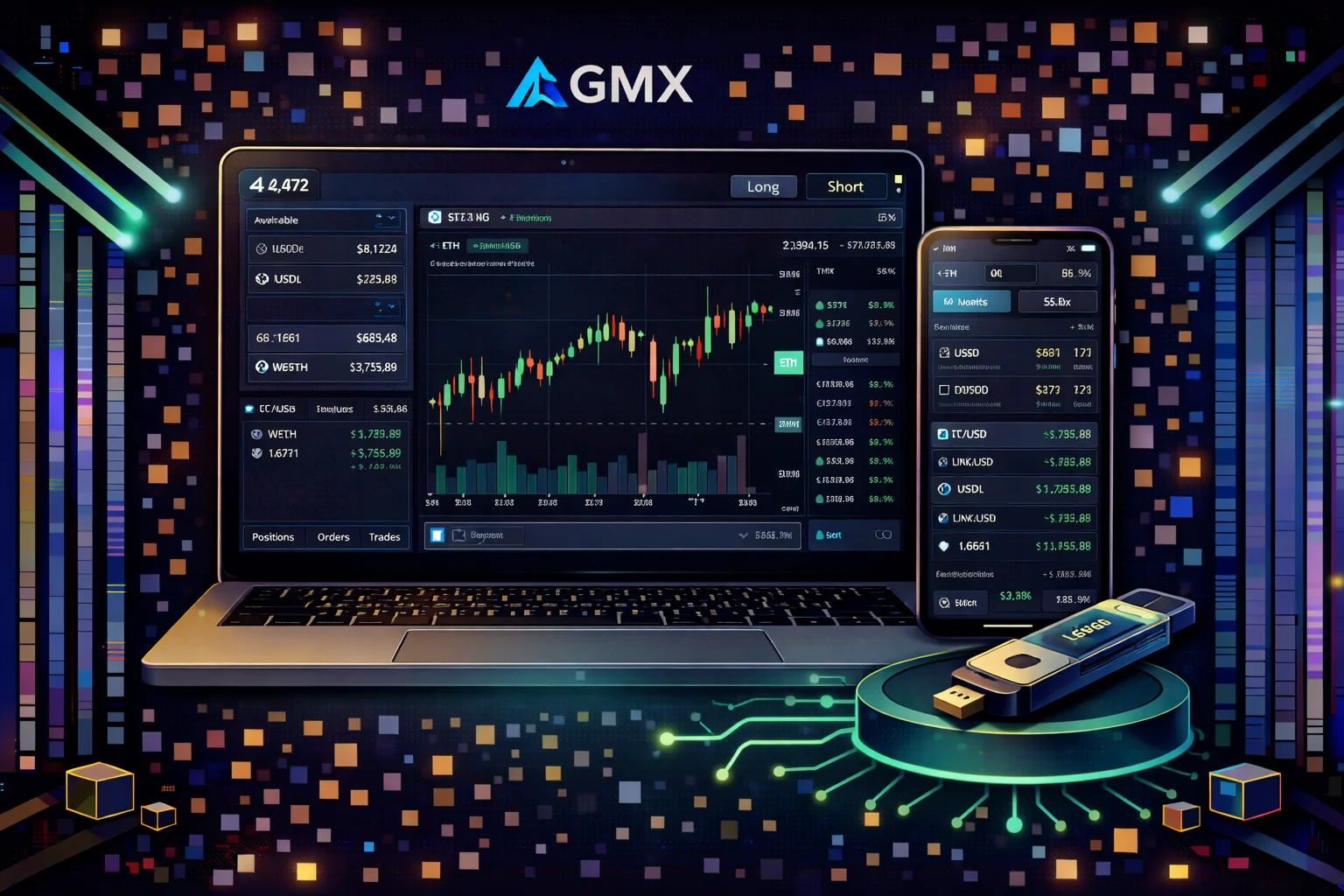
GMX Protocol Overview
GMX is a decentralised derivatives exchange that allows users to trade perpetual futures with up to 50x leverage directly from their cryptocurrency wallets. Built on Arbitrum and Avalanche blockchains, GMX uses a unique multi-asset pool (GLP) to provide liquidity for trading and generate yield for liquidity providers. The platform has become a cornerstone of decentralised finance derivatives trading since its inception.
The protocol features a dual-token system with GMX (governance and utility token) and GLP (liquidity provider token), offering different risk-reward profiles for users looking to earn yield or trade derivatives with maximum capital efficiency and flexibility.
Since its launch in September 2021, GMX has established itself as one of the leading decentralised perpetual futures platforms, processing over $100 billion in cumulative trading volume and distributing more than $150 million in fees to token holders. The platform's success stems from its innovative approach to solving the liquidity problem that has plagued decentralised derivatives exchanges for years.
Traditional DEX perpetuals rely on order books or virtual AMMs that require sophisticated market makers and often suffer from poor liquidity and high slippage. GMX's GLP pool model democratises liquidity provision, allowing any user to deposit assets and earn from trading activity without actively managing positions or understanding complex market-making strategies.
This has attracted a diverse user base ranging from passive yield farmers seeking stable returns to active traders leveraging the platform's zero-slippage execution and competitive funding rates.
The platform's architecture leverages Chainlink oracles for price feeds, ensuring that trades execute at fair market prices without the front-running and MEV extraction common on AMM-based platforms. This oracle-based pricing model enables traders to execute large positions without moving the market, while the GLP pool absorbs counterparty risk and provides consistent liquidity depth.
The multi-asset composition of GLP - typically including ETH, BTC, stablecoins, and other major cryptocurrencies - provides natural hedging and reduces the impact of any single asset's price movement. GMX's deployment on Arbitrum and Avalanche leverages Layer 2 scaling to keep transaction costs under $1, making it economically viable for traders of all sizes.
The platform supports major cryptocurrency pairs, including BTC, ETH, LINK, UNI, and others, with plans to expand to additional assets based on community governance votes. The combination of low fees, zero slippage, and high leverage makes GMX particularly attractive for both retail traders seeking capital efficiency and institutional participants requiring deep liquidity for large position sizes without market impact concerns.
Key Features
- Perpetual Trading: Up to 50x leverage on major cryptocurrencies
- GLP Token: Multi-asset liquidity pool with automatic rebalancing
- High Yields: Competitive APRs for both GMX staking and GLP providing
- Zero Price Impact: Trades execute at oracle prices
- Multi-Chain: Available on Arbitrum and Avalanche
- Real Yield: Revenue sharing from actual trading activity
Tokenomics and Yield
How does GMX share revenue with you? GMX has a unique revenue-sharing model. 70% of platform fees go to GLP holders. 30% goes to GMX stakers.
This creates a sustainable yield for you. It's based on actual trading volume rather than token emissions. What can you earn?
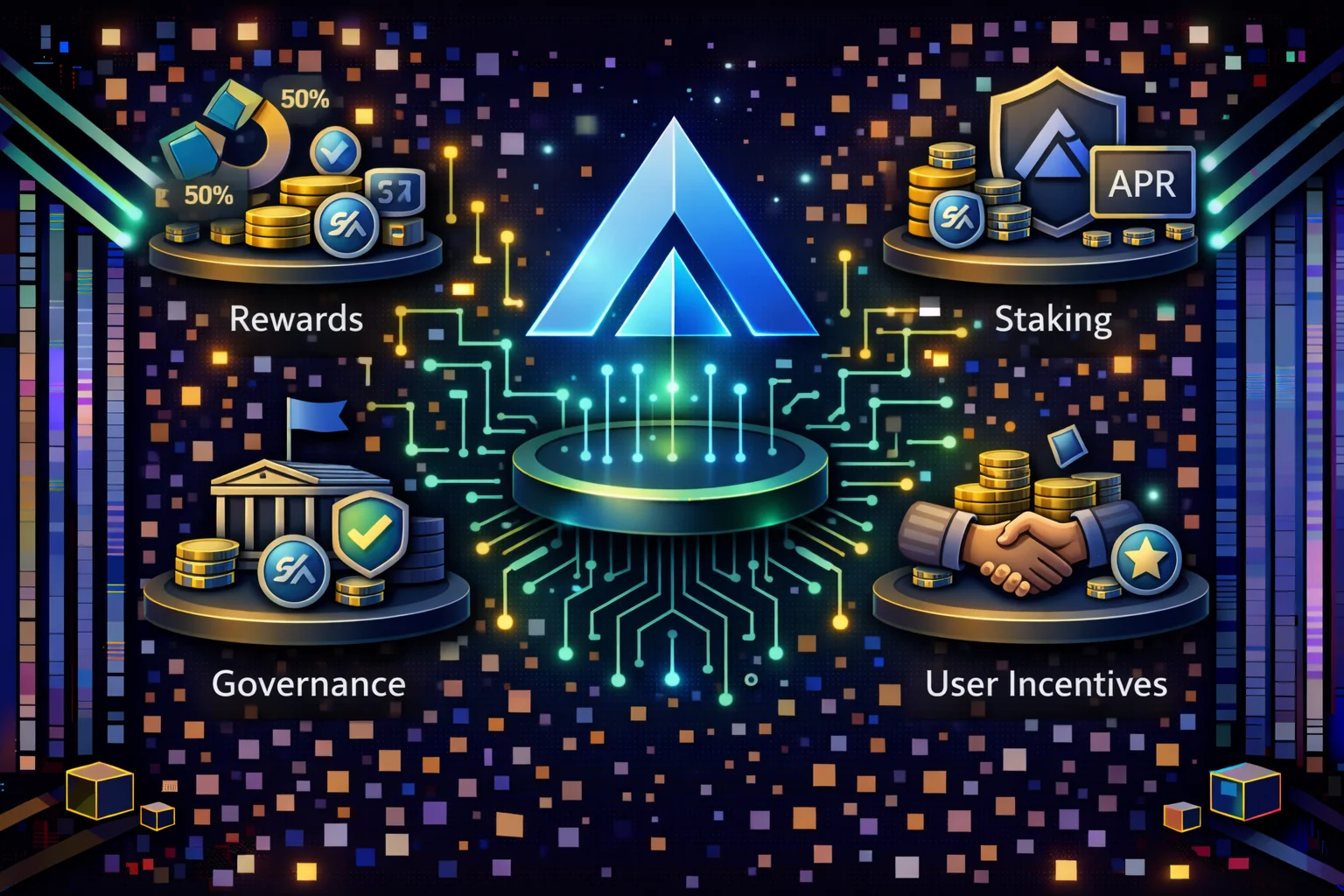
- GMX Staking: You earn 30% of platform fees plus esGMX rewards
- GLP Providing: You earn 70% of platform fees from trading activity
- Fee Sources: Trading fees, borrowing fees, liquidation fees
- Vesting: Your esGMX tokens vest over 365 days
Pros and Cons
Advantages
What are the benefits for you?
- You get high and sustainable yields from real trading activity
- You enjoy zero price impact trading with oracle prices
- You benefit from strong tokenomics with revenue sharing
- You can use multi-chain availability
- You get active development and community support
- You see transparent fee structure
Disadvantages
What should you watch out for?
- You face high smart contract risk for complex protocol
- Your GLP has exposure to volatile assets
- Trader profits can reduce your GLP returns
- You get limited trading pairs compared to CEX
- You may face high gas fees on Ethereum (though available on L2s)
- Complexity may confuse you if you're a beginner
GMX vs Competitors
| Feature | GMX | dYdX | Perpetual Protocol |
|---|---|---|---|
| Max Leverage | 50x | 20x | 10x |
| Trading Fees | 0.1% | 0.05-0.2% | 0.1% |
| Liquidity Model | GLP Pool | Order Book | vAMM |
| Chains | Arbitrum, Avalanche | Ethereum L2 | Optimism |
| Yield for LPs | 15-30% APR | N/A | Variable |
Risk Analysis
What risks should you understand before using GMX?
- Smart Contract Risk: You face complex protocol with potential vulnerabilities
- GLP Composition Risk: You have exposure to volatile assets in the pool
- Trader PnL Risk: Successful traders reduce your GLP holder returns
- Oracle Risk: You depend on price oracles for execution
- Regulatory Risk: You may face potential regulatory scrutiny of derivatives
Trading Features
What trading features can you access on GMX?
Leverage Trading
How much leverage can you use?
- Up to 50x leverage: You get high leverage available on major cryptocurrencies
- Long and short positions: You can profit from both rising and falling markets
- Zero price impact: Your trades execute at Chainlink oracle prices
- No slippage: You get consistent execution regardless of your trade size
Supported Assets
What can you trade?
- Major cryptocurrencies: You can trade BTC, ETH, LINK, UNI
- Stablecoins: You can use USDC, USDT, DAI, FRAX
- Cross-margin: You can use any supported asset as collateral
- Multi-chain: You get same assets available on Arbitrum and Avalanche
GLP Token Deep Dive
What is GLP and how does it work? GLP (GMX Liquidity Provider) is the backbone of the GMX ecosystem. It represents a basket of assets that serves as counterparty to traders:
GLP Composition
What's inside your GLP?
- Multi-asset basket: You hold an automatically rebalanced portfolio
- Target allocations: Maintained through trading incentives
- Dynamic weights: Your holdings adjust based on market conditions
- Risk distribution: Your risk is spread across multiple asset classes
GLP Yield Sources
How do you earn from GLP?
- Trading fees: You receive 70% of all platform trading fees
- Borrowing fees: You earn interest from leveraged positions
- Liquidation fees: You get penalties from liquidated positions
- Mint/burn fees: You earn fees from GLP creation and redemption
GLP Risks
What risks should you consider?
- Asset exposure: You have direct exposure to underlying assets
- Trader PnL: Losses when traders are profitable
- Impermanent loss: Similar to liquidity providing risks
- Concentration risk: Heavy exposure to certain assets
GMX Staking Mechanics
GMX token staking offers a different risk-reward profile compared to GLP:
Staking Rewards
- Fee sharing: 30% of platform fees distributed to stakers
- esGMX rewards: Additional rewards in escrowed GMX tokens
- Multiplier points: Boost rewards for long-term stakers
- Compound growth: Automatic reinvestment of rewards
Vesting System
- 365-day vesting: esGMX tokens vest over one year
- Flexible claiming: Claim vested tokens anytime
- Staking requirement: Must stake GMX to vest esGMX
- Multiplier preservation: Maintain staking to keep multipliers
Competitive Landscape
GMX competes with both centralised and decentralised derivatives exchanges:
vs centralised Exchanges
- Advantages: Self-custody, transparent fees, revenue sharing
- Disadvantages: Limited pairs, higher gas costs, complexity
- Use case: Users prioritising decentralisation and yield
vs Other DeFi Derivatives
- dYdX: More trading pairs but token-based rewards
- Perpetual Protocol: Virtual AMM model vs GLP pool
- Gains Network: Similar oracle-based execution
- GMX advantage: Real yield from trading activity
Performance and Metrics
GMX has demonstrated strong performance across key metrics:
- Total Value Locked: Consistently high TVL across both chains
- Trading Volume: Billions in cumulative trading volume
- Fee Generation: Millions in fees distributed to token holders
- User Growth: Steady increase in active users
- Yield Sustainability: Consistent returns from real activity
How to Use GMX
- Connect wallet to GMX on Arbitrum or Avalanche
- Choose between trading, staking GMX, or providing GLP liquidity
- For trading: Deposit collateral and open leveraged positions
- For yield: Stake GMX tokens or mint GLP with supported assets
- Monitor positions and claim rewards regularly
Getting Started Tips
- Start small: Begin with small positions to understand mechanics
- Understand risks: Read documentation thoroughly
- Monitor closely: Leveraged positions require active management
- Use stop losses: Protect against adverse price movements
- Diversify: Don't put all funds in one strategy
Future Developments
GMX continues to evolve with several planned improvements:
- GMX V2: Enhanced architecture with improved capital efficiency
- New trading pairs: Expansion to more cryptocurrency markets
- Cross-chain expansion: Deployment to additional blockchain networks
- Improved UI/UX: Better user interface for easier navigation
- Advanced features: New order types and trading tools
The evolution of GMX represents a significant milestone in decentralised derivatives trading, addressing fundamental limitations that have historically plagued DeFi perpetual futures platforms. Traditional centralised exchanges dominate the derivatives market with over $100 billion in daily trading volume, while decentralised alternatives have struggled to capture even 5% of this market share.
GMX's innovative approach using a multi-asset liquidity pool instead of traditional order books has proven that decentralised perpetuals can achieve competitive pricing, deep liquidity, and minimal slippage without relying on centralised infrastructure. The platform's success on Arbitrum and Avalanche demonstrates that Layer 2 solutions can deliver the speed and cost-efficiency needed for active derivatives trading, with transaction costs typically under $0.50, compared to $10-50 on Ethereum mainnet during peak periods.
What distinguishes GMX from competitors like dYdX, Perpetual Protocol, and Synthetix Perps is its unique approach to liquidity provision and risk management. Whilst most decentralised perpetual platforms use virtual automated market makers or order book models that require sophisticated market makers, GMX's GLP pool allows any user to become a liquidity provider and earn from trading activity.
This democratisation of market making has attracted over $400 million in liquidity, creating a sustainable ecosystem where traders benefit from zero price impact on most trades. In contrast, liquidity providers earn consistent yields from fees. The platform's oracle-based pricing eliminates front-running and MEV extraction that plague AMM-based derivatives, ensuring traders get fair execution prices. However, this model also means GLP holders effectively take the opposite side of all trades, creating a unique risk-reward dynamic in which their returns depend on trader profitability: when traders lose money, GLP holders profit from their losses, and vice versa.
The tokenomics of GMX and GLP create a compelling value proposition for long-term holders and active participants. GMX token stakers receive 30% of platform fees plus esGMX rewards, with current APRs ranging from 15% to 25% depending on trading volume. The esGMX mechanism encourages long-term alignment by requiring a one-year vesting period, preventing mercenary capital from extracting value and immediately selling.
GLP holders receive 70% of fees and typically earn 20-40% APR, though this comes with exposure to the underlying asset basket and trader PnL. The fee distribution model ensures that as trading volume grows, both GMX and GLP holders benefit proportionally, creating a flywheel effect: higher fees attract more liquidity, enabling larger trades with less slippage, which attracts more traders.
This sustainable economic model has allowed GMX to generate over $150 million in cumulative fees since launch, with the majority distributed directly to token holders rather than retained by the protocol or team. The platform's transparent fee structure and real-time distribution mechanism set a new standard for DeFi protocols, demonstrating that sustainable yield generation is possible without relying on inflationary token emissions or unsustainable incentive programs that characterise many competing platforms.
Professional Derivatives Trading and Institutional Applications
Professional GMX implementations enable sophisticated derivatives trading strategies that leverage the platform's unique liquidity model, comprehensive risk management features, and advanced trading capabilities for institutional cryptocurrency operations and professional digital asset management. Enterprise applications include systematic derivatives trading strategies, comprehensive portfolio hedging techniques, and advanced liquidity-provisioning strategies that optimise returns while managing counterparty risk, market volatility, and operational complexity for professional derivatives trading and institutional cryptocurrency risk management across multiple market conditions and trading scenarios.
Advanced institutional strategies require a comprehensive understanding of GMX's tokenomics, GLP mechanics, and derivatives pricing models that enable sophisticated trading operations while maintaining appropriate risk management and regulatory compliance. Professional users implement systematic trading algorithms, comprehensive risk assessment procedures, and advanced portfolio optimisation techniques that maximise returns while managing the unique risks associated with decentralised derivatives trading and professional cryptocurrency operations across evolving market conditions and regulatory frameworks for institutional digital asset management.
Advanced Trading Features
Leverage Trading Mechanics
GMX offers up to 50x leverage on perpetual futures, allowing traders to amplify their positions significantly. The platform uses a unique pricing mechanism that combines Chainlink oracles with aggregate pricing from major exchanges to prevent manipulation and ensure fair execution. Leverage is provided through a collateral-based system in which traders deposit assets into GLP or use direct collateral to open positions.
The liquidation mechanism is designed to protect both traders and liquidity providers. Positions are automatically liquidated when the collateral falls below the maintenance margin requirement, typically around 1-2% of the position size. Liquidation fees are distributed to GLP holders and keepers who execute the liquidation transactions, creating an efficient market-driven liquidation system.
Order Types and Execution
GMX supports multiple order types, including market orders, limit orders, stop-loss orders, and take-profit orders. Market orders execute immediately at the current oracle price with minimal slippage, while limit orders allow traders to specify exact entry and exit prices. Stop-loss and take-profit orders can be set simultaneously, enabling comprehensive risk management strategies.
The platform's execution model eliminates front-running and MEV (Maximal Extractable Value) attacks by using oracle prices rather than AMM pricing. This means traders get consistent execution at fair market prices without worrying about sandwich attacks or other forms of manipulation common on traditional DEXs. Order execution is guaranteed as long as sufficient liquidity exists in the GLP pool.
Risk Management Tools
GMX provides comprehensive risk management tools for both traders and liquidity providers. Traders can set position size limits, use trailing stops, and implement dollar-cost averaging strategies through recurring orders. The platform displays real-time profit/loss calculations, liquidation prices, and funding rate projections to help traders make informed decisions.
For GLP holders, the platform offers detailed analytics on pool composition, utilisation rates, and historical performance. Risk metrics include exposure to different assets, open interest distribution, and funding rate trends. These tools help liquidity providers understand their risk exposure and make strategic decisions about when to enter or exit GLP positions.
GMX and GLP Tokenomics
GMX Token Utility
The GMX token serves multiple functions within the ecosystem. Stakers receive 30% of platform fees in ETH or AVAX, creating direct revenue sharing with token holders. Additionally, staked GMX earns esGMX (escrowed GMX) rewards that vest over one year, aligning long-term incentives. The token also provides governance rights for protocol upgrades and parameter adjustments.
GMX has a maximum supply of 13.25 million tokens, with approximately 8.9 million currently in circulation. The token distribution includes allocations for team members (vested over 2 years), early investors, and ongoing liquidity mining rewards. The deflationary mechanism through fee buybacks and burns helps maintain token value over time.
GLP Token Mechanics
GLP represents ownership in the liquidity pool and automatically rebalances to maintain target asset allocations. When traders profit, GLP holders bear the losses, and when traders lose, GLP holders capture the gains. This creates a zero-sum game between traders and liquidity providers, with fees providing additional yield to GLP holders regardless of trader performance.
The GLP token can be minted by depositing any supported asset, with the platform automatically converting it to the appropriate pool composition. Redemptions work similarly, allowing users to withdraw in their preferred asset. The minting and redemption fees (typically 0.2-0.8%) help prevent arbitrage and maintain pool stability during volatile market conditions.
Fee Distribution Model
GMX implements a transparent fee distribution model in which 70% of trading fees go to GLP holders and 30% to GMX stakers.
This creates sustainable yield for both token holders and liquidity providers. The fee structure includes 0.1% for opening and closing positions, plus dynamic funding rates that balance long and short positions.
Funding rates on GMX are calculated hourly based on the imbalance between long and short positions. When longs dominate, they pay funding to shorts, and vice versa. This mechanism helps maintain market equilibrium and provides additional yield opportunities for traders willing to take the less popular side of trades.
GMX Competitive Analysis
GMX vs dYdX
Whilst dYdX offers an order book-based perpetuals exchange with higher liquidity for major pairs, GMX provides a simpler user experience with guaranteed execution and no slippage on oracle-priced trades. dYdX requires more active trading and market making, whereas GMX's GLP model allows passive liquidity provision. GMX operates on Arbitrum and Avalanche with lower fees, while dYdX has migrated to its own Cosmos-based chain.
GMX vs Perpetual Protocol
Perpetual Protocol uses a virtual AMM model with external liquidity providers, while GMX's GLP pool provides direct liquidity. GMX offers higher leverage (50x vs 10x) and more straightforward tokenomics. Perpetual Protocol has more advanced order types and better liquidity for altcoin pairs, but GMX provides more consistent execution and simpler risk management for most traders.
GMX vs centralised Exchanges
Compared to centralised exchanges like Binance or Bybit, GMX offers non-custodial trading with full transparency and no KYC requirements. However, centralised exchanges offer deeper liquidity, more trading pairs, and advanced features such as copy trading. GMX's advantage lies in decentralisation, censorship resistance, and direct revenue sharing with token holders, making it ideal for users prioritising self-custody and transparency.
Advanced Trading Strategies and Professional Implementation
Sophisticated Leverage Management Techniques
Professional GMX traders implement sophisticated leverage management techniques that optimise risk-adjusted returns through strategic position sizing, dynamic leverage adjustment, and comprehensive risk monitoring systems. Advanced practitioners utilise mathematical models to analyse market volatility, correlation patterns, and liquidity dynamics, determining optimal leverage levels that maximise profit potential while maintaining appropriate risk parameters across different market conditions and trading strategies.
Advanced leverage strategies include position scaling techniques that gradually increase exposure during favourable market conditions, dynamic hedging mechanisms that protect against adverse price movements, and systematic risk management protocols that automatically adjust position sizes based on market volatility and portfolio performance. These sophisticated approaches require a deep understanding of derivatives mechanics, market microstructure, and risk management principles that enable professional-grade trading performance on decentralised platforms.
Multi-Asset Portfolio Construction and Risk Management
Professional GMX users implement comprehensive portfolio construction strategies that optimise asset allocation across different cryptocurrency markets while managing correlation risk, volatility exposure, and liquidity requirements. Advanced practitioners utilise modern portfolio theory applications, factor analysis, and systematic rebalancing protocols that maintain optimal portfolio construction while adapting to changing market conditions and opportunity sets within the GMX ecosystem.
Risk management frameworks include correlation analysis between different cryptocurrency assets, tail risk assessment through stress testing scenarios, and comprehensive monitoring systems that provide early warning of potential portfolio risks. Professional traders implement systematic position-sizing rules, automated stop-loss mechanisms, and diversification requirements to protect capital while enabling participation in high-potential trading opportunities across multiple cryptocurrency markets and time horizons.
Quantitative Analysis and Algorithmic Trading Implementation
Advanced GMX trading strategies leverage quantitative analysis and algorithmic trading techniques that identify market inefficiencies, optimise entry and exit timing, and implement systematic trading approaches based on statistical models and machine learning algorithms. Professional practitioners utilise comprehensive backtesting methodologies, performance attribution analysis, and risk decomposition techniques to support data-driven trading decisions while maintaining appropriate risk management and operational efficiency.
Algorithmic implementation includes automated trading systems that execute predefined strategies based on market conditions, technical indicators, and risk parameters while maintaining human oversight and risk controls. Advanced users implement sophisticated monitoring systems, performance analytics, and continuous optimisation protocols that enable systematic improvement of trading strategies, adapt to evolving market conditions, and maintain competitive advantages in decentralised derivatives markets.
Institutional-Grade Risk Management and Compliance
Professional GMX users implement institutional-grade risk management frameworks that address smart contract risk, counterparty risk, market risk, and operational risk through comprehensive monitoring, diversification, and hedging strategies. Advanced practitioners utilise quantitative risk models, stress testing protocols, and scenario analysis to support informed decision-making while maintaining appropriate risk levels for different investment mandates and regulatory requirements.
Compliance considerations include regulatory analysis, tax optimisation strategies, and reporting requirements that ensure full compliance with applicable regulations while maximising after-tax returns and operational efficiency. Professional users implement comprehensive record-keeping systems, automated reporting tools, and compliance monitoring protocols that meet institutional standards while enabling optimal trading performance through a systematic approach to regulatory compliance and risk management across different jurisdictions.
Comprehensive Ecosystem Analysis and Market Positioning
Competitive Landscape and Market Leadership
GMX maintains its position as a leading decentralised derivatives platform through continuous innovation, superior user experience, and sustainable tokenomics that attract both traders and liquidity providers seeking reliable, efficient, and profitable DeFi trading opportunities. The protocol's competitive advantages include zero-slippage execution, transparent fee distribution, and innovative liquidity provision mechanisms that differentiate it from both centralised exchanges and other decentralised derivatives platforms.
Market positioning analysis reveals GMX's strength in key metrics, including total value locked, trading volume, and user retention, that demonstrate the protocol's fundamental value proposition and long-term sustainability. Professional users benefit from this market leadership through superior execution quality, consistent liquidity, and reliable yield-generation opportunities enabled by the protocol's proven business model and strong community support.
Technology Innovation and Protocol Development
GMX's technology stack represents significant innovation in decentralised derivatives trading through its oracle-based pricing mechanism, multi-asset liquidity pool design, and efficient execution engine that eliminates many traditional limitations of decentralised exchanges. The protocol's technical architecture enables zero-slippage trading, guaranteed execution, and transparent fee distribution while maintaining decentralisation and permissionless access for all users.
Ongoing development initiatives include enhanced cross-chain functionality, improved user interface design, and advanced trading features that maintain GMX's technological leadership while expanding accessibility for mainstream users. The protocol's commitment to continuous innovation, security excellence, and user experience optimisation ensures sustainable competitive advantage while preserving the decentralised principles that define its core value proposition.
Liquidity Provision Economics and GLP Analysis
GMX's GLP liquidity provision mechanism creates unique economic dynamics that benefit both traders and liquidity providers through sustainable yield generation, risk sharing, and transparent fee distribution. The multi-asset liquidity pool design enables efficient capital utilisation, reduced impermanent loss exposure, and consistent yield generation that attracts long-term liquidity providers seeking stable returns from DeFi protocols.
Advanced GLP analysis includes understanding the risk-return profile of liquidity provision, correlation dynamics between different pool assets, and the impact of trader performance on liquidity provider returns. Professional users implement sophisticated strategies for GLP participation that optimise risk-adjusted returns while contributing to protocol liquidity and earning sustainable yields from derivatives trading fees and token emissions.
Governance Framework and Community Development
GMX's governance model enables token holders to participate in protocol development decisions while maintaining technical excellence and operational efficiency through structured proposal processes and community voting mechanisms. The governance framework includes protocol parameter adjustments, fee distribution modifications, and strategic development initiatives that ensure democratic decision-making while preserving protocol integrity and user protection.
Community development initiatives include educational resources, developer tools, and ecosystem partnerships that foster innovation and expand the protocol's capabilities while maintaining strong community engagement. The platform's commitment to transparency, community involvement, and decentralised governance creates a sustainable foundation for long-term growth while ensuring that protocol development aligns with user needs and market opportunities.
Professional Features and Advanced Functionality
Advanced Order Types and Execution Strategies
GMX provides sophisticated order types and execution strategies that enable professional traders to implement complex strategies while maintaining precise control over entry and exit conditions. Advanced order functionality includes limit orders, stop-loss orders, and take-profit mechanisms that support systematic trading approaches while protecting against adverse market movements and optimising profit realisation opportunities.
Professional execution strategies include position scaling techniques, dollar-cost averaging implementations, and systematic rebalancing protocols that optimise trading performance while managing risk exposure and operational complexity. Advanced users benefit from comprehensive order management tools, execution analytics, and performance monitoring systems that enable continuous optimisation of trading strategies while maintaining appropriate risk management standards.
Portfolio Management and Performance Analytics
GMX offers comprehensive portfolio management tools and performance analytics that allow professional users to monitor trading performance, analyse risk exposure, and optimise strategy implementation across multiple positions and time horizons. Advanced analytics, including profit-and-loss attribution, risk decomposition analysis, and performance benchmarking, provide detailed insights into trading effectiveness and areas for improvement.
Portfolio management features include position monitoring, risk assessment tools, and automated alerts that enable proactive management of trading positions while maintaining awareness of market conditions and portfolio performance. Professional users benefit from comprehensive reporting capabilities, historical performance analysis, and risk management tools that support informed decision-making and continuous improvement of trading strategies.
Integration Capabilities and API Access
GMX provides comprehensive integration capabilities and API access that allow professional users to implement automated trading strategies, integrate with portfolio management systems, and develop custom applications that leverage the protocol's functionality while maintaining security and operational efficiency. Advanced integration features include real-time market data access, automated order execution, and comprehensive position management capabilities.
API functionality enables developers to create sophisticated trading applications, risk management systems, and portfolio optimisation tools that leverage GMX's infrastructure, enhancing user experience and operational efficiency. Professional users benefit from comprehensive documentation, developer support, and integration assistance that support the successful implementation of custom solutions and automated trading strategies.
Advanced Trading Strategies and Professional Applications
Professional Derivatives Trading and Risk Management
GMX enables sophisticated derivatives trading strategies through its innovative perpetual futures platform that combines decentralised infrastructure with professional-grade trading capabilities. Advanced traders utilise GMX's unique multi-asset pool mechanism, zero-price-impact trading, and comprehensive risk management tools to implement complex trading strategies, including hedging, arbitrage, and systematic trading approaches that leverage the platform's distinctive features while managing counterparty and market risks effectively.
Professional risk management features include advanced position sizing algorithms, comprehensive portfolio analytics, and systematic monitoring tools that enable sophisticated traders to optimise their strategies while maintaining appropriate risk levels. The platform's innovative GLP token mechanism provides unique opportunities for yield generation and risk diversification that complement traditional trading strategies while offering exposure to the platform's trading volume and fee generation through systematic liquidity provision.
Institutional Applications and Large-Scale Operations
GMX's decentralised architecture and professional-grade features make it suitable for institutional applications, including hedge fund operations, proprietary trading, and systematic investment strategies that require reliable execution, transparent pricing, and comprehensive risk management capabilities. The platform's ability to handle large positions without price impact, combined with its transparent fee structure and decentralised governance, provides institutional users with confidence in platform stability and operational reliability.
Advanced institutional features include API access for automated trading, comprehensive analytics and reporting capabilities, and integration with professional trading infrastructure that allows sophisticated users to implement systematic trading strategies while maintaining the benefits of decentralised finance including transparency, composability, and reduced counterparty risk compared to traditional centralised derivatives platforms.
Yield Generation and Liquidity Provision Strategies
GMX's GLP token provides sophisticated yield generation opportunities through exposure to the platform's multi-asset liquidity pool that generates fees from trading activity while providing essential liquidity for perpetual futures trading. Professional investors utilise GLP as a diversified cryptocurrency investment vehicle that generates yield through trading fees while providing exposure to a basket of major cryptocurrencies, including Bitcoin, Ethereum, and other blue-chip assets.
Advanced yield strategies include systematic GLP accumulation, yield optimisation through strategic timing, and portfolio integration approaches that leverage GLP's unique characteristics as both a yield-generating asset and a diversified cryptocurrency exposure vehicle. The token's innovative design provides professional investors with opportunities to generate consistent returns while supporting the platform's liquidity infrastructure and contributing to the broader development of the GMX ecosystem.
Future Development and Strategic Innovation
Protocol Evolution and Technology Advancement
GMX's development roadmap includes significant technological innovations designed to enhance trading capabilities, improve capital efficiency, and expand the protocol's functionality for sophisticated DeFi strategies. Future developments include advanced automated market maker mechanisms, enhanced cross-chain functionality, and improved user experience features that maintain GMX's leadership position while expanding accessibility for mainstream users and institutional participants seeking sophisticated decentralised trading solutions.
Technology advancement priorities focus on scalability improvements, gas optimisation, and enhanced security features that support growing user adoption while maintaining the protocol's core value propositions of decentralised perpetual trading and innovative tokenomics. Innovation initiatives include artificial intelligence integration for trading optimisation, automated strategy execution, and comprehensive analytics platforms that enable sophisticated trading while maintaining user-friendly interfaces and operational simplicity for diverse user segments.
Market Expansion and Ecosystem Growth
GMX's market expansion strategy includes integration with additional blockchain networks, support for new asset types, and development of partnerships that expand the protocol's reach while maintaining security and decentralisation principles. Ecosystem growth initiatives focus on developer adoption, institutional integration, and community building that create sustainable network effects while supporting continued innovation and protocol development through collaborative ecosystem participation.
Strategic partnerships include integration with major DeFi protocols, institutional service providers, and blockchain infrastructure platforms that enhance GMX's capabilities while expanding market reach and user adoption. Market expansion efforts prioritise sustainable growth that maintains protocol security and user value while creating opportunities for continued innovation and development through strategic collaboration and ecosystem integration that benefits all stakeholders and participants.
Professional Applications and Advanced Cryptocurrency Management
Institutional Integration and Enterprise Solutions
GMX's professional DeFi management addresses institutional security requirements, decentralised governance obligations, and operational efficiency needs while maintaining permissionless access and self-custody principles that define decentralised finance value propositions. Enterprise solutions include comprehensive liquidity management frameworks, advanced position monitoring mechanisms, and sophisticated risk assessment systems that support institutional DeFi participation while maintaining appropriate protocol oversight and control mechanisms through professional-grade decentralised exchange infrastructure.
Advanced Security Architecture and Risk Management
Ecosystem Integration and Technology Innovation
GMX's technological evolution focuses on perpetual trading innovation, liquidity optimisation mechanisms, and advanced risk management systems that maintain competitive advantages while addressing evolving DeFi trading needs and market requirements. Innovation priorities include multi-asset index development, automated market making improvements, and sophisticated fee distribution mechanisms that provide users with comprehensive decentralised trading capabilities while maintaining security standards and capital efficiency through continuous protocol advancement and ecosystem development.
Future Development and Market Leadership
What's next for GMX? GMX's strategic development roadmap focuses on maintaining its position as the leading decentralised perpetuals exchange. It does this through continuous innovation, ecosystem expansion, and comprehensive feature enhancement. This addresses your evolving trader needs. It preserves the decentralisation and transparency principles that define the platform's value proposition. Future development priorities include advanced trading features for you. You'll get an enhanced user experience. You'll see sophisticated risk management tools that maintain competitive advantages while supporting sustainable growth and market leadership.
How will GMX maintain its leadership? Market leadership initiatives include proactive adaptation to regulatory developments. You'll see strategic partnerships with institutional clients. You'll benefit from comprehensive ecosystem integration that positions GMX for continued success as the DeFi derivatives market matures and expands. The platform's commitment to innovation excellence ensures your continued value. User value creation is prioritised. Operational transparency ensures its continued relevance and growth in the competitive decentralised finance landscape.
Quantitative Trading Infrastructure and Mathematical optimisation
GMX's trading infrastructure incorporates mathematical models, including stochastic calculus, Monte Carlo simulations, and machine learning algorithms, that enable traders to implement algorithmic strategies while maintaining appropriate risk controls. The platform provides real-time market microstructure analysis, volatility modelling, and correlation analysis for derivatives trading operations and systematic alpha generation.
Market Making and Liquidity Provision Excellence
The platform's innovative market-making mechanisms utilise automated market-making technology and dynamic pricing algorithms to ensure optimal liquidity across all trading pairs. Liquidity providers benefit from diversified fee structures, impermanent-loss protection mechanisms, and yield-optimisation strategies that maximise returns while minimising exposure to adverse market conditions through intelligent position management and automated rebalancing systems.
GMX's unique approach to liquidity provision includes multi-asset collateral pools, cross-margining, and innovative hedging mechanisms, enabling superior capital efficiency compared to traditional perpetual trading platforms. These features enable market makers to optimise their capital allocation while providing deep liquidity for traders seeking to execute large positions with minimal market impact and optimal execution quality.
Professional Risk Management and Institutional Integration
Professional traders utilising GMX benefit from sophisticated risk management frameworks that include real-time position monitoring, automated stop-loss mechanisms, and comprehensive portfolio analytics that enable institutional-grade trading operations while maintaining decentralised protocol benefits. Risk management tools include advanced volatility modelling, correlation analysis, and systematic position-sizing algorithms that optimise trading performance while maintaining appropriate capital preservation and operational efficiency.
Institutional integration capabilities include API access for algorithmic trading, comprehensive reporting systems for compliance requirements, and advanced custody solutions that enable professional trading operations while maintaining regulatory compliance and operational transparency. These features position GMX as a viable alternative to centralised derivatives exchanges for institutional clients seeking decentralised trading infrastructure with professional-grade capabilities and comprehensive risk management frameworks designed for sophisticated trading operations and institutional-grade excellence in cryptocurrency derivatives trading.
Conclusion
GMX's Revolutionary Approach to Decentralised Trading
GMX has fundamentally transformed the decentralised derivatives landscape through its innovative GLP liquidity model and oracle-based pricing mechanism. Unlike traditional AMM-based platforms that suffer from slippage and impermanent loss, GMX's unique architecture delivers zero slippage while generating sustainable yield for liquidity providers. This breakthrough design has established GMX as the premier destination for professional traders seeking decentralised leverage without compromising on execution quality or transparency.
The platform's multi-asset liquidity pool represents a paradigm shift in how decentralised exchanges approach market making and risk management. By aggregating diverse assets into a single pool that serves as a counterparty to all trades, GMX eliminates the fragmented liquidity issues that plague other decentralised derivatives platforms. This innovation enables consistent execution quality regardless of market conditions while providing GLP holders with diversified exposure to trading fees and asset appreciation across the entire portfolio.
GMX stands out as one of the most innovative and user-friendly decentralised perpetual exchanges in 2025. Its unique GLP liquidity model, zero-slippage execution, and transparent fee distribution make it an attractive option for both traders and liquidity providers. The platform's focus on simplicity without sacrificing functionality has created a sustainable ecosystem that delivers real yield.
The protocol is best suited for traders seeking decentralised leverage trading with guaranteed execution, liquidity providers looking for sustainable yield opportunities, and long-term investors who want exposure to derivatives trading fees. The combination of GMX staking rewards and GLP yield provides multiple ways to earn from the platform's growth.
However, GMX may not be ideal for high-frequency traders who need the deepest liquidity, users seeking exotic altcoin pairs, or those uncomfortable with smart contract risks. The platform's strength lies in its core offering of major crypto pairs with reliable execution and transparent economics, rather than competing on breadth of offerings.
The platform's innovative approach to decentralised derivatives trading has established new standards for the industry. By solving the liquidity problem through its GLP pool model, GMX has demonstrated that decentralised exchanges can compete effectively with centralised alternatives. The oracle-based pricing mechanism eliminates many of the issues that plague traditional AMM-based derivatives platforms, including front-running, MEV extraction, and price manipulation.
Looking ahead, GMX's roadmap includes several exciting developments that could further enhance its market position. The planned integration with additional Layer 2 networks will expand accessibility and reduce transaction costs for users. Enhanced portfolio management tools and institutional-grade features are being developed to attract larger traders and investment funds. The platform's commitment to maintaining its decentralised ethos while scaling operations positions it well for long-term success in the evolving DeFi landscape.
Risk management remains a crucial consideration for all GMX participants. GLP holders should understand that their returns are directly tied to trader performance, creating a unique risk-reward dynamic. Whilst historical data shows GLP has been profitable over time, periods of successful trader activity can impact returns. Diversification across multiple DeFi protocols and traditional investments remains advisable for most users.
For users prioritising decentralisation, transparency, and sustainable yield in derivatives trading, GMX represents one of the best options available in 2025. The platform's proven track record, strong community, and continuous development make it a cornerstone of the DeFi derivatives ecosystem. Whether you're a trader seeking efficient leverage or an investor looking for yield opportunities, GMX offers compelling solutions that align with the core principles of decentralised finance.
Frequently Asked Questions
- Is GMX safe to use?
- GMX has been audited and has a good security track record, but like all DeFi protocols, it carries smart contract risks. Users should understand the risks of providing liquidity and trading derivatives.
- How does GMX generate yield?
- GMX generates yield through trading fees, borrowing fees from leveraged positions, and liquidation fees. GLP token holders earn 70% of platform fees, while GMX stakers earn 30%.
- What is the difference between GMX and GLP?
- GMX is the governance token that can be staked for rewards, while GLP is the liquidity provider token representing a basket of assets. GLP holders earn more fees but have more risk exposure.
- Can I lose money providing GLP liquidity?
- Yes, GLP holders can lose money if traders are consistently profitable or if the underlying assets in the pool decline in value. However, they earn fees from all trading activity.
- What leverage does GMX offer?
- GMX offers up to 50x leverage on perpetual futures for major cryptocurrencies like Bitcoin and Ethereum. Leverage is provided through the GLP liquidity pool, which serves as the counterparty to all trades.
- Which blockchains does GMX support?
- GMX is deployed on Arbitrum and Avalanche networks, offering low-cost trading with fast transaction finality. Both deployments share the same tokenomics and fee structure.
- What are the fees on GMX?
- GMX charges a 0.1% fee for opening and closing positions, plus borrowing fees for leveraged positions. Swap fees range from 0.2% to 0.8%, depending on the asset. These fees are distributed to GLP and GMX stakers.
Sources & References
Affiliate Disclosure
This page contains affiliate links. When you sign up through our referral links, we may earn a commission at no additional cost to you. This helps support our platform and allows us to continue providing valuable content and recommendations.