Crypto Derivatives Trading Guide
Cryptocurrency derivatives have become a dominant force in crypto trading, offering sophisticated tools for speculation, hedging, and portfolio management. This comprehensive guide explores futures, options, perpetual swaps, and advanced trading strategies for the evolving derivatives landscape of 2025.
Introduction
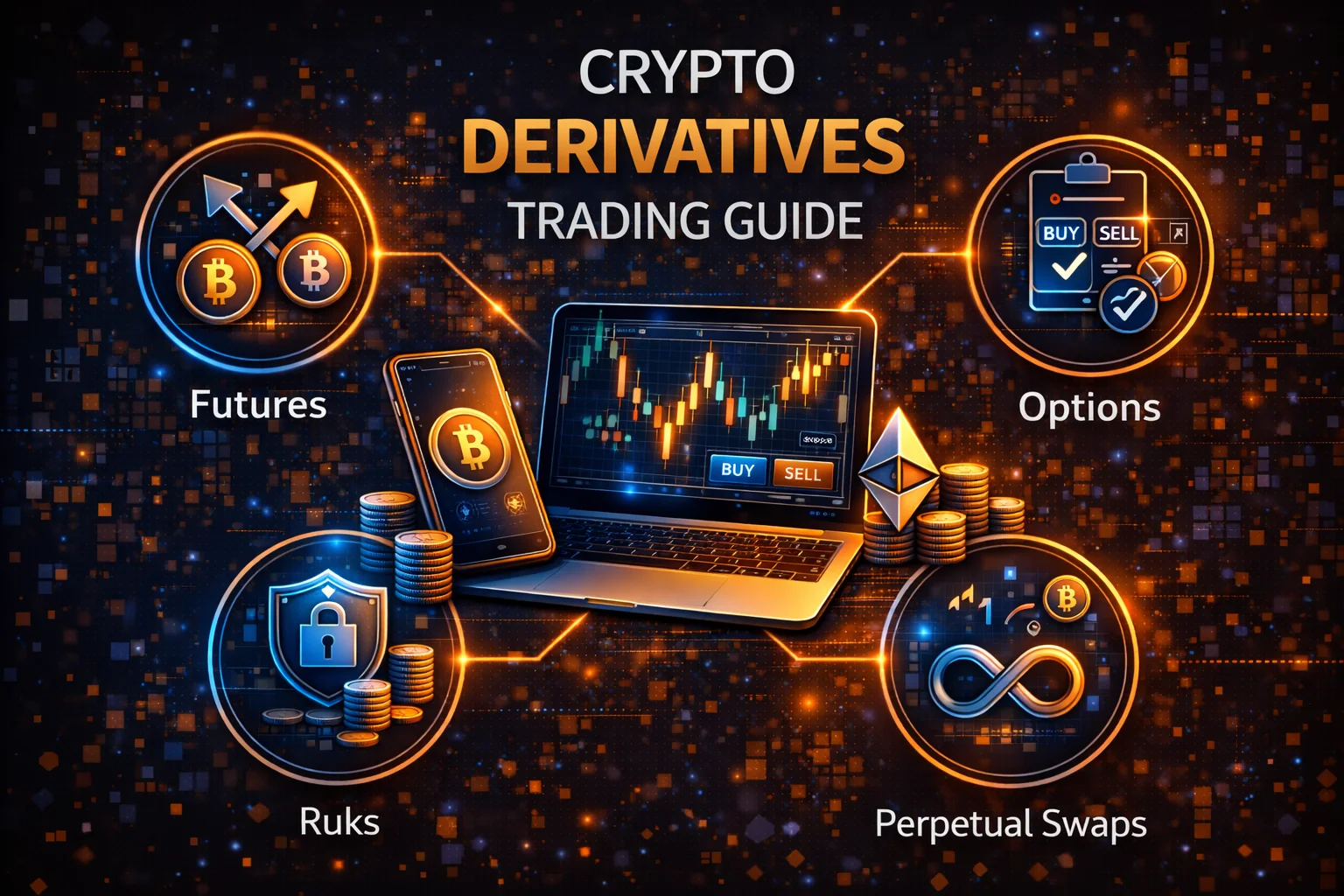
Cryptocurrency derivatives have revolutionised digital asset trading, transforming from niche financial instruments into the backbone of modern crypto markets. These sophisticated financial products enable traders to speculate on price movements, hedge existing positions, and implement complex trading strategies without directly owning the underlying cryptocurrencies. In 2025, derivatives markets often exceed spot trading volumes by significant margins, highlighting their critical role in price discovery, liquidity provision, and risk management across the cryptocurrency ecosystem.
The evolution of crypto derivatives has been remarkable, progressing from simple Bitcoin futures contracts to complex multi-asset products including perpetual swaps, options, structured products, and exotic derivatives. This growth has been driven by institutional adoption, regulatory clarity, and technological innovations that have made derivatives trading more accessible, efficient, and secure. Major exchanges now offer sophisticated derivatives platforms with advanced order types, risk management tools, and algorithmic trading capabilities that rival traditional financial markets.
Understanding derivatives is essential for serious cryptocurrency traders and investors seeking to maximise returns while managing risk effectively. These instruments provide unique advantages including leverage capabilities, hedging opportunities, and the ability to profit from both rising and falling markets. However, derivatives trading also introduces significant risks including leverage amplification, liquidation possibilities, and complex mechanics that require thorough understanding before implementation.
The derivatives landscape in 2025 is characterised by increased sophistication, regulatory compliance, and institutional participation. Traditional financial institutions are launching cryptocurrency derivatives products, while crypto-native platforms continue innovating with new instruments and features. This convergence has created a mature, liquid market that offers unprecedented opportunities for skilled traders while demanding higher levels of knowledge and risk management expertise.
This comprehensive guide explores every aspect of cryptocurrency derivatives trading, from fundamental concepts and instrument types to advanced strategies and risk management techniques. Whether you're new to derivatives or seeking to enhance your existing knowledge, this guide provides the insights and practical guidance needed to navigate the complex but rewarding world of cryptocurrency derivatives trading in 2025 and beyond.
The regulatory environment for cryptocurrency derivatives has matured significantly, with major jurisdictions implementing clear frameworks that provide both trader protection and market integrity. This regulatory clarity has encouraged institutional participation and improved market structure, creating more stable and predictable trading conditions that benefit both retail and professional traders.
Technology continues to drive innovation in derivatives trading, with advanced matching engines, sophisticated risk management systems, and algorithmic trading tools becoming standard across major platforms. These technological improvements have reduced latency, improved execution quality, and enabled more complex trading strategies that were previously available only to institutional traders.
Market microstructure has evolved to support high-frequency trading, market making, and arbitrage strategies that improve liquidity and reduce spreads. Understanding these market dynamics is crucial for successful derivatives trading, as they directly impact execution costs, slippage, and the effectiveness of various trading strategies in different market conditions.
The integration of artificial intelligence and machine learning in derivatives trading has created new opportunities and challenges for retail traders. Whilst these technologies improve market efficiency and provide sophisticated analysis tools, they also increase competition and require traders to continuously adapt their strategies to remain competitive in an increasingly algorithmic trading environment.
Understanding Crypto Derivatives
What Are Derivatives?
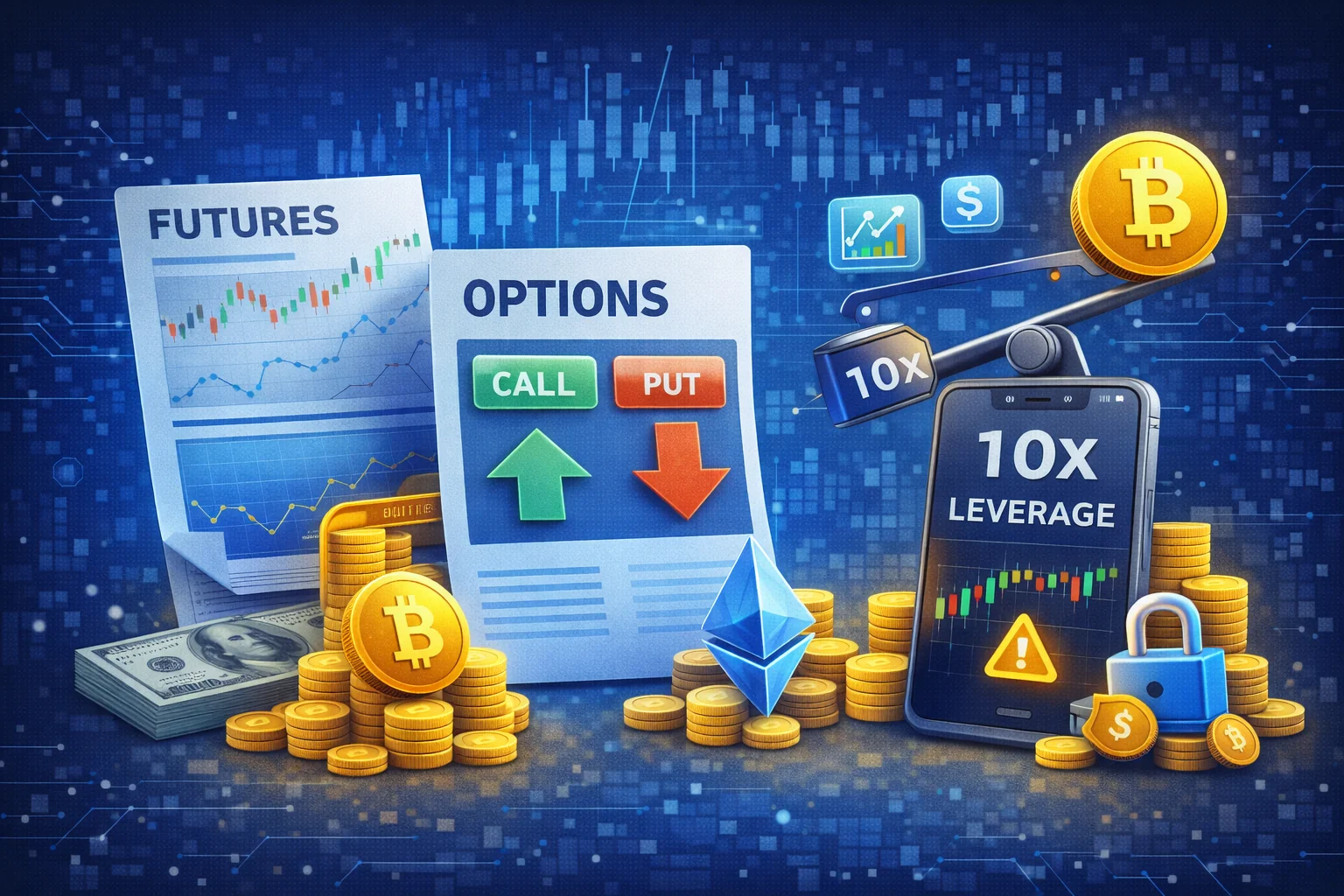
Derivatives are financial contracts whose value derives from an underlying asset - in this case, cryptocurrencies. They allow traders to speculate on price movements, hedge existing positions, and access leverage without directly owning the underlying cryptocurrency.
The digital asset derivatives market has exploded in recent years, with daily trading volumes often exceeding spot markets. In 2024, derivatives accounted for over 60% of total crypto trading volume, highlighting their importance in the modern crypto ecosystem.
Key characteristics of digital asset derivatives:
- Contract-based trading: Trade exposure without owning underlying assets
- Leverage capabilities: Amplified exposure with margin requirements as low as 1%
- Bidirectional trading: Profit from both rising and falling markets through long and short positions
- Hedging tools: Protect existing crypto portfolios against adverse price movements
- Capital efficiency: Control large positions with relatively small capital outlay
- 24/7 trading: Continuous market access unlike traditional financial markets
Market Evolution and Growth
The digital asset derivatives landscape has matured significantly since Bitcoin futures launched on CME in 2017. Today's market features:
- Institutional adoption: Major banks and hedge funds actively trade digital asset derivatives
- Regulatory clarity: Clearer frameworks in major jurisdictions like the US and EU
- Product innovation: From simple futures to complex structured products
- Improved infrastructure: Better risk management and settlement systems
Types of Digital Asset Derivatives
The crypto derivatives market offers several instrument types, each serving different trading and risk management needs:
- Futures Contracts: Standardised agreements to buy or sell crypto at predetermined prices and dates
- Perpetual Swaps: Futures-like contracts without expiration dates, the most popular derivative type
- Options: Rights (not obligations) to buy or sell at specific strike prices before expiration
- Swaps: Exchange of cash flows based on crypto price movements
- Structured Products: Complex instruments combining multiple derivatives
Market Participants
Understanding who trades derivatives helps explain market dynamics:
- Retail Traders: Individual investors seeking leveraged exposure or hedging
- Institutional Investors: Hedge funds, family offices, and asset managers
- Market Makers: Provide liquidity and profit from bid-ask spreads
- Arbitrageurs: Exploit price differences between markets and instruments
- Miners and Validators: Hedge future crypto earnings against price volatility
- edging tools for risk management
- Capital efficiency through margin trading
Types of Crypto Derivatives
The crypto derivatives market offers several instrument types:
- Futures: Contracts to buy or sell crypto at a predetermined price and date
- Perpetual Swaps: Futures without expiration dates
- Options: Rights to buy or sell at specific prices
- Swaps: Exchange of cash flows based on crypto prices
Futures Trading
How Futures Work
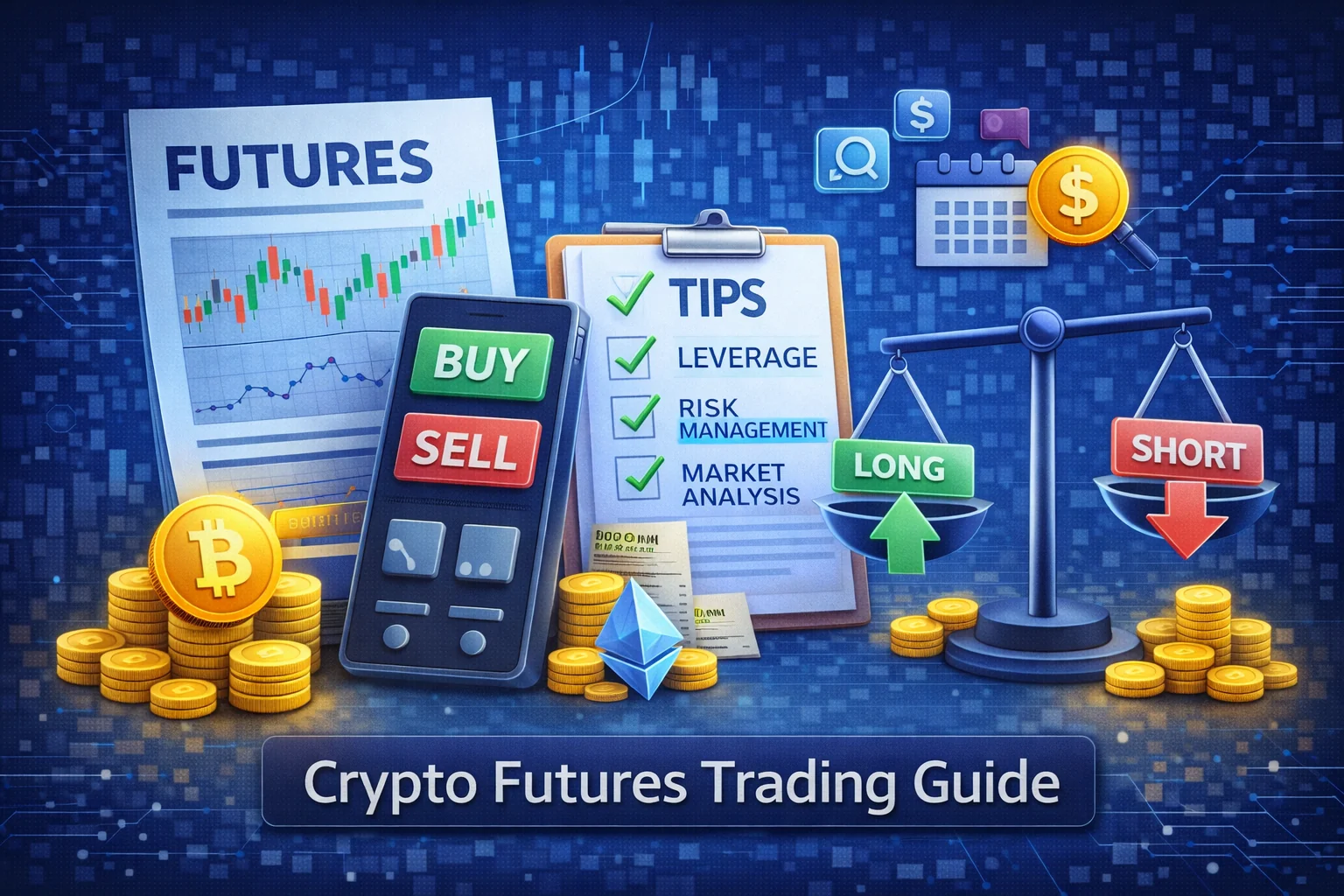
Crypto futures are standardised contracts that obligate parties to buy or sell a cryptocurrency at a predetermined price on a specific future date. Unlike spot trading, futures allow you to gain exposure to price movements without owning the underlying asset, making them powerful tools for speculation and hedging.
When you buy a Bitcoin future at $50,000 expiring in March, you're agreeing to purchase Bitcoin at that price regardless of where the market trades at expiration. If Bitcoin is at $60,000 at expiration, you profit $10,000 per contract. If it's at $40,000, you lose $10,000.
Contract Specifications
Understanding contract details is crucial for successful futures trading:
- Contract Size: Standard units (e.g., 1 BTC, 10 ETH, or mini contracts)
- Tick Size: Minimum price movement (typically $1-$5 for BTC futures)
- Expiration Cycles: Monthly, quarterly (March, June, September, December)
- Settlement Method: Cash-settled (most common) or physical delivery
- Trading Hours: 24/7 for crypto futures vs limited hours for traditional futures
Margin Requirements and Leverage
Futures trading requires posting margin - a good faith deposit to cover potential losses:
- Initial Margin: Required deposit to open positions (typically 5-50% of contract value)
- Maintenance Margin: Minimum account balance to keep positions open
- Variation Margin: Daily settlement of profits and losses
- Leverage Calculation: Contract value ÷ margin requirement
Example: A $50,000 Bitcoin future with 10% initial margin requires $5,000 deposit, providing 10x leverage. A 1% move in Bitcoin price results in a 10% change in the account.
Popular Futures Contracts
Major exchanges offer futures on various cryptocurrencies:
- Bitcoin (BTC): Most liquid, available on CME, Binance, OKX
- Ethereum (ETH): Second most popular, growing institutional interest
- Major Altcoins: SOL, ADA, DOT, AVAX, MATIC
- DeFi Tokens: UNI, AAVE, COMP, SUSHI
- Index Futures: Crypto market indices, DeFi baskets
Futures vs Spot Trading
Key differences that impact trading decisions:
- Capital Efficiency: Futures require less capital for same exposure
- Short Selling: Easy to short crypto through futures vs complex spot shorting
- No Custody: No need to store actual cryptocurrencies
- Expiration Risk: Positions must be closed or rolled before expiry
- Basis Risk: Futures prices may diverge from spot prices
Perpetual Swaps
Understanding Perpetuals
Perpetual swaps ("perps") are the most popular crypto derivatives, accounting for over 70% of derivatives trading volume. They combine the leverage benefits of futures with the flexibility of never expiring, making them ideal for both short-term speculation and long-term position holding.
Unlike traditional futures, perpetuals have no expiration date. Instead, they use a funding mechanism to keep contract prices anchored to spot prices, preventing the basis divergence common in futures markets.
Funding Rate Mechanism
The financing mechanism is the cornerstone of perpetual swaps, ensuring price convergence with spot markets:
- Funding Rate Calculation: Based on the premium/discount between perpetual and spot prices
- Payment Direction: When perpetual > spot, longs pay shorts; when perpetual spot, shorts pay longs
- Payment Frequency: Every 8 hours on most exchanges (00:00, 08:00, 16:00 UTC)
- Rate Magnitude: Typically ranges from -0.375% to +0.375% per funding period
Example: If Bitcoin perpetual trades at $50,500 while spot is $50,000, the financing cost will be positive, meaning long positions pay short positions to incentivize selling pressure and price convergence.
Advanced Funding Strategies
Sophisticated traders use financing costs for additional profit opportunities:
- Funding Arbitrage: Collect funding payments while hedging with spot positions
- Funding Rate Prediction: Anticipate rate changes based on market sentiment
- Cross-Exchange Funding: Exploit funding rate differences between platforms
Leverage and Margin
Perpetual swaps offer some of the highest leverage in crypto trading:
- Retail Platforms: Up to 125x leverage on major pairs
- Institutional Platforms: Typically 10-20x with better risk management
- Cross vs Isolated Margin: Choose between portfolio-wide or position-specific margin
- Auto-Deleveraging: Mechanism to close profitable positions when counterparties are liquidated
Advantages Over Futures
- No Expiration: Hold positions indefinitely without rollover costs
- Higher Liquidity: Concentrated liquidity in single contracts vs multiple expiries
- Tighter Spreads: Better execution due to concentrated order flow
- Simpler Management: No need to track expiration dates or roll positions
- Funding Income: Potential to earn funding payments in trending markets
Risks and Considerations
- Funding Costs: Can accumulate significantly in trending markets
- High Leverage Risk: Easy to over-leverage and face liquidation
- Market Manipulation: Financing mechanisms can be manipulated around payment times
- Platform Risk: centralised exchanges control funding calculations
Options Trading
Understanding Crypto Options
Crypto options provide the right, but not obligation, to buy (call) or sell (put) cryptocurrency at specific strike prices before expiration. They offer asymmetric risk-reward profiles, making them powerful tools for speculation, hedging, and income generation.
Unlike futures and perpetuals, options buyers have limited downside (premium paid) but unlimited upside potential. This makes them attractive for directional bets with defined risk parameters.
Options Fundamentals
Key concepts every options trader must understand:
- Strike Price: The price at which the option can be exercised
- Expiration Date: When the option expires (daily, weekly, monthly, quarterly)
- Premium: The cost to purchase the option
- Intrinsic Value: The option's value if exercised immediately
- Time Value: Premium above intrinsic value, decays as expiration approaches
- Implied Volatility: Market's expectation of future price volatility
The Greeks: Risk Sensitivities
Options prices change based on multiple factors, measured by "Greeks":
- Delta: Price sensitivity to underlying asset moves (0-1 for calls, -1-0 for puts)
- Gamma: Rate of change of delta, highest for at-the-money options
- Theta: Time decay, how much value the option loses daily
- Vega: Sensitivity to implied volatility changes
- Rho: Sensitivity to interest rate changes (less relevant for crypto)
Basic Options Strategies
Directional Strategies
- Long Call: Bullish strategy with limited risk, unlimited reward potential
- Long Put: Bearish strategy for downside protection or speculation
- Short Call: Bearish/neutral strategy, collect premium but unlimited risk
- Short Put: Bullish/neutral strategy, collect premium with limited upside
Income Strategies
- Covered Call: Sell calls against existing crypto holdings for income
- Cash-Secured Put: Sell puts with cash backing to potentially buy crypto cheaper
- Iron Condor: Profit from low volatility by selling both calls and puts
Volatility Strategies
- Long Straddle: Buy call and put at same strike, profit from large moves either direction
- Long Strangle: Buy out-of-money call and put, cheaper than straddle
- Short Straddle/Strangle: Sell options to profit from low volatility
Crypto Options Characteristics
Crypto options differ from traditional options in several ways:
- High Volatility: Crypto's volatility makes options expensive but potentially profitable
- 24/7 Trading: Continuous price discovery vs traditional market hours
- Settlement: Usually cash-settled in USD or crypto
- Limited History: Less historical data for volatility modelling
- Regulatory Uncertainty: Evolving regulatory landscape affects availability
Advanced Trading Strategies
Directional Strategies
Trend Following
Systematic approaches to capture sustained price movements:
- Momentum Trading: Enter positions in the direction of strong price moves with volume confirmation
- Breakout Trading: Trade breaks above resistance or below support levels
- Moving Average Systems: Use MA crossovers and slopes for entry/exit signals
- Channel Trading: Trade within established price channels using derivatives for leverage
Mean Reversion
Strategies that profit from price returning to average levels:
- Bollinger Band Reversals: Trade bounces off extreme band levels
- RSI Divergence: Identify overbought/oversold conditions for reversal trades
- Support/Resistance Trading: Fade moves to key technical levels
Arbitrage and Market Neutral Strategies
Cash-and-Carry Arbitrage
Risk-free profit from price differences between spot and futures:
- Setup: Buy spot crypto, sell futures when futures trade at a premium
- Profit: Capture the basis (futures premium) as it converges to zero at expiration
- Risk Management: Account for funding costs, storage fees, and execution slippage
- Example: BTC spot at $50,000, March futures at $51,000 - buy spot, sell futures, profit $1,000 at expiration
Calendar Spreads
Trade price differences between different expiration dates:
- Long Calendar: Sell near-term, buy far-term when near-term is expensive
- Short Calendar: Buy near-term, sell far-term when curve is inverted
- Volatility Play: Profit from changes in volatility term structure
Cross-Exchange Arbitrage
Exploit price differences between exchanges:
- Spot Arbitrage: Buy on cheaper exchange, sell on expensive exchange
- Funding Rate Arbitrage: Long on exchange with negative funding, short on positive funding
- Execution Challenges: Account for transfer times, fees, and slippage
Hedging Strategies
Portfolio Hedging
Protect existing crypto holdings against adverse moves:
- Direct Hedging: Short futures/perpetuals equal to spot holdings
- Beta Hedging: Hedge with correlated assets (e.g., hedge altcoins with BTC shorts)
- Options Hedging: Buy puts for downside protection while maintaining upside
- Dynamic Hedging: Adjust hedge ratios based on market conditions
Delta Neutral Strategies
Market-neutral positions that profit from volatility or time decay:
- Long Gamma: Buy options, hedge with futures to profit from volatility
- Short Gamma: Sell options, hedge with futures to profit from time decay
- Volatility Trading: Trade implied vs realised volatility differences
Algorithmic and Quantitative Strategies
Statistical Arbitrage
- Pairs Trading: Long/short correlated crypto pairs when they diverge
- Mean Reversion Models: Systematic mean reversion based on statistical models
- Cointegration: Trade relationships between cryptocurrencies that tend to move together
Market Making
- Bid-Ask Spread Capture: Provide liquidity and profit from spreads
- Inventory Management: Balance long/short inventory to minimise risk
- Adverse Selection: Avoid trading against informed flow
Comprehensive Risk Management
Understanding Derivatives Risks
Derivatives trading involves multiple risk layers that can compound quickly. Successful traders develop systematic approaches to identify, measure, and manage these risks.
Market Risks
Price Risk
- Directional Risk: Losses from adverse price movements in underlying assets
- Volatility Risk: Changes in implied volatility affecting options positions
- Gap Risk: Sudden price jumps that bypass stop-loss orders
- Correlation Risk: Breakdown of expected relationships between assets
Leverage and Margin Risks
- Liquidation Risk: Forced position closure when margin falls below maintenance requirements
- Margin Call Risk: Need to deposit additional funds to maintain positions
- Cascade Liquidations: Market-wide liquidations causing extreme price moves
- Financing Cost Risk: Unexpected funding costs in perpetual swaps
Operational Risks
Platform and Counterparty Risks
- Exchange Risk: Platform insolvency, hacks, or operational failures
- Custody Risk: Loss of funds due to security breaches
- Settlement Risk: Failure to settle trades or deliver assets
- Regulatory Risk: Changes in regulations affecting platform operations
Technical Risks
- System Downtime: Inability to manage positions during critical market moves
- Execution Risk: Slippage and poor fills during volatile periods
- API Failures: Algorithmic trading system malfunctions
- Fat Finger Errors: Accidental large orders or wrong parameters
Risk Management Framework
Position Sizing and Leverage
Proper position sizing is the foundation of risk management:
- Kelly Criterion: Mathematical approach to optimal position sizing based on win rate and average win/loss
- Fixed Fractional: Risk fixed percentage of capital per trade (typically 1-3%)
- Volatility-Based Sizing: Adjust position size based on asset volatility
- Maximum Leverage Rules: Never exceed predetermined leverage limits regardless of opportunity
Stop-Loss and Take-Profit Orders
- Technical Stops: Based on support/resistance levels, moving averages
- Percentage Stops: Fixed percentage loss limits (e.g., 5% stop-loss)
- Volatility Stops: ATR-based stops that adjust to market volatility
- Time Stops: Close positions after predetermined time periods
- Trailing Stops: Lock in profits while allowing for continued upside
Portfolio-Level Risk Controls
- Correlation Limits: Avoid excessive exposure to correlated positions
- Sector Limits: Diversify across different crypto sectors (DeFi, Layer 1, etc.)
- Time Diversification: Spread entries across different time periods
- Maximum Drawdown Limits: Stop trading when losses exceed predetermined levels
Advanced Risk Metrics
Value at Risk (VaR)
Statistical measure of potential losses over specific time periods:
- Historical VaR: Based on historical price movements
- Parametric VaR: Assumes normal distribution of returns
- Monte Carlo VaR: Simulates thousands of potential outcomes
Stress Testing
- Historical Scenarios: Test portfolio against past market crashes
- Hypothetical Scenarios: Model extreme but plausible market events
- Correlation Breakdown: Test what happens when correlations change
Psychological Risk Management
Emotional Control
- Pre-Defined Rules: Create and follow systematic trading rules
- Position Limits: Never risk more than you can afford to lose
- Regular Breaks: Step away from markets during losing streaks
- Performance Review: Regular analysis of trading decisions and outcomes
Cognitive Biases
- Overconfidence: Avoid increasing position sizes after winning streaks
- Loss Aversion: Don't hold losing positions too long hoping for recovery
- Confirmation Bias: Seek information that challenges your positions
- Anchoring: Don't fixate on entry prices when making exit decisions
Best Derivatives Platforms
Platform Selection Criteria
Choosing the right derivatives platform is crucial for trading success. Consider these factors:
- Liquidity: Deep order books for better execution and tighter spreads
- Product Range: Variety of instruments (futures, perpetuals, options)
- Leverage Options: Appropriate leverage levels for your risk tolerance
- Fee Structure: Maker/taker fees, financing costs, withdrawal costs
- Security: Insurance funds, cold storage, regulatory compliance
- Technology: Platform stability, API quality, mobile apps
- Customer Support: Responsive support for technical and account issues
Top centralised Exchanges
Binance
- Strengths: Largest derivatives volume, extensive product range, competitive fees
- Products: Futures, perpetuals, options, leveraged tokens
- Leverage: Up to 125x on major pairs
- Best For: High-volume traders, diverse strategy implementation
OKX
- Strengths: Advanced trading tools, options market leader, institutional features
- Products: Futures, perpetuals, options, structured products
- Leverage: Up to 100x with sophisticated risk management
- Best For: Options traders, institutional investors, advanced strategies
Bybit
- Strengths: User-friendly interface, reliable execution, strong perpetuals focus
- Products: Perpetuals, futures, options (limited)
- Leverage: Up to 100x with intuitive risk management
- Best For: Retail traders, perpetual swaps specialists, beginners
Institutional Platforms
CME Group
- Products: Bitcoin and Ethereum futures and options
- Advantages: Regulated environment, institutional custody, cash settlement
- Requirements: Higher minimum sizes, institutional access
Deribit
- specialisation: Crypto options market leader
- Products: BTC and ETH options, futures
- Advantages: Deep options liquidity, advanced options tools
decentralised Protocols
GMX
- Model: decentralised perpetuals with GLP liquidity pool
- Advantages: No KYC, self-custody, transparent on-chain settlement
- Limitations: Lower leverage (50x max), limited pairs
- Best For: DeFi natives, privacy-focused traders
Pendle
- specialisation: Yield derivatives and interest rate trading
- Products: Yield tokenization, fixed/variable yield trading
- Innovation: Unique yield trading mechanisms
Platform Comparison Matrix
| Platform | Max Leverage | Products | Fees | Best For |
|---|---|---|---|---|
| Binance | 125x | All types | 0.02-0.04% | Volume traders |
| OKX | 100x | All types | 0.02-0.05% | Options traders |
| Bybit | 100x | Perpetuals focus | 0.01-0.06% | Retail traders |
| GMX | 50x | Perpetuals | 0.1% | DeFi users |
Real-World Derivatives Trading Success Stories
Case 1: Hedging Strategy - Miner Protection
User: Bitcoin mining operation
Risk: BTC price drop affecting profitability
Solution: Short BTC futures to hedge production
- Monthly production: 10 BTC
- Sold 10 BTC futures at $40,000
- BTC dropped to $35,000
- Mining revenue: $350,000 (10 BTC × $35k)
- Futures profit: $50,000 (10 BTC × $5k gain)
- Total: $400,000 (locked in $40k price)
Result: Hedge protected against 12.5% price drop, maintained profitability.
Case 2: Leverage Trading - Amplified Gains
User: Experienced trader with $10,000
Strategy: 10x leverage long on ETH
Execution: ETH at $2,000, opened $100,000 position
- ETH rose 15% to $2,300
- Position value: $115,000
- Profit: $15,000 (150% on $10k capital)
- Risk: 10% drop would liquidate position
Lesson: Leverage amplifies both gains and losses. Used tight stop-loss at 8%.
Case 3: Options Strategy - Protected Upside
User: Holder of 5 BTC wanting downside protection
Strategy: Buy put options at $38,000 strike
Cost: $1,000 premium (2.6% of position)
- BTC dropped from $40,000 to $32,000
- Put option profit: $30,000 (5 BTC × $6k)
- BTC loss: -$40,000 (5 BTC × $8k drop)
- Net loss: -$11,000 (vs -$40,000 unhedged)
- Protection saved: $29,000 (72.5% of loss)
Result: Options insurance limited downside while maintaining upside potential.
Case 4: Perpetual Funding Arbitrage
User: Arbitrage trader with $50,000
Strategy: Capture financing cost payments
Setup: Long spot BTC, short perpetual futures
- Funding rate: 0.01% every 8 hours (positive)
- Daily funding: 0.03% × $50,000 = $15/day
- Monthly earnings: $450 (0.9% monthly)
- Annual yield: 10.8% (market neutral)
Result: Risk-free yield from financing cost arbitrage, no directional exposure.
Case 5: Liquidation Loss - Overleveraged Position
User: Novice trader with $5,000
Mistake: 20x leverage without stop-loss
Outcome: Complete loss
- Opened $100,000 long position at 20x
- BTC dropped 5% (normal volatility)
- Position liquidated automatically
- Total loss: $5,000 (100% of capital)
Lesson: Excessive leverage + no risk management = guaranteed liquidation. Never use more than 3-5x leverage as beginner.
Quantitative Risk Models and Advanced Analytics
Black-Scholes-Merton Model Adaptations
Traditional options pricing models require significant modifications for cryptocurrency markets due to extreme volatility, 24/7 trading, and unique market microstructure. The Black-Scholes-Merton framework, whilstfoundational, assumes constant volatility and interest rates - assumptions that break down in crypto markets where volatility can shift dramatically within hours.
Advanced practitioners implement stochastic volatility models such as the Heston model, which accounts for volatility clustering and mean reversion patterns observed in cryptocurrency markets. These models incorporate volatility smile effects, where implied volatility varies across strike prices and expiration dates, providing more accurate pricing for complex options strategies.
Monte Carlo Simulation Frameworks
Professional derivatives traders employ Monte Carlo simulations to model thousands of potential price paths, incorporating jump-diffusion processes that capture cryptocurrency's tendency for sudden, large price movements. These simulations enable sophisticated scenario analysis, stress testing, and optimal hedge ratio calculations that static models cannot provide.
Advanced Monte Carlo implementations include variance reduction techniques such as antithetic variates and control variates, improving computational efficiency while maintaining accuracy. Professional trading systems integrate these models with real-time market data feeds, enabling dynamic hedging adjustments based on changing market conditions and volatility regimes.
Machine Learning Risk Assessment
Institutional derivatives trading increasingly relies on machine learning algorithms for risk assessment and portfolio optimisation. Neural networks trained on historical price data, order book dynamics, and macroeconomic indicators can identify subtle patterns and correlations that traditional statistical methods miss.
Ensemble methods combining multiple machine learning models provide robust risk predictions whilstreducing overfitting risks. These systems continuously adapt to changing market conditions, incorporating new data patterns and adjusting risk parameters automatically. Professional implementations include explainable AI components that provide transparency into model decisions for regulatory compliance and risk management oversight.
Regime Detection and Adaptive Strategies
Cryptocurrency markets exhibit distinct volatility regimes - periods of low volatility punctuated by high-volatility episodes. Advanced quantitative models employ Hidden Markov Models and regime-switching frameworks to identify these transitions, enabling adaptive trading strategies that adjust parameters based on current market conditions.
Professional traders implement regime-aware position sizing, where leverage and exposure are dynamically adjusted based on detected volatility regimes. During high-volatility periods, positions are reduced and hedging is increased, whilstlow-volatility periods allow for higher leverage and more aggressive strategies. These adaptive frameworks significantly improve risk-adjusted returns compared to static approaches.
Institutional Trading Infrastructure and Professional Execution
Prime Brokerage and Multi-Exchange Connectivity
Professional derivatives trading requires sophisticated infrastructure connecting multiple exchanges simultaneously, enabling optimal execution across fragmented liquidity pools. Prime brokerage services provide unified margin management, cross-exchange netting, and consolidated reporting essential for institutional-scale operations.
Advanced execution management systems (EMS) implement smart order routing algorithms that automatically split large orders across multiple venues, minimising market impact whilstachieving optimal fill prices. These systems incorporate real-time latency measurements, exchange-specific order book dynamics, and historical execution quality metrics to make intelligent routing decisions.
Algorithmic Execution Strategies
Institutional derivatives trading employs sophisticated algorithmic execution strategies designed to minimise transaction costs and market impact. Time-Weighted Average Price (TWAP) algorithms spread large orders across predetermined time intervals, whilstVolume-Weighted Average Price (VWAP) algorithms align execution with historical volume patterns.
Implementation Shortfall algorithms optimise the trade-off between market impact and timing risk, dynamically adjusting execution speed based on market conditions and urgency requirements. These algorithms incorporate real-time volatility measurements, order book depth analysis, and predictive models of short-term price movements to optimise execution quality.
Risk Management Infrastructure
Professional derivatives trading platforms implement comprehensive risk management systems with real-time position monitoring, automated risk limit enforcement, and sophisticated stress testing capabilities. These systems calculate portfolio-level Greeks, scenario-based profit and loss projections, and correlation-adjusted risk metrics across all positions and instruments.
Advanced risk systems incorporate pre-trade risk checks that prevent orders violating risk limits from reaching exchanges, post-trade monitoring that triggers alerts when positions approach risk thresholds, and automated hedging systems that can execute protective trades when predefined risk levels are breached. Integration with exchange APIs enables real-time margin monitoring and automated position adjustments to prevent liquidations.
Regulatory Compliance and Reporting
Institutional derivatives trading requires comprehensive compliance infrastructure supporting regulatory reporting requirements across multiple jurisdictions. Trade reporting systems automatically format and submit transaction data to relevant regulatory bodies, while maintaining detailed audit trails for supervisory review.
Professional compliance systems implement best execution monitoring, ensuring trades meet regulatory requirements for price improvement and execution quality. These systems generate comprehensive reports demonstrating compliance with fiduciary duties, risk management requirements, and market conduct regulations essential for institutional operations.
Professional Portfolio Hedging Techniques
Dynamic Delta Hedging Strategies
Professional options traders implement dynamic delta hedging strategies that continuously adjust hedge ratios based on changing market conditions and option sensitivities. Unlike static hedging approaches, dynamic hedging requires frequent rebalancing to maintain desired risk exposures as underlying prices and volatilities change.
Advanced delta hedging incorporates transaction cost optimisation, where rebalancing frequency is optimised to balance hedging effectiveness against trading costs. Professional systems use sophisticated algorithms to determine optimal rebalancing thresholds based on volatility forecasts, transaction costs, and risk tolerance parameters.
Gamma Scalping and Volatility Trading
Sophisticated traders employ gamma scalping strategies that profit from volatility while maintaining delta-neutral positions. These strategies involve buying options to establish positive gamma exposure, then trading the underlying asset against price movements to capture volatility profits while maintaining overall market neutrality.
Professional gamma scalping requires precise execution timing, sophisticated volatility forecasting, and careful transaction cost management. Advanced practitioners use machine learning algorithms to optimise scalping frequency and size based on realised volatility patterns, market microstructure effects, and execution cost models.
Cross-Asset Hedging Strategies
Institutional portfolios often require hedging across multiple asset classes and cryptocurrencies with varying correlation structures. Professional hedging strategies employ multivariate risk models that account for time-varying correlations, volatility spillovers, and regime-dependent relationships between different cryptocurrencies and traditional assets.
Advanced cross-asset hedging incorporates basis risk management, where hedging instruments may not perfectly correlate with portfolio exposures. Professional systems continuously monitor hedge effectiveness, adjusting hedge ratios based on rolling correlation estimates and regime detection algorithms that identify periods when historical relationships break down.
Tail Risk Protection Strategies
Professional portfolio managers implement sophisticated tail risk protection strategies designed to limit losses during extreme market events. These strategies often involve purchasing out-of-the-money put options, implementing put spread collars, or using volatility derivatives to hedge against sudden volatility spikes.
Advanced tail risk strategies incorporate cost-benefit optimisation, where protection costs are weighed against potential loss reduction benefits. Professional implementations use historical simulation and Monte Carlo analysis to evaluate protection strategy effectiveness across various market scenarios, optimising strike selection and expiration timing to maximise protection efficiency.
Institutional Derivatives Strategies plus Professional Trading
Professional cryptocurrency derivatives trading requires sophisticated understanding of market mechanics, risk management frameworks, plus advanced trading strategies which maximise returns while maintaining appropriate risk exposure. Institutional practitioners implement comprehensive approaches encompassing quantitative analysis, systematic risk assessment, plus professional-grade trading infrastructure which ensure optimal derivatives performance plus sustainable long-term growth through advanced trading techniques plus systematic market analysis.
Advanced derivatives strategies encompass options trading, futures arbitrage, plus sophisticated hedging techniques which optimise portfolio performance while managing market volatility plus directional risks. Professional approaches include systematic strategy evaluation, comprehensive risk management, plus advanced analytics which enable optimal derivatives utilisation plus strategic portfolio optimisation through professional-grade trading systems plus systematic monitoring of market conditions plus trading opportunities.
Institutional derivatives infrastructure encompasses high-frequency trading systems, sophisticated risk management platforms, plus comprehensive analytics tools which enable professional-grade derivatives trading plus optimal market participation. Advanced infrastructure includes automated execution systems, systematic risk monitoring, plus comprehensive reporting capabilities which ensure optimal trading performance plus sustainable long-term success through professional derivatives trading excellence plus systematic market optimisation approaches.
Professional derivatives risk management encompasses comprehensive evaluation of counterparty risks, market volatility, plus operational vulnerabilities which affect derivatives trading safety plus performance. Advanced practitioners implement systematic risk assessment frameworks, ongoing monitoring protocols, plus comprehensive risk mitigation strategies which ensure optimal derivatives trading plus strategic risk management through professional-grade evaluation techniques plus systematic analysis of all factors which influence derivatives outcomes plus portfolio performance through comprehensive risk analysis plus strategic optimisation methodologies.
Advanced derivatives market analysis includes comprehensive evaluation of market microstructure, liquidity patterns, plus volatility dynamics which influence derivatives pricing plus trading opportunities. Professional practitioners leverage sophisticated analytical tools, comprehensive market data, plus systematic approaches which ensure optimal derivatives trading plus strategic market participation through advanced analytical techniques plus systematic evaluation of market conditions, trading opportunities, plus emerging developments which affect derivatives performance plus investment outcomes through strategic optimisation plus professional trading excellence.
Conclusion
Cryptocurrency derivatives trading represents one of the most sophisticated and potentially rewarding aspects of digital asset markets, offering experienced traders powerful tools for speculation, hedging, and portfolio optimisation. The evolution of crypto derivatives from simple Bitcoin futures to complex multi-asset products has created unprecedented opportunities for skilled traders while demanding higher levels of knowledge, discipline, and risk management expertise.
Success in derivatives trading requires mastering fundamental concepts, understanding market mechanics, and implementing robust risk management strategies. The leverage inherent in derivatives can amplify both profits and losses, making education and careful position sizing critical for long-term success. Traders must develop deep understanding of funding rates, liquidation mechanics, and the unique characteristics of different derivative instruments before committing significant capital.
The derivatives landscape in 2025 offers mature, liquid markets with institutional-grade infrastructure and regulatory oversight. However, this sophistication comes with increased complexity and competition from professional traders and algorithmic systems. Retail traders must focus on developing edge through specialised knowledge, disciplined execution, and continuous learning to compete effectively in this environment.
Platform selection remains crucial for derivatives trading success, with factors including liquidity, fees, available instruments, and risk management tools all impacting trading outcomes. The emergence of decentralised derivatives protocols alongside traditional centralised exchanges provides traders with more options but also requires careful evaluation of smart contract risks and liquidity considerations.
Education and practice are essential prerequisites for derivatives trading success. The complexity of these instruments demands thorough understanding before risking real capital, and even experienced traders benefit from continuous learning as markets evolve and new products emerge. Demo trading, paper trading, and starting with small positions are recommended approaches for building competency safely.
As the cryptocurrency market continues evolving, derivatives will play an increasingly important role in price discovery, risk management, and institutional adoption. Traders who master these instruments while maintaining strict risk discipline will be well-positioned to capitalise on the opportunities presented by this dynamic and rapidly growing market segment.
Sources & References
Frequently Asked Questions
- What are crypto derivatives and how do they work?
- Crypto derivatives are financial contracts whose value derives from underlying cryptocurrencies like Bitcoin or Ethereum. They allow traders to speculate on price movements, hedge existing positions, or access leverage without owning the actual cryptocurrency. The main types include futures (contracts with expiration dates), perpetual swaps (futures without expiration), and options (rights to buy/sell at specific prices).
- What's the difference between futures and perpetual swaps?
- Futures contracts have specific expiration dates and require settlement or rollover, while perpetual swaps have no expiration and can be held indefinitely. Perpetuals use funding rates (periodic payments between long and short positions) to keep contract prices close to spot prices, whereas futures prices can diverge significantly from spot as expiration approaches.
- How much leverage can I use, and what are the risks?
- Leverage varies by platform and instrument, typically ranging from 2x to 125x for retail traders. Whilst higher leverage amplifies potential profits, it also magnifies losses and increases the risk of liquidation. A 10x leveraged position means a 10% adverse price move could wipe out your entire margin. Most experienced traders recommend starting with low leverage (2-5x) until you develop proper risk management skills.
- Are derivatives suitable for beginners?
- Derivatives involve significant complexity and risk, making them generally unsuitable for complete beginners. New traders should first master spot trading, understand market dynamics, and develop risk management skills. If interested in derivatives, start with paper trading (simulated trading) to learn without risking real capital, then begin with small positions and low leverage.
- What are funding rates in perpetual swaps?
- Funding rates are periodic payments (usually every 8 hours) between long and short position holders in perpetual swaps. When the perpetual price is above the spot price, long positions pay short positions, and vice versa. Rates typically range from -0.375% to +0.375% per funding period. These payments help keep perpetual prices anchored to spot prices and can significantly impact profitability for longer-term positions.
- How do I choose the right derivatives platform?
- Consider factors like liquidity (for better execution), product variety (futures, perpetuals, options), fee structure, security measures, regulatory compliance, and user interface quality. For beginners, prioritise platforms with good educational resources and lower minimum trade sizes. Advanced traders might prefer platforms with sophisticated tools, API access, and institutional-grade features.
- What's the difference between cross margin and isolated margin?
- Cross margin uses your entire account balance as collateral for all positions, allowing profits from one position to offset losses in another. Isolated margin allocates specific amounts to individual positions, limiting potential losses to the allocated margin but preventing cross-position offsetting. Cross margin offers more flexibility but higher risk, while isolated margin provides better risk control for individual trades.
- How do I manage risk when trading derivatives?
- Implement systematic risk management, including: proper position sizing (never risk more than 1-3% of capital per trade), use stop-loss orders, diversify across different assets and strategies, monitor margin levels closely, avoid emotional trading decisions, and never use maximum available leverage. Consider starting with a risk management framework and sticking to it regardless of market conditions.
← Back to Crypto Investing Blog Index
Financial Disclaimer
This content is not financial advice. All information provided is for educational purposes only. Cryptocurrency investments carry significant investment risk, and past performance does not guarantee future results. Always do your own research and consult a qualified financial advisor before making investment decisions.