Best Practices to Secure Your Crypto 2025
Cryptocurrency security remains paramount in 2025, as digital assets become increasingly valuable and attractive to hackers. Learn essential security practices to protect your investments from theft, scams, and human error.
Introduction
Cryptocurrency security has become more critical than ever in 2025. Digital assets continue to gain mainstream adoption. They attract increasingly sophisticated threats from cybercriminals, state actors, and opportunistic scammers. Unlike traditional banking systems, cryptocurrency operates on the principle of self-custody. Traditional banks have built-in protections, deposit insurance, and regulatory oversight. Cryptocurrency places the full responsibility for security directly on individual users. They must implement comprehensive protection strategies.
The cryptocurrency threat landscape has evolved dramatically over the past few years. Attackers have developed increasingly sophisticated methods. They compromise wallets and steal private keys. They exploit user vulnerabilities through social engineering, phishing attacks, and malware. This malware is specifically designed to target cryptocurrency holders. Professional security practices have become essential. This applies to anyone holding significant cryptocurrency assets. A single security mistake can result in permanent and irreversible loss of funds.
Effective cryptocurrency security requires a multi-layered approach. This combines technical safeguards, operational security practices, and ongoing vigilance against emerging threats. The most secure cryptocurrency users implement defence-in-depth strategies. These include the use of hardware wallets, secure backup procedures, and network security measures. Comprehensive threat awareness protects against both technical attacks and social engineering attempts.
This comprehensive security guide examines every aspect of cryptocurrency protection in 2025. It covers fundamental wallet security to advanced operational security techniques. These are used by institutional investors and high-net-worth individuals. Whether you're securing your first Bitcoin purchase or protecting a substantial cryptocurrency portfolio, implementing these security best practices is essential. This ensures long-term success in the digital asset ecosystem.
The irreversible nature of blockchain transactions means security mistakes can result in permanent loss of funds. There is no recourse for recovery through traditional financial institutions or legal systems. This fundamental characteristic of cryptocurrency makes proper security practices not just recommended, but absolutely essential. This applies to anyone holding digital assets, regardless of the amount or investment strategy employed.
The cryptocurrency security landscape has evolved dramatically over recent years. New threats emerge alongside technological advances and increased adoption. From sophisticated phishing attacks targeting seed phrases to complex smart contract exploits in DeFi protocols, the range of potential security risks continues to expand. The ecosystem grows, matures, and attracts more valuable assets. This incentivises criminal activity.
Professional security practices in cryptocurrency involve multiple layers of protection. These include secure wallet selection, proper key management, and transaction verification procedures. Ongoing security monitoring must be implemented systematically. It must be maintained consistently. These practices require understanding both technical security measures and operational security procedures. These protect against human error and social engineering attacks.
Recent years have witnessed numerous high-profile security breaches. Exchange hacks and individual losses total billions of dollars. These have highlighted the importance of robust security practices. From sophisticated phishing attacks targeting seed phrases to elaborate social engineering schemes involving fake customer support, threat actors have developed increasingly creative methods. They steal users' cryptocurrency holdings through both technical and psychological manipulation.
However, the evolution of threats has been matched by significant improvements. Security tools, practices, and education are now available to cryptocurrency users. Hardware wallets have become more user-friendly and affordable. Multi-signature solutions are more accessible to retail users. The cryptocurrency community has developed comprehensive best practices. These protect digital assets across various use cases and risk profiles.
The regulatory landscape in 2025 has also brought clearer guidelines for cryptocurrency security. Many jurisdictions are implementing consumer protection measures. They maintain the self-custodial nature that makes cryptocurrency unique. These developments have created a more secure environment. This benefits both individual and institutional investors. However, personal responsibility remains paramount for asset protection.
Understanding the current threat landscape is crucial. This enables implementing effective security measures. These address real-world risks rather than theoretical concerns. Common attack vectors include phishing websites, malicious software, and social engineering. SIM swapping and device theft are also threats. These devices contain cryptocurrency wallets or seed phrases. Increasingly sophisticated scams target both newcomers and experienced users.
The rise of decentralised finance (DeFi) has introduced additional security considerations. These extend beyond traditional wallet security. They include smart contract risks, impermanent loss, and protocol governance risks. The complexity of interacting safely with multiple protocols is also a factor. Users must now understand not only wallet security. They must also understand the risks associated with various DeFi platforms. Yield farming strategies and cross-chain interactions require careful consideration.
This comprehensive security guide provides practical, actionable strategies. These protect your cryptocurrency investments across all aspects of digital asset management. From basic wallet security to advanced operational security practices, these guidelines will help you build a robust security framework. This protects your assets whilst enabling confident participation in the opportunities and innovations of the cryptocurrency ecosystem. For specific security tools, see our Ledger hardware wallet review and crypto security tools comparison.
The cryptocurrency security landscape has evolved dramatically. New threats emerge alongside technological advances. From sophisticated phishing attacks targeting seed phrases to complex smart contract exploits in DeFi protocols, the range of potential security risks continues to expand. The ecosystem grows and matures.
Professional security practices in cryptocurrency involve multiple layers of protection, including secure wallet selection, proper key management, transaction verification procedures, and ongoing security monitoring. These practices must be implemented systematically and maintained consistently to provide effective protection against the diverse range of threats present in the cryptocurrency ecosystem.
This comprehensive security guide provides practical, actionable strategies for protecting your cryptocurrency investments across all aspects of digital asset management. From basic wallet security to advanced operational security practices, these guidelines will help you build a robust security framework that protects your assets while enabling you to participate confidently in the cryptocurrency ecosystem.
Recent years have witnessed numerous high-profile security breaches, exchange hacks, and individual losses totalling billions of dollars. From sophisticated phishing attacks targeting seed phrases to elaborate social engineering schemes, threat actors have developed increasingly creative methods to steal users' cryptocurrency holdings.
However, the evolution of threats has been matched by improvements in security tools, practices, and education. Hardware wallets have become more user-friendly, multi-signature solutions are more accessible, and the cryptocurrency community has developed comprehensive best practices for protecting digital assets.
The regulatory landscape in 2025 has also brought clearer guidelines for cryptocurrency security, with many jurisdictions implementing consumer protection measures while maintaining the self-custodial nature that makes cryptocurrency unique. These developments have created a more secure environment for both individual and institutional investors.
Understanding the threat landscape is crucial for implementing effective security measures. Common attack vectors include phishing websites, malicious software, social engineering, SIM swapping, and physical theft of devices containing cryptocurrency wallets or seed phrases.
The rise of decentralised finance (DeFi) has introduced additional security considerations, including smart contract risks, impermanent loss, and the complexity of interacting with multiple protocols. Users must now understand not only wallet security but also the risks associated with various DeFi platforms and strategies.
Mobile security has become increasingly important as more users access their cryptocurrency holdings through smartphones and tablets. The convenience of mobile access must be balanced against the additional attack surfaces and vulnerabilities that mobile devices introduce.
Social media and communication platforms have become primary vectors for cryptocurrency-related scams and attacks. Understanding how to safely navigate these platforms while maintaining privacy and security is essential for modern cryptocurrency users.
The concept of operational security (OpSec) has gained prominence in the cryptocurrency community, emphasising the importance of maintaining privacy and security in all aspects of digital asset management, from initial acquisition to long-term storage and eventual use.
This comprehensive guide provides practical, actionable security advice for cryptocurrency users at all levels of experience. From basic wallet security to advanced techniques used by security professionals, these practices will help protect your digital assets against the full spectrum of threats present in 2025.
The investment in time and effort required to implement proper security measures is minimal compared to the potential losses from inadequate protection. By following the practices outlined in this guide, users can significantly reduce their risk exposure while maintaining the benefits and convenience of cryptocurrency ownership.
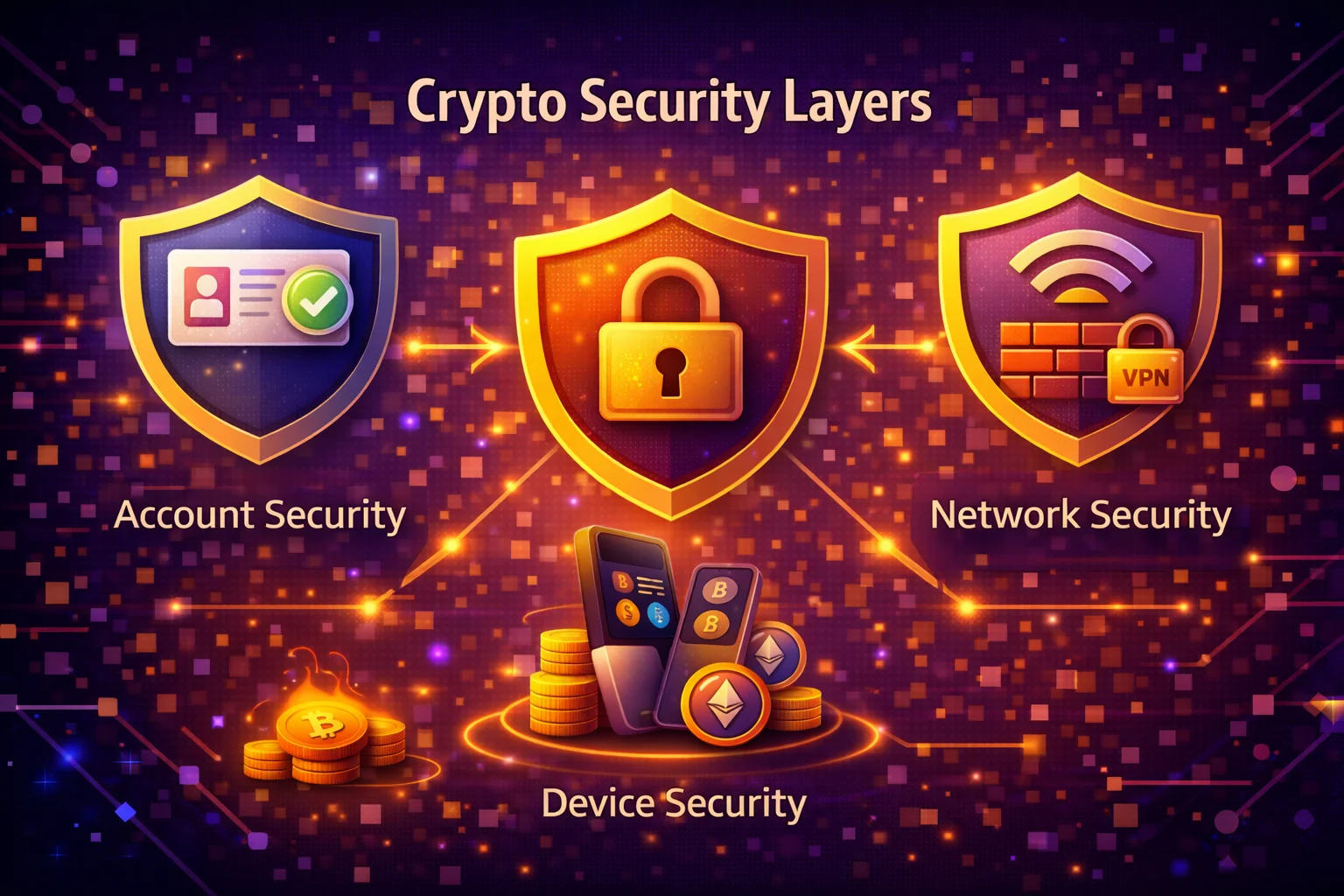
Cryptocurrency Security Fundamentals
Understanding basic security principles is essential before diving into specific practices. Cryptocurrency security differs from traditional finance because transactions are irreversible, and you're responsible for protecting your own assets.
Core Security Principles
- Self-Custody: You are your own bank - full responsibility for security
- Irreversible Transactions: No chargebacks or transaction reversals
- Private Key Control: Whoever controls private keys controls the funds
- Pseudonymous Nature: Addresses are public but not directly linked to identity
- 24/7 Market: Attacks can happen anytime, anywhere
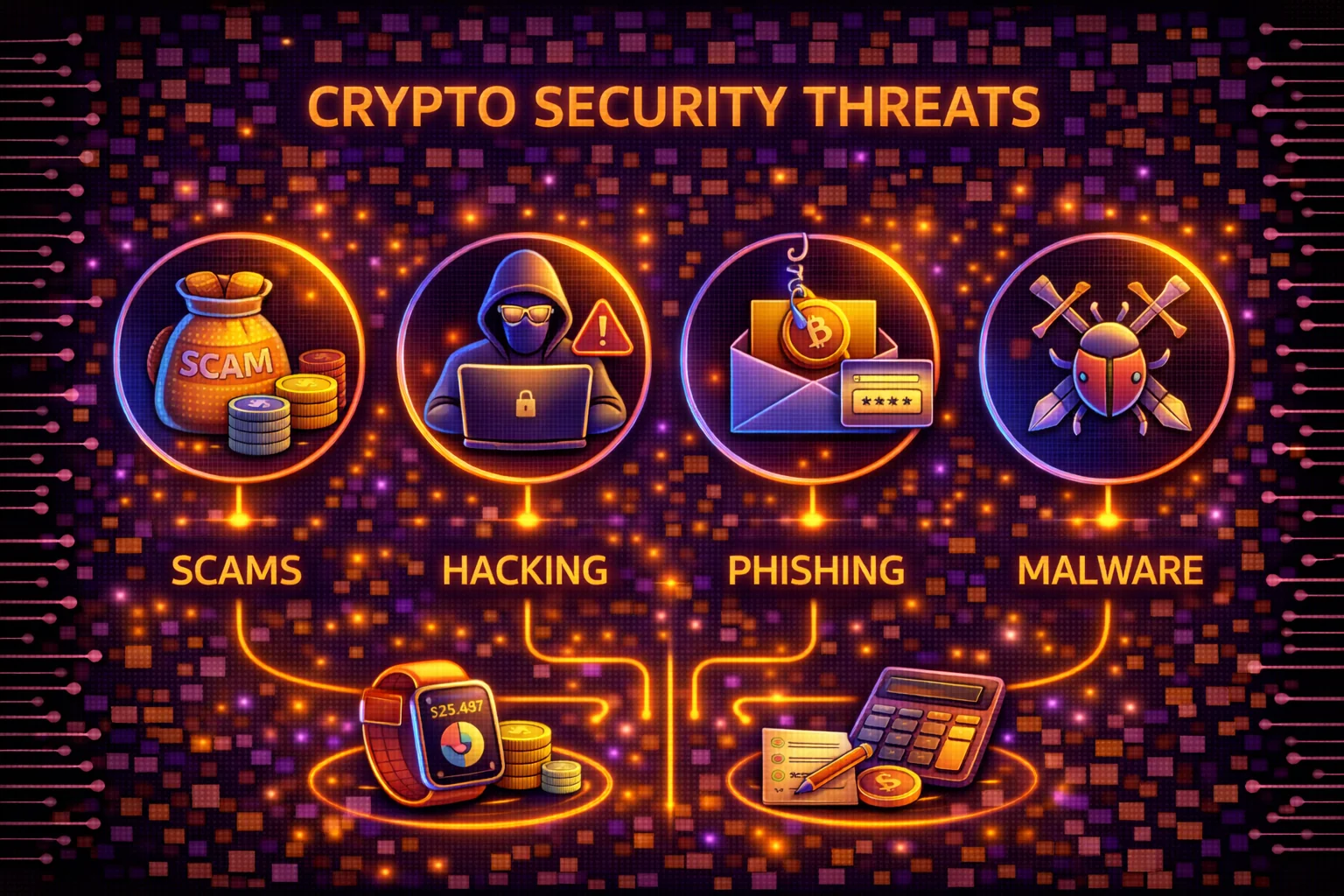
Common Threat Vectors
- Phishing Attacks: Fake websites stealing credentials
- Malware: Software designed to steal crypto
- Social Engineering: Manipulating people to reveal information
- Physical Theft: Stealing devices or seed phrases
- Exchange Hacks: centralised platforms being compromised
- Smart Contract Exploits: Vulnerabilities in DeFi protocols
Security Mindset
- Paranoid by Default: Assume everything is potentially compromised
- Verify Everything: Double-check addresses, URLs, and transactions
- minimise Attack Surface: Reduce exposure points
- defence in Depth: Multiple layers of security
- Regular Updates: Keep all software current
Wallet Security Best Practices
Your wallet choice and configuration significantly impact your security posture. Different wallet types offer different security trade-offs.
Hardware Wallets (Cold Storage)
Hardware wallets provide the highest security for long-term storage:
- Recommended Devices: Ledger Nano X, Trezor Model T, Tangem
- Offline Storage: Private keys never touch internet-connected devices
- Physical Confirmation: Transactions require physical button press
- Secure Element: Dedicated chip for cryptographic operations
- Backup Recovery: Seed phrase allows wallet restoration
Software Wallets (Hot Storage)
Software wallets offer convenience but require careful security practices:
- Reputable Options: MetaMask, Trust Wallet, Exodus
- Limited Amounts: Only keep small amounts for daily use
- Regular Updates: Keep wallet software current
- Strong Passwords: Use unique, complex passwords
- Biometric Locks: Enable fingerprint or face unlock
Multi-Signature Wallets
Multi-sig wallets require multiple signatures for transactions:
- Shared Control: Requires multiple parties to approve transactions
- Business Use: Ideal for organisations and partnerships
- Reduced Risk: No single point of failure
- Complexity: More complex setup and management
Wallet Security Configuration
- Strong PINs: Use 6+ digit PINs, avoid patterns
- Timeout Settings: Auto-lock after short periods
- Address Verification: Always verify receiving addresses
- Firmware Updates: Keep hardware wallet firmware current
- Secure Backup: Multiple copies of recovery information
Seed Phrase Protection
Your seed phrase is the master key to your cryptocurrency. Protecting it appropriately is absolutely critical for security.
Seed Phrase Fundamentals
- Master Key: Can restore access to all your crypto
- 12-24 Words: Usually 12 or 24 randomly generated words
- BIP39 Standard: standardised word list for compatibility
- Case Sensitive: Exact spelling and order matter
- Irreplaceable: Cannot be changed once generated
Physical Storage Methods
- Metal Plates: Fire and water resistant storage
- Paper Backup: Multiple copies in different locations
- Cryptosteel: specialised metal seed phrase storage
- Safe Deposit Box: Bank vault storage for high-value holdings
- Home Safe: Fire-resistant safe for convenient access
What NOT to Do
- Digital Storage: Never store seed phrases digitally
- Cloud Services: Avoid Google Drive, iCloud, Dropbox
- Email/Messages: Never send via email or messaging apps
- Photos: Don't take pictures of seed phrases
- Sharing: Never share with anyone, including family
Advanced Seed Phrase Security
- Passphrase Protection: Add 25th word for extra security
- Shamir's Secret Sharing: Split seed into multiple parts
- Geographic Distribution: Store copies in different locations
- Inheritance Planning: Secure access for heirs
- Regular Verification: Periodically test recovery process
Exchange Security Practices
Whilst exchanges are convenient for trading, they present significant security risks. Follow these practices to minimise exposure.
Choosing Secure Exchanges
- Reputation: Use established exchanges with good track records
- Regulation: Prefer regulated exchanges in stable jurisdictions
- Security Features: Look for advanced security options
- Insurance: Some exchanges offer deposit insurance
- Transparency: Regular security audits and reports
Account Security Configuration
- Two-Factor Authentication: Use authenticator apps, not SMS
- Unique Passwords: Never reuse passwords
- Withdrawal Whitelisting: Restrict withdrawals to known addresses
- API Security: Limit API permissions and use IP restrictions
- Email Verification: Require email confirmation for changes
Trading Security Practices
- Minimal Holdings: Keep only trading amounts on exchanges
- Regular Withdrawals: Move profits to personal wallets
- Session Management: Log out after trading sessions
- Activity Monitoring: Regularly check login history
- Suspicious Activity: Report unusual account activity immediately
Recommended Secure Exchanges
Scam Prevention and Recognition
Cryptocurrency scams are sophisticated and constantly evolving. Learn to recognise and avoid common scam tactics.
Common Scam Types
Phishing Attacks
- Fake Websites: Copies of legitimate sites to steal credentials
- Email Phishing: Fraudulent emails requesting sensitive information
- Social Media: Fake support accounts on Twitter, Telegram
- URL Spoofing: Similar-looking domains to trick users
Investment Scams
- Ponzi Schemes: Unsustainable high-return promises
- Fake ICOs: Fraudulent token sales
- Pump and Dump: Artificial price manipulation
- Celebrity Endorsements: Fake celebrity crypto promotions
Technical Scams
- Fake Wallets: Malicious wallet apps that steal funds
- Clipboard Malware: Changes copied addresses
- Fake Airdrops: Requests for private keys or payments
- Smart Contract Exploits: Malicious DeFi contracts
Red Flags to Watch For
- Guaranteed Returns: No investment guarantees profits
- Urgency Pressure: "Limited time" or "act now" tactics
- Unsolicited Contact: Unexpected investment opportunities
- Request for Keys: Legitimate services never ask for private keys
- Too Good to Be True: Unrealistic promises or returns
Verification Practices
- URL Verification: Always check website URLs carefully
- SSL Certificates: Ensure sites use HTTPS
- Official Channels: Verify information through official sources
- Community Research: Check forums and social media for warnings
- Independent Verification: Verify claims through multiple sources
Network and Internet Security
Your internet connection and network security significantly impact your cryptocurrency safety.
Secure Network Practices
- Avoid Public Wi-Fi: Never access crypto accounts on public networks
- VPN Usage: Use reputable VPNs for additional privacy
- Home Network Security: Secure your router and Wi-Fi
- Dedicated Devices: Consider crypto-only devices
- Network Monitoring: Monitor for suspicious activity
Browser Security
- Dedicated Browser: Use separate browser for crypto activities
- Extension Security: Only install necessary, verified extensions
- Regular Updates: Keep browsers updated
- Private Browsing: Use incognito mode for sensitive activities
- Bookmark Sites: Bookmark legitimate crypto sites
DNS Security
- Secure DNS: Use Cloudflare (1.1.1.1) or Quad9 (9.9.9.9)
- DNS over HTTPS: Enable encrypted DNS queries
- Router DNS: Configure secure DNS at router level
- DNS Monitoring: Watch for DNS hijacking attempts
Device Security
The security of your devices directly impacts the safety of your cryptocurrency.
Operating System Security
- Regular Updates: Install security patches promptly
- Antivirus Software: Use reputable antivirus solutions
- Firewall Protection: Enable and configure firewalls
- User Account Control: Use standard user accounts, not admin
- Disk Encryption: Encrypt hard drives and storage
Mobile Device Security
- Screen Locks: Use PINs, passwords, or biometrics
- App Store Only: Download apps from official stores
- Permission Management: Review and limit app permissions
- Remote Wipe: Enable remote device wiping
- Backup Encryption: Encrypt device backups
Physical Security
- Device Locks: Always lock devices when not in use
- Shoulder Surfing: Be aware of people watching screens
- Secure Storage: Store devices securely when not in use
- Travel Security: Extra precautions when travelling
- Disposal Security: Properly wipe devices before disposal
DeFi Security Practices
Decentralised Finance introduces unique security challenges requiring specialised knowledge and practices.
Smart Contract Security
- Audit Verification: Only use audited protocols
- Code Review: Understand contract functionality
- Time Locks: Prefer protocols with time-locked upgrades
- Bug Bounties: Look for active bug bounty programs
- Community Reputation: Research protocol reputation
Transaction Security
- Gas Price Verification: Check gas prices before transactions
- Slippage Settings: Set appropriate slippage tolerance
- Transaction Simulation: Use tools to simulate transactions
- Address Verification: Double-check all addresses
- Approval Management: Regularly revoke unused approvals
DeFi-Specific Risks
- Impermanent Loss: Understand liquidity provision risks
- Flash Loan Attacks: Be aware of protocol vulnerabilities
- Governance Risks: Understand token governance implications
- Oracle Manipulation: Price feed security concerns
- Composability Risks: Risks from protocol interactions
Backup and Recovery Planning
Proper backup and recovery planning ensures you can regain access to your cryptocurrency even in worst-case scenarios.
Backup Strategy
- Multiple Copies: Create several backup copies
- Geographic Distribution: Store backups in different locations
- Different Media: Use various storage methods
- Regular Testing: Periodically test recovery procedures
- Update Backups: Keep backups current with changes
Recovery Planning
- Recovery Procedures: Document step-by-step recovery
- Emergency Contacts: List of important contacts and services
- Asset Inventory: Complete list of all crypto holdings
- Access Instructions: Clear instructions for family/heirs
- Legal Documentation: Include crypto in estate planning
Inheritance Planning
- Will Updates: Include crypto assets in your will
- Trustee Education: Educate trustees about crypto
- Secure Instructions: Provide secure access instructions
- Professional Help: Consult crypto-aware estate lawyers
- Regular Reviews: Update plans as holdings change
Essential Security Tools and Software
The right tools can significantly enhance your cryptocurrency security posture. Here are essential tools every crypto investor should consider.
Password Management
Recommended Password Managers
- 1Password: Excellent security features, crypto-friendly
- Bitwarden: Open-source, affordable option
- KeePass: Offline, self-hosted solution
- Dashlane: User-friendly with VPN included
Password Best Practices
- Unique Passwords: Different password for every service
- Complex Generation: Use random, long passwords (20+ characters)
- Regular Updates: Change passwords periodically
- Secure Storage: Never store passwords in browsers or plain text
- Master Password: Use strong, memorable master password
Two-Factor Authentication Tools
Authenticator Apps
- Authy: Cloud backup, multi-device sync
- Google Authenticator: Simple, widely supported
- Microsoft Authenticator: Push notifications, backup
- 1Password: Integrated with password manager
Hardware Security Keys
- YubiKey 5 Series: USB-A, USB-C, NFC options
- Titan Security Key: Google's hardware key
- SoloKeys: Open-source alternative
- Nitrokey: Privacy-focused German option
Network Security Tools
VPN Services
- NordVPN: Strong encryption, no-logs policy
- ExpressVPN: Fast speeds, wide server network
- Mullvad: Anonymous accounts, privacy-focused
- ProtonVPN: Swiss privacy laws, free tier available
DNS Security
- Cloudflare (1.1.1.1): Fast, privacy-focused DNS
- Quad9 (9.9.9.9): Malware blocking DNS
- OpenDNS: Customizable filtering options
- NextDNS: Advanced privacy and security features
Security Monitoring Tools
Blockchain Monitoring
- Etherscan: Ethereum transaction monitoring
- Blockchain.info: Bitcoin address tracking
- Zapper: DeFi portfolio monitoring
- DeBank: Multi-chain portfolio tracking
Security Scanners
- MythX: Smart contract security analysis
- Slither: Solidity static analysis
- Token Sniffer: Token contract analysis
- De.Fi Scanner: DeFi security checker
Security Incident Response
Despite best efforts, security incidents can occur. Having a prepared response plan can minimise damage and help recover from breaches.
Immediate Response Actions
Suspected Wallet Compromise
- Stop All Activity: Immediately cease all transactions
- Assess Damage: Check all wallet balances and recent transactions
- Secure Remaining Funds: Transfer to new, secure wallet immediately
- Change Credentials: Update all related passwords and 2FA
- Revoke Approvals: Cancel all smart contract approvals
- Document Evidence: Screenshot transactions and wallet states
- Report Incident: Contact relevant exchanges and authorities
Exchange Account Breach
- Contact Support: Immediately contact exchange support
- Freeze Account: Request account freeze if possible
- Change Passwords: Update all credentials immediately
- Review Activity: Check all recent login and trading activity
- Enable Restrictions: Add withdrawal restrictions and whitelisting
- Monitor Closely: Watch account for several weeks
Investigation and Analysis
Determining Attack Vector
- Timeline Analysis: Reconstruct sequence of events
- Device Forensics: Scan devices for malware
- Network Analysis: Check for network intrusions
- Social Engineering: Review recent communications
- Physical Security: Assess physical access to devices
Damage Assessment
- Financial Losses: Calculate total value lost
- Data Exposure: Determine what information was compromised
- Identity Theft Risk: Assess personal information exposure
- Ongoing Risks: Identify continuing vulnerabilities
Recovery and Prevention
System Recovery
- Clean Installation: Reinstall operating systems if needed
- New Wallets: Generate fresh wallets with new seed phrases
- Updated Security: Implement additional security measures
- Monitoring Setup: Establish ongoing monitoring systems
Prevention Improvements
- Security Audit: Comprehensive review of all practices
- Process Updates: Improve security procedures
- Training: Learn from the incident
- Tool Upgrades: Implement better security tools
Security Checklists and Procedures
Use these checklists to ensure you consistently follow comprehensive security practices.
Daily Security Checklist
- Device Locks: ✓ All devices locked when not in use
- Secure Connections: ✓ Only use secure, trusted networks
- URL Verification: ✓ Double-check all website URLs
- Transaction Verification: ✓ Verify all addresses before sending
- Logout Procedures: ✓ Log out of all crypto services
- Suspicious Activity: ✓ Monitor for unusual account activity
Weekly Security Checklist
- Software Updates: ✓ Update all crypto-related software
- Account Reviews: ✓ Review all exchange and wallet activity
- Backup Verification: ✓ Verify backup integrity
- Security News: ✓ Check for new security threats
- Password Health: ✓ Review password manager alerts
Monthly Security Checklist
- Full Security Audit: ✓ Comprehensive security review
- Approval Management: ✓ Revoke unused smart contract approvals
- Device Security: ✓ Full antivirus scans on all devices
- Network Security: ✓ Router firmware and security updates
- Backup Testing: ✓ Test wallet recovery procedures
- Documentation Updates: ✓ Update security documentation
Annual Security Checklist
- Complete Security Overhaul: ✓ Review entire security posture
- Hardware Replacement: ✓ Consider hardware wallet upgrades
- Inheritance Planning: ✓ Update estate planning documents
- Professional Review: ✓ Consider security consultant review
- Insurance Review: ✓ Evaluate crypto insurance options
New Wallet Setup Checklist
- Secure Environment: ✓ Clean, offline environment for setup
- Genuine Hardware: ✓ Verify hardware wallet authenticity
- Firmware Update: ✓ Update to latest firmware
- Seed Generation: ✓ Generate seed phrase securely
- Seed Backup: ✓ Create multiple physical backups
- Seed Verification: ✓ Verify seed phrase accuracy
- PIN Setup: ✓ Set strong PIN code
- Test Transaction: ✓ Send small test amount
- Recovery Test: ✓ Test wallet recovery process
- Secure Storage: ✓ Store seed phrases securely
Real-World Security Case Studies
Learning from real security incidents helps understand how attacks happen and how to prevent them.
Case Study 1: Phishing Attack
Scenario: User receives email claiming to be from their exchange about suspicious activity
Attack Sequence
- Initial Contact: Fraudulent email with urgent security warning
- Fake Website: Link leads to convincing fake exchange site
- Credential Theft: User enters login credentials
- 2FA Bypass: Real-time phishing captures 2FA codes
- Account Takeover: Attacker gains full account access
- Fund Theft: All funds withdrawn to attacker's wallet
Prevention Measures
- URL Verification: Always type exchange URLs manually
- Bookmark Sites: Use bookmarks for legitimate sites
- Email scepticism: Be suspicious of urgent security emails
- Direct Contact: Contact exchange directly to verify
- Hardware 2FA: Use hardware keys instead of SMS/apps
Case Study 2: Malware Attack
Scenario: User downloads fake wallet software containing malware
Attack Sequence
- Fake Software: Malicious wallet app on unofficial site
- Installation: User installs compromised software
- Seed Theft: Malware captures seed phrase during setup
- Clipboard Hijacking: Malware changes copied addresses
- Silent Monitoring: Attacker monitors wallet activity
- Fund Drainage: Funds stolen when wallet reaches threshold
Prevention Measures
- Official Sources: Only download from official websites
- Signature Verification: Verify software signatures
- Antivirus Scanning: Scan all downloads
- Address Verification: Always double-check addresses
- Hardware Wallets: Use hardware wallets for large amounts
Case Study 3: Social Engineering
Scenario: Attacker impersonates exchange support to gain access
Attack Sequence
- Information Gathering: Attacker researches victim online
- Initial Contact: Phone call claiming to be exchange support
- Urgency Creation: Claims account will be frozen
- Information Extraction: Requests verification information
- Credential Theft: Tricks user into revealing credentials
- Account Access: Uses information to access account
Prevention Measures
- Verification Protocol: Always verify caller identity
- No Phone Support: Most exchanges don't call users
- Information Protection: Never share sensitive information
- Callback Verification: Call official number to verify
- sceptical Mindset: Be suspicious of urgent requests
Case Study 4: Smart Contract Exploit
Scenario: User interacts with malicious DeFi contract
Attack Sequence
- Fake Protocol: Attacker creates fake DeFi protocol
- High Yields: Advertises unrealistic returns
- Social Proof: Uses fake reviews and endorsements
- Token Approval: User approves unlimited token spending
- Fund Drainage: Contract drains all approved tokens
- Exit Scam: Attacker disappears with funds
Prevention Measures
- Due Diligence: Research protocols thoroughly
- Audit Verification: Only use audited contracts
- Limited Approvals: Approve only needed amounts
- Realistic Expectations: Be sceptical of high yields
- Community Research: Check community feedback
Advanced Security Techniques
For users with significant holdings or advanced security requirements, these techniques provide an additional layer of protection.
Air-Gapped Systems
Complete Air-Gap Setup
- Dedicated Computer: Never-connected device for key operations
- Operating System: Clean OS installation without network drivers
- Physical Isolation: Remove Wi-Fi cards and Ethernet ports
- Faraday Cage: RF-shielded environment for ultimate security
Air-Gap Procedures
- Key Generation: Generate private keys offline
- Transaction Signing: Sign transactions offline
- QR Code Transfer: Use QR codes to transfer data
- USB Isolation: Use dedicated USB drives for transfers
Multi-Signature Security
Multi-Sig Configuration
- 2-of-3 Setup: Require 2 signatures from 3 possible keys
- Geographic Distribution: Keys stored in different locations
- Device Diversity: Different hardware wallet brands
- Backup Strategies: Multiple recovery options
Multi-Sig Benefits
- No Single Point of Failure: Multiple keys required
- Theft Protection: Attacker needs multiple keys
- Loss Protection: Can lose one key without losing funds
- Shared Control: Multiple parties can control funds
Advanced Authentication
Hardware Security Keys
- FIDO2/WebAuthn: Modern authentication standard with cryptographic attestation
- Phishing Resistance: Cannot be phished remotely through domain binding
- Multiple Keys: Use backup keys for redundancy across devices
- Biometric Integration: Combine with biometrics for enhanced verification protocols
Biometric Security
- Fingerprint Scanners: Hardware-based fingerprint authentication
- Facial Recognition: 3D facial recognition systems
- Iris Scanning: High-security iris recognition
- Voice Recognition: Voice pattern authentication
Operational Security (OpSec)
Privacy Protection
- Compartmentalization: Separate identities for different activities
- Anonymous Communications: Use Tor and encrypted messaging
- Financial Privacy: minimise linking of crypto addresses
- Social Media Caution: Avoid discussing holdings publicly
Physical Security
- Secure Locations: Multiple secure storage locations
- Surveillance Systems: Monitor access to storage areas
- Access Controls: Biometric locks and access logs
- Decoy Systems: Fake wallets with small amounts
Enterprise-Grade Security
Institutional Practices
- Custody Solutions: Professional custody services
- Insurance Coverage: Comprehensive crypto insurance
- Compliance Programs: Regulatory compliance frameworks
- Audit Procedures: Regular security audits
Team Security
- Role-Based Access: Limit access based on roles
- Approval Workflows: Multi-person approval processes
- Security Training: Regular team security education
- Incident Response: Formal incident response procedures
Advanced Security Implementation and Professional Practices
Enterprise-Grade Multi-Signature Security Architecture
Professional cryptocurrency security requires sophisticated multi-signature implementations that distribute key control across multiple parties, devices, and geographic locations to eliminate single points of failure while maintaining operational efficiency. Advanced multi-sig configurations include time-locked transactions, hierarchical access controls, and sophisticated key management protocols that provide institutional-level security for high-value cryptocurrency holdings through systematic risk distribution and comprehensive access management.
Enterprise multi-signature systems encompass hardware security modules, geographically distributed key storage, and comprehensive audit trails that ensure maximum security while maintaining operational flexibility for complex organisational structures. Professional implementations include automated compliance monitoring, sophisticated access controls, and comprehensive backup procedures that protect against both external threats and internal risks through systematic security architecture and operational procedures.
Advanced Threat Detection and Monitoring Systems
Professional cryptocurrency security requires comprehensive monitoring systems that detect suspicious activities, unauthorised access attempts, and potential security breaches through automated analysis and real-time alerting mechanisms. Advanced threat detection includes behavioral analysis, transaction pattern monitoring, and sophisticated anomaly detection that identifies potential security threats before they can compromise cryptocurrency holdings through systematic monitoring and analysis capabilities.
Sophisticated monitoring systems encompass network traffic analysis, device fingerprinting, and comprehensive logging that provides complete visibility into all cryptocurrency-related activities while maintaining privacy and operational efficiency. Professional monitoring includes automated incident response, comprehensive forensic capabilities, and sophisticated threat intelligence integration that enables proactive security management through advanced technological implementation and systematic security procedures.
Comprehensive Backup and Recovery Strategies
Professional cryptocurrency backup strategies require sophisticated redundancy systems that protect against data loss, hardware failure, and catastrophic events while maintaining security and accessibility of backup materials. Advanced backup implementations include geographically distributed storage, encrypted backup systems, and comprehensive recovery procedures that ensure cryptocurrency access under various failure scenarios through systematic redundancy and comprehensive disaster recovery planning.
Enterprise backup systems encompass automated backup verification, comprehensive testing procedures, and sophisticated recovery protocols that ensure reliable access to cryptocurrency holdings under emergency conditions while maintaining security standards. Professional backup strategies include multi-format storage, comprehensive documentation, and systematic testing procedures that validate backup integrity and recovery capabilities through regular verification and optimisation processes.
Advanced Authentication and Access Control Systems
Professional cryptocurrency access control requires sophisticated authentication systems that combine multiple factors, biometric verification, and advanced security protocols to ensure authorized access whilstpreventing unauthorised cryptocurrency transactions. Advanced authentication includes hardware tokens, biometric systems, and sophisticated behavioral analysis that provides comprehensive access control while maintaining user convenience and operational efficiency through systematic security implementation.
Enterprise access control systems encompass role-based permissions, time-based access restrictions, and comprehensive audit capabilities that ensure appropriate access controls while maintaining operational flexibility for complex organisational requirements. Professional authentication includes advanced cryptographic protocols, sophisticated key management, and comprehensive monitoring systems that provide institutional-level access security through systematic implementation and continuous optimisation processes.
Operational Security and Incident Response Procedures
Professional cryptocurrency operations require comprehensive operational security procedures that address human factors, process vulnerabilities, and systematic risks through structured protocols and continuous training programs. Advanced operational security includes comprehensive threat modelling, systematic risk assessment, and sophisticated incident response procedures that ensure appropriate security posture while maintaining operational efficiency through systematic security management and continuous improvement processes.
Enterprise operational security encompasses comprehensive training programs, systematic security audits, and sophisticated incident response capabilities that ensure organisational resilience against various security threats while maintaining operational continuity. Professional operational procedures include comprehensive documentation, systematic testing, and continuous improvement processes that enhance security effectiveness while maintaining operational efficiency through systematic security management and optimisation methodologies.
Regulatory Compliance and Legal Protection Strategies
Professional cryptocurrency security requires comprehensive compliance frameworks that address regulatory requirements, legal obligations, and fiduciary responsibilities while maintaining security effectiveness and operational efficiency. Advanced compliance includes comprehensive documentation, systematic reporting, and sophisticated audit capabilities that ensure regulatory compliance while maintaining security standards through systematic compliance management and continuous monitoring processes.
Enterprise compliance systems encompass automated reporting, comprehensive audit trails, and sophisticated legal protection mechanisms that ensure appropriate regulatory compliance while maintaining operational flexibility and security effectiveness. Professional compliance includes comprehensive risk assessment, systematic documentation, and continuous monitoring systems that provide legal protection while maintaining security standards through systematic compliance implementation and optimisation processes.
Emerging Technology Integration and Future-Proofing
Professional cryptocurrency security requires continuous adaptation to emerging technologies, evolving threats, and changing regulatory landscapes through systematic technology evaluation and strategic implementation planning. Advanced security systems include quantum-resistant cryptography, advanced biometric systems, and sophisticated artificial intelligence integration that provide future-proof security while maintaining compatibility with existing systems through systematic technology adoption and optimisation processes.
Enterprise technology integration encompasses comprehensive evaluation procedures, systematic implementation planning, and sophisticated testing protocols that ensure successful adoption of emerging security technologies while maintaining operational continuity and security effectiveness. Professional future-proofing includes comprehensive research, systematic planning, and continuous optimisation that ensures long-term security effectiveness while adapting to changing technological and regulatory environments through systematic innovation and strategic implementation processes.
Market Dynamics and Economic Factors
Regulatory Environment Evolution
Security best practices evolve alongside emerging threats in the cryptocurrency ecosystem. Hardware wallet adoption increases while multi-signature solutions become standard for institutional and high-net-worth individual protection strategies.
Institutional Adoption Impact
Financial institutions implementing cryptocurrency security protocols establish industry standards that benefit individual users through improved wallet technologies and security practices. Institutional security requirements drive innovation in multi-signature solutions, hardware security modules, and comprehensive audit procedures.
Technology Innovation Cycles
Security technology advancement focuses on user-friendly implementations of advanced cryptographic techniques, biometric authentication, and seamless backup solutions. These developments make sophisticated security measures accessible to everyday users without compromising convenience or usability.
Technical Implementation and Advanced Strategies
Implementing advanced security measures requires comprehensive understanding of cryptographic principles, threat vectors, and protective technologies. Security-conscious users can leverage multi-layered approaches to safeguard their cryptocurrency assets against evolving threats and sophisticated attacks.
Protocol-Level Considerations
Security protocols differ across blockchain networks, with each implementing unique cryptographic standards, key management systems, and vulnerability mitigation strategies. Bitcoin employs ECDSA signatures and hierarchical deterministic wallets, whilstEthereum supports multiple signature schemes and smart contract security patterns that require different protective approaches.
Smart Contract Integration
Yield optimisation Techniques
Conclusion
Cryptocurrency security in 2025 requires a comprehensive, multi-layered approach. This addresses the unique challenges of self-custodial digital assets. The practices outlined in this guide provide a robust framework. They protect your cryptocurrency investments against the full spectrum of threats. These are present in today's digital landscape.
The fundamental principle of cryptocurrency security remains unchanged. You are your own bank. With that freedom comes the full responsibility for protecting your assets. Unlike traditional financial systems with built-in protections and insurance, cryptocurrency security depends entirely on your knowledge. Preparation and consistent application of best practices are essential.
Advanced security implementation requires understanding the interconnected nature of cryptocurrency threats. These range from technical vulnerabilities to social engineering attacks. Professional cryptocurrency users develop comprehensive security protocols. These address hardware security, software protection, operational security, and emergency response procedures. These protocols evolve continuously. New threats emerge and security technologies advance.
The cryptocurrency security landscape continues evolving. Institutional adoption, regulatory developments, and technological innovations drive this evolution. Multi-signature wallets, hardware security modules, and decentralised identity solutions represent the cutting edge. Early adoption of these advanced security measures provides significant advantages. This protects substantial cryptocurrency holdings.
Regular security audits, threat assessment updates, and continuous education remain essential components. The most secure cryptocurrency users maintain detailed security documentation. They conduct periodic security reviews. They stay informed about emerging threats and protective technologies. This proactive approach ensures long-term asset protection. This works in an evolving threat environment.
Emergency response planning forms a critical component of comprehensive cryptocurrency security strategies. Professional cryptocurrency users develop detailed incident response procedures. These address various compromise scenarios. These include wallet breaches, exchange hacks, and social engineering attacks. These procedures include immediate containment measures. Asset recovery strategies are essential. Post-incident security improvements prevent similar future compromises. They strengthen overall security posture. This is through systematic vulnerability assessment. Comprehensive remediation processes address both technical and operational security gaps.
Hardware wallets represent the gold standard for cryptocurrency storage. They provide air-gapped security. This isolates your private keys from internet-connected devices. However, hardware wallet security is only as strong as your seed phrase protection. Operational security practices matter. The combination of hardware wallet storage with proper seed phrase backup creates a robust defence. Secure operational procedures are essential. This protects against most attack vectors.
The evolution of threats in the cryptocurrency space has been matched by improvements. Security tools and practices have advanced. Multi-signature wallets, time-locked transactions, and advanced authentication methods provide additional layers of protection. These benefit users willing to invest the time to implement them properly.
Social engineering and phishing attacks remain amongst the most effective methods. Attackers use these to compromise cryptocurrency holdings. No amount of technical security can protect against users voluntarily providing their seed phrases or private keys to malicious actors. Maintaining healthy scepticism is essential. Verifying all communications independently are crucial skills for cryptocurrency users.
The rise of decentralised finance has introduced new security considerations. These extend beyond simple wallet protection. Smart contract interactions, token approvals, and complex DeFi strategies require additional knowledge and caution. Understanding these risks is crucial. Implementing appropriate safeguards is essential for users participating in DeFi protocols.
Regular security audits of your cryptocurrency holdings and practices help identify potential vulnerabilities. This happens before they can be exploited. This includes reviewing wallet security, updating software, and rotating passwords. Reassessing your overall security posture is important. Threats and technologies evolve.
Ready to secure your crypto properly? Start with our Ledger hardware wallet review for the best security, or explore our hardware wallets comparison to find the perfect security solution.
The investment in proper security measures is minimal. This is compared to the potential losses from inadequate protection. The time spent learning and implementing these practices pays dividends. You gain peace of mind and actual security. Most security breaches result from basic mistakes. These could have been prevented with proper knowledge and preparation.
As the cryptocurrency ecosystem continues to mature, security practices must evolve. They must address new threats. They must take advantage of improved tools. Staying informed about emerging security threats and solutions is an ongoing responsibility. This applies to all cryptocurrency users, regardless of their experience level.
The future of cryptocurrency security looks promising. Continued improvements in hardware wallet technology are emerging. Better user interfaces for security tools are being developed. Increased awareness of security best practices is spreading throughout the community. However, the fundamental responsibility for security will always rest with individual users.
Remember that perfect security is impossible. However, following the practices outlined in this guide will significantly reduce your risk exposure. You maintain the benefits and convenience of cryptocurrency ownership. The goal is not to eliminate all risks. It is to manage them effectively. This preserves the revolutionary potential of decentralised digital assets.
By implementing these security practices consistently and staying informed about evolving threats and solutions, you can confidently participate in the cryptocurrency ecosystem while protecting your investments for the long term. Security is not a destination but an ongoing journey that requires continuous attention and adaptation.
Sources & References
Frequently Asked Questions
- What is the most important crypto security practice?
- Use a hardware wallet for long-term storage and keep your seed phrase offline in multiple secure locations. Never share your private keys or seed phrase with anyone, and always verify addresses before sending transactions.
- Should I use hot wallets or cold wallets?
- Use cold wallets (hardware wallets) for long-term storage of large amounts. Hot wallets are suitable for small quantities required for daily transactions, but they require additional security measures, such as strong passwords and two-factor authentication (2FA).
- How can I protect myself from crypto scams?
- Verify all URLs before entering credentials, never click suspicious links, avoid too-good-to-be-true offers, always double-check recipient addresses before sending transactions, and never share private keys or seed phrases with anyone.
- Is it safe to store crypto on exchanges?
- Only keep small amounts on exchanges for trading. Use reputable exchanges with robust security measures, enable all available security features, and always withdraw larger amounts to your own wallet, where you control the private keys.
- How should I store my seed phrase?
- Store seed phrases offline only - never digitally. Use metal plates for fire/water resistance, keep multiple copies in different secure locations, and never take photos or store them in cloud services. Consider using a safe deposit box for high-value holdings.
- What should I do if I think my wallet is compromised?
- Immediately transfer all funds to a new, secure wallet with a fresh seed phrase. Change all related passwords, revoke any smart contract approvals, and investigate the circumstances of the compromise to prevent future incidents.
← Back to Crypto Investing Blog Index
Financial Disclaimer
This content is not financial advice. All information provided is for educational purposes only. Cryptocurrency investments carry significant investment risk, and past performance does not guarantee future results. Always do your own research and consult a qualified financial advisor before making investment decisions.