International Money Transfer Guide
Discover the most cost-effective and secure methods to send money internationally in 2025. Compare fees, currency rates, and transfer times across top money transfer services. This guide helps you choose wisely.
Introduction

The international money transfer landscape has transformed dramatically in 2025. Sending $1,000 from the UK to India through your high-street bank costs roughly $45-65 in fees plus a 3-4% exchange rate markup -- totalling $75-105 in real costs. The same transfer through Wise costs $7-9 with the mid-market exchange rate. Through Revolut (Premium), it costs nothing in fees with a 0.5% weekend markup. That is a difference of $70-100 on a single transfer, and for the 1.4 million UK residents who send money abroad regularly, these savings compound into thousands of pounds annually.
The global remittance market processes over $800 billion annually, and the average cost of sending $200 internationally has dropped from 7.3% in 2020 to approximately 4.1% in 2025. However, costs vary enormously by corridor. The UK-to-EU corridor is the cheapest (0.5-1.5% total cost via Wise or Revolut), whilst UK-to-Nigeria runs 4-7% and UK-to-Pakistan 5-8% through traditional providers. Digital services have cut these costs significantly, but you need to know which service works best for your specific route.
Your choice depends on four factors: the corridor (destination country), transfer amount, how urgently the recipient needs the money, and how they want to receive it (bank deposit, cash pickup, or mobile wallet). A $500 transfer to family in the Philippines has completely different optimal providers than a $15,000 property payment to Spain. This guide breaks down the real costs, speeds, and trade-offs for each scenario.
Expert Tip: Always compare the total cost including fees and exchange rate margins. A "zero fee" service like Remitly often hides 1-2% in the exchange rate markup, making Wise cheaper overall despite its visible $3-8 fee. For a $1,000 GBP-to-EUR transfer, the true cost breakdown is: Wise ($7.50 fee, mid-market rate, recipient gets approximately 913 EUR), Remitly ($3.99 fee, 1% rate markup, recipient gets approximately 906 EUR), bank wire ($25-45 fee, 3% rate markup, recipient gets approximately 868 EUR).
Speed comparison: Same-day delivery is available through Western Union and MoneyGram cash pickup (minutes), Revolut instant transfers between Revolut users (seconds), and Remitly Express (hours). Standard bank-to-bank transfers take 1-2 days via Wise and Remitly, 3-5 days via traditional bank wires. If your recipient needs cash within the hour, only Western Union and MoneyGram reliably deliver globally -- but you will pay 5-10% more for that speed.
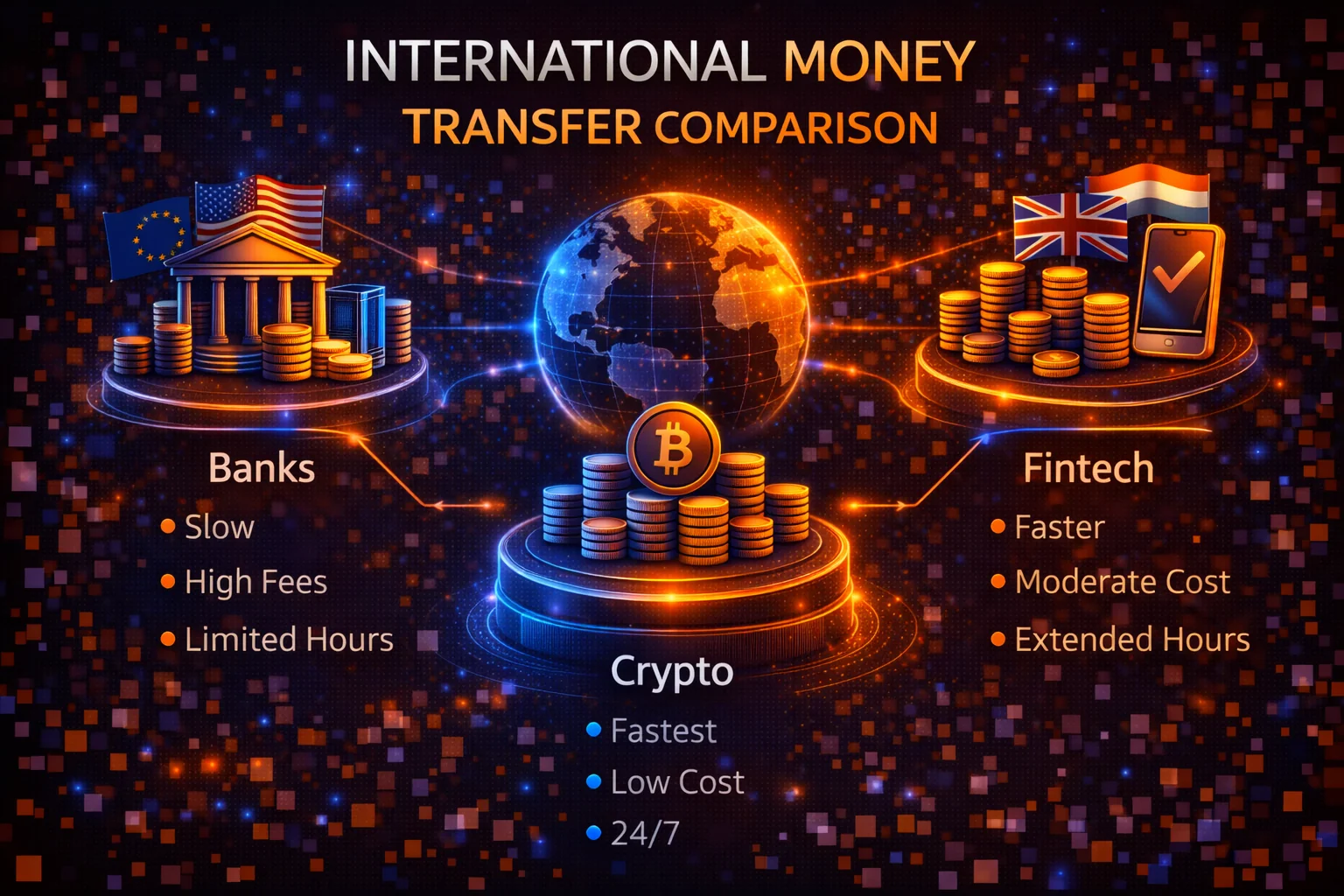
International Remittance Overview
International remittances in 2025 split into three clear tiers by cost and speed. Digital-first services (Wise, Revolut, Remitly) offer total costs of 0.5-3% with 1-2 day delivery. Traditional operators (Western Union, MoneyGram) charge 3-8% but provide instant cash pickup at 500,000+ locations worldwide. Banks remain the most expensive option at 4-8% total cost with 3-5 day delivery -- yet they still process roughly 40% of cross-border payments due to inertia and trust.
Quick Fact: The average cost of sending $200 internationally has dropped from 7.3% to 4.1% since 2020. The cheapest corridors (US-Mexico, UK-EU) now cost under 1% through digital services. The most expensive (Sub-Saharan Africa corridors) still average 7-9%, making provider selection critical for these routes.
Key Factors in Cross-Border Payments
- Transfer Fees: Fixed fees charged by the service provider
- Exchange Rate Markup: Hidden costs in currency conversion
- Transfer Speed: Time from initiation to recipient receiving funds
- Transfer Limits: Minimum and maximum amounts per transaction
- Delivery Methods: Bank deposit, cash pickup, mobile wallet
- Regulatory Compliance: Licensing and consumer protection
Types of Payment Services
- Digital Payment Services: App-based platforms with competitive rates
- Traditional Remittance Operators: Western Union, MoneyGram
- Bank Wire Transfers: Direct bank-to-bank transfers
- Online Banking: International transfers through your bank
- Cryptocurrency: Digital currency transfers (where legal)
Pro Tip: Always calculate the total cost carefully. A fee-free service might have poor exchange rates. The real cost is in the rate markup. Slippage affects large transfers. Liquidity pools offer better rates.
Advanced International Transfer Strategies and optimisation
Multi-Corridor Transfer optimisation
Different corridors have wildly different cost structures, and choosing the wrong provider for your route wastes money. Here are the most common UK corridors with specific provider recommendations based on our testing:
- UK to EU (GBP to EUR): Wise charges 0.35-0.45% total. Revolut Premium offers fee-free transfers with mid-market rates on weekdays (0.5% markup on weekends). For transfers over $5,000, both beat banks by $100+.
- UK to US (GBP to USD): Wise charges 0.5-0.6%. OFX offers better rates on transfers above $10,000. Bank wires cost 3-4% total -- avoid them.
- UK to India (GBP to INR): Remitly often beats Wise by 0.3-0.5% on this corridor due to promotional rates. Western Union Online is competitive for cash pickup delivery. Total cost ranges from 1.5% (Remitly) to 6% (high-street bank).
- UK to Nigeria (GBP to NGN): WorldRemit and Remitly dominate. Costs run 2-4% digitally versus 7-10% through traditional operators. Mobile money delivery through MTN or Airtel is often faster than bank deposits.
- UK to Philippines (GBP to PHP): Remitly Express delivers in minutes for $3.99 flat fee. Wise takes 1-2 days but saves 0.5-1% on the exchange rate.
Expert Strategy: For transfers over $5,000, monitor exchange rates for 2-3 days using Wise or XE rate alerts. GBP/EUR can fluctuate 1-2% within a week, which on a $10,000 transfer means $100-200 difference. For regular monthly transfers, Wise's auto-transfer feature locks in your preferred rate automatically.
Corporate and Business Transfer Solutions
Businesses sending regular international payments need different tools from personal users. The key difference is volume: a company paying 50 overseas contractors monthly cannot process each transfer individually through Wise's personal interface. Here are the main business-grade options with their pricing:
- Wise Business: 0.4-1.5% per transfer depending on corridor, batch payments for up to 1,000 recipients, API integration for automated payroll, multi-currency accounts in 10+ currencies. Free to open, no monthly fee.
- Payoneer: 2% receiving fee, 0.5% withdrawal fee. Best for freelancers and marketplace sellers receiving payments from platforms like Amazon, Fiverr, or Upwork. Supports 150+ currencies.
- OFX: No transfer fees on amounts over $10,000, competitive exchange rates (0.4-0.8% spread). Dedicated dealer for large business transfers. Best for property transactions and large invoices.
- SWIFT (via banks): $25-50 per transfer, 2-4% rate markup, 3-5 business days. Still necessary for certain regulated industries and jurisdictions that require bank-to-bank transfers.
Cost comparison for 50 monthly transfers of $2,000 each: Wise Business costs roughly $800-1,500/month total. A traditional bank costs $2,500-4,000/month in fees and rate markups. That is $12,000-30,000 in annual savings by switching to a digital business platform.
Cryptocurrency and Stablecoin Transfers
Crypto-based transfers shine on expensive corridors where traditional providers charge 5-10%. Sending USDC from the UK to Nigeria costs roughly $0.50-2.00 in network fees on Ethereum Layer 2 (Arbitrum or Base) and arrives in under 5 minutes. The recipient converts USDC to naira through a local exchange or peer-to-peer platform like Binance P2P. Total cost: approximately 1-2% including conversion, versus 7-10% through traditional remittance operators.
However, crypto transfers have real limitations you should understand before using them. Your recipient needs a crypto wallet and access to a local exchange or P2P platform to convert to local currency -- this works well in Nigeria, the Philippines, and India but poorly in rural areas of most countries. Regulatory status varies: the UK's FCA regulates crypto exchanges but not peer-to-peer transfers. Tax reporting obligations apply to crypto transactions in most jurisdictions, adding compliance complexity.
The practical approach for most people: use stablecoins (USDC or USDT) for corridors where traditional services charge more than 4%, and stick with Wise or Remitly for well-served corridors like UK-EU or UK-US where crypto offers no meaningful cost advantage. If you do use crypto, send stablecoins rather than Bitcoin or Ethereum -- the 2-5% price volatility during a Bitcoin transfer can wipe out any fee savings.
Risk Management and Security optimisation
Advanced risk management for international transfers involves implementing multi-layered security protocols, diversifying transfer methods, and maintaining comprehensive transaction monitoring to protect against fraud, operational failures, and regulatory changes. Professional users develop contingency plans that include alternative transfer routes and backup providers to ensure continuity during service disruptions.
Currency risk management strategies include hedging techniques, timing optimisation, and diversification approaches that minimise exposure to adverse exchange rate movements. These strategies are particularly important for regular transfers or large amounts where currency fluctuations can significantly impact total costs and recipient value.
Operational risk mitigation includes provider diversification, transaction limits, and monitoring systems that detect unusual activity or service degradation. Professional users maintain relationships with multiple providers and implement automated monitoring systems that provide early warning of potential issues affecting transfer operations.
Compliance risk management involves staying current with regulatory changes, maintaining proper documentation, and implementing procedures that ensure continued access to transfer services. This includes understanding beneficial ownership requirements, source of funds documentation, and ongoing monitoring obligations that affect international transfer activities.
Emerging Technologies and Innovation in International Transfers
Artificial Intelligence and Machine Learning Applications
AI's most practical impact on money transfers is fraud detection and pricing optimisation. Wise's machine learning system analyses transaction patterns to detect suspicious activity 10x faster than rule-based systems whilst reducing false positives by approximately 60% -- meaning fewer legitimate transfers get delayed for manual review. For you as a user, this means faster processing times and fewer frozen transactions.
AI-powered exchange rate prediction helps some services offer better rates. Remitly uses machine learning to forecast currency movements and optimise its rate offerings for popular corridors. The practical benefit: marginally better exchange rates during volatile periods, though the difference is typically 0.1-0.3% -- noticeable on large transfers but insignificant on small ones.
Blockchain Technology and Distributed Ledger Systems
Blockchain enables transparent transaction records. These records are immutable permanently. This enhances security for international transfers. It reduces reliance on traditional banking. Distributed ledgers provide transparency. Consensus mechanisms ensure security.
Smart contracts automate transfer conditions effectively. They handle compliance checking automatically. This reduces costs significantly. Processing times decrease dramatically. Programmable money enables automation. Conditional payments execute automatically.
Cross-border payment networks bypass traditional banking completely. They're particularly valuable for underserved markets. Traditional banking infrastructure is limited there. Decentralised networks provide access. Peer-to-peer transfers work globally.
Real-World Example: JPMorgan's JPM Coin processes transactions daily. It handles over $1 billion in volume. This proves blockchain's enterprise viability clearly. Central bank digital currencies expand adoption. Institutional adoption grows rapidly.
Mobile Technology and Digital Wallet Integration
Mobile-first solutions leverage smartphone ubiquity effectively. They provide accessible transfer services easily. Minimal infrastructure is required. Biometric authentication enhances security significantly. Mobile wallets store funds securely. QR codes enable easy transfers. Use mobile solutions to get convenient access that works welleverywhere.
Digital wallet integration enables seamless transfers. Cross-border transfers work smoothly. Users can send money easily. Different payment ecosystems connect. This bypasses traditional banking intermediaries. Interoperability protocols connect wallets. Cross-chain bridges enable transfers.
Offline capabilities address connectivity challenges effectively. SMS codes enable transfers easily. USSD codes work with limited internet. This serves underserved markets well. Feature phones support basic transfers. Mesh networks provide connectivity.
Market Insight: Mobile money accounts grew significantly in 2024. They grew by 18% globally. Over 1.6 billion accounts are registered worldwide. Digital adoption accelerates rapidly; Fintech penetration increases.
Biometric authentication integration enhances security significantly. User experience improves simultaneously. Fingerprint scanning works well. Facial recognition is accurate. Voice authentication is convenient. Password requirements are eliminated. Fraud risks are reduced. These technologies help users greatly. Limited literacy users benefit most. Technical skills aren't required. Traditional authentication methods can be difficult. Zero-knowledge proofs enhance privacy. Decentralised identity solutions emerge. Use biometric authentication to get better security that works wellfor everyone.
Regulatory Landscape and Compliance Evolution
Global Regulatory Harmonization Efforts
International regulatory coordination efforts aim to standardise requirements. Compliance requirements need standardization. Regulatory arbitrage should be reduced. Cross-border payment efficiency improves. Harmonized standards help providers. Mutual recognition agreements work well. These initiatives reduce compliance costs; Providers benefit significantly. Service availability improves. Consistency increases for users. Different jurisdictions work together. Regulatory sandboxes test innovations; Global standards emerge.
Anti-money laundering and counter-terrorism financing regulations continue evolving to address emerging risks whilstbalancing security concerns with financial inclusion objectives. Modern compliance frameworks utilise risk-based approaches that enable proportionate requirements based on transaction characteristics, user profiles, and corridor risks rather than blanket restrictions that limit access.
Data protection and privacy regulations impact operations. International transfer operations face requirements. Data localization is required. Consent management is essential. Cross-border data transfer restrictions exist. Providers must navigate landscapes. Complex regulatory landscapes challenge providers. Operational efficiency must be maintained. User experience standards matter. Global service delivery is supported. GDPR compliance is essential. Data sovereignty concerns grow.
Consumer protection frameworks establish standards for transparency, dispute resolution, and service quality that enhance user confidence whilstcreating competitive advantages for compliant providers. These regulations often include requirements for clear fee disclosure, guaranteed exchange rates, and standardised complaint procedures that improve overall market quality.
Emerging Market Regulatory Development
Emerging market regulators increasingly recognise the importance of accessible international transfer services for economic development and financial inclusion, leading to regulatory frameworks that balance innovation with consumer protection. These developments create opportunities for expanded service availability whilstrequiring careful attention to local compliance requirements.
Central bank digital currency initiatives in various countries may significantly impact international transfer markets by providing government-backed alternatives to traditional transfer methods. These developments could reduce costs and increase efficiency whilstcreating new regulatory considerations for private transfer providers.
Financial inclusion policies in emerging markets often include specific provisions for international transfers, recognising their importance for economic development and poverty reduction. These policies may include regulatory sandboxes, reduced compliance requirements for small transfers, and incentives for serving underserved populations.
Regional payment integration initiatives create opportunities for simplified cross-border transfers within economic blocs whilstpotentially creating barriers for providers operating across multiple regions. Understanding these regional developments is crucial for strategic planning and market entry decisions.
1. Wise (TransferWise)
Leading digital remittance service known for transparency and favorable rates.
- Transfer Fees: 0.35-2% of transfer amount
- price rates: Real exchange rate with transparent markup
- Transfer Speed: 1-2 business days for most destinations
- Coverage: 80+ countries and 50+ currencies
- Delivery Methods: Bank deposit, debit card funding
- Best For: Transparent pricing, frequent transfers
2. Remitly
Focused on remittances with competitive rates for developing countries. Popular amongst migrant workers sending money home.
- Transfer Fees: $0-$3.99 depending on funding method
- Exchange Rates: Competitive rates with small markup
- Transfer Speed: Minutes to 3 business days
- Coverage: 100+ countries with focus on remittance corridors
- Delivery Methods: Bank deposit, cash pickup, mobile wallet
- Best For: Remittances to family, developing countries
User Review: "Remitly saved me $40 per month compared to my bank. The app is simple and my family gets money in minutes." - Maria, USA to Philippines
3. Western Union Online
Digital platform of the traditional remittance giant. Combines global reach with modern convenience.
- Transfer Fees: $0.99-$5.99 for online transfers
- Exchange Rates: Competitive online rates
- Transfer Speed: Minutes to 1 business day
- Coverage: 200+ countries and territories
- Delivery Methods: Bank deposit, cash pickup, mobile wallet
- Best For: Global coverage, cash pickup options
Why Choose Western Union? Unmatched global presence with 500,000+ agent locations worldwide.
4. XE Money
From the trusted currency experts. Known for transparent pricing and excellent customer service.
- Transfer Fees: $0 for transfers over certain amounts
- Exchange Rates: Competitive rates from currency experts
- Transfer Speed: 1-4 business days
- Coverage: 60+ countries
- Delivery Methods: Bank deposit
- Best For: Large transfers, currency expertise
Digital Payment Services
Digital services have revolutionised international remittances with better rates, faster processing, and user-friendly interfaces.
Advantages of Digital Services
- Lower Costs: Reduced overhead leads to better rates and lower fees
- Transparency: Clear fee structure and real-time currency rates
- Speed: Faster processing through automated systems
- Convenience: 24/7 availability through mobile apps
- Tracking: Real-time transfer status updates
- Security: Advanced encryption and fraud protection
Top Digital Platforms
Wise Features
- Multi-currency account with debit card
- Batch payments for businesses
- API integration for developers
- Transparent fee calculator
- Rate alerts and notifications
Remitly Features
- Express and economy transfer options
- Mobile wallet integration
- Cash pickup network
- Promotional FX rates
- Recipient notification system
Revolut Features
- Instant transfers between Revolut users
- Cryptocurrency integration
- Premium account benefits
- Stock trading platform
- Travel card functionality
Traditional Transfer Methods
Traditional methods remain important for certain use cases, despite higher costs.
Bank Wire Transfers
- Transfer Fees: $15-$50 per transfer
- Exchange Rate Markup: 2-4% above market rate
- Transfer Speed: 3-5 business days
- Security: High security through banking networks
- Best For: Large amounts, business transfers
Traditional Remittance Operators
Western Union (Agent Locations)
- Transfer Fees: $5-$50 depending on amount and destination
- price rates: Higher markup than online services
- Transfer Speed: Minutes for cash pickup
- Coverage: 500,000+ agent locations worldwide
- Best For: Recipients without bank accounts
MoneyGram
- Transfer Fees: $5-$40 per transfer
- conversion rates: Competitive with Western Union
- Transfer Speed: Minutes to hours
- Coverage: 350,000+ locations in 200+ countries
- Best For: Cash transfers, rural areas
Postal Services
- International Money Orders: Secure but slow method
- Postal Transfers: Government-backed reliability
- Lower Fees: Often cheaper than commercial services
- Limited Coverage: Not available to all countries
Cost Comparison Analysis
Understanding the true cost of international transfers requires analysing both fees and exchange rate markups.
Sample Transfer: $1,000 USD to EUR
| Service | Transfer Fee | Exchange Rate | Total Cost | Recipient Gets |
|---|---|---|---|---|
| Wise | $7.50 | 0.92 EUR | $7.50 | €913.10 |
| Remitly | $3.99 | 0.91 EUR | $13.99 | €906.01 |
| Western Union Online | $4.99 | 0.90 EUR | $24.99 | €895.01 |
| Bank Wire | $25.00 | 0.89 EUR | $55.00 | €868.25 |
Cost Factors by Transfer Amount
- Small Transfers ($100-$500): Fixed fees have higher impact, choose low-fee services
- Medium Transfers ($500-$5,000): Balance between fees and currency rates
- Large Transfers ($5,000+): Exchange rate markup becomes more significant
Regional Cost Variations
- Developed Countries: More competition leads to lower costs
- Remittance Corridors: specialised services offer competitive rates
- Emerging Markets: Higher costs due to regulatory and infrastructure challenges
- Restricted Countries: Limited options may increase costs
Choosing the Right Transfer Service
Select the best service based on your specific needs and circumstances.
Transfer Amount Considerations
- Small Amounts ($50-$500): Focus on low fixed fees
- Medium Amounts ($500-$5,000): Balance fees and conversion rates
- Large Amounts ($5,000+): prioritise competitive currency rates
Speed Requirements
- Instant/Same Day: Western Union, MoneyGram cash pickup
- 1-2 Business Days: Wise, Remitly, digital services
- 3-5 Business Days: Bank wires, traditional methods
- Economy Options: Slower but cheaper alternatives
Recipient Preferences
- Bank Account: Digital services offer best rates
- Cash Pickup: Western Union, MoneyGram networks
- Mobile Wallet: Remitly, regional services
- Debit Card: Instant delivery to card
Frequency of Transfers
- One-time Transfers: Focus on total cost
- Regular Transfers: Consider loyalty programs and volume discounts
- Business Transfers: API integration and batch processing
Security and Regulatory Compliance
Ensure your remittances are secure and compliant with international regulations.
Regulatory Licensing
- Money Service Business (MSB): Required in most jurisdictions
- Financial Conduct Authority (FCA): UK regulation
- FinCEN Registration: US compliance
- European Licenses: EU payment service directives
- Local Licenses: Country-specific requirements
Consumer Protection
- Deposit Protection: Segregated client funds
- Dispute Resolution: Formal complaint procedures
- Transparency Requirements: Clear fee disclosure
- Refund Policies: Protection for failed transfers
Security Measures
- Encryption: End-to-end data protection
- Two-Factor Authentication: Account security
- Fraud Monitoring: Automated suspicious activity detection
- Identity Verification: KYC compliance
- Transaction Monitoring: AML compliance
Compliance Requirements
- Know Your Customer (KYC): Identity verification
- Anti-Money Laundering (AML): Transaction monitoring
- Source of Funds: Documentation for large transfers
- Purpose of Transfer: Required information
Remittance Tips and Best Practices
Before Sending Money
- Compare Total Costs: Include fees and exchange rate markups
- Verify Recipient Details: Double-check bank information
- Check FX rates: Monitor rates for optimal timing
- Understand Delivery Options: Choose appropriate method
- Review Transfer Limits: Ensure amount is within limits
During the Transfer
- Keep Transaction Records: Save confirmation numbers
- Track Transfer Status: Monitor progress
- Notify Recipient: Inform them of incoming transfer
- Provide Required Information: Complete all fields accurately
Cost optimisation Strategies
- Time Your Transfers: Avoid weekend markups
- Use forwards Contracts: Lock in rates for future transfers
- Consider Batch Transfers: Combine multiple payments
- Take Advantage of Promotions: First-time user bonuses
- Set Rate Alerts: Transfer when rates are favorable
Avoiding Common Mistakes
- Don't Rush: Compare options before sending
- Verify Legitimacy: Use only licensed services
- Avoid Cash Advances: Don't use credit cards for funding
- Check Recipient Requirements: Ensure they can receive funds
- Keep Documentation: Maintain records for tax purposes
Future of International Remittances
Emerging Technologies
- Central Bank Digital Currencies (CBDCs): Government-issued digital currencies may streamline cross-border payments
- Blockchain Technology: Faster settlement times and reduced intermediary costs
- Artificial Intelligence: Better fraud detection and risk assessment
- Open Banking: Direct bank-to-bank connections reducing costs
Market Trends
- Increased Competition: More players entering the market driving down costs
- Regulatory Harmonization: standardised rules across jurisdictions
- Mobile-First Solutions: Growing focus on smartphone-based transfers
- Real-Time Payments: Instant settlement becoming the standard
Future of International Remittances
Emerging Technologies Reshaping Remittances
The international remittance landscape is undergoing rapid transformation driven by technological innovations that promise to make cross-border payments faster, cheaper, and more accessible. These emerging technologies are addressing long-standing pain points in traditional remittance systems while creating new opportunities for financial inclusion.
Central Bank Digital Currencies (CBDCs)
Central Bank Digital Currencies represent a paradigm shift today. Governments approach digital payments differently now. Cross-border transactions are changing rapidly. Countries explore new possibilities actively. China leads with its Digital Yuan. The European Union develops Digital Euro. Various pilot programs operate worldwide. CBDCs can streamline international remittances effectively. Settlement times reduce significantly. Multiple currency conversion steps are eliminated. Digital sovereignty becomes important. Programmable money enables automation.
CBDCs could enable direct payment rails. Government-to-government transfers work efficiently. Traditional correspondent banking networks are bypassed. These networks add layers of fees. They create delays unnecessarily. This technology transforms remittance corridors. Countries with CBDC partnerships benefit most. Costs could reduce to near-zero levels. Regulatory oversight is maintained. Compliance requirements are met. Interoperability protocols connect systems. Cross-border settlements improve.
Blockchain and Distributed Ledger Technology
Blockchain technology continues evolving rapidly. It goes beyond cryptocurrency applications now. More efficient remittance infrastructure emerges. Modern blockchain solutions offer programmable money. Smart contract automation works well. Transparent transaction tracking improves experience. Both senders and recipients benefit. Decentralised finance protocols expand options. Atomic swaps enable direct exchanges.
Layer 2 scaling solutions address blockchain limitations. Interoperability protocols improve connections. Earlier limitations around speed are solved. Cost issues are resolved effectively. These improvements make blockchain competitive. Traditional methods face new competition. Additional benefits are significant. 24/7 availability is standard. Programmable compliance works automatically. Counterparty risk reduces through decentralisation. Settlement mechanisms are trustless. Zero-knowledge proofs enhance privacy. You should consider Layer 2 solutions to get better performance that works wellfor scaling.
Artificial Intelligence and Machine Learning
AI and machine learning technologies revolutionize remittance services. Fraud detection improves dramatically. Risk assessment becomes more accurate. Regulatory compliance is automated. Advanced algorithms analyse transaction patterns. Real-time analysis identifies suspicious activities. False positives are reduced significantly. Legitimate transfers process faster. Neural networks learn patterns. Behavioral analytics detect anomalies. Use AI-powered services to get better security which is important for protection.
Machine learning models improve exchange rate prediction. Remittance providers offer more competitive rates. Customers can time transfers optimally. This provides better value consistently. Natural language processing enhances customer service. Intelligent chatbots work effectively. Automated compliance documentation saves time. Sentiment analysis improves support. Predictive analytics optimise operations. You should leverage ML-powered services to get better rates that works wellfor timing.
Market Evolution and Competitive Dynamics
The remittance market experiences unprecedented competition today. Traditional barriers to entry fall rapidly. Fintech startups enter the market. Established technology companies compete. Social media platforms join too. They enter the remittance space actively; Innovation drives progress. Costs reduce for consumers; Market disruption accelerates. Platform economics change dynamics.
This increased competition forces traditional players to adapt. Western Union modernizes offerings. MoneyGram reduces fees significantly. They must modernise to compete. The result is a diverse ecosystem. Remittance options multiply rapidly. Each option is optimised differently. Different use cases are served; Geographic corridors vary. Customer preferences differ. Network effects benefit users. Economies of scale reduce costs.
Regulatory Harmonization and Open Banking
Regulatory frameworks evolve to support innovation. Consumer protection is maintained. Anti-money laundering compliance continues. Open banking initiatives create opportunities; Europe leads development. The UK follows closely. Other regions adopt similar approaches. standardised APIs enable connections. Direct bank-to-bank transfers work. Intermediaries become less necessary; Associated costs reduce. API economy grows; Fintech integration improves.
International regulatory cooperation improves steadily. Organizations like FATF work actively. They harmonize anti-money laundering standards. Standards span multiple jurisdictions. This harmonization reduces compliance costs. Remittance providers benefit significantly. More efficient processing becomes possible. Cross-border payments improve. Regulatory sandboxes test innovations. Global standards emerge gradually.
Regional Remittance Analysis and Corridors
Major Remittance Corridors
Understanding regional remittance patterns helps significantly. Cost-effective services vary by corridor. Different regions have varying infrastructure. Financial infrastructure differs globally; Regulatory requirements vary. Competitive dynamics affect costs. Options change by region. Corridor-specific optimisation matters; Market penetration varies.
North America to Latin America
The US-Mexico corridor represents significance. It's the world's largest remittance flow. Over $60 billion is sent annually. This corridor benefits from extensive competition. Digital providers compete aggressively. This results in low costs globally. Services like Remitly compete. Xoom offers competitive rates; Traditional players adapt. Rates reach as low as 1-2%. Digital transfers are preferred. Cross-border payment volumes grow. Use this corridor to get excellent rates that works wellfor Mexico transfers.
Other significant corridors include multiple destinations. US to Guatemala is important. El Salvador receives substantial flows. Honduras benefits from digital adoption. Digital adoption grows rapidly there. Mobile money solutions become popular. Recipients without bank accounts benefit. They receive funds directly; Smartphones enable transfers. Financial inclusion improves. Unbanked populations gain access.
Europe to Africa
European countries send substantial remittances to African nations, with corridors like France to Morocco, UK to Nigeria, and Italy to Egypt being particularly significant. These corridors often face higher costs due to less developed financial infrastructure and regulatory complexities.
However, mobile money adoption in Africa is driving innovation in remittance services. Providers like WorldRemit and Azimo specialise in these corridors, offering mobile money delivery options that bypass traditional banking infrastructure and reduce costs for recipients.
Middle East to South Asia
Gulf Cooperation Council (GCC) countries are major sources of remittances to South Asian countries like India, Pakistan, Bangladesh, and the Philippines. These corridors benefit from established banking relationships and growing digital adoption, resulting in competitive pricing and multiple delivery options.
India's Unified Payments Interface (UPI) system is revolutionizing remittance delivery, enabling instant, low-cost transfers directly to recipients' bank accounts or digital wallets. Similar innovations in other South Asian countries are improving the remittance experience for millions of migrant workers.
Emerging Market Opportunities
Emerging markets present significant opportunities for remittance innovation, particularly in regions with large diaspora populations and growing digital infrastructure. Countries in Southeast Asia, Eastern Europe, and parts of Africa are experiencing rapid growth in digital remittance adoption.
Cryptocurrency-based remittances are gaining traction in some emerging markets, particularly where traditional banking infrastructure is limited or where local currencies face instability. However, regulatory uncertainty around cryptocurrency remains a significant challenge in many jurisdictions.
Business and Commercial Remittance Considerations
Small Business International Payments
Small and medium enterprises (SMEs) have unique remittance needs that differ from personal transfers. Business payments often involve larger amounts, require detailed documentation for tax and accounting purposes, and may need integration with existing financial systems.
specialised business remittance services like Wise Business, Payoneer, and traditional banks offer features tailored to commercial needs, including multi-currency accounts, batch payment processing, and API integrations for automated payment workflows. These services typically offer better price rates for larger volumes while providing the documentation and compliance features businesses require.
Freelancer and Gig Economy Payments
The growing gig economy has created new remittance patterns as freelancers and remote workers receive payments from international clients. These payments often involve smaller, more frequent transactions that require fast processing and competitive exchange rates.
Platforms like Payoneer, Wise, and Paypal have developed solutions specifically for freelancers, offering features like multi-currency receiving accounts, integration with popular freelancing platforms, and tax reporting tools. Understanding these specialised services can help freelancers optimise their international payment processing and reduce costs.
Investment and Property Transactions
Large-value transactions for property purchases, investment transfers, or business acquisitions require specialised remittance services that can handle significant amounts while providing enhanced security and compliance features.
Private banking services offer personalised solutions. specialised foreign exchange brokers help. Institutional remittance providers serve clients. These offer personalised service effectively. High-value transfers benefit most. Dedicated account managers assist. customised exchange rate hedging protects. Enhanced due diligence procedures work. These services offer better rates. Large transfers get advantages. Security features are required; Compliance features matter. Significant financial transactions need protection. Wealth management services expand. Private client solutions grow. You should consider private banking to get personalised service that works wellfor large amounts.
Strategic Implementation Framework
Portfolio Construction Methodologies
Cryptocurrency-based international transfers offer advantages today. Traditional banking has limitations. Faster settlement times are available. Lower fees are possible. 24/7 availability works well. However, users must navigate challenges. Regulatory compliance is required. Exchange rate volatility affects value; Recipient accessibility varies. Proper documentation is essential; Tax requirements differ. Legal requirements vary. Different jurisdictions have rules. Stablecoin solutions reduce volatility. DeFi protocols offer alternatives.
Risk Assessment and Mitigation
International money transfer risks include fluctuations. Exchange rate fluctuations affect value. Regulatory compliance requirements vary. Service provider reliability concerns exist. Comparing transfer fees helps decisions; Processing times matter. Regulatory protections are important. Users can select appropriate services. Understanding potential delays helps. Complications in transactions occur. Cross-border transactions have challenges. Risk management strategies work. Hedging mechanisms protect value.
Comprehensive Market Analysis
International money transfers benefit from cryptocurrency solutions that offer faster settlement times, lower fees, and reduced intermediary requirements compared to traditional banking systems. Modern transfer services leverage blockchain technology to provide transparent, efficient cross-border payment solutions for global users.
Institutional Adoption Trends
International money transfer evolution includes cryptocurrency-based solutions that offer faster settlement times and lower fees compared to traditional banking systems. Digital payment innovations provide alternatives to SWIFT networks while maintaining regulatory compliance and consumer protection standards.
Regulatory Landscape Evolution
Technology Infrastructure Development
Digital payment infrastructure improvements include enhanced compliance systems, real-time fraud detection, and automated regulatory reporting that streamline international transfers while maintaining security standards. These technological advances make cross-border payments more efficient and cost-effective for users worldwide.
Advanced International Transfer Strategies and Professional Implementation
Hedging Currency Risk on Large Transfers
If you are transferring more than $10,000 (for a property purchase, investment, or business payment), exchange rate fluctuations can cost hundreds of pounds. GBP/EUR moved from 1.14 to 1.17 between January and March 2025 -- on a $50,000 transfer, that 2.6% swing equals $1,300. Three practical hedging strategies:
- Forward contracts (OFX, Wise Business, banks): Lock today's rate for a future transfer date. OFX offers forwards with no fee for transfers over $10,000. You pay the current rate regardless of what happens to the market between now and settlement. Best for: property purchases with a known completion date.
- Rate alerts and timing (Wise, XE): Set target rates and transfer when hit. Free to set up. Requires flexibility on timing. Best for: non-urgent transfers where you can wait 1-4 weeks for a favorable rate.
- Split transfers: Send 50% now, 50% in 2-4 weeks to average out rate fluctuations. Simple to execute and requires no special tools. Best for: regular business payments where timing is somewhat flexible.
Avoiding Common Costly Mistakes
Based on analysis of common transfer errors, here are the most expensive mistakes and how to avoid them:
- Using your bank by default: Banks charge 3-5% total cost (fees plus rate markup) versus 0.5-1.5% through digital services. On $5,000, that is $125-225 wasted. Always compare on comparison sites like Monito or ExchangeRateIQ before sending.
- Funding with credit card: Most services treat credit card funding as a cash advance, charging 2-5% fee plus immediate interest. Always fund from your bank account or debit card.
- Ignoring the exchange rate: A service advertising "zero fees" but offering a 2% rate markup costs more than one charging $5 with the mid-market rate. Calculate the total amount the recipient receives, not just the fee.
- Sending on weekends: Some services (including Revolut for non-Premium users) apply 0.5-1% weekend exchange rate markups. Schedule transfers for weekdays when forex markets are open.
Conclusion
The international money transfer landscape offers unprecedented choice for consumers in 2025, with digital services providing significant advantages over traditional banking through substantial cost improvements, dramatic speed increases, and improved transparency. Success lies in understanding your specific needs and matching them with appropriate providers rather than defaulting to expensive traditional options.
For regular remittances and personal transfers, digital services like Wise, Remitly, and WorldRemit offer competitive rates, low fees, and reliable delivery through platforms with transparent pricing, real-time tracking, and multiple delivery options catering to diverse recipient preferences.
Business users need specialised services for large transfers. Traditional banks offer relationship management and enhanced compliance support, though digital alternatives compete increasingly and should be evaluated to ensure optimal value and service quality.
The future of international transfers evolves rapidly as emerging technologies including blockchain-based systems and central bank digital currencies promise continued improvements in speed, cost, and global accessibility. Staying informed and reviewing transfer options regularly helps ensure access to the most efficient solutions.
Ultimately, the best service meets your specific requirements for cost, speed, security, and convenience. Understanding available options and their trade-offs enables informed decisions that save money whilst improving the experience for both you and recipients.
Quick Decision Guide
Choose your provider based on your specific situation: for UK-to-EU transfers under $5,000, use Wise or Revolut (total cost under 1%). For UK-to-India or UK-to-Philippines family remittances, use Remitly Express for speed or Wise for lowest total cost. For large transfers over $10,000 (property, investments), use OFX or Wise Business with a forward contract to lock your rate. For recipients without bank accounts, Western Union or MoneyGram remain the only viable options despite higher costs. Review your provider choice every 6 months -- the competitive landscape shifts rapidly and loyalty to a single provider rarely pays in this competitive market.
Sources & References
Frequently Asked Questions
- What is the cheapest way to send money internationally?
- Digital money transfer services like Wise, Remitly, and Western Union Online typically offer the lowest fees and best exchange rates compared to traditional banks.
- How long do international money transfers take?
- Transfer times vary by service and destination. Digital services typically take 1-3 business days, while traditional bank wires can take 3-5 business days to process.
- Are international money transfers safe?
- Yes, when using regulated money transfer services. Look for companies licensed by financial authorities and protected by deposit insurance or segregated client funds.
- What information do I need for international transfers?
- You typically need the recipient's full name, address, bank details (IBAN/SWIFT code), transfer purpose, and your identification for compliance requirements.
- Can I cancel an international money transfer?
- Most services allow cancellation within a short window (usually 30 minutes to 24 hours) before processing. After processing begins, cancellation may not be possible.
- Are there limits on international money transfers?
- Yes, most services have daily, monthly, and annual limits. These vary by service, your verification level, and destination country regulations.
- Do I need to pay taxes on money transfers?
- Generally, sending money abroad isn't taxable, but receiving large amounts may have tax implications. Consult a tax professional for specific situations.
- What happens if my transfer fails?
- Reputable services will refund failed transfers, usually within 3-5 business days. Keep transaction records and contact customer service immediately if issues arise.
← Back to Crypto Investing Blog Index
Financial Disclaimer
This content is not financial advice. All information provided is for educational purposes only. Cryptocurrency investments carry significant investment risk, and past performance does not guarantee future results. Always do your own research and consult a qualified financial advisor before making investment decisions.