Best Travel Cards: Complete Guide
Discover the top travel cards for 2025 that offer zero foreign fees, competitive currency rates, and excellent rewards for international travellers.
Introduction
A two-week holiday spending $3,000 abroad costs you $60-$90 in hidden fees with a typical UK high street bank card (2-3% foreign transaction markup plus poor exchange rates). The right travel card eliminates most or all of that. But "best" depends entirely on how you travel — Wise charges the lowest conversion fees for infrequent travellers, Revolut offers the most features for regular travellers willing to pay a monthly subscription, and Crypto.com gives 0% FX markup if you hold enough CRO stake for the Ruby tier or above.
The hidden costs go beyond the headline foreign transaction fee. Many banks add a 1.5-2% markup to the Mastercard or Visa exchange rate on top of their stated fee, meaning the real cost of spending abroad can reach 4-5%. ATM withdrawals are even worse — a typical UK bank charges £1.50-£2 per withdrawal plus the FX markup, and the ATM operator often adds their own fee on top. Over a year of regular travel, these charges compound into hundreds of pounds. If you travel quarterly and spend £2,000 per trip, switching from a standard bank card to a zero-FX card saves you £160-£200 annually — more than enough to justify any subscription fee. A dedicated travel card with interbank rates and free ATM withdrawals pays for itself within the first trip.
The 2025 landscape has shifted meaningfully. Wise and Revolut now dominate the budget travel card space, but crypto-linked cards from Crypto.com, Wirex, and Binance have carved out a niche for holders who want to spend their crypto gains without converting everything to fiat first. The trade-off is that crypto cards often require token staking to unlock the best perks, which introduces price exposure you would not have with a pure fiat card. Whether that trade-off makes sense depends on whether you already hold those tokens as part of your investment portfolio or would need to buy them solely for card benefits.
This guide compares specific cards with real fee structures, ATM limits, and honest limitations. We tested each card across multiple currencies and countries. The goal is straightforward: help you pick the one or two cards that will save you the most money based on your actual travel patterns, whether that is a single annual holiday, monthly business trips, or a digital nomad lifestyle that demands reliable multi-currency spending every week.
International Cards Overview
Payment cards are specialised payment solutions designed for international use, offering benefits like zero international fees, competitive FX rates, and travel-specific rewards. In 2025, the travel card market will have evolved significantly with digital-first providers challenging traditional banks.
Key Benefits of International Cards
- No International Fees: Save 2-3% on every international purchase
- Competitive price rates: Get near-interbank rates for currency conversion
- Global Acceptance: Use your card worldwide with Visa or Mastercard networks
- Travel Rewards: Earn points, miles, or cashback on travel purchases
- Security Features: Advanced fraud protection and instant spending controls
- Multi-Currency Support: Hold and spend in multiple currencies
Types of International Cards
International cards come in several formats:
- Digital Payment Cards: App-based cards with instant issuance
- Traditional Credit Cards: Bank-issued cards with travel benefits
- Prepaid Payment Cards: Load money before travelling
- Multi-Currency Cards: Hold multiple currencies simultaneously
Top Payment Solutions
1. Revolut Premium -- Best All-Round for Regular Travellers
Revolut offers the widest feature set but charges a monthly subscription. You need to understand the tier structure to avoid surprise fees.
- FX markup: 0% on weekdays (Mon-Fri) for 29 supported currencies at interbank rates. On weekends and for exotic currencies, Revolut adds a 0.5-1% markup because FX markets are closed and they hedge the risk
- Free plan limits: Free FX conversion up to £1,000/month, then 0.5% fee. Premium (£6.99/mo) raises this to unlimited. Metal (£14.99/mo) adds insurance and cashback
- ATM withdrawals: Free plan: £200/month free, then 2%. Premium: £400/month free. Metal: £800/month free. After the limit, a flat 2% fee applies
- Travel insurance: Premium includes medical cover up to £10,000 per trip (single trips up to 45 days). Metal increases this to £50,000 with winter sports cover
- Honest limitation: Weekend FX markup catches people out -- if you spend heavily on Saturday/Sunday, Wise can be cheaper. Customer support has improved but remains slower than traditional banks for complex disputes
2. Wise (formerly TransferWise) -- Best for Transparency and Low Fees
Wise shows you the exact fee before every conversion. No subscription, no hidden markups, no weekend surcharges.
- FX markup: 0.37% for major currencies (GBP to EUR, USD, etc.). Ranges up to 1.5% for exotic currencies like Thai Baht or Argentine Peso. The fee is shown upfront before you confirm -- what you see is what you pay
- ATM withdrawals: Two free withdrawals per month up to £200 total, then £0.50 per withdrawal plus 1.75% of the amount. For cash-heavy destinations, this adds up quickly
- Multi-currency account: Hold balances in 50+ currencies with local account details in GBP, EUR, USD, AUD, and others -- useful if you receive income in multiple currencies
- Card fee: One-time £7 for a physical card. No monthly subscription
- Honest limitation: No travel insurance, no cashback, no rewards. This is a pure low-fee conversion tool. ATM limits are tight compared to Revolut, making it less suitable for countries where you need regular cash
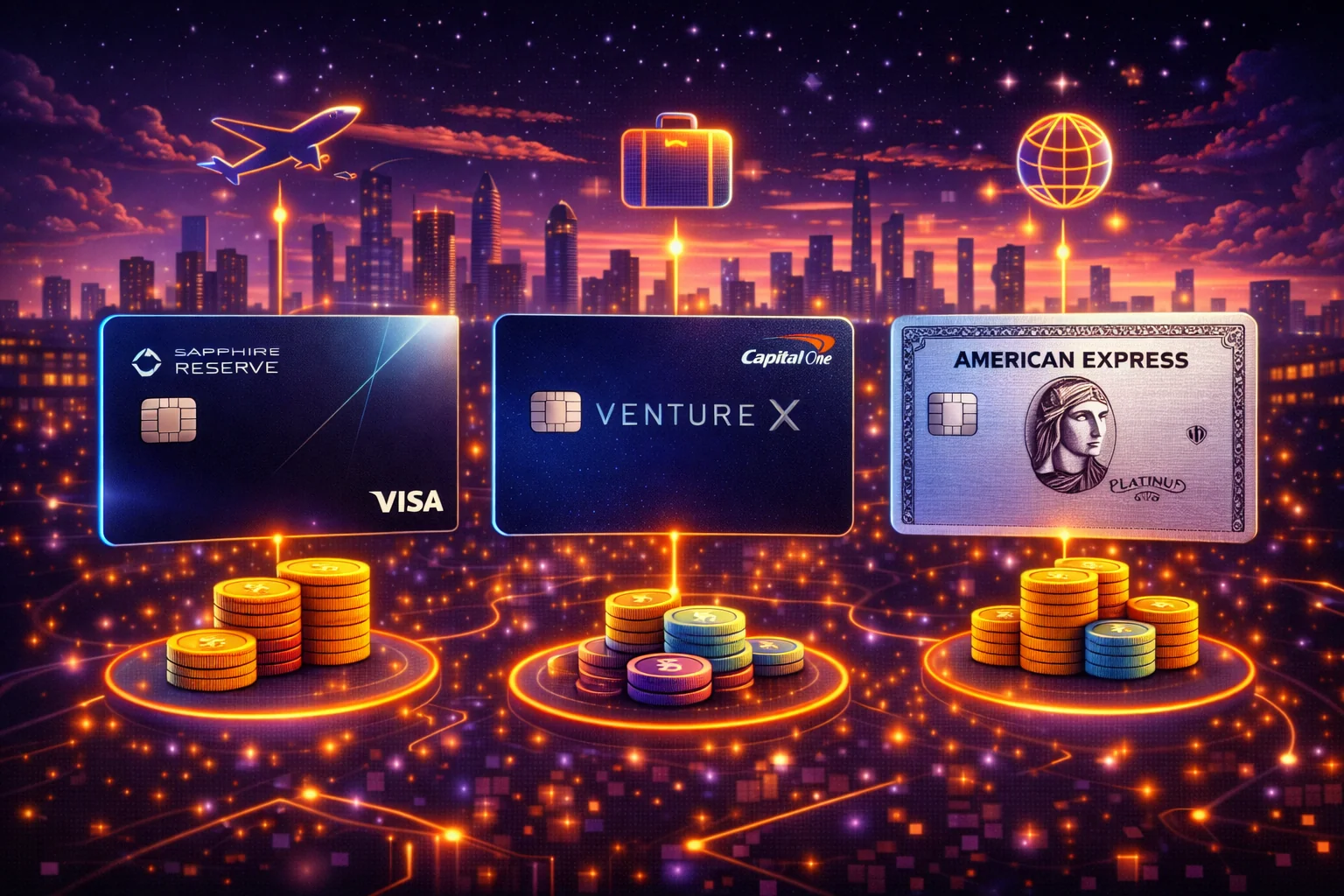
3. Chase Sapphire Preferred
Premium credit card with excellent travel rewards and benefits.
- International Fees: 0%
- Rewards: 2x points on travel and dining
- Sign-up Bonus: 60,000 points after spending requirement
- Travel Benefits: Trip protection, rental car insurance
- Annual Fee: $95
4. Capital One Venture X
High-reward travel credit card with premium benefits.
- International Fees: 0%
- Rewards: 2x miles on all purchases, 5x on hotels and rental cars
- Annual Credit: $300 travel credit
- Lounge Access: Priority Pass membership
- Annual Fee: $395
Digital Payment Solutions
Digital payment solutions represent the future of travel banking, offering instant setup, real-time controls, and innovative features. These modern financial tools provide travellers with unprecedented flexibility, security, and convenience while managing expenses abroad. Advanced digital platforms integrate seamlessly with mobile devices, enabling instant notifications, spending limits, and comprehensive expense tracking for both personal and business travel requirements.
Advantages of Digital Cards
- Instant Issuance: Get your card immediately after signup
- Real-Time Controls: Freeze/unfreeze cards instantly
- Spending Analytics: Detailed transaction categorization
- Exchange Rate Alerts: Notifications for favorable rates
- Virtual Cards: Generate temporary cards for online purchases
- Mobile-First Design: optimised for smartphone use
Top Digital Payment Providers
Revolut
The pioneer in digital travel banking with over 25 million users worldwide.
- Instant card creation and delivery
- Real-time conversion rates
- Cryptocurrency integration
- Stock trading within the app
- Travel insurance and benefits
Wise (TransferWise)
Focused on transparent international money transfers and travel spending.
- Real currency rates with transparent fees
- Multi-currency account functionality
- Business account options
- International wire transfers
- Debit card for global spending
Monzo
UK-based digital bank with strong travel features.
- No international fees
- Instant spending notifications
- Automatic categorization
- Savings goals and budgeting
- Fee-free ATM withdrawals (with limits)
Traditional Payment Solutions
Traditional banks continue to offer competitive payment solutions with established networks and premium benefits.
Premium Credit Cards
American Express Platinum
- Annual Fee: $695
- Foreign Fees: 0%
- Rewards: 5x points on flights, 5x on prepaid hotels
- Benefits: Airport lounge access, hotel status, travel credits
- Insurance: Comprehensive travel and purchase protection
Citi Premier Card
- Annual Fee: $95
- Foreign Fees: 0%
- Rewards: 3x points on travel, gas, and supermarkets
- Sign-up Bonus: 60,000 points after spending requirement
- Transfer Partners: 17 airline and hotel partners
No Annual Fee Options
Capital One VentureOne
- Annual Fee: $0
- Foreign Fees: 0%
- Rewards: 1.25x miles on all purchases
- Sign-up Bonus: 20,000 miles after spending requirement
- Benefits: No blackout dates for redemptions
Bank of America Travel Rewards
- Annual Fee: $0
- Foreign Fees: 0%
- Rewards: 1.5x points on all purchases
- Redemption: Statement credit for travel purchases
- Benefits: Simple rewards structure
Feature Comparison
Compare key features across different payment categories:
Fees Comparison
| Card Type | International Fee | ATM Withdrawal Fee | Annual Fee |
|---|---|---|---|
| Revolut Premium | 0% (weekdays) | Free up to £400/month | £6.99/month |
| Wise Payment Card | 0.35-2% | Free up to £200/month | £7 one-time |
| Chase Sapphire Preferred | 0% | Varies by ATM | $95/year |
| Capital One Venture X | 0% | Varies by ATM | $395/year |
Rewards Comparison
- Highest Travel Rewards: Capital One Venture X (5x on hotels/rentals)
- Best Overall Rate: Capital One Venture X (2x on everything)
- Best Sign-up Bonus: Chase Sapphire Preferred (60,000 points)
- Most Flexible: Capital One cards (no blackout dates)
Understanding Payment Solution Fees
Payment solution fees can significantly impact your savings. Here's what to watch for:
International Fees
Traditional cards often charge 2-3% on foreign purchases. The best payment solutions eliminate these fees, saving you money on every international transaction.
ATM Withdrawal Fees
ATM fees vary widely:
- Digital Cards: Often offer free withdrawals up to monthly limits
- Credit Cards: May charge cash advance fees (avoid ATM use)
- Debit Cards: Usually charge fixed fees per withdrawal
Exchange Rate Markups
Even cards with "no foreign fees" may include exchange rate markups:
- Transparent Providers: Wise shows exact fees upfront
- Real-Time Rates: Revolut offers interbank rates during market hours
- Hidden Markups: Some cards include 1-2% in FX rates
Annual and Monthly Fees
Consider the total cost of ownership:
- No Fee Cards: Good for occasional travellers
- Low Monthly Fees: Digital cards often charge £5-10/month
- High Annual Fees: Premium cards with extensive benefits
Payment Solution Security Features
Security is crucial when travelling internationally. Modern payment solutions offer advanced protection features.
Digital Security Features
- Instant Card Controls: Freeze/unfreeze cards immediately
- Real-Time Notifications: Instant alerts for all transactions
- Spending Limits: Set daily/monthly spending limits
- Geographic Controls: Restrict card use to specific countries
- Virtual Cards: Generate temporary cards for online purchases
- Biometric Authentication: Fingerprint and face recognition
Traditional Security Features
- EMV Chip Technology: Secure chip-based transactions
- Contactless Payments: Tap-to-pay for quick transactions
- Zero Liability Protection: No liability for fraudulent charges
- Travel Notifications: Inform bank of travel plans
- 24/7 Customer Service: Global support for emergencies
Travel Safety Tips
- Carry multiple payment methods (cards from different networks)
- Keep emergency cash in local currency
- Store card information securely (separate from physical cards)
- Use hotel safes for backup cards and documents
- Monitor accounts regularly for unauthorised transactions
- Have bank contact information readily available
Payment Solution Tips and Best Practices
Before You Travel
- Research Acceptance: Verify merchant acceptance in destination countries
- Notify Banks: Set travel notifications to prevent blocks
- Download Apps: Install mobile banking apps for account management
- Check Limits: Verify daily spending and ATM withdrawal limits
- Backup Plans: Arrange multiple payment methods
Whilst travelling
- Monitor price rates: Time currency exchanges for better rates
- Use Local Currency: Always pay in local currency to avoid DCC fees
- Track Spending: Monitor transactions in real-time
- Secure Storage: Keep cards in RFID-blocking wallets
- Emergency Contacts: Keep bank phone numbers accessible
maximising Rewards
- Category Bonuses: Use cards with highest rewards for specific purchases
- Sign-up Bonuses: Plan large purchases around bonus requirements
- Transfer Partners: maximise value through airline/hotel transfers
- Promotional Offers: Take advantage of limited-time bonuses
- Annual Benefits: Use travel credits and perks before expiration
Regional Travel Card Considerations
Europe Travel
European travel presents unique opportunities and challenges for payment solution users. The eurozone simplifies currency management, but varying payment preferences across countries require strategic planning.
In Northern European countries like Sweden, Denmark, and Norway, cash usage has declined dramatically. Digital payments are preferred, making contactless payment solutions essential. Many establishments no longer accept cash, particularly in Stockholm and Copenhagen city centers.
Southern European countries like Italy, Spain, and Greece still maintain strong cash cultures, especially for small purchases and local markets. However, major tourist areas and chain establishments readily accept international cards. The key is carrying both digital payment options and some local currency.
Eastern European countries present mixed scenarios. Poland and Czech Republic have rapidly adopted digital payments, while countries like Romania and Bulgaria may still prefer cash in rural areas. Research your specific destinations and plan accordingly.
Asia-Pacific Travel
Asia-Pacific regions showcase the world's most diverse payment landscapes, from ultra-modern digital ecosystems to traditional cash-based economies.
Japan represents a fascinating paradox: technologically advanced yet cash-centric. Whilst major cities accept international cards, many restaurants, shops, and transportation systems prefer cash. IC cards like Suica and Pasmo are essential for public transport and small purchases.
South Korea leads in digital payment adoption, with mobile payments dominating daily transactions. International cards work well in Seoul and Busan, but having a T-money card for public transport enhances the experience.
Southeast Asian countries vary significantly. Singapore and Hong Kong offer seamless international payment acceptance, while countries like Vietnam, Thailand, and Indonesia may require cash for street food, local transport, and small vendors. ATM networks are generally reliable, but fees can accumulate quickly.
China presents unique challenges due to the dominance of WeChat Pay and Alipay. International cards work in major hotels and tourist areas, but daily life requires local payment apps. Some international cards now offer integration with Chinese payment systems.
Americas Travel
The Americas offer generally good international card support, but regional variations require consideration.
United States and Canada provide excellent global acceptance across all sectors. Contactless payments have grown significantly, and mobile wallets like Apple Pay and Google Pay are widely accepted. The main consideration is choosing cards without international fees for cross-border travel.
Mexico and Central American countries accept international cards in tourist areas and major cities, but cash remains important for local markets, street food, and rural areas. ATM availability is good in urban centers but may be limited in remote regions.
South American countries present varying levels of card acceptance. Argentina, Chile, and Brazil have well-developed card networks, while countries like Bolivia and Paraguay may require more cash-based planning. Currency volatility in some countries makes real-time exchange rate monitoring crucial.
Africa and Middle East
These regions require careful planning due to varying infrastructure and payment system development.
South Africa, Morocco, and Egypt offer reasonable card acceptance in tourist areas and major cities. However, cash remains essential for local markets, transportation, and rural areas. ATM networks exist but may have limited availability outside urban centers.
Gulf countries like UAE, Qatar, and Saudi Arabia have modern payment infrastructure with excellent international card acceptance. These destinations often provide better card experiences than many Western countries.
Sub-Saharan Africa presents significant challenges, with limited card acceptance outside major cities and tourist areas. Mobile money systems like M-Pesa in Kenya offer innovative solutions but require local setup. Cash planning becomes crucial for these destinations.
Payment Solution Cost Analysis
Understanding True Costs
Payment costs extend beyond obvious fees, requiring comprehensive analysis to determine real value. Hidden costs often exceed advertised rates, making detailed comparison essential for smart financial decisions.
International fees represent the most visible cost, typically ranging from 0% to 3% per transaction. However, the absence of transaction fees doesn't guarantee the best deal. Exchange rate markups can add 1-4% to each transaction, often exceeding traditional transaction fees.
ATM withdrawal fees create another cost layer. Some cards offer free withdrawals up to monthly limits, while others charge fixed fees plus percentage-based charges. International ATM networks may add their own fees, creating compound charges that significantly impact travel budgets.
Annual Fee Justification
Premium payment solutions often carry substantial annual fees, requiring careful benefit analysis to justify costs. The break-even point depends on individual spending patterns and travel frequency.
Travel credits represent the most straightforward benefit, often offsetting annual fees directly. Cards offering $300 annual travel credits against $395 annual fees provide net $95 cost, assuming full credit utilisation. However, credit restrictions may limit practical value.
Lounge access benefits vary significantly in value based on travel patterns. Frequent flyers may derive $500+ annual value from Priority Pass memberships, while occasional travellers might use lounges rarely. Consider your actual travel frequency and airport preferences when evaluating these benefits.
Insurance benefits provide substantial but hard-to-quantify value. Trip cancellation insurance, rental car coverage, and purchase protection can save thousands in specific situations. However, existing insurance coverage may duplicate these benefits, reducing practical value.
Spending Category optimisation
maximising payment value requires strategic spending across different categories and understanding bonus structures.
Travel purchases typically earn the highest rewards, but category definitions vary between cards. Some cards include ride-sharing and parking in travel categories, while others restrict bonuses to airlines and hotels. Understanding these nuances helps optimise spending strategies.
Dining categories have expanded significantly, with many cards including food delivery services and coffee shops. This expansion increases earning opportunities for daily spending, making dining bonuses more valuable than traditional travel-only rewards.
General spending rates matter for non-category purchases, which often represent the majority of card usage. Cards offering 1.5-2% on all purchases may provide better overall value than cards with high category bonuses but low base rates.
Currency Exchange Strategies
Smart currency management can significantly reduce travel costs and maximise purchasing power abroad.
Multi-currency accounts allow pre-loading favorable exchange rates, protecting against currency fluctuations during travel. Services like Wise and Revolut enable currency conversion during favorable market conditions, potentially saving 2-5% compared to real-time conversion.
Dynamic Currency Conversion (DCC) represents a common trap for travellers. When merchants offer to charge your home currency instead of local currency, they typically apply unfavorable exchange rates with 3-5% markups. Always choose local currency charging to avoid these inflated rates.
Timing currency exchanges can provide significant savings for large purchases or extended travel. Monitoring exchange rate trends and converting during favorable periods can improve purchasing power substantially. However, this strategy requires market knowledge and timing precision.
Future of Travel Cards and Beyond
Emerging Technologies
The payment industry continues evolving rapidly, with emerging technologies reshaping how we pay while travelling. Understanding these trends helps in making future-proof card choices.
Biometric authentication is becoming standard across premium payment solutions. Fingerprint and facial recognition eliminate the need for PINs and signatures, speeding up transactions while improving security. Some cards now offer voice authentication for phone-based account management.
Artificial intelligence integration provides personalised spending insights and fraud detection. AI systems analyse spending patterns to identify unusual transactions instantly, often blocking fraudulent charges before users notice them. These systems also provide spending categorization and budget recommendations.
Blockchain technology promises to revolutionize international payments by reducing settlement times and costs. Whilst still emerging, blockchain-based payment solutions could eliminate traditional banking intermediaries, reducing fees and improving exchange rates.
Regulatory Changes
Regulatory developments across different regions impact payment card features and costs, requiring ongoing attention to changing rules.
European PSD2 regulations have strengthened consumer protection and reduced interchange fees, benefiting travellers through lower costs and improved security. These regulations also enable open banking features, allowing better account aggregation and financial management.
United States regulatory discussions around interchange fees could impact reward structures significantly. Potential fee reductions might decrease reward rates but could lower overall costs for merchants and consumers.
Anti-money laundering (AML) regulations continue tightening globally, requiring enhanced identity verification for new accounts. Whilst this improves security, it may complicate account opening processes for international travellers.
Sustainability Initiatives
Environmental consciousness is driving innovation in payment solution materials and operations, appealing to eco-conscious travellers.
Sustainable card materials are replacing traditional plastic, with options including recycled ocean plastic, wood, and metal alternatives. Some providers offer carbon-neutral shipping and packaging, reducing environmental impact.
Carbon offset programs integrated into payment solutions allow automatic offsetting of travel-related emissions. Some cards calculate flight emissions and purchase offsets automatically, while others provide bonus rewards for sustainable spending categories.
Digital-first approaches reduce physical card production and shipping. Virtual cards for online purchases and mobile wallet integration minimise the need for physical cards, reducing environmental impact while improving convenience.
Advanced Travel Finance Strategies and Professional Implementation
Crypto-Linked Travel Cards
Several crypto platforms now offer Visa or Mastercard debit cards that let you spend crypto holdings directly. The most established option is the Crypto.com Visa card, which offers tiered benefits based on CRO token staking:
- Midnight Blue (free): 1% cashback in CRO, no FX benefit -- essentially a basic prepaid card
- Ruby Steel ($400 CRO stake): 2% cashback, Spotify reimbursement ($13.99/mo), and 0% FX markup on spending. This is the sweet spot for crypto users who want genuine travel card benefits
- Royal Indigo/Jade Green ($4,000 CRO stake): 3% cashback, Spotify + Netflix reimbursement, airport lounge access, and 0% FX markup
- Honest limitation: You must stake CRO tokens (and accept the price risk) to unlock the better tiers. The Ruby tier requires locking $400 of CRO for 180 days. If CRO drops 50% in that period, your "free" benefits cost you $200. ATM limits are $400/month free, then 2% fee
Which Card Combination Works Best?
Most experienced travellers carry two cards from different networks to maximise coverage and minimise fees:
- Budget traveller (1-2 trips/year): Wise card (no subscription) as your primary, plus a Monzo or Starling fee-free debit card as backup. Total cost: £7 one-time
- Regular traveller (monthly trips): Revolut Premium (£6.99/mo) for unlimited FX and travel insurance, plus Wise for weekend spending when Revolut adds markup. Total cost: £84/year
- Crypto-savvy traveller: Crypto.com Ruby card for 2% cashback and 0% FX, plus Wise for currencies Crypto.com handles poorly. Total cost: $400 CRO stake (returned after 180 days, subject to price changes)
Detailed Card Analysis and Features
Wise Multi-Currency Card: Technical Deep Dive
The Wise multi-currency card represents a revolutionary approach to international spending, utilising advanced currency conversion algorithms and real-time exchange rate optimisation. The card's underlying technology employs sophisticated financial infrastructure that maintains multiple currency balances simultaneously, enabling instant conversions at mid-market rates without traditional banking markup fees.
Advanced features include intelligent spending optimisation that automatically selects the most cost-effective currency for each transaction, comprehensive spending analytics with detailed categorization, and real-time notifications with transaction-level currency conversion details. The platform's API integration enables seamless connectivity with accounting software, expense management systems, and financial planning applications, making it ideal for business travellers and digital nomads.
Security implementations include advanced fraud detection algorithms, real-time transaction monitoring, and comprehensive dispute resolution processes. The card supports contactless payments, mobile wallet integration, and secure online transactions with enhanced authentication protocols. Geographic spending controls and merchant category restrictions provide additional security layers for international travel scenarios.
Revolut Premium Travel Benefits
Revolut's premium travel offerings extend far beyond basic currency conversion, incorporating comprehensive travel insurance packages, airport lounge access programs, and exclusive partner benefits. The platform's travel insurance includes comprehensive medical coverage, trip cancellation protection, baggage loss compensation, and emergency assistance services available 24/7 worldwide.
Premium features include unlimited international transfers, priority customer support, advanced budgeting tools with travel-specific categories, and exclusive access to investment products including cryptocurrency trading, stock investments, and commodity trading. The platform's savings vaults enable automatic travel fund accumulation with competitive interest rates and goal-based saving strategies.
Business account features provide comprehensive expense management, team card distribution, advanced reporting capabilities, and integration with major accounting platforms. Multi-user access controls, spending limits, and real-time expense tracking make Revolut particularly suitable for corporate travel programs and business expense management.
Crypto-Friendly Travel Solutions
Modern travel cards increasingly incorporate cryptocurrency functionality, enabling seamless conversion between digital assets and traditional currencies for travel expenses. These solutions provide real-time cryptocurrency conversion, competitive exchange rates, and comprehensive transaction tracking for tax reporting purposes.
Advanced cryptocurrency features include multi-asset support for major cryptocurrencies, staking rewards programs, and DeFi integration capabilities. Some platforms offer cryptocurrency cashback rewards, enabling travellers to earn digital assets through regular spending while maintaining traditional payment card convenience.
Security considerations for crypto-enabled travel cards include advanced encryption protocols, multi-signature authentication, and comprehensive insurance coverage for digital asset holdings. Regulatory compliance features ensure adherence to local cryptocurrency regulations across different jurisdictions, providing peace of mind for international travellers.
Business Travel optimisation Strategies
Corporate travel programs require sophisticated financial management solutions that combine expense tracking, policy compliance, and cost optimisation. Modern business travel cards provide comprehensive reporting capabilities, automated expense categorization, and integration with corporate accounting systems for streamlined financial management.
Advanced business features include employee spending controls, real-time budget monitoring, and automated policy enforcement mechanisms. Integration with travel booking platforms enables seamless expense capture, while advanced analytics provide insights into travel spending patterns and optimisation opportunities.
Compliance features include automated tax reporting, VAT reclaim capabilities, and comprehensive audit trails for financial oversight. Multi-level approval workflows, spending limit controls, and merchant category restrictions ensure adherence to corporate travel policies while maintaining operational flexibility.
Digital Nomad Financial Management
Digital nomads require specialised financial solutions that accommodate frequent international travel, multiple currency exposures, and complex tax situations. Modern travel cards provide comprehensive multi-currency management, automated expense tracking, and integration with tax preparation software for simplified compliance.
Location-based features include automatic currency detection, local merchant recommendations, and region-specific spending insights. Advanced budgeting tools enable cost-of-living comparisons across different destinations, helping digital nomads optimise their travel budgets and lifestyle choices.
Income management features support multiple revenue streams, international client payments, and currency hedging strategies. Integration with freelancing platforms, payment processors, and accounting software provides comprehensive financial management solutions for location-independent professionals.
Travel Security and Fraud Protection
International travel exposes financial accounts to increased security risks, making advanced fraud protection essential for travel cards. Modern solutions employ machine learning algorithms that analyse spending patterns, detect anomalous transactions, and provide real-time security alerts for suspicious activities.
Advanced security features include biometric authentication, device-based security tokens, and geographic spending controls that automatically restrict transactions outside designated travel areas. Emergency card replacement services ensure continued access to funds during travel emergencies, while 24/7 customer support provides immediate assistance for security concerns.
Comprehensive insurance coverage includes fraud liability protection, unauthorised transaction coverage, and emergency cash advance services. Some platforms provide identity theft protection, credit monitoring services, and comprehensive dispute resolution processes for travel-related financial issues.
Emerging Technologies in Travel Finance
The travel finance industry continues evolving through integration of emerging technologies including artificial intelligence, blockchain protocols, and advanced mobile applications. AI-powered spending optimisation provides personalised recommendations for travel expenses, while predictive analytics help travellers anticipate and budget for upcoming expenses.
Blockchain integration enables enhanced security, transparent transaction processing, and reduced settlement times for international payments. Smart contract functionality automates travel-related financial processes, including insurance claims, loyalty program management, and expense reimbursement procedures.
Mobile technology advances include augmented reality expense tracking, voice-activated transaction management, and seamless integration with travel planning applications. These innovations enhance user experience while providing sophisticated financial management capabilities for modern travellers.
Regulatory Compliance and International Standards
International travel finance operates within complex regulatory frameworks that vary significantly across jurisdictions. Modern travel cards must comply with anti-money laundering regulations, know-your-customer requirements, and data protection standards across multiple countries and regions.
Compliance features include automated transaction reporting, suspicious activity monitoring, and comprehensive audit trails for regulatory oversight. Integration with international banking networks ensures adherence to global financial standards while maintaining operational efficiency and user convenience.
Data protection implementations include advanced encryption protocols, secure data storage practices, and transparent privacy policies that comply with international data protection regulations. These measures ensure user information remains secure while enabling seamless international financial transactions.
Real Cost Comparison: £5,000 Holiday Spending
To make this concrete, here is what you would actually pay in fees on a two-week holiday spending £5,000 across EUR, USD, and THB currencies:
- High street bank (Barclays, HSBC): 2.75% non-Sterling transaction fee = £137.50 in fees, plus typically 1-2% exchange rate markup = total cost of £175-£225
- Revolut Premium: £0 FX fees on weekday spending (approx 70% of spend = £3,500), plus 0.5% weekend markup on remaining £1,500 = £7.50 in fees, plus £6.99 monthly subscription = total cost of approximately £14
- Wise: 0.37% on EUR/USD (£3,000 = £11.10), plus 0.85% on THB (£2,000 = £17) = total cost of approximately £28
- Crypto.com Ruby: £0 FX fees, plus 2% cashback in CRO on all spending (£100 back). Net cost: negative £100 (you come out ahead), though CRO value may fluctuate
The savings are substantial. Even the most expensive fintech option (Wise at £28) saves you over £150 compared to a traditional bank card on a single holiday. Over a year of regular international spending, the difference compounds significantly.
Professional Travel Finance Implementation
Business Travel Card Setup
If you travel for work, the practical approach is: Revolut Business (from £25/month for the Grow plan) gives you employee cards with individual spending limits, automatic receipt matching, and direct Xero/QuickBooks integration. Wise Business charges no monthly fee but takes a small per-transaction conversion fee. For teams of 5+ travelling regularly, Revolut Business typically works out cheaper because the subscription eliminates per-transaction FX fees. For solo freelancers, Wise Business with its zero monthly cost is usually the better choice.
Conclusion
Selecting the right travel card in 2025 can transform your international travel experience, saving significant money on foreign transaction fees while providing enhanced security, convenience, and financial control. The modern travel card landscape offers unprecedented choice, with innovative fintech companies and traditional banks competing to provide the best value for international travellers.
The key to maximising travel card benefits lies in understanding your specific travel patterns, spending habits, and financial priorities. Whether you prioritise zero foreign fees, competitive exchange rates, comprehensive travel insurance, or premium rewards programs, there's a travel card designed to meet your needs. The most successful travellers often use a combination of cards to optimise different aspects of their international spending.
As the travel industry continues to evolve with new payment technologies, enhanced security features, and innovative reward structures, staying informed about the latest developments in travel cards will help you maintain optimal financial efficiency during your international adventures. The investment in researching and selecting the right travel card pays dividends through reduced costs, enhanced security, and improved travel experiences that make every journey more enjoyable and financially efficient.
As the travel industry continues evolving and financial technology advances, travel cards will become even more sophisticated and valuable. Features like cryptocurrency integration, AI-powered spending insights, and seamless integration with travel platforms represent the future of travel finance. By staying informed about these developments and regularly reviewing your travel card strategy, you can ensure you're always getting the best value from your international spending.
The investment in researching and selecting appropriate travel cards pays dividends through reduced fees, enhanced security, and improved travel experiences. Start by evaluating your travel patterns, compare the options outlined in this guide, and choose the cards that best align with your needs. With the right travel cards in your wallet, you can focus on enjoying your travels rather than worrying about financial logistics.
Sources & References
Frequently Asked Questions
- What is the best travel card for international use?
- The best payment solutions for international use typically offer no foreign transaction fees, competitive exchange rates, and global acceptance. Top options include Revolut, Wise, and Chase Sapphire cards.
- Do payment cards have foreign transaction fees?
- Many traditional cards charge 2-3% foreign transaction fees, but the best payment solutions offer zero foreign transaction fees, saving you money on international purchases.
- Can I use payment cards for ATM withdrawals abroad?
- Yes, most payment cards allow ATM withdrawals abroad. However, fees vary by provider; some offer free withdrawals up to certain limits, while others charge a fixed fee per transaction.
- Are digital payment cards better than physical cards?
- Digital payment cards offer instant issuance, real-time spending controls, and better security features. However, having a physical backup card is recommended for areas with limited digital payment acceptance.
- How do I avoid international fees?
- Choose cards that explicitly state "no international fees." Be aware that some cards may still include exchange rate markups even without transaction fees.
- What should I do if my payment card is lost or stolen?
- Immediately contact your card issuer to report the loss and freeze the card. Most providers offer 24/7 support and can issue emergency replacement cards while travelling.
- Can I hold multiple currencies on one payment card?
- Yes, many modern payment solutions support multiple currencies. Wise and Revolut let you hold 30+ currencies and convert between them at competitive rates.
- Are payment rewards worth the annual fees?
- This depends on your spending patterns. Calculate the value of rewards and benefits against the annual fee. Heavy travellers often benefit from premium cards, while occasional travellers may prefer no-fee options.