Best Brokers Top Investing Platforms Comparison
Find the perfect broker for your investment needs with our comprehensive comparison of top platforms in 2025, covering fees, features, and specialised services.
Introduction
The brokerage industry has undergone a revolutionary transformation in 2025, with leading platforms offering unprecedented value through zero-commission trading, advanced technology, and comprehensive financial services. The competitive landscape has evolved to serve diverse investor needs, from beginners seeking educational resources and simple interfaces to professional traders requiring sophisticated tools and global market access. Understanding the differences between these platforms is crucial for selecting a broker that aligns with your investment style, experience level, and long-term financial goals.
Modern brokers have expanded far beyond simple trade execution to become complete financial service providers offering research tools, educational resources, retirement planning, and integrated banking services. This evolution has created distinct categories of brokers, each excelling in different areas and serving specific market segments. Some platforms prioritise user-friendly interfaces and beginner-friendly educational content, while others focus on advanced trading tools and competitive pricing for active traders.
The democratisation of investing through commission-free trading has levelled the playing field, allowing investors with any budget to access professional-grade investment tools and global markets. However, this apparent simplicity masks important differences in execution quality, available markets, research capabilities, and customer support that can significantly impact your investment success. Choosing the right broker requires careful consideration of factors beyond headline commission rates, including platform reliability, order execution quality, and the breadth of available investment products.
This detailed comparison examines the leading financial services of 2025. We analyse their strengths, limitations, and ideal use cases to help you make an informed decision. We evaluate each broker across multiple dimensions. These include costs, features, user experience, and customer support. This provides actionable guidance for selecting the platform that best serves your investment needs.
Our analysis considers both traditional and emerging brokers. We examine how established firms have adapted to changing market conditions. New entrants challenge conventional approaches with innovative technology and competitive pricing structures. For broader financial education, explore our cryptocurrency investment guide.
Broker Comparison Overview
Choosing the right investment broker is crucial for your financial success in 2025's dynamic investment landscape. The brokerage industry has undergone revolutionary changes over the past decade, with zero-commission trading becoming the standard, advanced technology platforms democratizing access to sophisticated tools, and comprehensive investment options expanding beyond traditional stocks and bonds to include cryptocurrencies, fractional shares, and alternative investments.
The modern brokerage ecosystem offers unprecedented opportunities for investors at every level. Major players have eliminated commission fees for stock trades while intensifying competition on platform quality, research capabilities, educational resources, and specialised services. This shift has fundamentally changed how investors evaluate brokers, moving beyond simple cost considerations to focus on platform functionality, research quality, customer service, and unique features that align with specific investment strategies and goals.
Whether you're a beginner investor taking your first steps into the market or an active trader executing complex strategies, understanding the distinct strengths and weaknesses of each broker is essential for making an informed decision. The right broker can enhance your investment experience through superior tools, research, and support, while the wrong choice can limit your potential and create unnecessary friction in your investment journey.
Our comprehensive analysis examines traditional full-service brokers, discount brokers, and specialised platforms across multiple critical dimensions, including cost structure, available investments, platform usability, research quality, customer support, and mobile capabilities. We evaluate each broker's suitability for different investor profiles, from conservative long-term investors to active day traders, and examine how emerging trends are reshaping the competitive landscape.
Several key trends characterise the 2025 brokerage landscape: increasing integration of cryptocurrency trading into traditional platforms, enhanced mobile-first experiences, AI-powered research and asset management tools, and the continued expansion of commission-free trading to international markets and alternative investments. These developments create both opportunities and challenges for investors seeking the optimal platform for their needs.
Top Investment Brokers
Fidelity - Best for Research and Education
Fidelity excels in providing comprehensive research tools and educational resources that help investors make informed decisions. The platform offers zero-commission stock trades, excellent mutual fund selection, and industry-leading research capabilities that rival those of much more expensive services.
The broker's commitment to investor education is evident in its extensive library of articles, webinars, and interactive tools designed to improve investment knowledge and decision-making. Fidelity's platform combines user-friendly design with powerful analytical tools, making it accessible to beginners while providing the depth experienced investors need.
TD Ameritrade - Best Trading Platform
TD Ameritrade's thinkorswim platform is widely regarded as one of the best exchange services available, offering advanced charting, technical analysis tools, and customizable interfaces that cater to serious traders. The platform provides comprehensive options-trading capabilities and sophisticated analytical tools to support complex trading strategies.
Beyond the advanced platform, TD Ameritrade offers excellent educational resources, paper trading capabilities, and comprehensive market research. The broker's commitment to trader education and platform development makes it an excellent choice for investors who want to develop their trading skills and utilise professional-grade tools.
E*TRADE - Best Mobile Experience
E*TRADE has invested heavily in mobile technology, creating one of the most comprehensive and user-friendly mobile trading experiences available. The platform offers full trading functionality on mobile devices, making it ideal for investors who prefer to manage their portfolios on the go.
The broker combines mobile excellence with competitive pricing and solid research capabilities. E*TRADE's platform provides real-time quotes, advanced charting, and comprehensive account management features through both web and mobile interfaces, ensuring investors can access their accounts and execute trades from anywhere.
Detailed Comparison Table
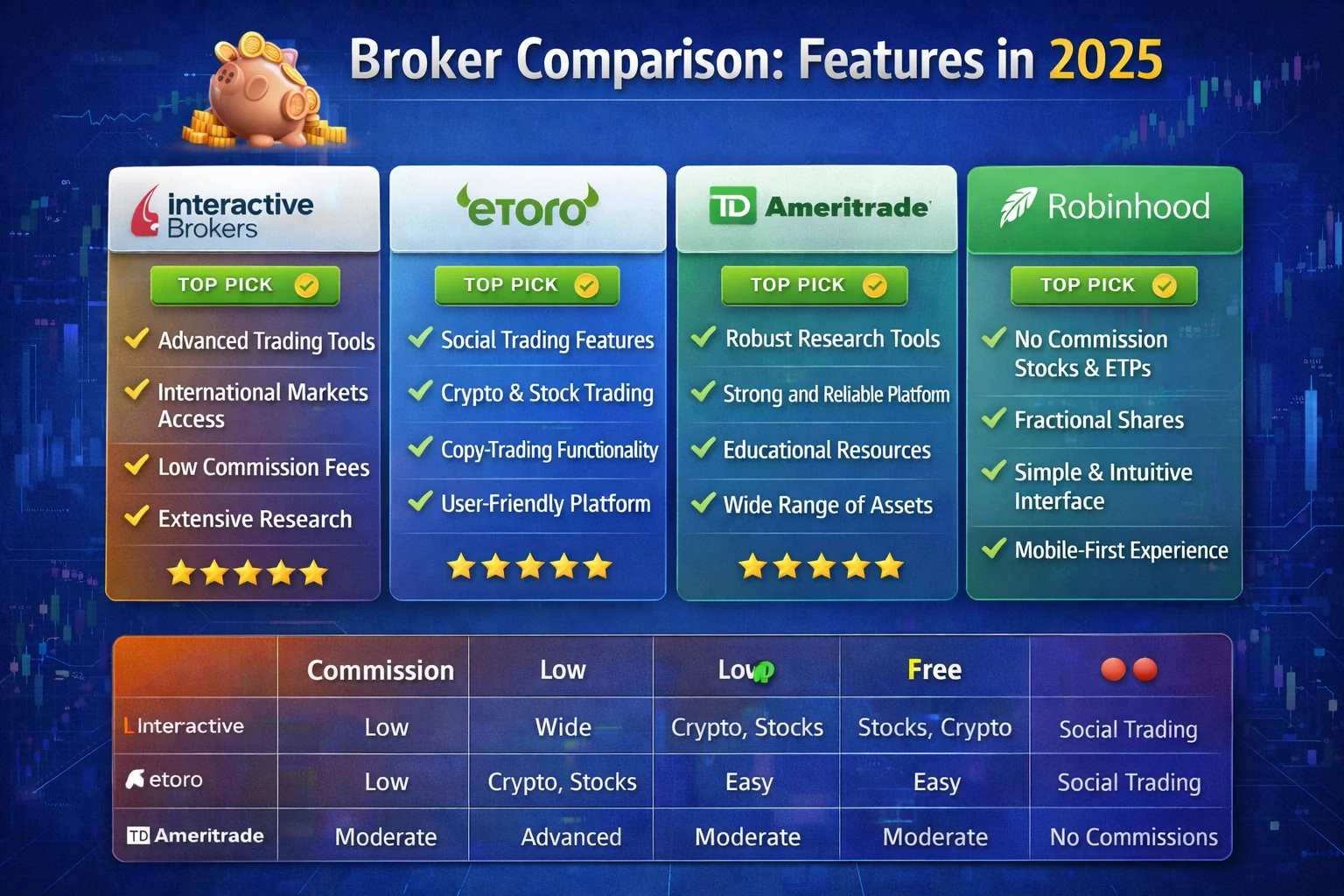
| Broker | Stock Commissions | Options | Account Minimum | Best For | Crypto Available |
|---|---|---|---|---|---|
| Fidelity | $0 | $0.65/contract | $0 | Research, Education | Yes |
| TD Ameritrade | $0 | $0.65/contract | $0 | Advanced platform | Yes |
| E*TRADE | $0 | $0.65/contract | $0 | Mobile trading | Yes |
| Webull | $0 | $0.65/contract | $0 | Commission-free trading | Yes |
| Robinhood | $0 | $0 | $0 | Beginners, Mobile-first | Yes |
| Vanguard | $0 | $1/contract | $0 | Long-term investing, ETFs | No |
| Coinbase | N/A | N/A | $0 | US-regulated crypto | Yes |
| OKX | N/A | N/A | $0 | Advanced crypto trading | Yes |
Best Brokers for Beginners
User-Friendly Platforms
Beginning investors benefit from brokers that prioritise simplicity and education over premium capabilities. Fidelity excels in this area, offering an intuitive interface that doesn't overwhelm new users while providing comprehensive educational resources to build investment knowledge.
These platforms feature guided investment processes, educational content integrated into the trading experience, and customer support specifically trained to help beginning investors. The combination of zero commissions and educational support makes these brokers ideal for investors just starting their financial journey.
Educational Resources
Quality educational content is crucial for beginning investors. The best brokers for beginners offer comprehensive learning centres with articles, videos, webinars, and interactive tools that cover investment basics, market evaluation, and asset management strategies.
Fidelity and TD Ameritrade particularly excel in educational offerings, providing structured learning paths that guide beginners from basic concepts to advanced strategies. These resources help new investors build confidence and knowledge needed for successful long-term investing.
Robo-Advisory Services
Many brokers now offer robo-advisory services that provide automated asset management for beginning investors. These services use algorithms to create and maintain diversified portfolios based on individual risk tolerance and investment goals, making professional-quality asset management accessible to investors with smaller account balances.
Best for Active Trading
Advanced Trading Tools
Active traders require sophisticated platforms with advanced charting, technical analysis tools, and fast execution capabilities. TD Ameritrade's thinkorswim platform leads in this category, offering professional-grade tools that support complex trading strategies and detailed market evaluation.
These platforms provide real-time market data, advanced order types, algorithmic trading capabilities, and comprehensive options trading tools. The ability to customise interfaces, create complex screening criteria, and access detailed market analytics makes these brokers ideal for serious traders.
Low-Cost Structure
Whilst most brokers offer zero-commission stock trades, active traders often benefit from per-share pricing models that can reduce costs for large volume trading. Tiered pricing structures offered by some brokers can significantly reduce trading costs for high-volume traders compared to flat-rate commission structures.
Market Access
Active traders often seek access to international markets, extended trading hours, and diverse investment products. Some brokers offer extensive international market access with trading in over 150 markets worldwide, while others focus primarily on U.S. markets with limited international options.
Cryptocurrency Trading Brokers
Integrated Crypto Trading
The integration of cryptocurrency trading into traditional financial services has become increasingly common in 2025. Major brokers, including Fidelity and E*TRADE, now offer crypto trading alongside traditional investments, providing a unified platform for diversified portfolios.
For comprehensive crypto trading, specialised platforms like Binance and Kraken offer more extensive digital asset options and advanced trading features specifically designed for digital assets. You can get started with our Binance signup guide for reduced trading fees, or explore our Kraken registration walkthrough if you prefer a platform with strong regulatory standing and institutional-grade security features.
Security and Custody
Traditional brokers typically offer enhanced protection protocols and regulatory protections for digital asset holdings compared to standalone crypto exchanges. SIPC insurance and established regulatory frameworks provide additional security for investors who prefer traditional brokerage oversight for their digital asset investments.
International Trading Options
Global Market Access
Investors seeking international diversification need brokers that provide access to foreign markets. Some brokers offer direct access to over 150 markets worldwide, allowing investors to trade foreign stocks, bonds, and other securities in their native currencies.
Other brokers typically offer international exposure through ADRs (American Depositary Receipts) and international mutual funds or ETFs, which provide foreign market exposure without direct access to foreign exchanges. Whilst less comprehensive than direct market access, these options still enable international diversification for most investors.
Currency Exchange
International investing often requires currency exchange capabilities. Leading brokers offer competitive foreign exchange rates and the ability to hold multiple currencies in a single account, making international investing more efficient and cost-effective for active international traders.
Regional Broker Options
- European Markets: Access to LSE, Euronext, and German exchanges
- Asian Markets: Direct trading on Tokyo, Hong Kong, and Singapore exchanges
- Emerging Markets: Exposure to Latin American and African markets
- Currency Hedging: Tools to manage foreign exchange risk
Fee Structure Analysis
Commission-Free Trading
The elimination of stock trading commissions has become standard across the industry, with most major brokers offering zero-commission stock and ETF trades. This development has significantly reduced trading costs for most investors and eliminated a major barrier to frequent portfolio rebalancing and dollar-cost averaging strategies.
However, investors should consider other fees, including options commissions, margin rates, account maintenance fees, and expense ratios on proprietary funds. These costs can vary significantly between brokers and may impact overall investment returns, especially for active traders or investors with specific needs.
Hidden Costs
Whilst headline commission rates are important, investors should examine the total cost of ownership, including bid-ask spreads, payment for order flow arrangements, and margin rates. Some brokers may offer zero commissions while generating revenue through wider spreads or less favorable order execution.
Margin rates vary significantly between brokers, so comparing rates is essential for investors who use margin financing. Account maintenance fees, inactivity fees, and transfer fees can also impact total costs, particularly for smaller accounts or infrequent traders. For a deeper look at how fee structures compare across crypto-native exchanges, see our crypto exchanges comparison.
Fee Comparison Categories
- Stock Trading: Most brokers offer zero commissions
- Options Trading: Typically $0.50-$0.65 per contract
- Margin Rates: Range from 2.5% to 8% annually
- Account Fees: Maintenance and inactivity charges
- Transfer Fees: ACAT and wire transfer costs
Platform Features Comparison
Research and Analysis Tools
Quality research and analysis tools help investors make informed decisions and identify investment opportunities. Fidelity excels in providing comprehensive research reports, analyst ratings, and market commentary that rival expensive institutional research services.
Advanced screening tools, portfolio analysis capabilities, and risk evaluation features vary significantly between brokers. TD Ameritrade offers the most sophisticated analytical tools, while other brokers focus on user-friendly interfaces that make basic analysis accessible to all investors.
Mobile Capabilities
Mobile trading has become essential for modern investors who want to monitor portfolios and execute trades from anywhere. E*TRADE and TD Ameritrade lead in mobile functionality, offering comprehensive trading capabilities and real-time market data through well-designed mobile applications.
The quality of mobile platforms varies significantly, with some brokers offering full desktop functionality on mobile devices while others provide basic trading and account monitoring capabilities. Investors who prioritise mobile access should carefully evaluate each broker's mobile offerings.
Customer Service
Quality customer service becomes crucial when technical issues arise or investors need assistance with complex transactions. Fidelity consistently receives high ratings for customer service quality, availability, and responsiveness to investor needs.
Service options vary from phone and email support to live chat and in-person branch access. Some brokers offer 24/7 support while others maintain standard business hours. The quality and availability of customer service can significantly impact the overall investing experience, particularly for beginning investors who may need frequent assistance.
Advanced Broker Selection Strategies and Professional Considerations
Institutional-Grade Features and Professional Trading Tools
Professional investors and institutional clients require sophisticated broker features that extend beyond basic trading capabilities to include advanced order types, algorithmic trading support, and comprehensive risk management tools. Leading brokers provide institutional-grade platforms with direct market access, advanced options strategies, and sophisticated asset management tools that enable professional-level investment strategies while maintaining competitive pricing structures and comprehensive regulatory compliance.
Advanced exchange services offer features such as multi-asset portfolio optimisation, automated rebalancing capabilities, and comprehensive performance analytics that enable sophisticated investment strategies across global markets. Professional users benefit from advanced charting tools, technical analysis capabilities, and real-time market data that support informed decision-making while maintaining efficient execution and comprehensive risk management across diverse investment portfolios and trading strategies.
Global Market Access and International Investment Opportunities
Modern brokers increasingly offer global market access that enables investors to diversify across international markets, currencies, and asset classes while maintaining efficient execution and competitive pricing structures. Some brokers provide direct trading capabilities across over 135 markets worldwide, with local-currency settlement and comprehensive legal oversight, enabling truly global investment strategies.
International investment capabilities include foreign exchange trading, global ETF access, and direct investment in international stocks and bonds that enable comprehensive portfolio diversification while managing currency risk and legal requirements. Professional investors benefit from consolidated reporting, multi-currency account management, and comprehensive tax reporting that simplify international investment management while optimising after-tax returns and ensuring legal oversight across multiple jurisdictions.
Technology Integration and API Capabilities
Advanced brokers provide comprehensive technology integration capabilities including APIs, automated trading systems, and third-party platform integration that enable sophisticated investment strategies and operational efficiency. Professional users can implement algorithmic trading strategies, automated asset management, and comprehensive risk-monitoring systems that leverage broker infrastructure while maintaining control over investment decisions and risk-management protocols.
Technology capabilities include real-time market data feeds, automated order execution systems, and comprehensive portfolio analytics that enable systematic investment approaches while maintaining operational efficiency and risk control. Advanced users benefit from customizable interfaces, programmable trading strategies, and comprehensive integration capabilities that support sophisticated investment management while adapting to evolving market conditions and investment opportunities.
Regulatory Compliance and Investor Protection
Broker selection requires careful consideration of regulatory compliance, investor protection mechanisms, and financial stability that ensure asset security while maintaining access to comprehensive investment opportunities. Leading brokers maintain robust regulatory compliance across multiple jurisdictions, comprehensive insurance coverage, and strong financial positions that protect investor assets while providing reliable access to global markets and investment opportunities.
Investor protection includes SIPC insurance coverage, segregated client assets, and comprehensive regulatory oversight that ensures asset security while maintaining operational efficiency and competitive pricing. Professional investors benefit from transparent fee structures, comprehensive disclosure requirements, and robust dispute resolution mechanisms that provide confidence in broker relationships while enabling focus on investment strategy and asset management rather than operational concerns.
Cost optimisation and Fee Structure Analysis
Professional broker evaluation requires comprehensive analysis of fee structures, trading costs, and ancillary charges that impact overall investment returns across different investment strategies and portfolio sizes. Advanced users implement systematic cost analysis that considers not only commission rates but also spread costs, financing charges, and platform fees that affect total cost of ownership for different investment approaches and asset management strategies.
Cost optimisation strategies include understanding volume-based pricing tiers, negotiating institutional rates for large portfolios, and leveraging broker-specific advantages such as free ETF trading or reduced margin rates that can significantly impact long-term investment returns. Professional investors benefit from comprehensive cost analysis tools, transparent pricing structures, and competitive rate negotiations that optimise investment efficiency while maintaining access to premium capabilities and comprehensive service capabilities.
Successful broker selection ultimately depends on aligning platform capabilities with individual investment objectives, risk tolerance, and asset management requirements while maintaining cost efficiency and regulatory compliance standards.
Conclusion
Selecting the optimal broker for your investment needs in 2025 requires careful consideration of your investment style, experience level, and specific requirements. The brokerage landscape has evolved to offer exceptional value across multiple platforms, making the decision more nuanced than simply comparing commission rates. Beginning investors typically benefit most from brokers like Fidelity that combine zero commissions with comprehensive educational resources, excellent customer support, and user-friendly platforms designed to facilitate learning and growth.
Active traders and sophisticated investors may find platforms with advanced trading tools, competitive margin rates, and extensive international market access more suitable. Professional-grade features and competitive pricing structures are ideal for investors who place frequent trades or employ complex strategies that require sophisticated order types and analytical tools.
Mobile-focused investors should prioritise platforms like E*TRADE that offer comprehensive mobile functionality. In contrast, those seeking the best exchange service experience may prefer TD Ameritrade's thinkorswim for its advanced charting and technical analysis capabilities. The key is matching your specific needs and preferences with each broker's core strengths and specialised offerings.
The brokerage industry continues to evolve rapidly, with increasing integration of digital asset trading, enhanced mobile capabilities, AI-powered research tools, and improved user experiences. If you are weighing traditional investments against digital assets, our crypto vs stocks comparison provides a thorough breakdown of risk, returns, and portfolio allocation strategies. Most major brokers now offer competitive pricing and comprehensive services, making the choice more about platform preferences, specialised features, and service quality rather than basic functionality or cost considerations.
Consider the strategic advantage of maintaining accounts with multiple brokers to leverage each platform's unique strengths. Many successful investors use one broker for long-term investing and another for active trading, or combine traditional brokers with specialised platforms for digital asset or international investing. This approach allows you to optimise your investment experience while taking advantage of the best features each platform offers.
Ultimately, the best broker aligns with your investment goals, provides the tools and support you need, and enhances rather than hinders your investment journey. Take advantage of demo accounts and trial periods to test platforms before committing, and remember that your needs may evolve as your investment knowledge and portfolio complexity grow over time.
Professional Broker Selection and Institutional Considerations
Professional broker selection requires detailed analysis of institutional services, advanced trading capabilities, and regulatory compliance frameworks that enable investment strategies while maintaining appropriate oversight and operational efficiency. Enterprise applications include systematic multi-broker strategies, thorough cost analysis, and platform integration techniques that optimise trading execution while maintaining appropriate risk management and legal compliance for institutional investment operations and professional asset management across multiple asset classes and market conditions for optimal investment performance and operational excellence.
Technology Innovation and Future Developments
Leading brokers continue investing in cutting-edge technology. This enhances trading capabilities and improves user experience. It also provides advanced analytical tools for professional investment management. Innovation priorities include artificial intelligence integration for market evaluation. They also include automated asset management systems and enhanced mobile exchange services. These deliver institutional-quality capabilities through accessible interfaces.
These technological advances position top brokers for continued leadership. They maintain competitive advantages through continuous platform enhancement. User-focused development initiatives serve the changing needs of modern investors. These investors seek professional-quality brokerage services and comprehensive investment solutions.
Regulatory Compliance and Investor Protection
Modern brokerage platforms operate under comprehensive regulatory frameworks designed to protect investor interests while maintaining market integrity and operational transparency. Leading brokers exceed minimum regulatory requirements through enhanced security measures, comprehensive insurance coverage, and transparent fee structures that protect client assets while providing clear disclosure of all costs and potential risks associated with investment activities and trading operations.
Investor protection mechanisms include SIPC insurance coverage, segregated client accounts, and robust cybersecurity protocols that safeguard personal and financial information. Professional brokers implement multi-factor authentication, encrypted data transmission, and continuous monitoring systems that detect and prevent unauthorised access while maintaining the highest standards of data security and privacy protection for all client interactions and account management activities.
Global Market Access and International Investing
Top-tier brokers provide comprehensive global market access that enables investors to diversify portfolios across international markets, currencies, and asset classes. Advanced platforms offer direct access to major global exchanges, foreign currency trading capabilities, and international research resources that support informed decision-making for global investment strategies and cross-border portfolio management.
International investing capabilities include access to foreign stocks, bonds, ETFs, and mutual funds across developed and emerging markets. Professional brokers provide currency hedging tools, international tax reporting assistance, and compliance support for complex cross-border investment activities that require specialised knowledge and operational expertise for successful implementation and ongoing management of global investment portfolios.
Sources & References
Frequently Asked Questions
- Which broker is best for beginners?
- Fidelity is excellent for beginners due to its zero commissions, comprehensive educational resources, user-friendly platform, and excellent customer support. It offers guided investment processes and extensive learning materials.
- What are the lowest cost brokers?
- Fidelity and E*TRADE provide zero-commission stock trades for most investors. Consider total costs, including margin rates and other fees, not just headline commission rates.
- Which brokers offer digital asset trading?
- Most major brokers, including Fidelity and E*TRADE, now offer digital asset trading. For more comprehensive crypto options, consider specialised platforms like Binance or Kraken alongside traditional brokers.
- Do I need a minimum deposit to start?
- Most major brokers have eliminated minimum deposit requirements, allowing you to start investing with any amount. Some specialised services or account types may still require minimums, but basic brokerage accounts are typically accessible to all investors.
- Which broker has the best research tools?
- Fidelity offers the most comprehensive research tools and market evaluation. TD Ameritrade's thinkorswim platform also provides excellent analytical capabilities for serious traders and investors.